


























Views
Downloads
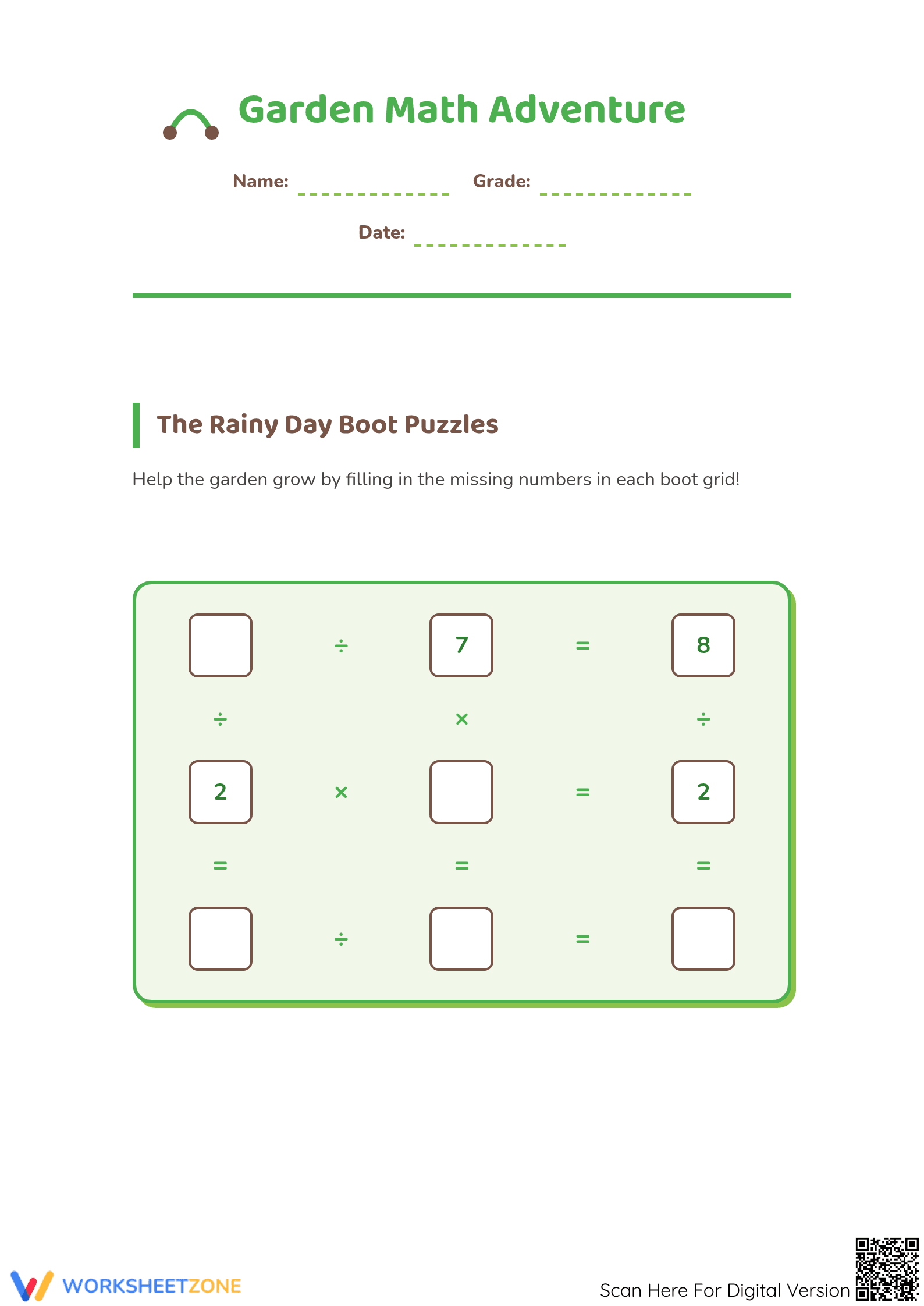
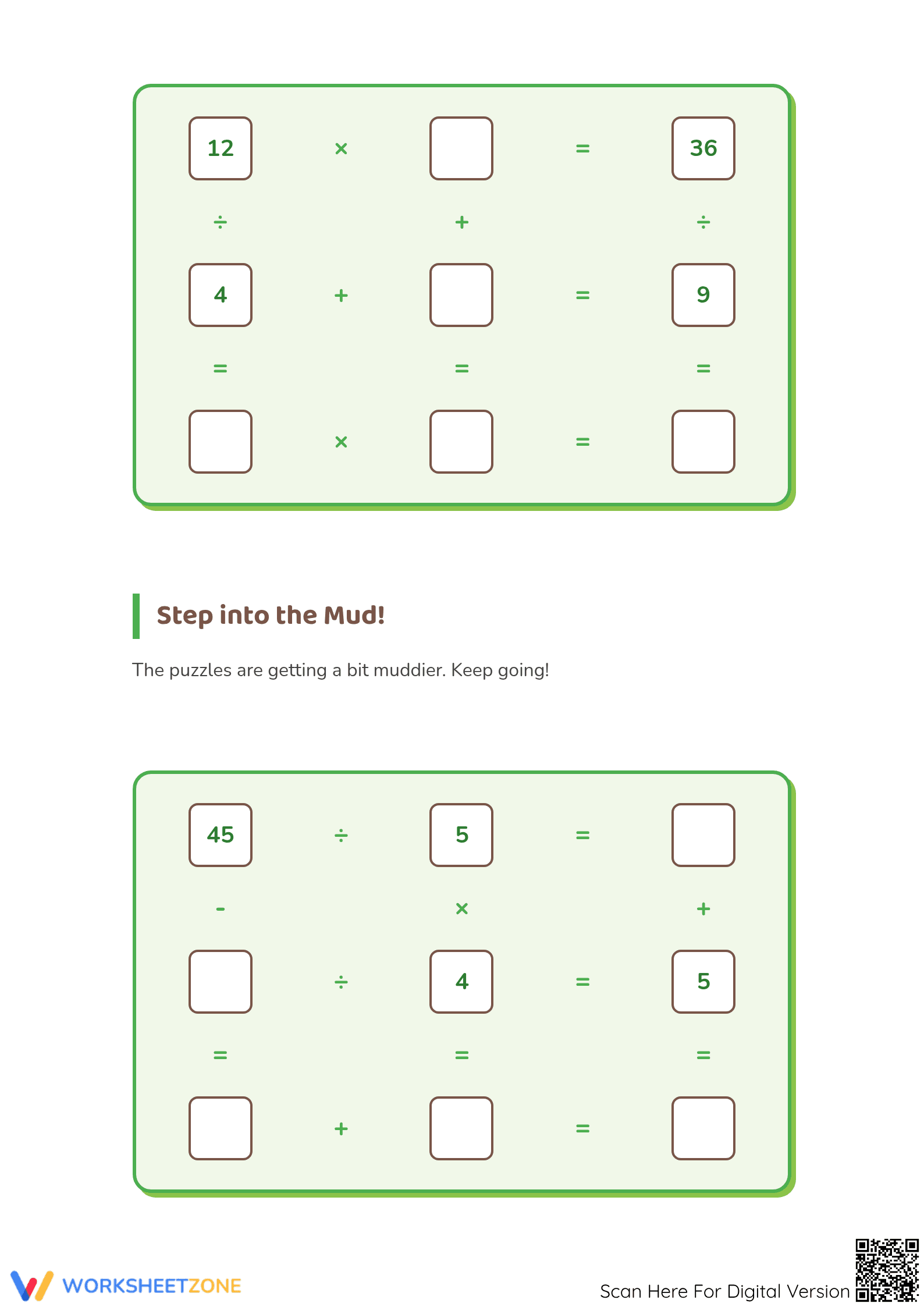
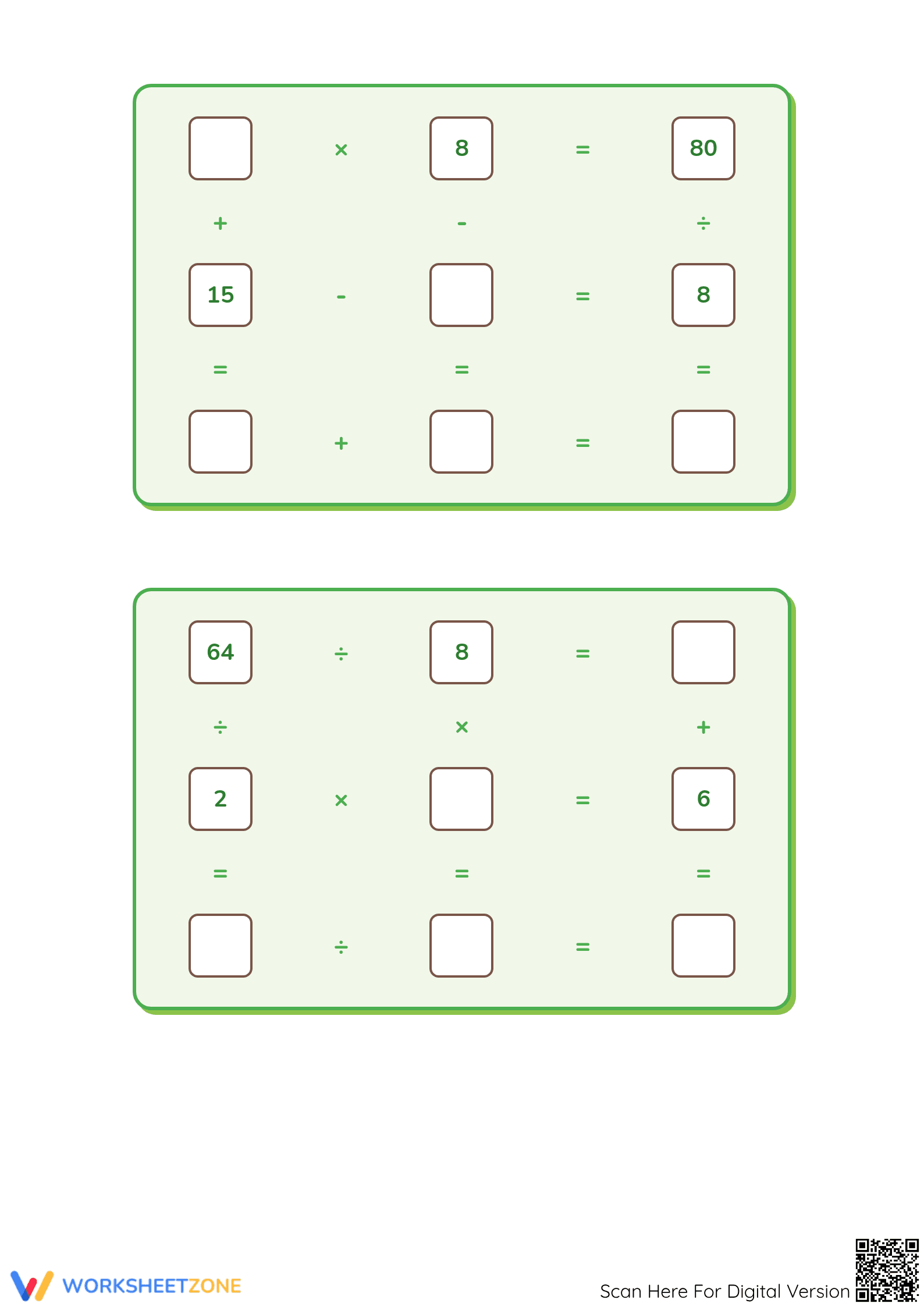
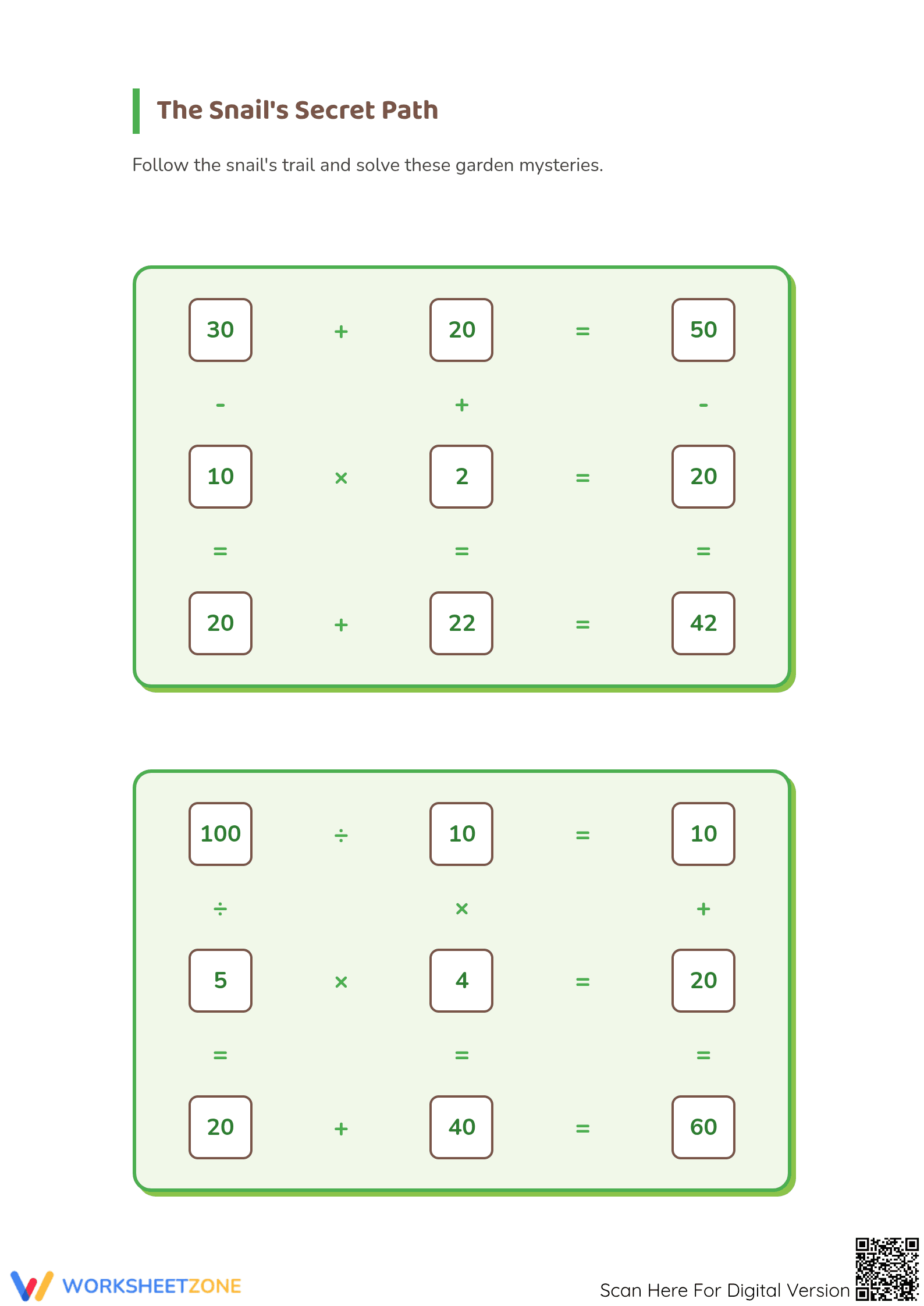
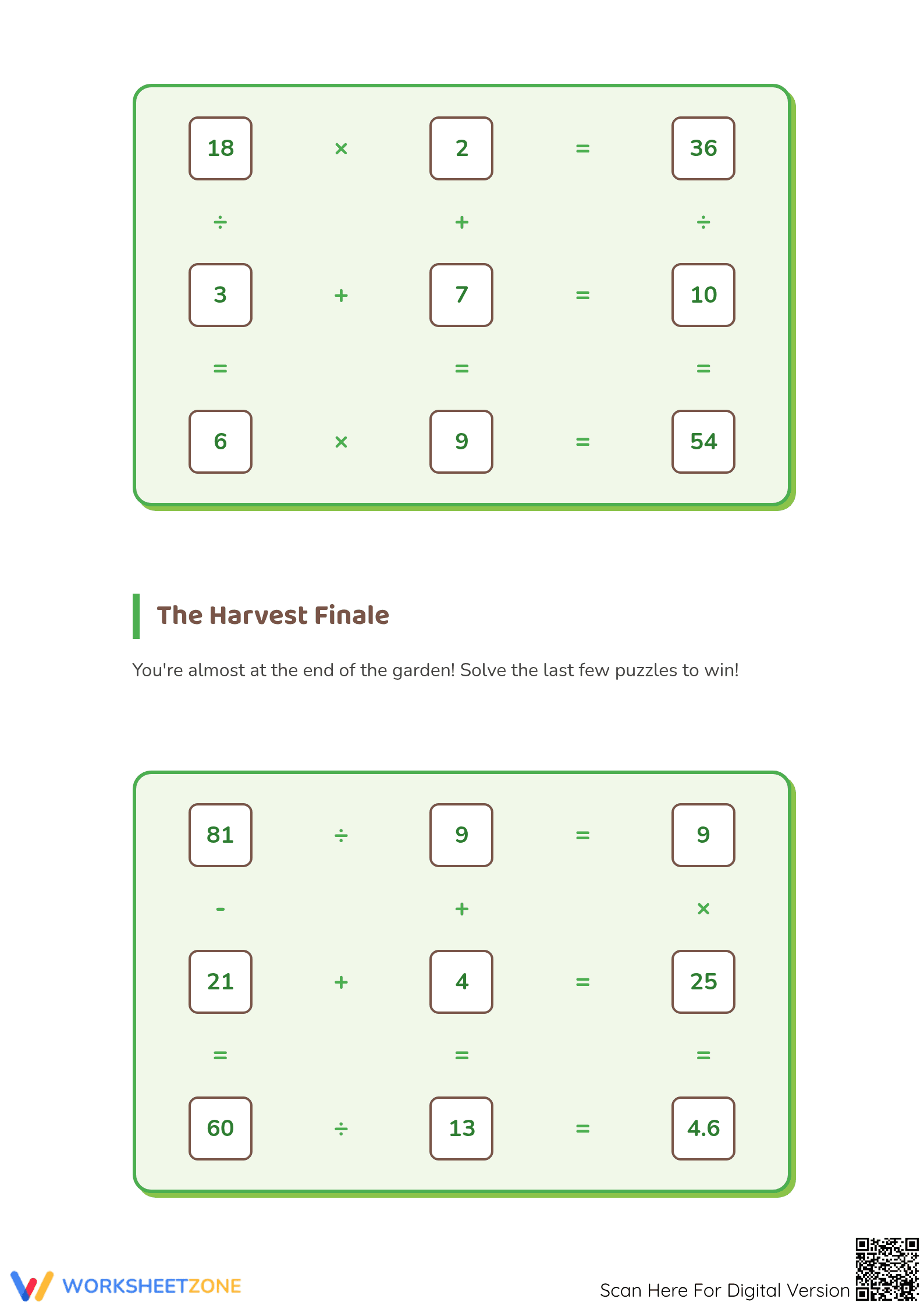

Printable Math Adventure: Multiplication & Division Grids
Paste this activity's link or code into your existing LMS (Google Classroom, Canvas, Teams, Schoology, Moodle, etc.).
Students can open and work on the activity right away, with no student login required.
You'll still be able to track student progress and results from your teacher account.
This Garden Math Adventure worksheet helps students master multiplication and division through engaging logic puzzles. By filling in missing numbers in operational grids, students strengthen their understanding of fact families and inverse operations. This activity transforms standard arithmetic practice into a rewarding garden-themed puzzle quest that builds confidence and fluency.
At a Glance
- Grade: 3–4 · Subject: Math
- Standard:
CCSS.MATH.CONTENT.3.OA.A.4— Determine the unknown whole number in a multiplication or division equation- Skill Focus: Multiplication & Division Fact Families
- Format: 5 pages · 9 logic grids · Answer key included · PDF
- Best For: Independent practice or warm-up activities
- Time: 20–30 minutes
What's Inside
This comprehensive five-page collection features nine distinct "Rainy Day Boot" and "Snail Path" puzzles. Each page presents complex mathematical grids where students must calculate vertical and horizontal equations simultaneously. The packet includes a complete answer key for rapid grading, clear instructional cues, and a progressive difficulty curve that keeps learners challenged from start to finish.
Zero-Prep Workflow
This workflow requires under two minutes of total teacher preparation. First, Print the 5-page PDF in seconds using standard tray settings. Next, Distribute the packets immediately to students for independent work. Finally, Review student progress using the rapid-check answer key. This streamlined process makes the resource highly suitable for emergency sub plans or last-minute transitions.
Standards Alignment
This resource is directly aligned with CCSS.MATH.CONTENT.3.OA.A.4, which requires students to determine the unknown whole number in multiplication or division equations. It also supports CCSS.MATH.CONTENT.3.OA.C.7 by promoting fluency within 100. Both standard codes can be copied directly into lesson plans, IEP goals, or district curriculum mapping tools.
How to Use It
Use this resource as a "First Ten" morning warm-up to activate mathematical reasoning before starting a new lesson. During the activity, walk the room and observe if students use inverse operations (e.g., using multiplication to solve a division blank), which serves as an excellent formative-assessment indicator. Expect students to complete the full five-page set in approximately twenty-five minutes.
Who It's For
The Garden Math Adventure is perfect for third and fourth-grade students who need additional fact fluency support or those who thrive on logic-based challenges. It serves as an excellent differentiation tool when paired with a multiplication anchor chart for struggling learners or as an extension for students who have already mastered standard worksheet formats.
The Garden Math Adventure utilizes a grid-based puzzle structure to reinforce CCSS.MATH.CONTENT.3.OA.A.4 by highlighting the fundamental relationship between multiplication and division. According to the RAND AIRS 2024 report on educational resource effectiveness, high-quality supplemental materials that incorporate logical reasoning alongside rote computation significantly improve long-term retention of basic math facts. By requiring students to solve for unknowns in multiple directions, the worksheet forces active engagement with fact families rather than passive recall. This multi-directional approach aligns with evidence-based practices for building computational fluency, ensuring that students can transfer their knowledge to more complex word problems and algebraic thinking. The inclusion of clear visual scaffolding and a themed narrative further supports student motivation and task persistence. Educators can rely on this standard-aligned tool to provide rigorous, independent practice that bridges the gap between basic operations and mathematical application.


