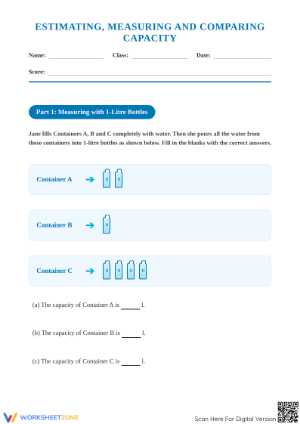
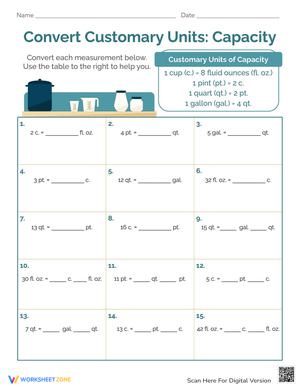
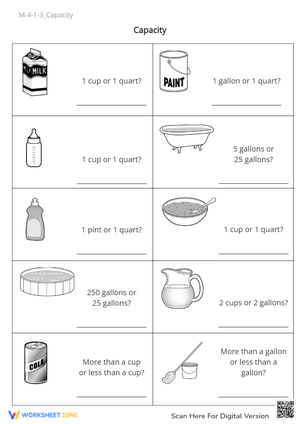
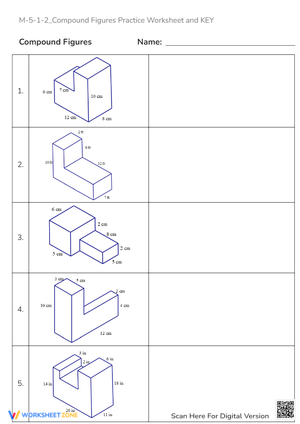
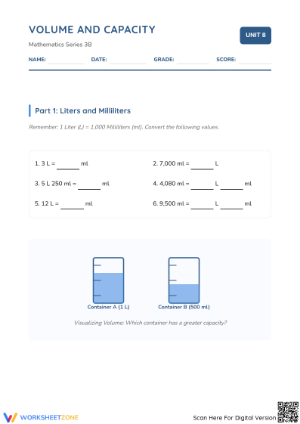
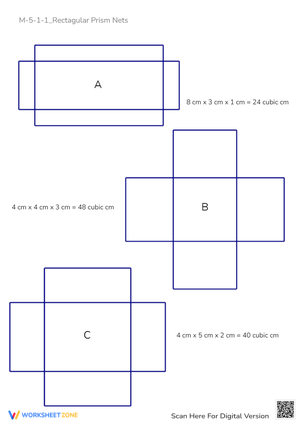
These measurement and capacity worksheets give teachers a ready set of practice pages for liquid volume — estimation, unit reading, and conversion — from kindergarten non-standard units through fifth-grade metric work. Each page targets a specific skill so teachers can pull exactly what a lesson needs rather than working through a general review.
Measurement and Capacity Practice These Worksheets Address
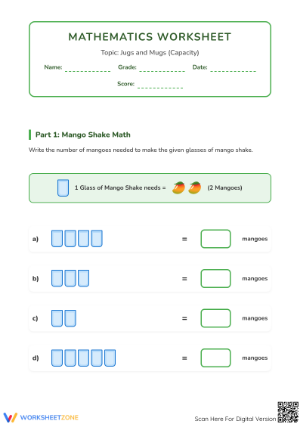
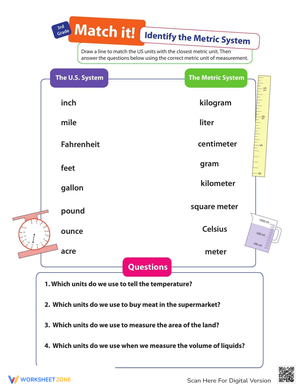
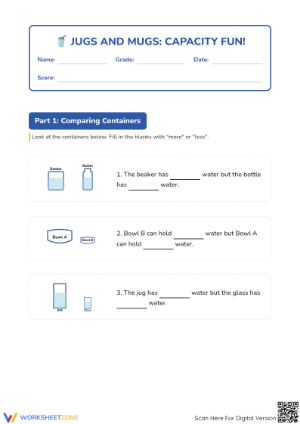
The worksheets move through capacity concepts in the order most curricula introduce them. Early grades work with non-standard units — how many scoops fill this jar, which container holds more — before students have the vocabulary for cups and quarts. In second and third grade, the focus shifts to US customary units: fluid ounces, cups, pints, quarts, and gallons. Students read labeled measuring cups, order containers by capacity, and complete simple one-step word problems. Upper elementary pages bring in milliliters and liters alongside the customary units, which is where conversion work becomes the central challenge.
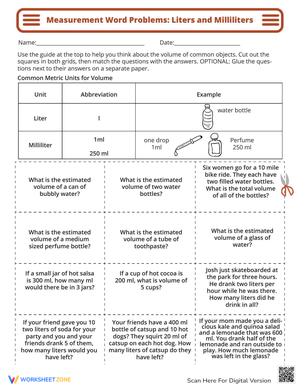
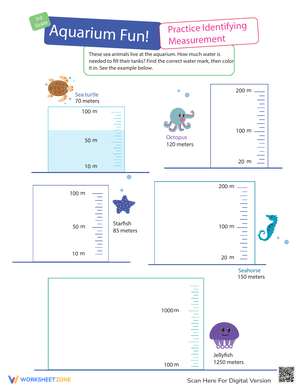
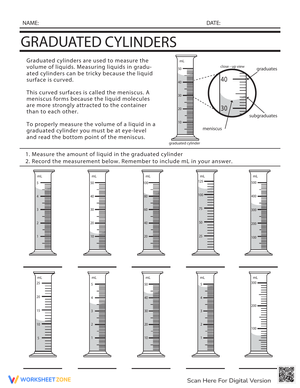
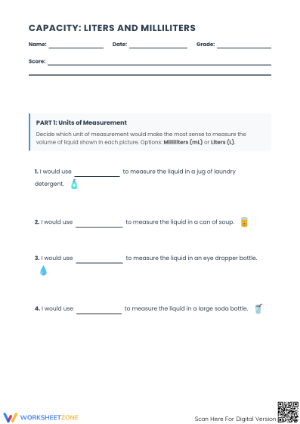
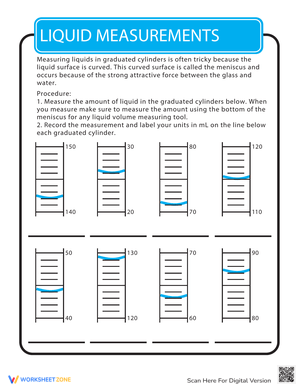
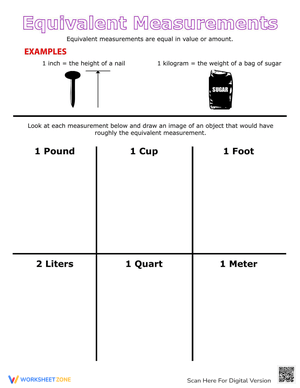
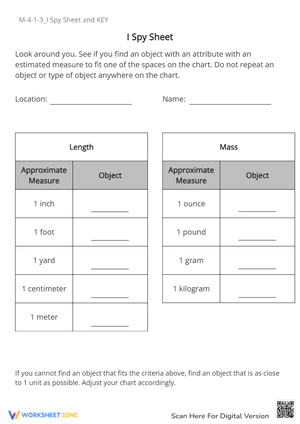
Within those grade bands, the specific task types include: reading a graduated cylinder or measuring cup illustration to the nearest increment, drawing a liquid level on a blank vessel to match a given measurement, circling the most reasonable estimate for an everyday container, filling in conversion tables, and solving multi-step word problems that require students to move between units before computing an answer.
Common Mistake Of Students That Teachers Should Aware and Address
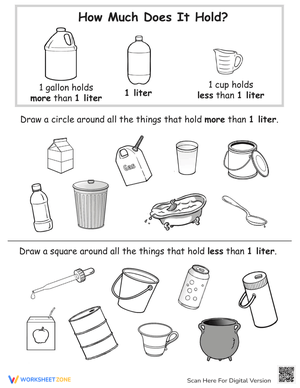
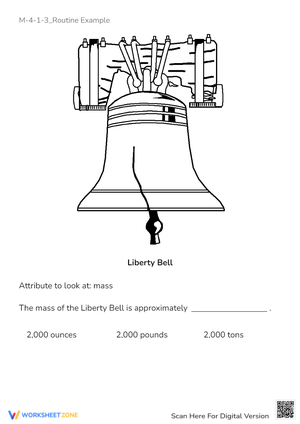
The estimation pages reveal two predictable errors. The first is scale confusion — a student who correctly selects 500 mL for a water bottle will circle 5 liters for a kitchen pot, not because they don't know the liter, but because they haven't yet built a mental anchor for what a liter looks like in a real container. The second error appears on graduated cylinder illustrations: students read the number closest to the liquid surface rather than identifying the scale increment. If a cylinder is marked in 25 mL intervals and the liquid sits between 50 and 75, many students write 60 because that looks like the middle — they import a ruler-reading habit that doesn't transfer to non-decimal scales.
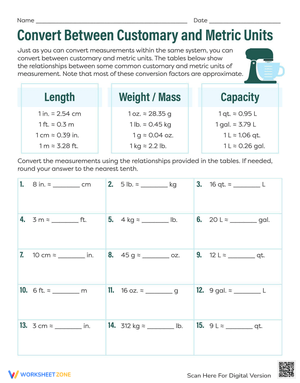
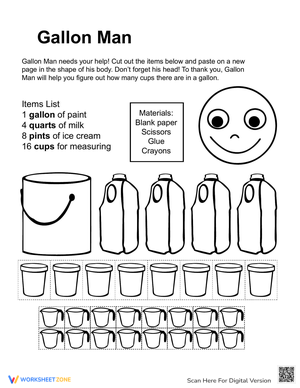
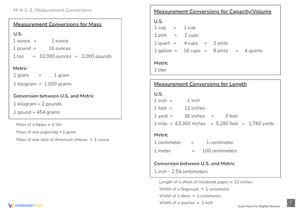
Conversion is where third and fourth graders stall most visibly. The US customary system asks students to hold four different relationships in working memory simultaneously (2 cups in a pint, 2 pints in a quart, 4 quarts in a gallon), and students who try to memorize those facts in isolation rather than as a connected chain lose them quickly. The worksheets that present conversion as a chain — filling in each link from cups up to gallon — produce more durable retention than isolated fact practice.
Recommended Lesson Planning Strategies To Take Full Advantages Of These Worksheets
The most effective placement for these worksheets is immediately after a hands-on activity, not before it. Students who pour actual water from a pint container into a quart jar and watch it fill halfway have a physical reference when they later see a conversion table on paper. The worksheet becomes a record of what they already know from the pouring station rather than an abstract task they are decoding cold.
In practice, the pages work well in three spots in the week. The estimation pages serve as a warm-up during the first ten minutes of a measurement unit lesson — students work independently, then the class discusses which estimates were reasonable and why, which generates the vocabulary the teacher needs for the main lesson. The graduated-cylinder reading pages work as formative checks mid-unit; a teacher can scan 28 pages in about four minutes to see which students are misreading the scale before the next lesson. The conversion and word-problem pages are better placed at the end of the week as structured practice after instruction is complete.
Standards Alignment
The core standard these pages support is CCSS 3.MD.A.2, which requires third graders to measure and estimate liquid volumes in standard units and solve one-step word problems involving volumes given in the same unit. That standard sits in a deliberate developmental sequence: students have spent second grade working with length measurement and the structure of rulers, so third grade capacity work builds directly on the idea of reading a scale against a marked interval — the same underlying skill, applied to a new tool.
Fourth and fifth grade pages extend into conversion work that the Common Core addresses under 4.MD.A.1 and 5.MD.A.1. Teachers working in states that have adopted other frameworks will find the skill sequence maps cleanly onto those standards as well, since the conceptual progression — non-standard to customary to metric to conversion — is consistent across most state-level documents.
Adapting These Worksheets For Different Levels of Students
For students who struggle with the conversion chain, remove the word problems entirely and focus on the table-completion pages until the unit relationships are solid. A student who can't yet reliably convert quarts to gallons will produce meaningless answers on a two-step word problem and learn nothing from the attempt.
For students who move through the pages quickly, the most productive extension is asking them to write their own capacity word problems — specifically, problems that require a classmate to convert units before computing. Writing a solvable, correctly-constrained word problem requires students to work backwards through the conversions they've been practicing, which surfaces gaps that forward practice misses. A student who confidently solves conversion problems sometimes cannot construct one, and that's diagnostic information worth having.
Frequently Asked Questions
At what point in a unit should I introduce the conversion worksheets?
After students have worked with the units physically — ideally after a pouring activity or Gallon Man construction — and can reliably identify which unit is larger or smaller. Introducing conversion pages before students have that ordering stable produces memorization without understanding, and those facts drop out quickly.
My second graders are rushing through the estimation pages without thinking. What helps?
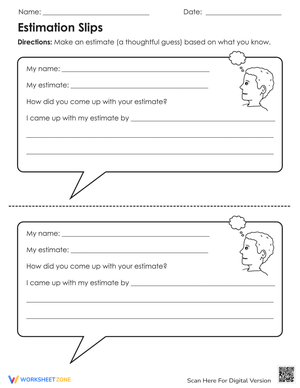
Require a written justification for at least two estimates per page — one or two sentences explaining why they chose that unit. Even "a bathtub is way bigger than a cup so I chose gallons" forces a student to articulate the reasoning rather than circling an answer at random. The quality of those sentences tells you whether the estimate was genuine thinking or guessing.
Do these pages work for metric-first curricula?
The metric pages — milliliters and liters — stand independently and don't require prior work with customary units. Teachers in metric-first programs can use those pages in sequence without the customary pages, then return to US customary as a contrast later in the year.













 Interactive Worksheet Maker
 Quiz Maker
 Word Search Maker
 Crossword Puzzle Maker
 Word Scramble Generator
 Sentence Scramble Generator
 Handwriting Worksheet Generator
 Name Tracing Generator
 Fill In The Blank Generator