Match circle worksheets to the exact skill you're teaching
One search for circle worksheets can pull up pages for a kindergartner learning to name a round shape and pages for a seventh grader calculating circumference. Those are very different lessons, so the first move is deciding which grade-level skill you're actually planning for. A sheet that asks students to color every circle belongs in a K-1 shape unit. A sheet that asks students to solve for a missing radius belongs in a middle school measurement unit. When the worksheet matches the standard you're teaching, students spend their time practicing the target skill instead of decoding an unfamiliar task.
This page groups circle practice by grade band so you can filter fast: identification for the youngest students, partitioning as a bridge to fractions, classifying and symmetry in upper elementary, and radius, diameter, and circumference for grades 4 through 7.
Kindergarten and grade 1: name circles, then split them
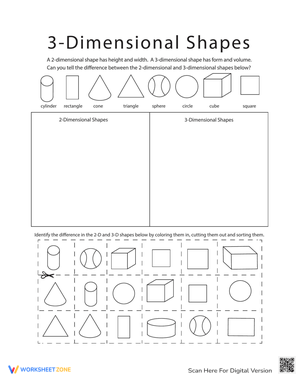
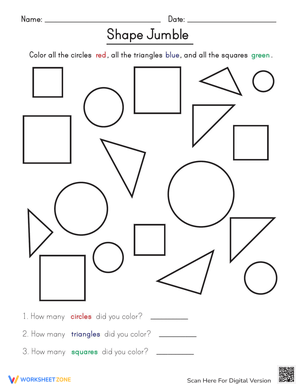
In kindergarten, the goal is recognition. The Common Core State Standards Initiative sets K.G.2 and K.G.4, which ask students to name and describe circles regardless of their size or orientation and to tell them apart from squares, triangles, and rectangles. Good circle worksheets at this level mix circles of different sizes on the same page so students learn that a tiny circle and a large circle are both circles. Sorting tasks, coloring tasks, and "circle the circles" pages all reinforce that a circle has no corners and no straight sides.
Grade 1 raises the demand. Standard 1.G.A.3 asks students to partition circles into two and four equal shares and to describe those shares with the words halves, fourths, and quarters. A partitioning worksheet is where shape geometry starts turning into early fraction sense. When a first grader folds or draws a line to split a circle into two equal parts, they're building the mental model they'll need later for fraction notation.
Grade 4: classify circles and study their symmetry
By grade 4, students compare figures using attributes. Standard 4.G.A.1 through 4.G.A.3 has students classify two-dimensional figures by their lines, angles, and symmetry, and a circle becomes a useful contrast to polygons. It has no sides and no angles, which makes it the clearest counterexample when students are sorting shapes by number of sides.
Symmetry is where the circle does its best teaching. A square has four lines of symmetry and an equilateral triangle has three, but a circle has infinitely many, because any line through its center folds it onto itself. Asking students to draw as many lines of symmetry as they can on a circle and then explain why they can never finish turns a routine task into a real reasoning moment, and it sticks with them longer than a memorized rule.
According to the Common Core State Standards Initiative, standard 4.G.A.3 asks grade 4 students to recognize a line of symmetry as a line across a figure such that the figure can be folded along the line into matching parts, and to identify line-symmetric figures and draw lines of symmetry, which makes the circle a natural anchor example.
Grades 4-7: radius, diameter, and circumference practice
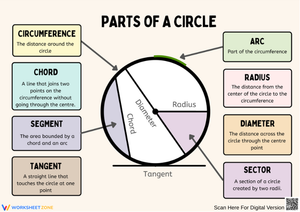
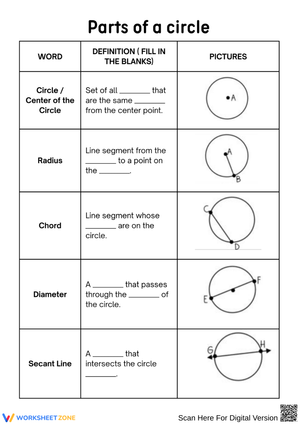
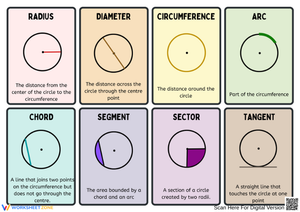
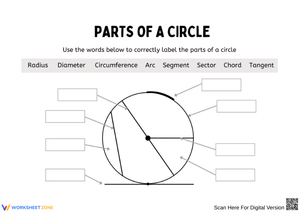
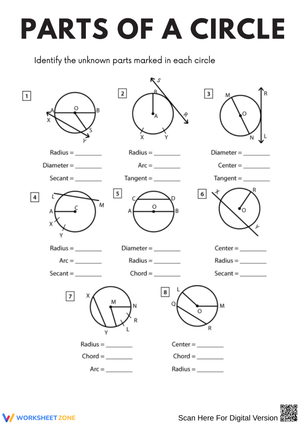
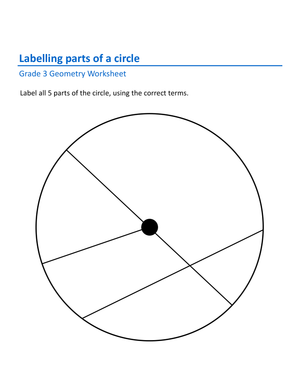
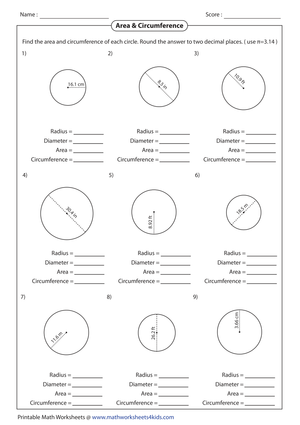
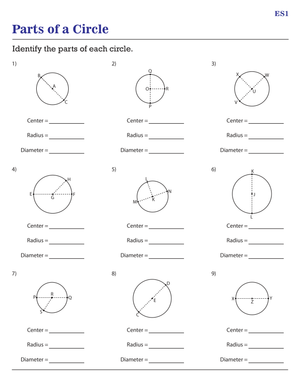
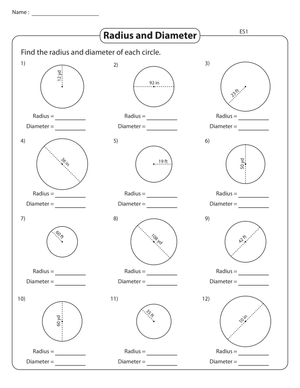
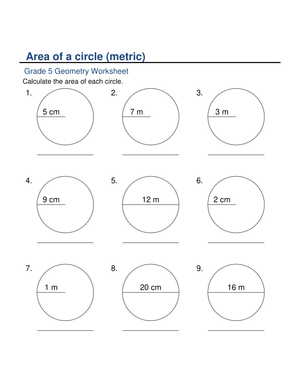
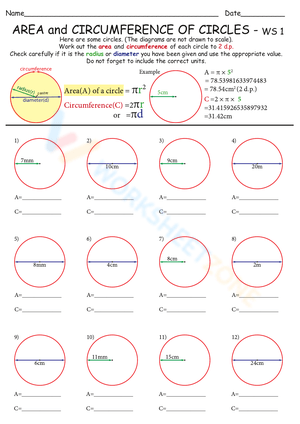
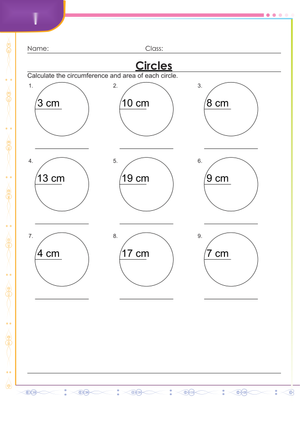
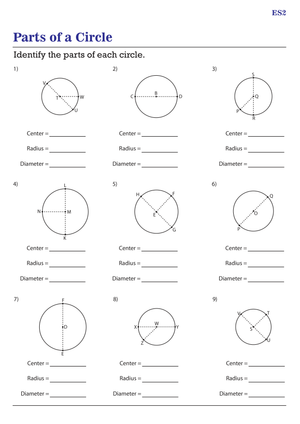
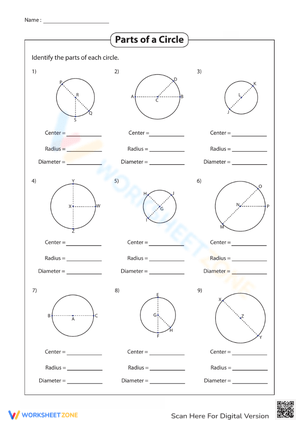
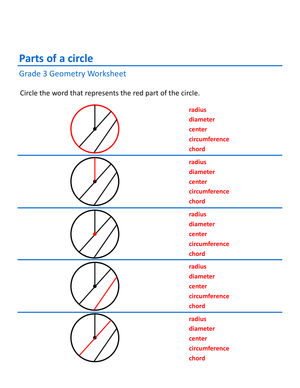
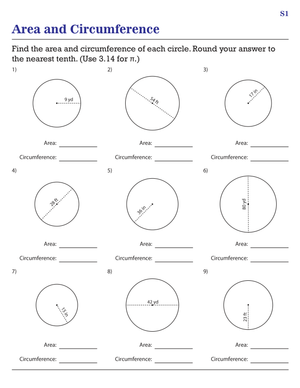
Once students can identify a circle, the vocabulary of its parts comes next. Radius, diameter, and circumference worksheets teach that the radius runs from the center to the edge, the diameter runs across through the center and equals two radii, and the circumference is the distance around. Keeping those three straight is the foundation for every later formula.
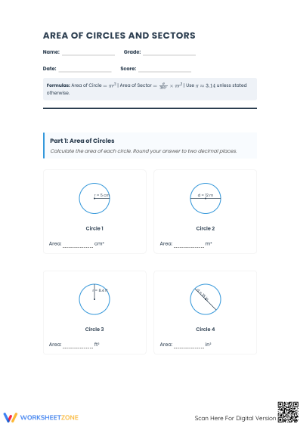
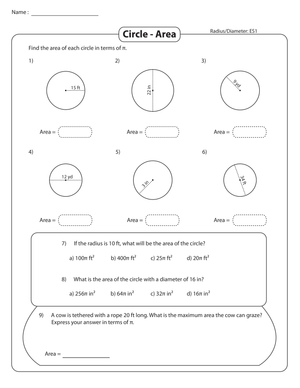
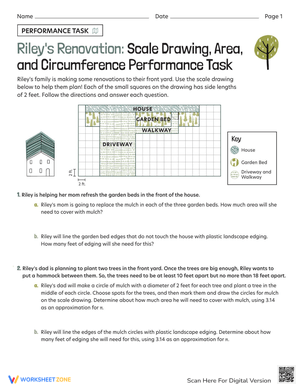
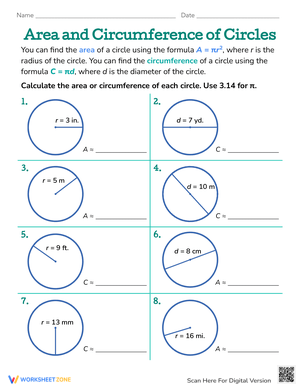
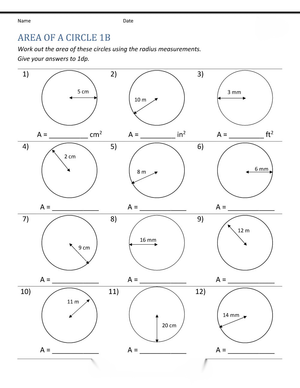
Standard 7.G.B.4 asks grade 7 students to know and use the formulas for the area and circumference of a circle and to give an informal derivation of the relationship between them. Worksheets that ask students to measure the diameter and the distance around several round objects, then divide, help them discover that the ratio always lands near 3.14. That hands-on lead-in makes pi feel like something they found rather than a number they were handed.
Classroom Implementation
Circle worksheets slot cleanly into a rotation. In a K-1 room, keep a stack of shape-sorting pages at a math center so early finishers get independent practice while you pull a small group. In grade 1, pair a partitioning sheet with paper circles students can physically fold, so the abstract line on the page matches a concrete action.
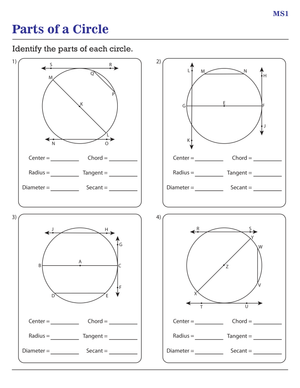
For grades 4 through 7, use a short diagnostic first. Give students a sheet with three labeled circles and ask them to mark the radius, diameter, and circumference before any formula work. The results tell you who owns the vocabulary and who needs a reteach, and that sorts your small groups for you.
- Use size-varied identification pages so students don't think all circles are the same size.
- Attach a folding task to any partitioning worksheet in grade 1.
- Run a measure-and-divide activity before introducing the circumference formula.
- Keep an answer-marking sheet so students can self-check at a center.
Frequently asked questions
1. What grade level are circle worksheets appropriate for?
Circle worksheets span kindergarten through grade 7. K-1 sheets focus on naming and partitioning, grade 4 sheets cover classifying and symmetry, and grades 4 through 7 move into radius, diameter, and circumference. Choose the sheet by the skill you're teaching rather than by the topic alone.
2. How do circle worksheets support early fraction learning?
Grade 1 standard 1.G.A.3 has students partition circles into two and four equal shares and name them as halves, fourths, and quarters. Splitting a circle into equal parts is a first, concrete step toward understanding fractions before formal notation appears.
3. What is the difference between radius, diameter, and circumference worksheets?
Radius practice measures from the center to the edge, diameter practice measures all the way across through the center, and circumference practice measures the distance around. Many worksheets combine all three so students see how they relate before applying grade 7 formulas.
4. How can teachers use circle worksheets for small-group intervention?
Use a short labeling or sorting page as a diagnostic, then group students by what they missed. A five-item sheet can quickly show whether a student confuses shape attributes or measurement vocabulary, so you can target the reteach instead of repeating the whole lesson.
5. Which standards do circle worksheets align to across grades?
Common Core standards K.G.2 and K.G.4 cover naming circles, 1.G.A.3 covers partitioning, 4.G.A.1 through 4.G.A.3 cover classifying and symmetry, and 7.G.B.4 covers circumference and area formulas. Matching a worksheet to one of these keeps practice aligned to your pacing.













 Interactive Worksheet Maker
 Quiz Maker
 Word Search Maker
 Crossword Puzzle Maker
 Word Scramble Generator
 Sentence Scramble Generator
 Handwriting Worksheet Generator
 Name Tracing Generator
 Fill In The Blank Generator