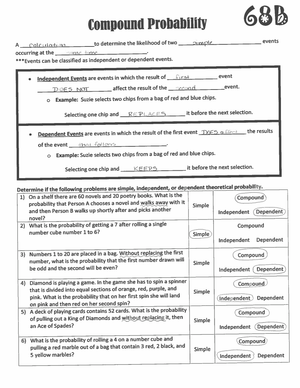
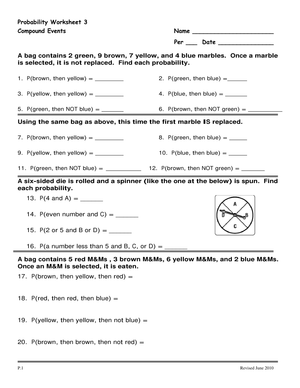
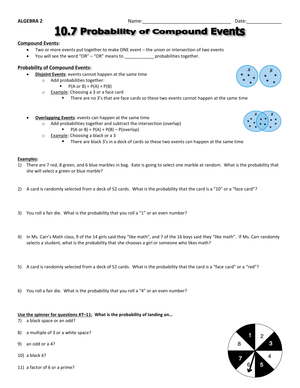
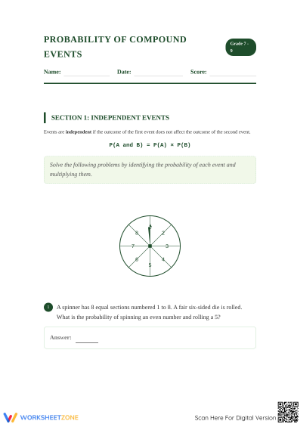
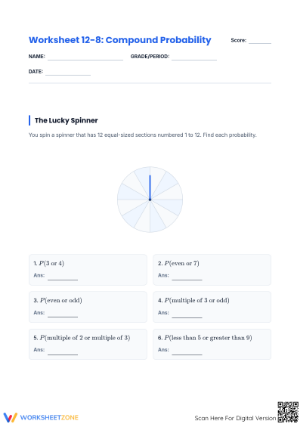
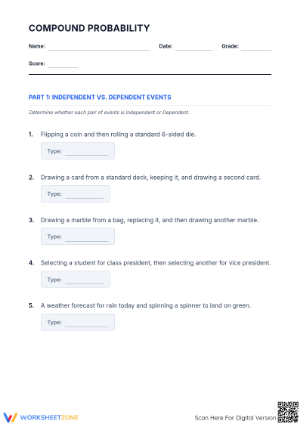
Compound probability worksheets ask students to find the likelihood of two or more events happening together, such as flipping a coin and rolling a die, or spinning a spinner twice. Unlike simple probability sheets, which focus on a single event with a small, obvious sample space, these worksheets require students to build and organize a full list of outcomes before they can count favorable ones. That extra step is exactly where most grade 6-8 students need structured practice.
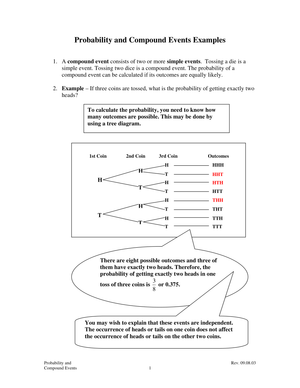
A well-built worksheet moves students through several representations of the same sample space: an organized list, a table, and a tree diagram. Giving students all three formats matters because some students see the pattern faster in a grid while others need the branching visual of a tree diagram to track each choice point. Worksheets that mix formats within the same practice set build flexibility rather than locking students into one method.
Aligning Worksheets to CCSS.MATH.CONTENT.7.SP.C.8
The core standard behind this skill is CCSS.MATH.CONTENT.7.SP.C.8, which sits in the Grade 7 Statistics and Probability cluster on investigating chance processes and developing, using, and evaluating probability models. Teachers can use the three sub-standards to sort worksheet tasks by the exact skill being targeted.
7.SP.C.8.a asks students to understand that the probability of a compound event is the fraction of outcomes in the sample space for which the event occurs. Worksheet problems tied to this sub-standard usually give students a completed sample space and ask them to identify a probability from it. 7.SP.C.8.b requires students to represent sample spaces using organized lists, tables, and tree diagrams, and to identify outcomes for everyday-language events like rolling double sixes. This is where most worksheet time should go, since building the sample space is the harder cognitive step. 7.SP.C.8.c calls for designing simulations to generate frequencies for compound events, including examples like estimating how many donors are needed to find a match for a given blood-type probability.
Sequencing worksheet practice by sub-standard, rather than by worksheet title alone, gives teachers a cleaner diagnostic tool: a student who can read a finished tree diagram (7.SP.C.8.a) but cannot build one from scratch (7.SP.C.8.b) needs targeted reteaching on constructing sample spaces, not repeated practice on the easier skill.
Why Tree Diagrams Matter for Two-Step Events
Tree diagrams give students a physical, step-by-step way to track choices. Each branch represents one possible outcome at a stage, and following a path from root to tip shows one complete compound outcome. For a coin-and-die problem, the first set of branches shows heads or tails, and each of those branches splits into six more for the die roll, giving twelve total paths. Counting the branches that match the target event, then dividing by the total number of paths, is a concrete way for students to calculate probability without memorizing a formula they do not yet understand.
Worksheets should also include organized lists and tables for the same type of problem so students can compare methods. A table works well for two independent events with a small number of outcomes each, since rows and columns naturally show every combination. An organized list is useful when outcomes need to be described in words, such as naming each possible outfit combination from a set of shirts and pants.
Classroom Implementation
Compound probability worksheets fit naturally into several classroom routines. A short warm-up worksheet with one or two problems can review sample-space building before diving into a new lesson. During small-group intervention, a worksheet focused only on 7.SP.C.8.b tasks gives struggling students repeated practice constructing tree diagrams with teacher support close by, while the rest of the class works independently on 7.SP.C.8.c simulation tasks.
For formative assessment, a worksheet with three or four compound probability problems at the end of a lesson gives a fast read on whether students can both build a sample space and calculate a probability from it, which are two separate skills that often need to be checked separately. Homework worksheets work best when they revisit a familiar context, like dice or spinners, so students are not learning a new scenario and a new skill at the same time.
Frequently Asked Questions
1. What grade level typically uses compound probability worksheets?
Compound probability worksheets are most commonly used in grade 7 classrooms, aligned to CCSS.MATH.CONTENT.7.SP.C.8, though grade 6 teachers may introduce early versions and grade 8 teachers may use them for review before moving into independent and dependent event work.
2. What is the difference between simple and compound probability?
Simple probability involves a single event with a small, direct sample space, such as rolling one die. Compound probability involves two or more events combined, such as rolling a die and flipping a coin, which requires students to build a larger sample space before calculating a probability.
3. How do tree diagrams help students solve compound probability problems?
Tree diagrams break a compound event into stages, with branches at each stage representing possible outcomes. Following each complete path from start to end shows one outcome in the sample space, which makes it easier for students to count total outcomes and favorable outcomes accurately.
4. How can teachers use compound probability worksheets for intervention or reteaching?
Teachers can sort worksheet problems by sub-standard, using 7.SP.C.8.b-focused tasks for students who need practice constructing sample spaces and 7.SP.C.8.a-focused tasks for students who need practice reading probabilities from a completed sample space, allowing targeted small-group support.
5. What real-world examples work best for teaching compound probability?
Dice, coins, spinners, and playing cards work well because students can physically manipulate them and see outcomes directly, which supports the organized-list and table methods described in CCSS.MATH.CONTENT.7.SP.C.8.b before students move to more abstract simulation tasks under 7.SP.C.8.c.













 Interactive Worksheet Maker
 Quiz Maker
 Word Search Maker
 Crossword Puzzle Maker
 Word Scramble Generator
 Sentence Scramble Generator
 Handwriting Worksheet Generator
 Name Tracing Generator
 Fill In The Blank Generator