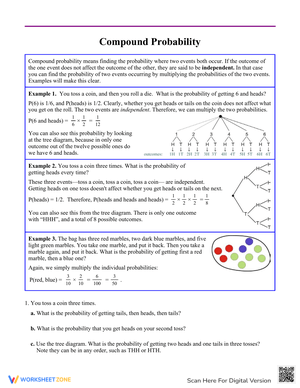
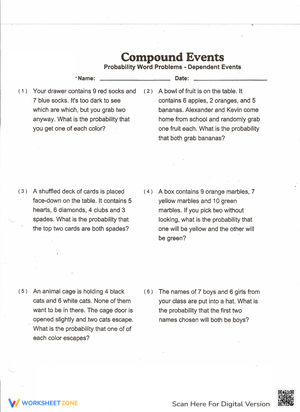
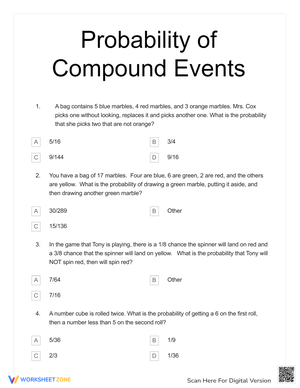
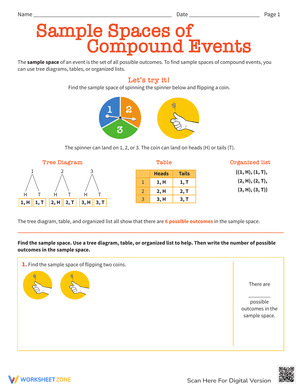
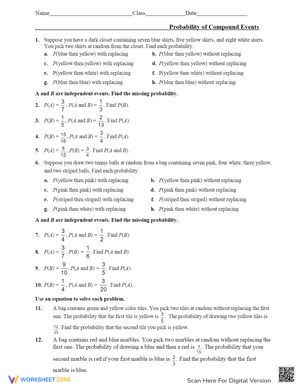
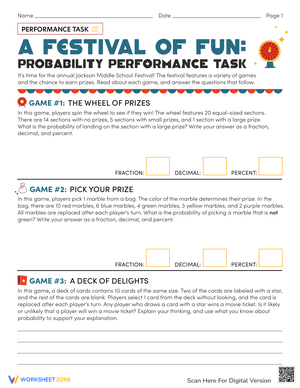
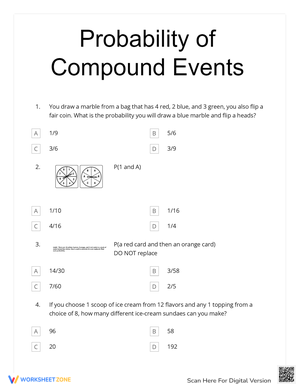
These compound events probability worksheets give 7th grade teachers a structured set of print-ready pages that move students from sample space construction through multi-step probability calculations — covering independent events, dependent events, tree diagrams, organized lists, and two-way tables in a single cohesive resource.
What the Pages Cover
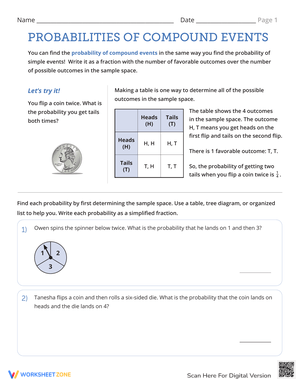
The set targets the specific skills that make compound probability difficult for most 7th graders: distinguishing event types, choosing the right calculation method, and building accurate sample spaces before touching any arithmetic. Individual pages address tree diagram construction, the multiplication rule for independent events, denominator adjustment for dependent events, and mixed-problem sets where students must first classify the situation before calculating.
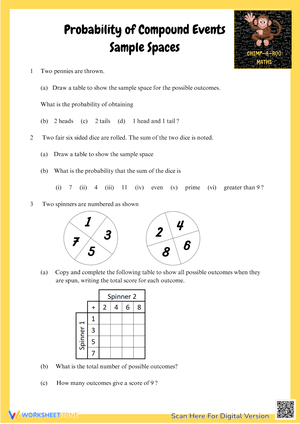
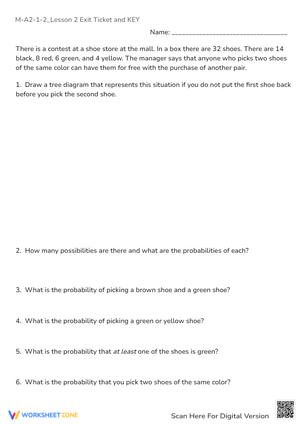
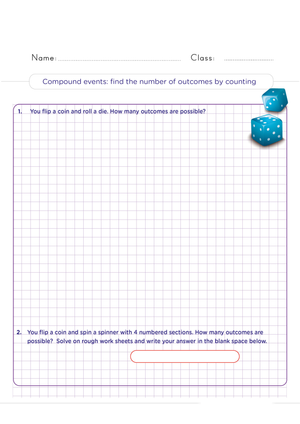
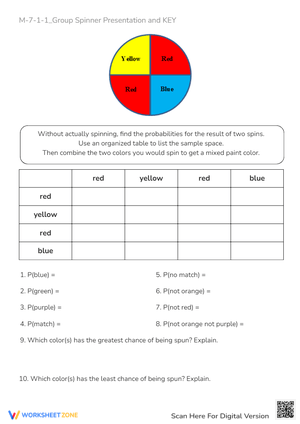
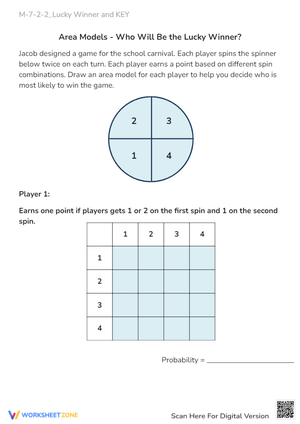
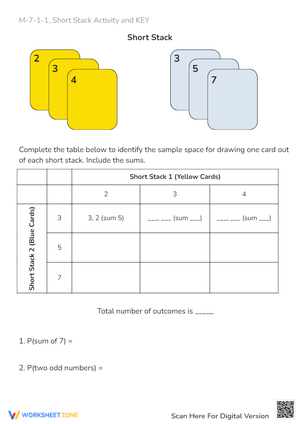
Every page type serves a distinct instructional purpose. Tree diagram pages ask students to draw each branch and label outcomes before writing a single fraction — that sequence matters, because students who skip to the calculation almost always miscount the sample space. Two-way table pages work well when the context involves two categorical variables (color and size, flavor and container) where the grid structure naturally prevents omissions. Organized list pages are the most accessible entry point: low visual complexity, small outcome sets, and a clear record of student thinking that teachers can scan quickly during circulation.
The Independent/Dependent Distinction — and Where Students Break Down
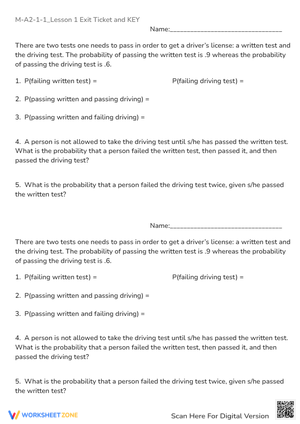
The single most reliable error pattern in student work is treating every compound event as independent. A student who correctly writes P(heads) × P(tails) = ½ × ½ for a two-flip problem will often write the same structure for a no-replacement marble draw — using 3/8 × 2/8 when the second denominator should be 7, not 8. The denominator stays frozen at the original bag size because the student has not registered that the sample space changed after the first draw. Worksheets that print the bag contents visually and ask students to cross off the first marble before writing the second fraction interrupt that habit at the right moment.
The fix is not re-explaining the definition of dependent events — most students can recite it. The fix is slowing them down at the step where the sample space changes. Problems that require students to write an updated sample space description ("After drawing the red tile, the bag contains ___") before entering any numbers produce measurably better accuracy than problems that ask only for a final probability.
Where These Pages Fit in a Unit Sequence
In most 7th grade classrooms, compound probability arrives after students have worked with single-event probability, experimental vs. theoretical probability, and basic fraction operations. That background matters — students who are still shaky on equivalent fractions lose cognitive bandwidth to procedural arithmetic before they can focus on the conceptual structure of compound events.
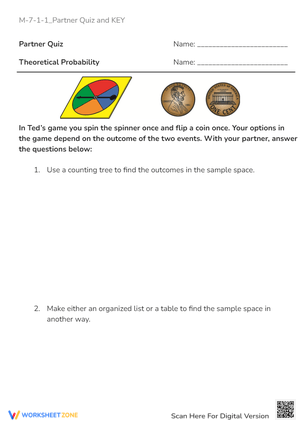
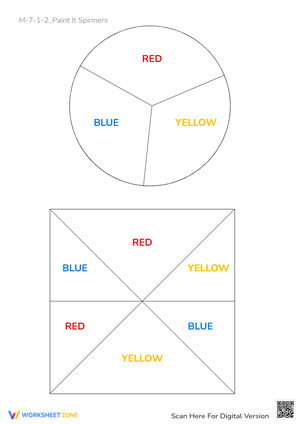
A three-phase sequence works well. Start with pages that ask only for complete sample spaces: no probability fractions, just organized lists or finished tree diagrams. The constraint forces students to think about all outcomes rather than jumping to a formula they half-remember. In the second phase, introduce the multiplication rule for independent events using contexts students already know — coin flips, standard dice, spinners with equal sections — and have pairs talk through each step before recording. In the third phase, give a mixed-problem page where the event type is unlabeled. Students mark each problem I or D before calculating. That classification step functions as built-in self-monitoring and gives teachers a quick diagnostic: a student who marks dependent events as independent, even when calculating correctly, has a conceptual gap that needs direct attention before the unit assessment.
The pages work well in the 10-minute warm-up block at the start of a lesson, as a targeted small-group activity during stations, or as a Friday review after simulation activities earlier in the week. They are less suited as first-contact instruction — they assume the relevant vocabulary has already been introduced.
How This Connects to 7.SP.C.8
Standard 7.SP.C.8 sits at the end of the 7th grade statistics and probability domain, and its placement is intentional. By this point in the year, students have worked through 7.SP.C.5 (probability as a number between 0 and 1), 7.SP.C.6 (experimental probability and long-run relative frequency), and 7.SP.C.7 (theoretical vs. experimental probability models). Compound events build on all three. Students need the 0-to-1 number line intuition to catch unreasonable answers, the experimental probability experience to understand simulation, and the theoretical probability vocabulary to describe what they're calculating.
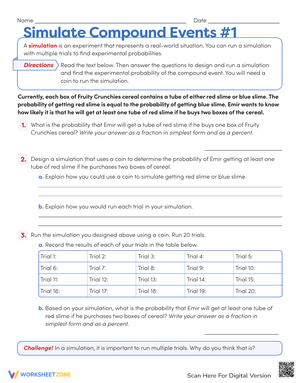
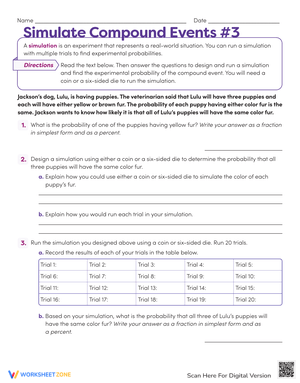
The standard specifically names four representations — organized lists, tables, tree diagrams, and simulation — and the worksheet set addresses the first three directly. Simulation (7.SP.C.8c) requires a different format than print pages and is best handled through hands-on activities or digital tools; these pages are not a substitute for that component of the standard.
Adjusting the Pages for the Range of Learners
For students still consolidating fraction operations, restricting early problems to unit fractions and halves keeps the compound probability reasoning in focus. A student working through P(3 on a die) × P(tails) = 1/6 × 1/2 is already managing two-step multiplication with unlike denominators; if that arithmetic is uncertain, the compound probability concept gets buried. Starting with P(heads) × P(heads) = 1/2 × 1/2 removes the arithmetic barrier without changing the target skill.
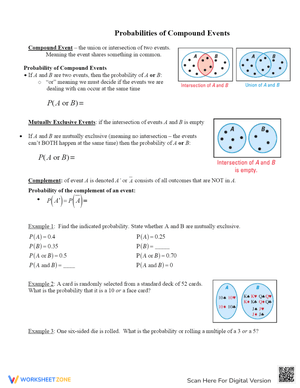
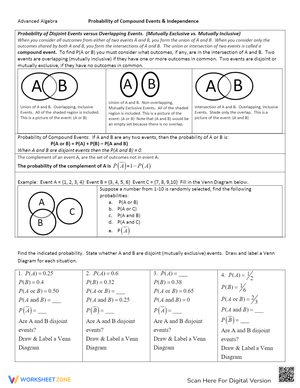
For students who move through the core pages quickly, problems that combine three events rather than two — or that ask for the probability of an event NOT occurring within a compound scenario — extend the same reasoning without requiring new conceptual scaffolding. A student who understands why P(A and B) = P(A) × P(B) for independent events can transfer that structure to P(A and B and C) with minimal additional instruction.
Frequently Asked Questions
1. Do students need to know both multiplication rule versions before the unit test?
Yes, and the timing matters. Introduce independent events first and let students practice the straightforward multiplication rule until it feels automatic — usually two or three focused practice sessions. Introducing dependent events too early, before the independent case is solid, causes students to conflate the two and apply denominator adjustment even when the sample space hasn't changed. The most common test error is not failing to know the dependent events formula; it's applying it where it doesn't belong.
2. How do tree diagrams for three-event problems stay readable?
They often don't, and that's worth acknowledging to students directly. A three-flip tree diagram produces eight endpoints and stays manageable; a three-event problem involving a die, a spinner, and a coin produces 24 branches and becomes difficult to read and check for errors. Two-way tables can't handle three variables, but organized lists scaled out systematically — fixing the first outcome and listing all combinations for the remaining two, then moving to the next first outcome — stay legible where large trees don't. Teaching students to recognize when a tree diagram becomes unwieldy is itself a useful mathematical reasoning skill.
3. What's a realistic pacing expectation for this standard?
Most 7th grade pacing guides allocate seven to ten class periods to the full compound probability unit, including simulation. The print-worksheet portion of that instruction typically covers four to six periods. Students who enter the unit with weak fraction fluency reliably need more time on independent events before dependent events are introduced — trying to compress that sequence to meet a calendar deadline is one of the more common sources of the errors that show up on end-of-unit assessments.













 Interactive Worksheet Maker
 Quiz Maker
 Word Search Maker
 Crossword Puzzle Maker
 Word Scramble Generator
 Sentence Scramble Generator
 Handwriting Worksheet Generator
 Name Tracing Generator
 Fill In The Blank Generator