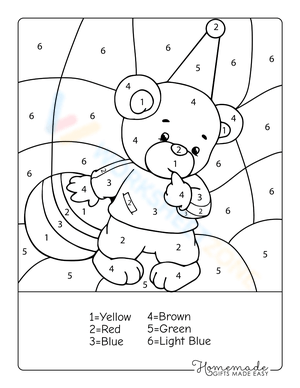
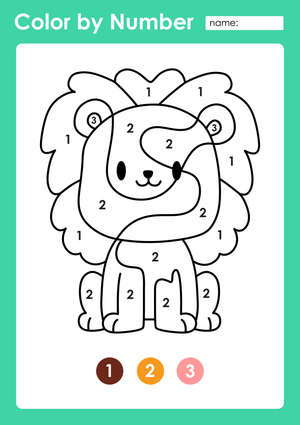
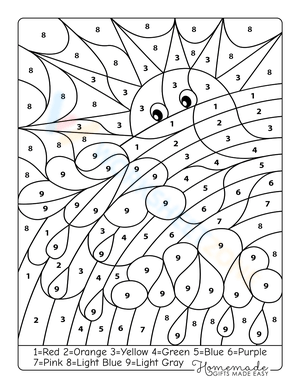
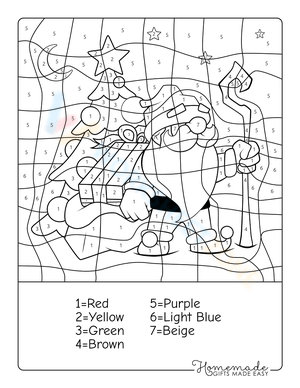
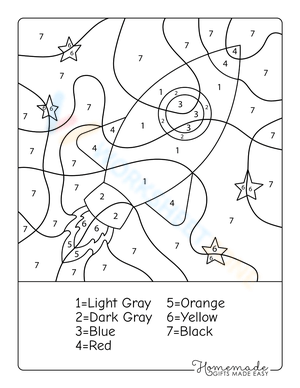
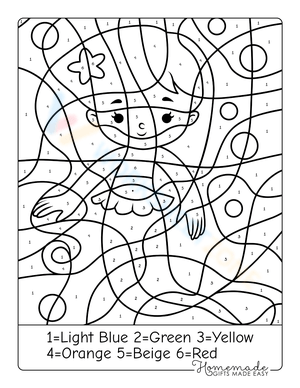
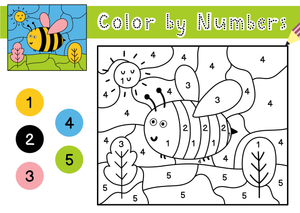
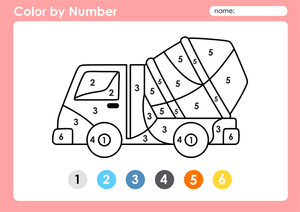
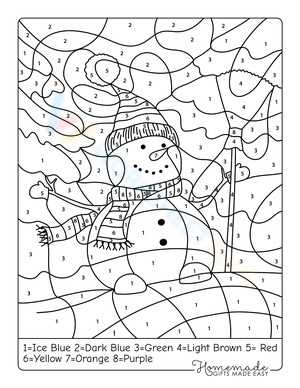
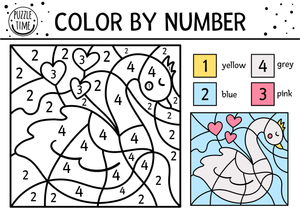
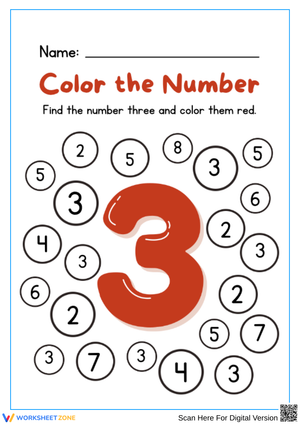
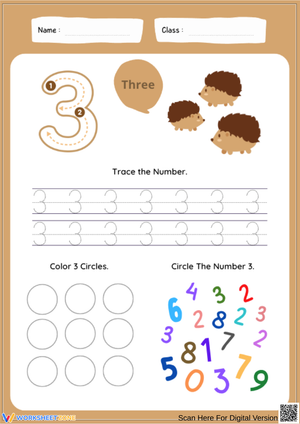
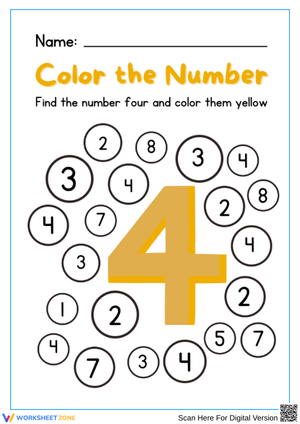
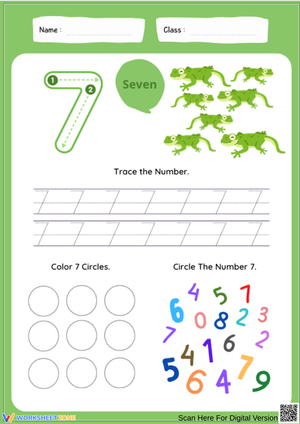
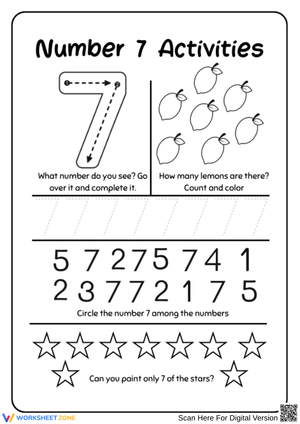
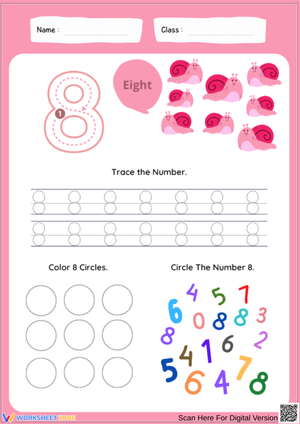
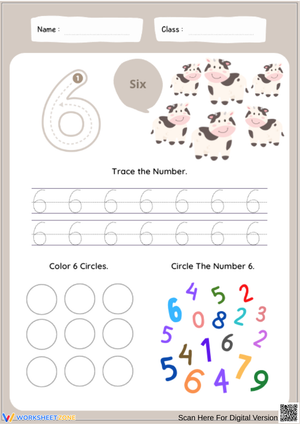
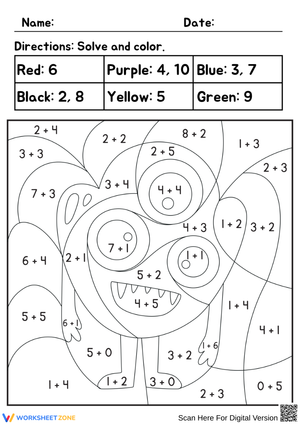
These kindergarten color by number printable worksheets center on science themes — weather, animal habitats, seasonal plants, and simple life cycles — giving teachers a cross-curricular tool that fits naturally into an early childhood routine. Each worksheet pairs number recognition with a science illustration, so the finished picture connects directly to whatever unit is running at that point in the year. The set covers numbers one through ten, with clear color keys and bold outlines sized for small hands still building crayon control.
What Students Practice Across the Set
The mechanical task is straightforward: students look at a numbered section of the illustration, find that number in the color key, and fill in the space with the matching color. But the learning packed into that loop is considerable. Students are reading a key — a skill that transfers directly to maps, graphs, and scientific diagrams they will encounter across the elementary years. They are also holding two pieces of information in working memory at the same time: the number in front of them and the color it corresponds to. For many five-year-olds, that dual-task demand is genuinely challenging, which is what makes the format productive rather than just entertaining.
The fine motor demands of kindergarten color by number printable worksheets are worth noting alongside the cognitive ones. The outlines on each worksheet are drawn large enough for beginning colorers but detailed enough that students must track where one numbered space ends and the next begins. Over several weeks, the hand strength and crayon precision students build here shows up in other work — letter formation tightens, and drawings begin to show more deliberate control at the edges.
Where These Fit Into the Day
The most effective placement is right after a hands-on science activity. After a water-cycle demonstration or a soil-sorting station, kindergartners tend to arrive back at their seats still buzzing. Handing out a kindergarten color by number printable worksheets at that moment does two things at once: it channels their remaining energy into focused hand work, and it keeps students visually inside the same topic. A student who just sorted leaves by shape and then colors a tree worksheet is making a connection without being told to make one.
Morning work is the other natural fit. Students arriving at different times need something self-directed and visually clear — no multi-step instructions, no reading required beyond finding a number in a key. A student can sit down and start independently within seconds of arriving, which means the teacher can handle arrival procedures without stopping to explain the task every few minutes.
Mistakes Students Make That Are Worth Watching For
The most predictable error is ignoring the key entirely and coloring the picture by instinct — making the sun yellow and the grass green regardless of what the numbers say. Students who do this aren't being careless; they're relying on prior knowledge, which is actually a sign of engagement. The fix is to walk through the key together before students begin, pointing out one or two numbers and asking students to predict which color they expect to see in that section. That brief setup breaks the habit of defaulting to expected color associations before it takes hold.
Number confusion between six and nine causes consistent trouble in this format. When a student colors the sky red because they read a nine as a six, the picture comes out wrong in a way that's immediately visible and easy to talk through. That built-in self-check is genuinely useful — students see the consequence of the error in the finished image and want to go back and correct it, which produces more motivated revision than circling a wrong numeral on a practice sheet.
Standard Alignment
These worksheets connect most directly to CCSS.MATH.CONTENT.K.CC.A.3, which asks students to write and recognize numbers from 0 to 20 and understand written numerals as representations of quantities. Color by number tasks address the recognition half of that standard — students must correctly identify each numeral before they can act on it. In most kindergarten sequences, numeral recognition instruction peaks during the first half of the year, making these resources a strong fit for October through February, when teachers are building fluency with numbers one through ten before moving into teen numbers and early addition concepts.
The science illustrations also provide low-stakes exposure to content addressed in NGSS K-ESS2 (Earth's Systems) and K-LS1 (From Molecules to Organisms). These worksheets don't deliver those standards on their own — direct instruction and hands-on observation do that work — but they give students repeated visual contact with scientific subject matter during independent or transition time, when deep instruction typically isn't happening.
Adjusting the Worksheets for a Range of Learners
For students who are still shaky on numerals one through five, pull worksheets from the set that use only that range and cover the higher numbers in the color key with a sticky note. No modification to the worksheet itself is needed — just limit the visible task. Students building confidence with a narrower number range complete the same illustration as their classmates and feel the same satisfaction at the end.
Students ready for more challenge benefit from a different kind of adjustment: rather than assigning a harder number range, ask them to write the number and color name in a sentence beneath the finished illustration. "The sun is yellow" or "The frog is green" pairs kindergarten color by number printable worksheets with early sentence writing and turns the completed picture into a literacy task. This extension asks very little of the teacher to set up and gives those students meaningful work while the rest of the class finishes coloring.
Frequently Asked Questions
What number range do these worksheets cover?
Most worksheets in the set use numbers one through ten, which maps onto the core kindergarten numeral recognition range. A smaller group within the set uses numbers one through five for students in the earlier stages of number work.
Do these work better in science centers or as whole-class activities?
Both placements work, but science centers tend to get more mileage out of them. When students work on these independently during rotations, teachers can check in briefly and ask one quick question — "what does that number tell you to use?" — without interrupting other groups. As whole-class morning work, the quiet, focused nature of the task also settles the room effectively after arrival.
How long does a typical worksheet take a kindergartner to finish?
Most students complete each worksheet in eight to twelve minutes, though students with slower fine motor development may need closer to fifteen. That range makes these resources well-suited to the window before a transition — the last ten minutes before lunch or specials, or the time between finishing a science activity and cleaning up the room.












 Interactive Worksheet Maker
 Quiz Maker
 Word Search Maker
 Crossword Puzzle Maker
 Word Scramble Generator
 Sentence Scramble Generator
 Handwriting Worksheet Generator
 Name Tracing Generator
 Fill In The Blank Generator