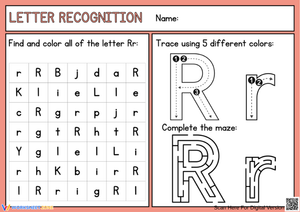
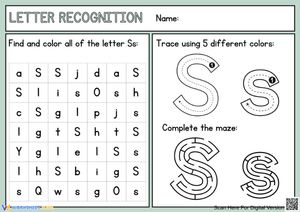
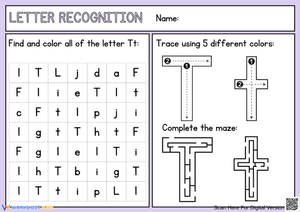
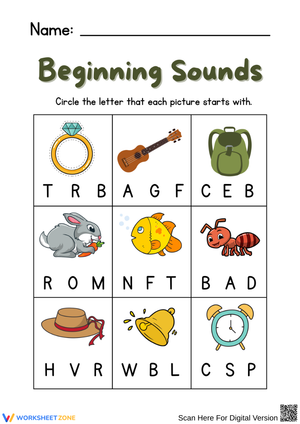
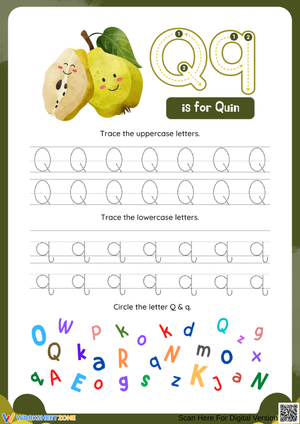
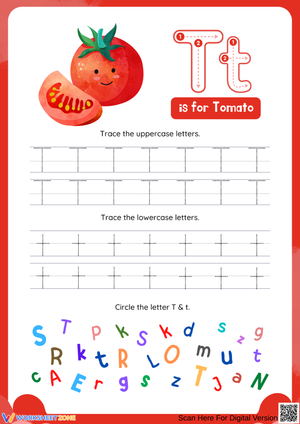
These kindergarten letter recognition worksheets give teachers a targeted, repeatable tool for one of the most predictable bottlenecks in early literacy — students who can recite the alphabet in sequence but cannot reliably name letters when they appear scrambled or pulled out of context. The set includes uppercase-lowercase matching tasks, letter search exercises, guided tracing practice, and discrimination work on commonly confused pairs. Each worksheet focuses on a narrow task so students can complete it without sorting through competing directions.
What's Inside the Set
The activities fall into four distinct skill areas, each targeting a different piece of letter knowledge.
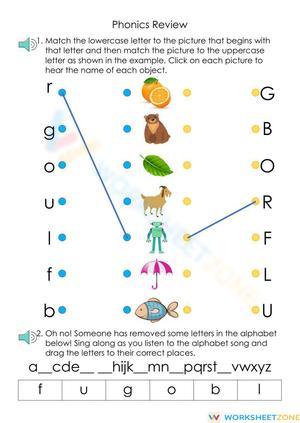
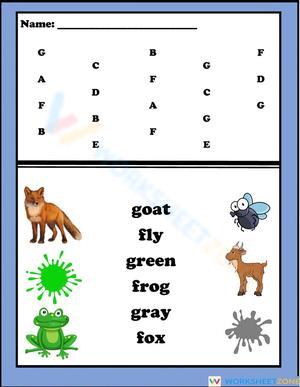
- Uppercase and lowercase matching: Students draw lines or cut and paste to connect capital letters with their lowercase forms. Many kindergarteners recognize a capital A but stumble when they see lowercase a in print — this task closes that gap directly.
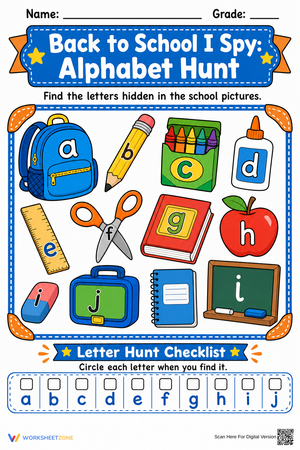
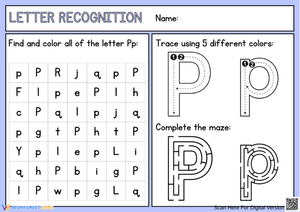
- Letter search and find: Students scan a grid of mixed letters, locate the target letter, and circle or color each instance. The exercise trains visual discrimination and teaches students to distinguish letters that share structural features.
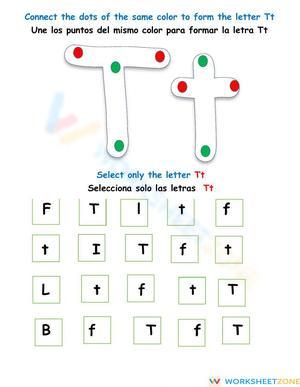
- Guided tracing: Each tracing worksheet pairs stroke-by-stroke letter formation with recognition practice. Students say the letter name, trace it, then mark the same letter among distractors — combining motor memory with visual recall in one short task.
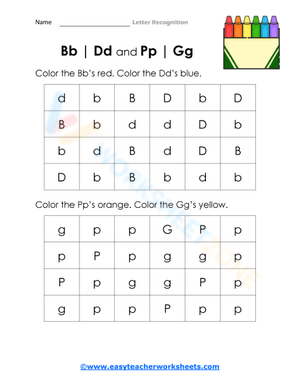
- Discrimination tasks for confusing pairs: Dedicated worksheets isolate b/d, p/q, m/w, and n/u, placing the two letters side by side with consistent visual anchors so students learn to notice the single feature that tells them apart.
One structural choice worth noting: the worksheets group letters by visual similarity rather than alphabetical order. Students work through c, o, a, and d together — all built on the same curved stroke — before moving to straight-line letters like l, t, and i. That grouping helps students notice what makes each letter distinct, which matters most for kids who are still treating the alphabet as one long string of unrelated symbols.
Standard Alignment
The full set of kindergarten letter recognition worksheets addresses CCSS.ELA-LITERACY.RF.K.1.D, which requires kindergarteners to recognize and name all upper- and lowercase letters of the alphabet. In classroom terms, this standard sits at the very start of the reading foundations strand and must be largely secured before systematic phonics instruction can take hold. Teachers using a structured literacy approach treat RF.K.1.D as a prerequisite — students who cannot yet name letters fluently have no meaningful foothold in phoneme-grapheme work, which makes early, repeated letter practice a genuine instructional priority rather than a warm-up formality.
Letter Confusions Teachers Should Expect and Address
The reversal errors that show up most often in actual student work are not random. When a student misidentifies b and d, the error almost always comes from treating both as "a circle with a stick," with the direction of the stick going unnoticed. The same logic produces n/u confusion — students who have not yet internalized directionality flip the letter and see what looks like the same shape. Less often discussed but just as persistent: a student who correctly names uppercase M will sometimes misread lowercase m as w because the two share nearly identical strokes, only flipped vertically. These are structural, predictable errors — not attention lapses.
The discrimination worksheets address each pair with a consistent format: an anchor letter appears at the left of every row with a brief verbal cue ("the b has the bump on the right"), followed by a row of mixed instances for students to circle or cross out. That immediate comparison — model, then identify — catches errors before they settle into habits that take much longer to undo.
How to Work These Worksheets Into Your Instructional Week
The most reliable use during the first ten weeks of kindergarten is morning work. A tracing or letter search worksheet gives students something concrete the moment they sit down, which matters at this age when the transition into the school day is still rough. The task is short enough to finish before morning announcements end and clear enough that no student needs to wait for teacher direction to begin.
During literacy centers, the matching and discrimination tasks pair well with a small tray of magnetic letters. After circling answers on the worksheet, students build the same letter pairs with the magnets — a fast cross-check that adds a tactile step without any extra materials prep. Small-group instruction is where the discrimination worksheets earn the most ground: when a teacher sits with three students who all reverse b and d, working through the worksheet together and talking through the anchor cue takes about eight minutes and gives the teacher a clear read on who is getting it and who needs another pass.
These kindergarten letter recognition worksheets also function as informal formative data. Collect them at the end of the week and scan for patterns — a student who consistently misidentifies the same three letters is telling you exactly where to focus next, without requiring any separate assessment materials.
Adjusting the Set for Students at Different Points in the Alphabet
Students who arrive in kindergarten already naming most letters fluently need less time on basic matching and tracing, and more time on the discrimination tasks. Pull the confusing-pairs worksheets early with this group rather than waiting until the class reaches that point in the sequence. For students on the opposite end — those who enter without consistent letter knowledge — the tracing worksheets provide a structured entry point because the motor task is concrete even when the letter name is not yet secure. A desk alphabet strip alongside the worksheet lets students self-check rather than guess, which keeps errors from repeating before a teacher can correct them.
For students flagged as at risk for reading difficulties, kindergarten letter recognition worksheets work best when paired with a brief oral naming routine. Before a student begins writing, a teacher or paraprofessional quickly points to six to eight letters and asks the student to name them aloud — no pencil yet. That thirty-second check locates the gap, and then the written task immediately reinforces the same letters. The whole routine takes less than five minutes and produces more actionable information than reviewing the completed worksheet alone.
Frequently Asked Questions
What order should I use when introducing letters with these worksheets?
The worksheets follow a visual-similarity sequence rather than alphabetical order, and that grouping works well for most classrooms. Teachers who need to follow the sequence of a specific phonics program can pull individual worksheets as needed — each worksheet targets a specific letter or confusing pair, so sequential use is not required.
How do the tracing worksheets work for left-handed students?
The tracing worksheets show stroke direction with numbered arrows, which applies the same way regardless of which hand a student uses. Left-handed students follow the same stroke sequence; the difference for them is grip and paper angle, which a teacher addresses directly during instruction rather than through the worksheet format itself.
By what point in the year should students have all letters secure?
Most kindergarten pacing guides expect fluent letter naming by the end of the first semester, with the second semester shifting emphasis toward letter-sound correspondence. Students who still have letter-naming gaps in January need direct intervention — using the discrimination worksheets in a small-group pull-out format three or four times a week can accelerate that work without pulling students entirely away from the phonics instruction the rest of the class is receiving.












 Interactive Worksheet Maker
 Quiz Maker
 Word Search Maker
 Crossword Puzzle Maker
 Word Scramble Generator
 Sentence Scramble Generator
 Handwriting Worksheet Generator
 Name Tracing Generator
 Fill In The Blank Generator