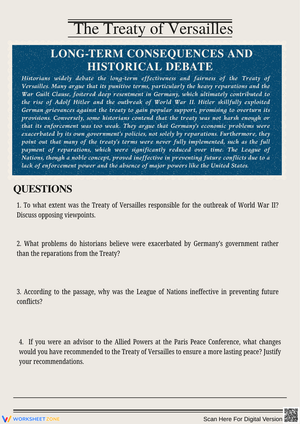
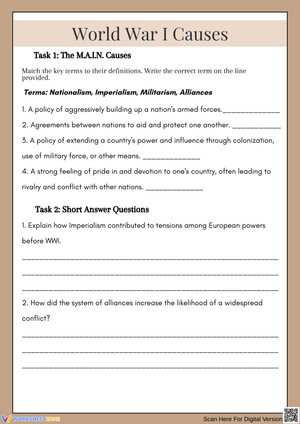
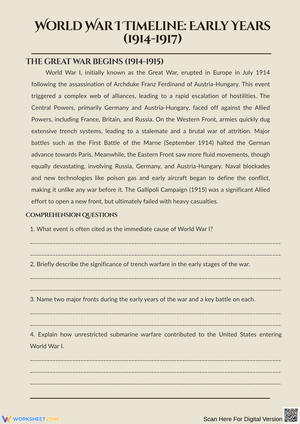
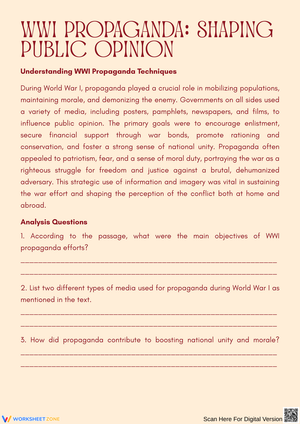
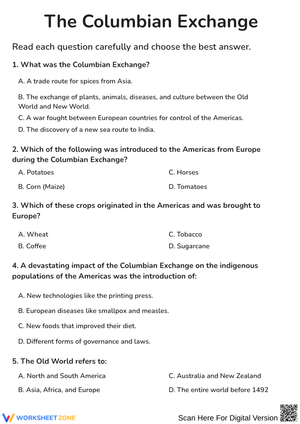
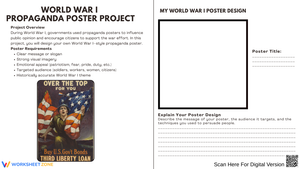
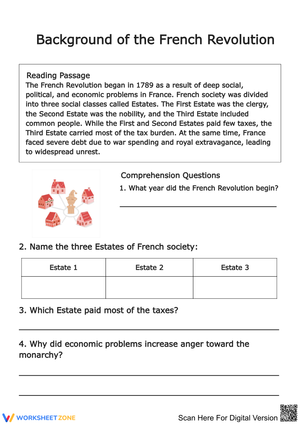
These world history worksheets for 9th grade give teachers a ready bank of skill-focused practice that spans the full length of a survey course — early river valley civilizations, classical empires, belief systems, trade networks, revolutions, industrialization, and global conflict. The set covers both content and the historical-thinking moves teachers return to all year: sequencing events, sourcing documents, analyzing maps, explaining causation, and writing brief evidence-based responses. Because a Grade 9 course covers more ground than almost any other secondary social studies course, the formats here are repeatable — they don't need to be retired after a single unit.
The Skills and Formats Across the Set
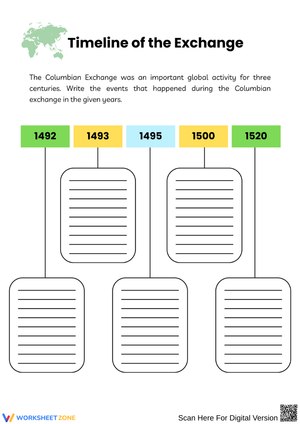
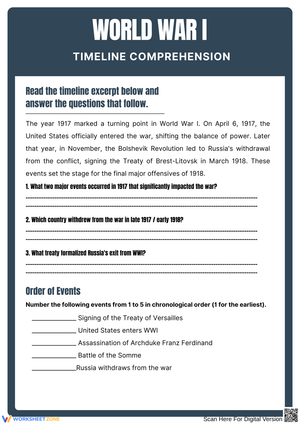
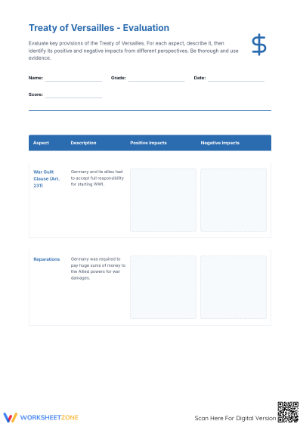
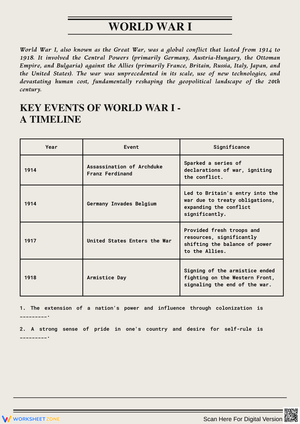
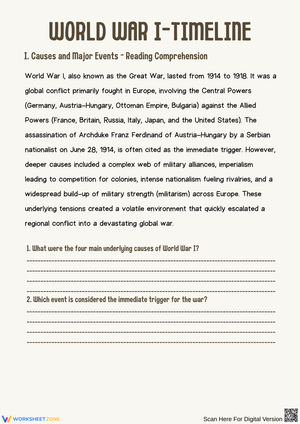
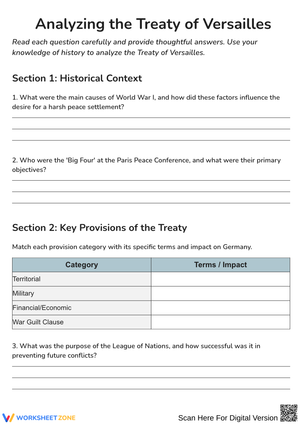
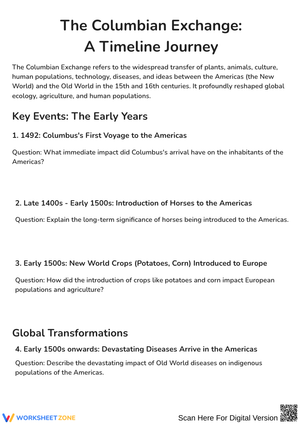
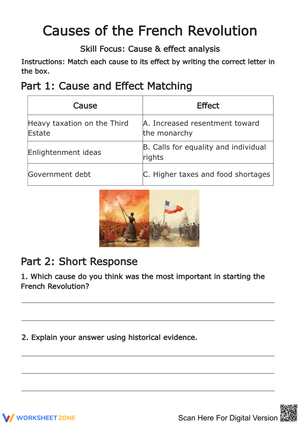
Timeline worksheets ask students to sequence events and identify turning points, not just place dates in order. Map activities have students trace empires, trade networks, and migration corridors, then explain how geography shaped political or economic decisions. Primary-source analysis sheets walk students through sourcing — identifying the author, intended audience, historical context, and purpose before drawing any conclusions from a document. Cause-and-effect charts break large topics into manageable parts so students can distinguish what triggered an event from what followed it. Compare-and-contrast organizers appear across multiple units: comparing classical empires, contrasting world religions, or examining different responses to industrialization.
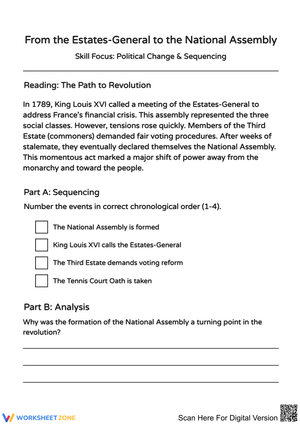
Two formats deserve particular mention. Vocabulary worksheets go beyond matching definitions — students sort terms into categories, use them in short sentences, and connect them to broader concepts they've already encountered. The claim-evidence response worksheets give students a structured format for answering a focused question with specific support from a provided text or visual. That format builds the micro-writing habit students need before they can successfully complete a full document-based response later in the year.
Building These Worksheets Into Your Lesson Plans
The strongest use of these resources comes from matching each format to a specific moment in the lesson cycle rather than treating worksheets as default seatwork. A map labeling task works at the opening of a new unit to activate geographic thinking before introducing content. A sourcing worksheet works well as a partner activity before a class discussion — students annotate individually, then compare their analysis before sharing out. A cause-and-effect chart completed during a notes block becomes the raw material for a short paragraph students write before the end of class.
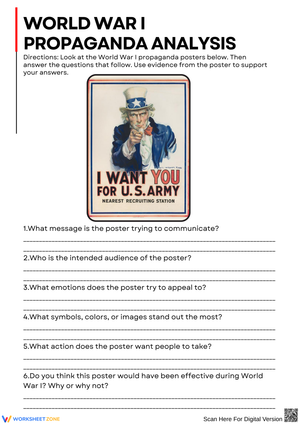
Teachers working with world history worksheets for 9th grade also find them useful at the edges of the instructional day. A brief vocabulary or image-analysis task handles the first eight minutes of class while attendance is taken and students settle. A three-question evidence response at the end of a Friday lesson gives useful formative data before the weekend without requiring a graded quiz. For sub plans, these resources hold up because directions are clear, questions are manageable without teacher facilitation, and answer keys allow a substitute to field basic questions without improvising.
Thinking Errors Students Make That These Worksheets Help Surface
BCE and CE notation causes real confusion on timeline worksheets, and it appears every year without exception. Students who have internalized that larger numbers represent more — a reasonable inference from every math class they've taken — often place 500 BCE after 200 BCE because 500 is larger. The timeline worksheets address this directly by having students calculate elapsed time and place events relative to a center axis rather than marking them on a blank left-to-right line, which forces engagement with the directionality of the BC side.
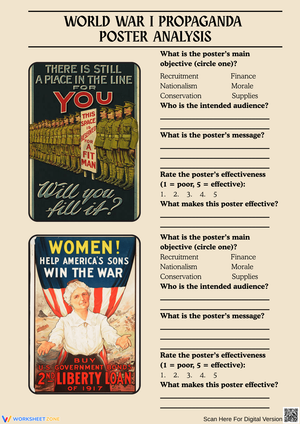
Primary-source analysis produces a different cluster of errors. Students routinely conflate purpose with point of view. Asked to identify an emperor's "perspective," they write "to show his power" — which is a purpose statement, not a point-of-view observation. The sourcing worksheets separate these into distinct labeled prompts so students practice them as genuinely different moves rather than interchangeable fill-ins. A related problem: students treat all primary sources as equally credible because they are "from the time period," missing that proximity to an event doesn't mean the author lacked a reason to shape their account. Regular sourcing practice builds the skepticism that argument makes.
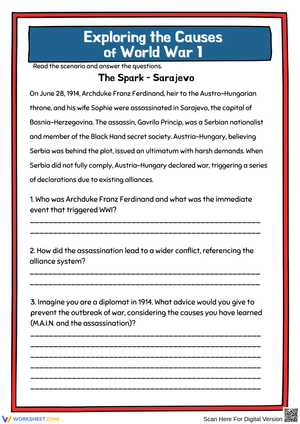
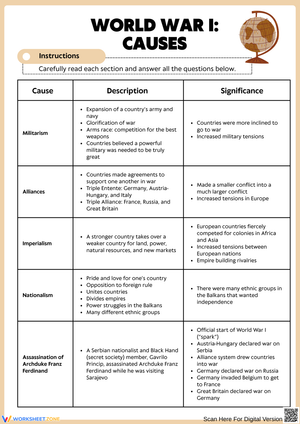
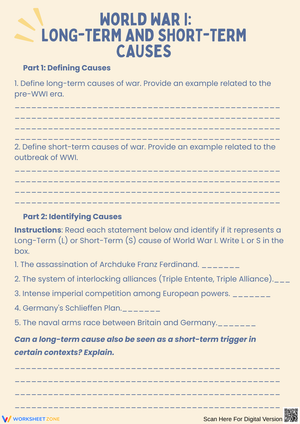
Cause-and-effect charts reveal a third predictable error: students list consequences as causes. When studying the decline of the Western Roman Empire, for example, students will place "economic collapse" as a cause of "political instability" and then place "political instability" as a cause of "economic collapse" in the same chart — which signals they haven't yet disentangled the relationship. Seeing that circularity in a chart format makes it easy to address directly in whole-class review.
Standard Alignment
These resources align with the NCSS C3 Framework standards for grades 9 through 12. The timeline and causation worksheets address D2.His.1.9-12, which calls on students to evaluate how historical events were shaped by unique circumstances of time and place. The primary-source analysis sheets align with D2.His.5.9-12, which asks students to analyze how historical contexts shaped people's perspectives. The claim-evidence response worksheets move into D3.1.9-12, taking students from inquiry into the construction of an evidence-based argument — a step that often gets skipped in content-heavy courses but matters significantly for writing development.
Several worksheets also address the Common Core literacy standards for history and social studies. RH.9-10.6 asks students to compare the point of view of two or more authors treating the same topic — a skill the sourcing and comparison worksheets practice directly. WHST.9-10.1 addresses writing arguments supported by relevant and sufficient evidence, which is exactly what the claim-evidence response format develops in smaller, more frequent doses than a full essay allows. That frequency matters: students who write one timed essay per quarter don't get enough practice with the evidence-selection step to improve it reliably.
Adjusting the Resources for a Range of Learners
Grade 9 world history classes are rarely uniform in reading readiness, and world history worksheets for 9th grade work best when teachers can adjust them to match the actual students in front of them. For students who need more support, the most effective adjustments are shortening source texts, adding a vocabulary box at the top of the worksheet, and breaking multi-part questions into shorter prompts with a sentence starter for each. On map worksheets, pre-labeling key geographic reference points — surrounding regions, major rivers — lowers cognitive load so students can focus on the analysis rather than orientation.
For students ready for more challenge, the same worksheets extend without requiring a completely different document. Add a second short source with a contrasting perspective and ask students to write about the tension between the two accounts. Replace a provided claim with an open prompt asking students to construct their own. For compare-and-contrast organizers, include a third case study alongside the original two. These additions are manageable for a teacher handling multiple preps, and they keep the extension rooted in the same task rather than sending advanced students somewhere else entirely.
Frequently Asked Questions
What topic units do these worksheets cover?
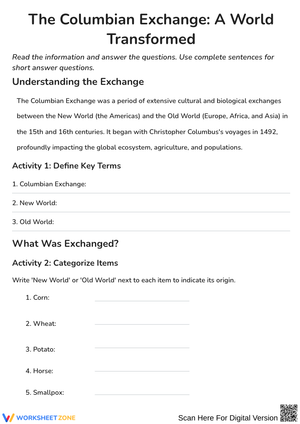
The set spans a typical Grade 9 survey sequence: early civilizations and river valley cultures, classical empires, world religions and belief systems, medieval societies, transregional trade, early modern exchange, revolutions and political change, industrialization, imperialism, and the world wars. District course order varies, so the formats are built to work across units rather than matching a single textbook's chapter structure.
Do the formats feel repetitive when used across a full year?
Teachers who use world history worksheets for 9th grade across a full year find that returning to the same format with different content actually helps students — they spend less mental energy decoding directions and more on the historical material itself. A sourcing worksheet used in an ancient civilizations unit asks different analytical work than one used with a 19th-century colonial document, even though the structure looks the same. The format becomes a known tool, which is an advantage rather than a limitation.
Do these worksheets include answer keys?
Yes. Each worksheet includes a completed answer key or model response. For open-ended questions, the model response shows the structure and evidence level expected without presenting it as the only acceptable answer. That distinction matters for peer review and for class discussion — students can compare their responses to the model without treating it as a single correct version.
Which formats work best for preparing students for document-based questions?
Primary-source analysis sheets and claim-evidence response worksheets are the most direct preparation for DBQ tasks. Assigning a sourcing worksheet with one or two short documents on a regular basis — especially in the weeks before a formal DBQ — builds the habit of reading a source for context and purpose before pulling evidence from it. Students who practice that move consistently write stronger introductions and make better evidence selections under timed conditions than students who encounter sourcing only as part of a high-stakes writing task.