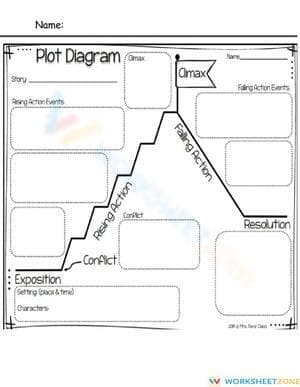
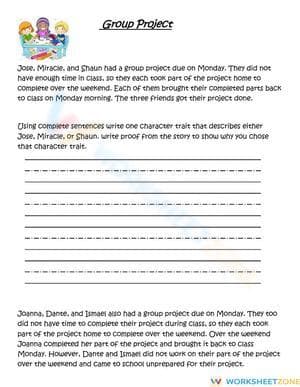
These analyzing story structure printable worksheets for 8th grade push students past the point of labeling plot parts and into the harder work of explaining how narrative decisions shape meaning. Each worksheet in the set asks students to identify key structural moments, cite textual evidence, and connect event order to conflict, character, and theme — skills that belong at the center of 8th-grade literary analysis.
The Specific Skills These Worksheets Target
Grade 8 students are expected to treat story structure as more than a sequence of events. They need to explain why a turning point matters, how tension accumulates across the rising action, and what the resolution reveals beyond the surface ending. Each worksheet in the set builds toward that kind of explanation through several task types:
- Plot structure mapping: Students locate and label exposition, rising action, climax, falling action, and resolution within a text or excerpt, then explain what each stage contributes to the narrative as a whole.
- Cause-and-effect tracing: Students identify how one event triggers the next, tracking how pressure builds across scenes and why that sequence creates meaning.
- Evidence-based response prompts: Every structural observation connects to a specific passage — students cite, quote, or paraphrase rather than generalize.
- Connections to literary elements: Tasks ask students to link structural moments to character change, type of conflict, point of view shifts, or the emergence of theme.
- Pacing and scene-order analysis: More challenging prompts ask students to explain why the author arranged scenes in a particular order and what effect that choice creates for a reader.
That consistent move from identification to explanation is what makes analyzing story structure printable worksheets for 8th grade more demanding than typical plot-review exercises — and more useful as preparation for analytical essay writing.
Frequent Student Errors Worth Watching For and Correcting
The most persistent error is students identifying the climax as whichever scene feels most dramatic or takes up the most space, rather than locating the moment when the central conflict peaks and turns toward resolution. A student might label the antagonist's reveal as the climax because it is tense and surprising — even when the real turning point is the protagonist's quiet decision two scenes later that determines the story's outcome. The worksheets address this directly: after identifying a structural moment, students explain how that moment changes the story's direction. If the explanation doesn't address change or consequence, that's the signal the identification needs revisiting.
Students also tend to write almost nothing about falling action. In their mental model, the story is essentially over once the climax passes. But falling action is where character consequences become visible and where theme often crystallizes. Several worksheets in the set include a dedicated falling action prompt that asks students to explain what this section reveals that the climax alone does not — a question that slows students down and gets them reading that stage as carefully as they read the dramatic peak.
Building These Worksheets Into a Lesson Sequence
Whole-class modeling is the most reliable entry point. Before students attempt an independent worksheet, the teacher works through a short, familiar story aloud — locating a turning point, explaining why it qualifies, and demonstrating what a written explanation actually sounds like. The false starts matter here: when students see a teacher revise a label or reconsider which moment is really the climax, they understand the task is genuinely analytical, not a quick fill-in.
After modeling, partner practice with a new text produces strong results. Students complete the organizer section independently, then compare their structural choices before either writes an explanation. Disagreements about where the climax falls are common — and instructive. Those conversations often produce more durable understanding than the written response itself.
For the last ten minutes before a class transition, a single-event analysis — identify the moment, cite the passage, explain how it changes the story — functions as an exit task without requiring a new text. Students apply it to whatever they have been reading that day. In small-group intervention, completing the first structural section together before students work independently keeps the organizer from becoming an obstacle and focuses the group on the analytical thinking that actually matters.
Standard Alignment
Analyzing story structure printable worksheets for 8th grade align directly with RL.8.3, which asks students to analyze how particular lines of dialogue or incidents in a story propel the action, reveal aspects of character, or provoke a decision. That standard is not satisfied by filling in a plot diagram — it requires students to select a specific event and explain its function in the narrative. The evidence and explanation prompts built into each worksheet address that expectation directly.
RL.8.5 is equally relevant. It asks students to compare and contrast the structure of texts, including how an author's decision about where to begin or end a story creates mystery, tension, or surprise. Several worksheets in the set include prompts that go exactly there: not just "where is the climax?" but "why does it appear where it does, and what would the story lose if it came earlier?" Both standards reflect the same underlying expectation — that students read structure as an intentional authorial choice rather than a neutral sequence of events.
Adjusting the Set for a Range of Readers
Eighth-grade classrooms hold a wide spread of reading fluency and analytical experience. The goal when differentiating is to preserve the rigor of the thinking while reducing barriers to entry where students genuinely need them.
- For readers who struggle: Use a shorter text with a clear conflict, and provide sentence frames for explanation prompts — "This event matters because... which causes..." A partially completed organizer with structural stages already labeled lets students focus on identifying events rather than managing both the task format and the content at the same time.
- For on-level readers: Students complete the organizer independently, then write a focused paragraph explaining how one structural element — the rising action, for example — develops the central conflict and raises stakes.
- For advanced readers: Add prompts about pacing, flashback, parallel subplots, or non-chronological structure. Ask students to consider what the text would lose if the author had ordered events differently.
- For students who freeze on open-ended writing: Structure the written response as a claim-evidence-explanation sequence. The worksheet provides the frame; students supply the literary thinking.
Graphic organizers earn their place here as temporary thinking tools, not endpoints. Students who map structural events before they write almost always produce more organized and confident explanations than students who try to write cold. The organizer is preparation for the writing that follows — once that writing is happening consistently, the organizer can be phased back.
Frequently Asked Questions
What is the difference between identifying story structure and analyzing it?
Identification means labeling parts — exposition, rising action, climax, resolution. Analysis means explaining what those parts do: how the rising action builds specific tension, why the climax is the turning point rather than an earlier dramatic scene, what the resolution reveals about theme that wasn't visible before. Grade 8 expectations require both, but the explanatory work is what moves students toward genuine literary thinking. These worksheets treat labeling as a starting point, not a destination.
Which text types pair best with story structure practice at this level?
Short stories are the strongest match because students can trace a full narrative arc in one class period. Literary excerpts from novels work when the passage contains a clear event or turning point that can stand on its own. Avoid excerpts that drop students mid-story with no context — those make structural analysis difficult because students can't locate exposition or gauge where they are in relation to the climax. Chapter-length excerpts from class novels tend to work particularly well because students already know the characters and conflict going in.
Can students complete these worksheets without reading a full text first?
Not productively. Story structure analysis depends on knowing the full sequence of events, not just a passage excerpt. The most effective use of each worksheet involves either reading a complete short story beforehand or working from a chapter-length excerpt that provides enough narrative context to identify multiple structural stages. Trying to analyze structure from a single isolated passage produces surface-level responses at best.
How do I keep the lesson from becoming a worksheet completion task rather than a thinking task?
Require students to share at least one answer in discussion before they finish independently. A 30-second partner exchange about where the climax falls — and why they placed it there — turns a fill-in exercise into genuine analytical conversation. Debrief two or three student responses as a class, especially when students disagree about structural placement. Those disagreements are often where the most productive discussion of the period happens.
Do these worksheets work for standardized test preparation?
Analyzing story structure printable worksheets for 8th grade translate well to assessment contexts because they practice the same close-reading and evidence-based response skills that appear in most 8th-grade ELA tests. Shorter worksheets paired with brief passages — one structural question, one textual evidence prompt — mirror the format students encounter during assessments without turning every practice session into test simulation.















 Interactive Worksheet Maker
 Quiz Maker
 Word Search Maker
 Crossword Puzzle Maker
 Word Scramble Generator
 Sentence Scramble Generator
 Handwriting Worksheet Generator
 Name Tracing Generator
 Fill In The Blank Generator