




























Views
Downloads


RL.4.3 Story Elements Assessment Worksheet - Grade 4 Printable

Paste this activity's link or code into your existing LMS (Google Classroom, Canvas, Teams, Schoology, Moodle, etc.).
Students can open and work on the activity right away, with no student login required.
You'll still be able to track student progress and results from your teacher account.
This comprehensive story elements graphic organizer serves as a final assessment tool for students to demonstrate their understanding of narrative structure. By synthesizing characters, setting, problem, and plot sequence, learners provide a complete analysis of any text. This resource ensures students can identify the main idea through evidence-based observation and summary.
At a Glance
- Grade: 4 · Subject: English Language Arts (ELA)
- Standard:
CCSS.ELA-LITERACY.RL.4.3— Describe character, setting, or events in a story using specific text details- Skill Focus: Narrative Analysis & Story Mapping
- Format: 1 page · 8 tasks · Answer key included · PDF
- Best For: Summative assessment of reading comprehension skills
- Time: 25–35 minutes
What's Inside
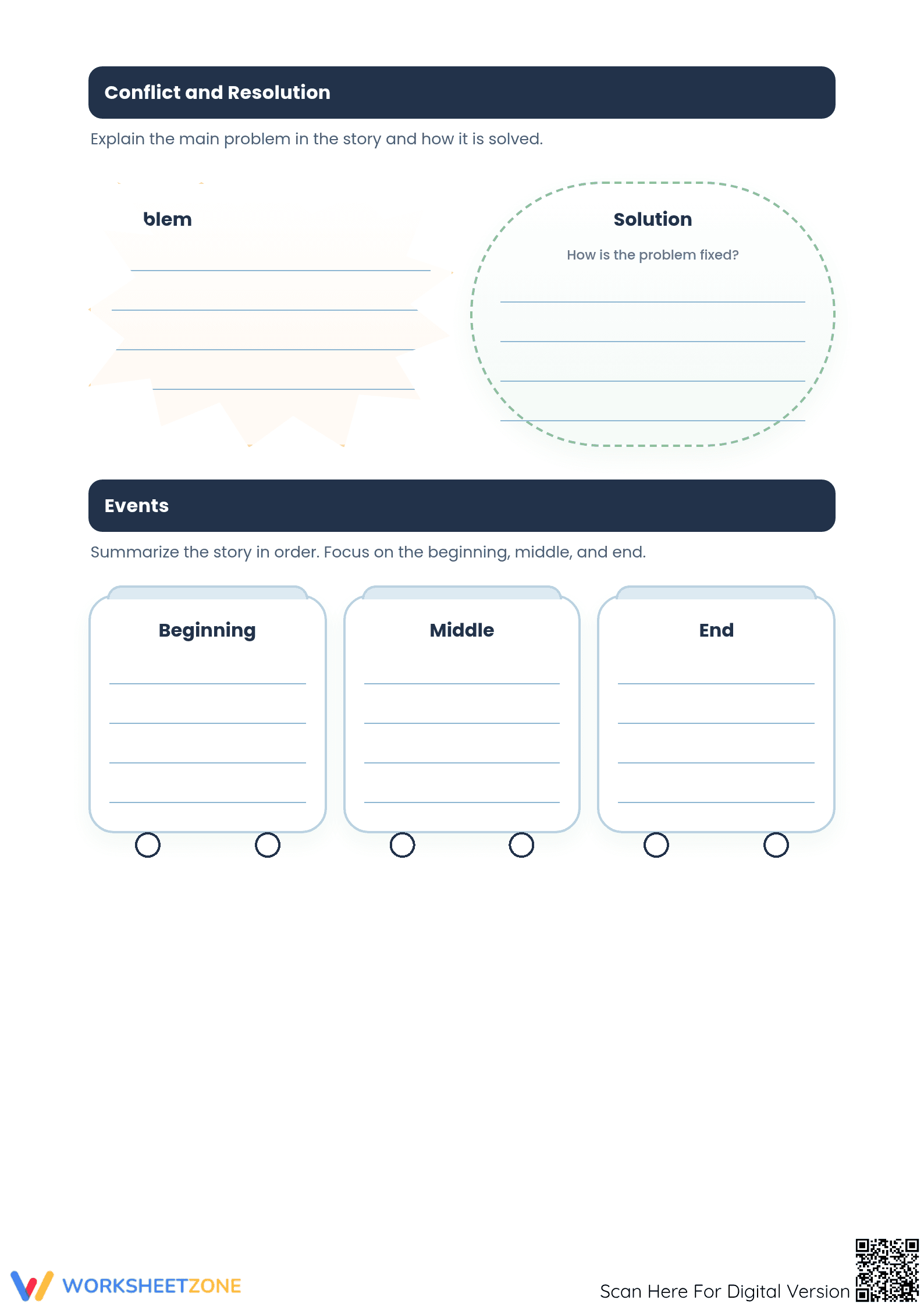
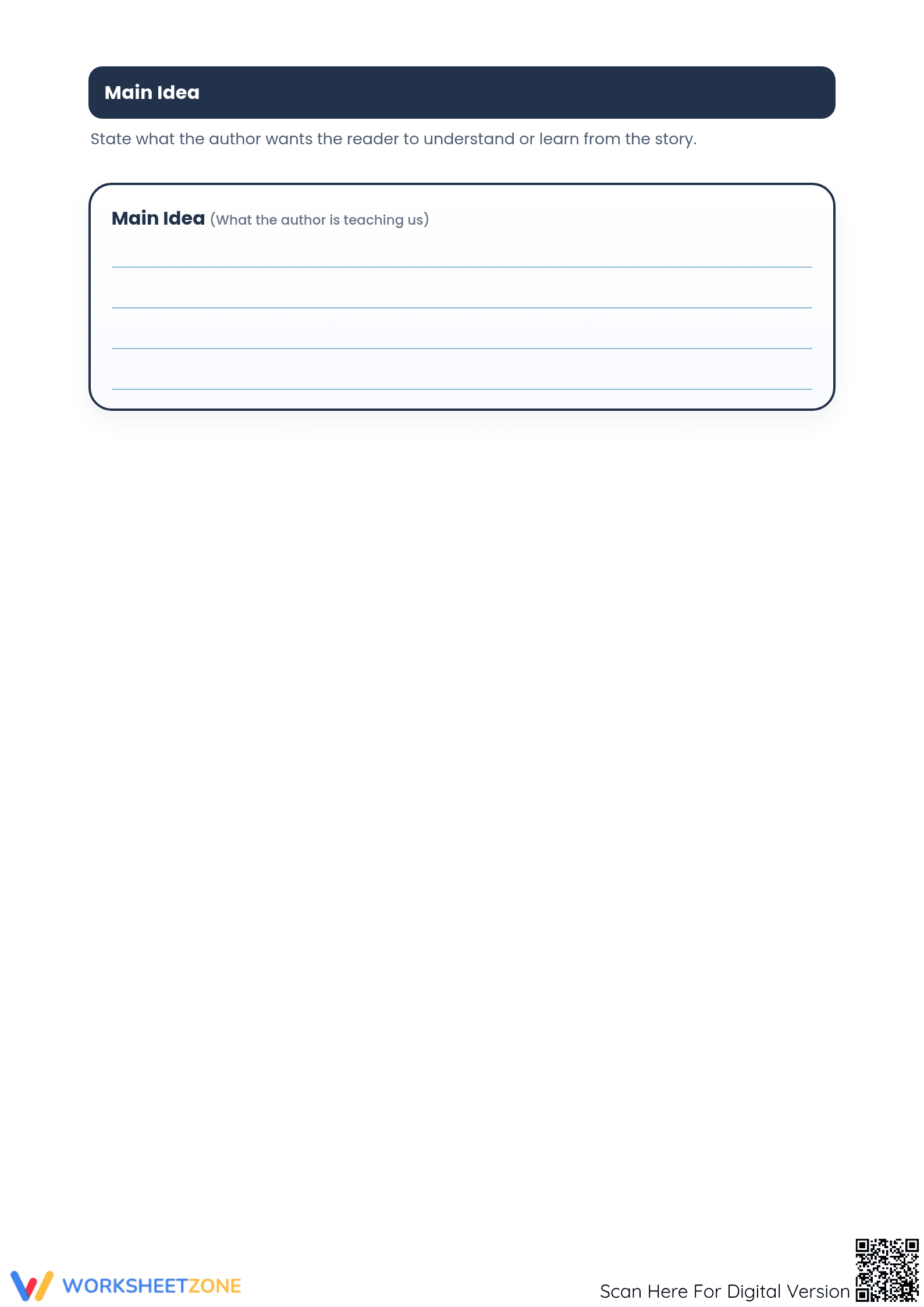
This single-page PDF features a visually structured layout designed for thorough narrative analysis. It includes eight fields: Title, Author, Characters, Setting, Problem, Solution, and a chronological sequence for Beginning, Middle, and End. The final section requires students to identify the Main Idea, providing a holistic view of the text's message.
Mastery Evidence
Each section maps directly to the sub-skills required by CCSS.ELA-LITERACY.RL.4.3. Teachers can evaluate mastery through three tiers: 'Approaching' for basic plot points, 'Meeting' for connecting setting to the problem, and 'Exceeding' for nuanced main ideas. Scores from these 8 tasks can be entered directly into gradebooks or IEP progress notes to document growth.
Standards Alignment
The primary focus is `CCSS.ELA-LITERACY.RL.4.3`: "Describe in depth a character, setting, or event in a story or drama, drawing on specific details in the text." This worksheet supports students in organizing these details into a coherent structure. This standard code can be copied directly into lesson plans or district curriculum mapping tools.
How to Use It
Deploy this worksheet after a direct instruction unit or as a concluding novel study activity. It functions exceptionally well as a summative assessment. For a formative approach, observe students during the "Events" section to ensure they capture pivotal transitions. Expect most students to complete the 8 tasks within 30 minutes.
Who It's For
This resource is designed for students in Grade 4 through middle school refining their literary analysis skills. It provides scaffolding for English Language Learners through clear visual prompts. This worksheet pairs naturally with a short story passage or an anchor chart detailing narrative components, allowing for differentiated support across various levels.
The mastery of narrative components is a foundational requirement for secondary literacy, as identified in the EdReports 2024 analysis of instructional materials. This printable worksheet targets CCSS.ELA-LITERACY.RL.4.3 by requiring students to synthesize character motivations, environmental settings, and plot resolutions into a single conceptual map. By isolating eight specific story elements, the resource ensures that students move beyond surface-level recall to a deeper structural understanding of how authors teach lessons through character development and conflict. Research from Fisher & Frey (2014) emphasizes that graphic organizers serve as critical scaffolds for complex text comprehension, enabling students to externalize their internal processing. Using this assessment allows educators to identify specific gaps in student logic, particularly in the relationship between the problem and the eventual solution. This evidence-based approach ensures that all learners can access Grade 4 standards while building the prerequisite skills for advanced literacy.


