These 7th grade plant cells printable worksheets resources give science teachers targeted practice materials for one of the most terminology-dense units in middle school life science. Students at this level are expected to identify organelles by name, describe what each part does, and compare plant cells with animal cells — three distinct skills that don't consolidate without repeated, focused practice. Each worksheet in the set addresses one of those demands rather than compressing all three into a single crowded activity.
What's Inside the Set
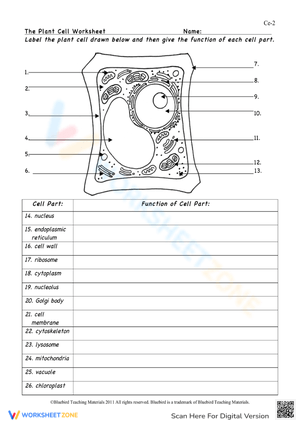
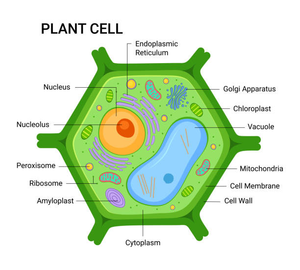
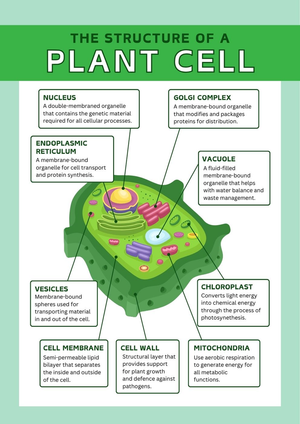
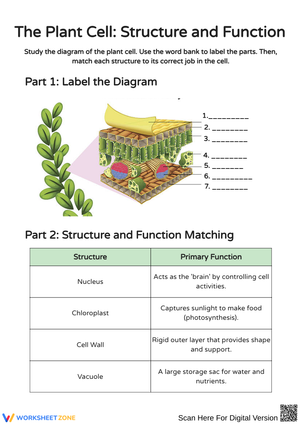
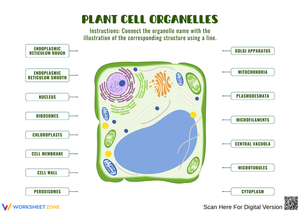
The organelles covered reflect what seventh-grade life science standards consistently require: cell wall, cell membrane, nucleus, cytoplasm, chloroplasts, large central vacuole, mitochondria, ribosomes, endoplasmic reticulum, and Golgi apparatus. That list is specific enough to prepare students for assessment while remaining manageable within a standard cell biology unit. The worksheets work across three skill layers — naming structures, explaining functions, and distinguishing what's unique to plant cells from what both plant and animal cells share.
The comparison work is where the thinking gets productive. Sorting organelles into three categories — plant cell only, animal cell only, present in both — asks students to make decisions rather than simply recall labels. It also mirrors the question format that appears on most end-of-unit assessments and many state science exams at this grade level.
Errors Worth Watching For Before the Unit Test
Three misconceptions appear consistently in seventh-grade student work on plant cells. The most common is treating the cell wall and the cell membrane as the same structure. Students know both surround the cell, and without explicit practice distinguishing their separate materials, locations, and functions, they use the terms interchangeably — sometimes within the same sentence. A comparison worksheet that asks students to write about each structure separately, rather than choose between them in a multiple-choice format, surfaces this confusion onto paper where it can be corrected before the test.
The second error: students assume chloroplasts appear in both plant and animal cells. This often happens because students have already learned that mitochondria are found in all cells — they generalize that pattern to any organelle associated with energy. A sorting chart that places chloroplasts alongside mitochondria and asks students to assign each to the correct column catches this before it becomes a quiz answer written in ink.
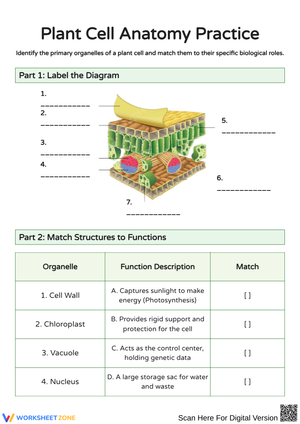
Third, students who correctly label the large central vacuole on a diagram will still describe it in a written response as "the part that controls the cell" — conflating it with the nucleus. Labeling tasks alone don't fix this. The function-matching worksheet requires students to pair the vacuole with water storage and structural support, which forces the distinction between what controls and what stores.
Fitting These Worksheets Into the Lesson Cycle
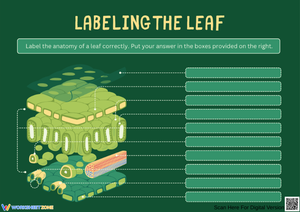
The most reliable sequence: introduce organelles with a brief projected diagram and explanation, use the labeling worksheet for guided practice, then assign the function-matching task for independent or partner work. That progression fits inside a 45-minute class period and moves students from recognition to recall before the bell. Save the comparison chart for a review day or as homework after students have encountered all ten organelles.
One move worth building into the unit: have students complete the labeling worksheet as a warm-up on the first day of review, then complete the function-based task covering the same organelles later in the period — this time without the diagram in front of them. Students who can point to a chloroplast on a picture often need considerably more work articulating what that organelle does. Running the two tasks back-to-back in a single class period turns each worksheet into a more honest check for understanding. For exit tickets, the labeling task without a word bank — 8 to 10 structures — gives clear data on who retained the day's vocabulary and who needs reteaching before the next lesson.
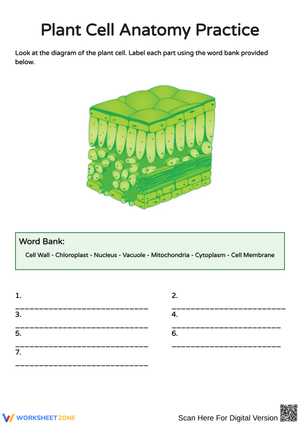
For substitute coverage, use the word-bank version. Clear diagram, clean directions that don't depend on anything the sub would need to explain. It runs itself.
Formats Available in the Set
Teachers searching for 7th grade plant cells printable worksheets options across different lesson stages benefit from having more than one format on hand. The set includes:
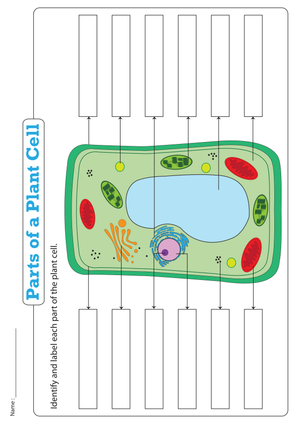
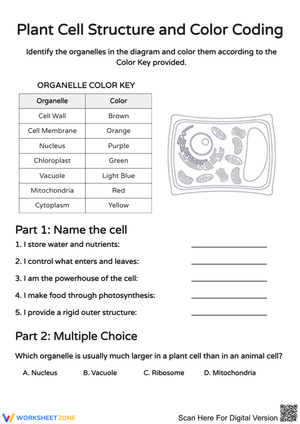
- Diagram labeling — numbered arrows, students fill in organelle names; effective for introduction and retrieval practice
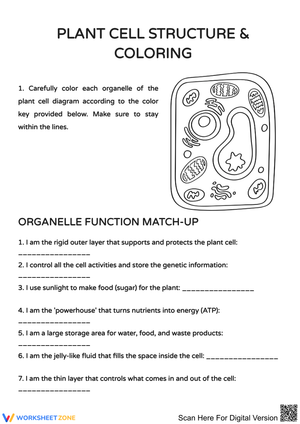
- Function matching — two-column format connecting organelle names to their roles; best assigned after the labeling task is complete
- Vocabulary tasks — focused retrieval of terms like chloroplast, vacuole, cytoplasm, and endoplasmic reticulum through low-stakes repetition
- Plant-versus-animal comparison charts — sort structures by cell type; directly targets the plant-specific distinctions students most often miss on assessments
- Short constructed response — students write two to three sentences explaining why a plant cell requires a cell wall, how chloroplasts and mitochondria serve different energy-related roles, or what the large central vacuole contributes to the cell's physical structure
Standard Alignment
NGSS MS-LS1-2 calls for students to develop and use a model to describe the function of a cell as a whole and explain how individual parts contribute to that function. In classroom terms, this standard pushes plant cell instruction beyond label memorization — students have to demonstrate that the cell wall provides structural support, the chloroplasts convert light energy through photosynthesis, and the large central vacuole maintains the pressure that keeps plant cells firm. The labeling worksheets build the foundational knowledge MS-LS1-2 requires. The function-matching and comparison tasks are where students show the explanatory thinking the standard actually assesses. Teachers in states that have adopted or adapted NGSS into their own frameworks will find the set maps directly onto the practice of developing and using models.
Adjusting These Worksheets for a Range of Learners
The lowest-effort adjustment with the most practical impact for students who need additional support is adding a word bank to the labeling worksheet. The content stays intact — students still read each term and decide where it belongs — but the barrier of blank recall is removed. For students ready for extension, removing the word bank and adding a written prompt at the bottom of the comparison chart raises the ceiling considerably. A strong prompt: explain why a plant cell requires both mitochondria and chloroplasts, and what the absence of either would mean for the cell's survival.
These 7th grade plant cells printable worksheets resources also adapt well for small-group reteaching. Pull the function-matching worksheet and work through it verbally with two or three students who struggled on the labeling task — ask each student to point to the organelle on a diagram before writing the answer. That combination of pointing, naming, and writing surfaces the vocabulary-to-function gaps that written practice alone often misses.
Pairing any worksheet in the set with a microscope observation or cell model activity also deepens retention. After students observe prepared slides or build a cell model, completing the labeling task transfers what they experienced into precise academic vocabulary — a step that hands-on activities rarely force on their own.
Frequently Asked Questions
What organelles should a 7th grade plant cell worksheet include?
At minimum: cell wall, cell membrane, nucleus, cytoplasm, chloroplasts, large central vacuole, mitochondria, ribosomes, endoplasmic reticulum, and Golgi apparatus. That range meets grade-level expectations across most state science frameworks and gives students enough content to address energy, transport, storage, and structural protection without the depth demanded at the high school level.
How do plant cell worksheets differ from animal cell worksheets?
Plant cell worksheets place direct instructional weight on the three structures most prominently associated with plant cells — the cell wall, chloroplasts, and large central vacuole — and ask students to explain what each contributes. Animal cell worksheets focus on shared organelles while highlighting the structures plant cells carry that animal cells do not. The comparison charts in this set are where both topics naturally overlap and where student understanding of the distinction is most clearly revealed.
Can these resources work for review and assessment rather than initial instruction?
Yes. The labeling worksheet without a word bank makes a clean formative check. The comparison chart paired with a short constructed response works as a pre-test or post-unit assessment item. For test preparation, any of these 7th grade plant cells printable worksheets resources doubles as a study tool students can annotate and keep — more useful than a generic review handout that only asks students to circle or underline terms without requiring them to explain anything.
What makes a plant cell diagram on a worksheet readable after photocopying?
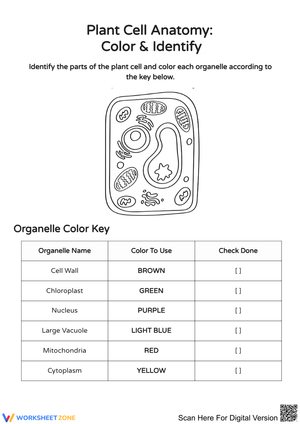
Clean numbered arrows, enough white space between label lines, and organelles drawn at a size that stays distinguishable in black and white. Overly detailed or stylized diagrams tend to lose clarity when copied, leaving students guessing at arrow direction rather than thinking about biology.












 Interactive Worksheet Maker
 Quiz Maker
 Word Search Maker
 Crossword Puzzle Maker
 Word Scramble Generator
 Sentence Scramble Generator
 Handwriting Worksheet Generator
 Name Tracing Generator
 Fill In The Blank Generator