7th grade writing process printable worksheets give ELA teachers something they rarely have enough of: stage-specific tasks students can start without a five-minute explanation. Each worksheet targets one move — brainstorming a central claim, developing a body paragraph, revising for organization, or editing for sentence boundaries — so class time goes toward actual writing rather than untangling what the assignment requires.
The Skills Covered at Each Stage
The set spans all five stages of the writing process, with each worksheet staying focused on a single instructional goal rather than attempting to cover the whole process at once.
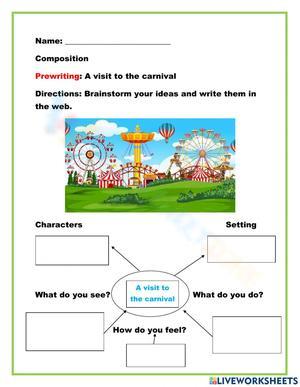
- Prewriting: Students brainstorm, narrow topics, map story elements, or build claim-and-evidence charts before drafting begins. Narrative plot organizers, argument planning worksheets, and informative research note sheets all appear at this stage.
- Drafting: Paragraph planners, sentence starters for body paragraphs, and introduction-building frames help students move from organized plan to prose. The structure is light enough to guide without forcing every essay into the same shape.
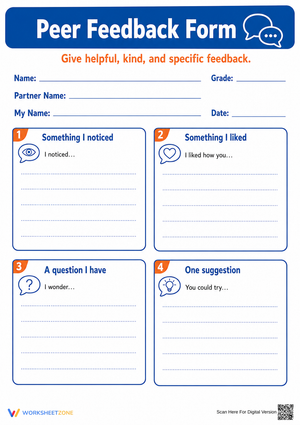
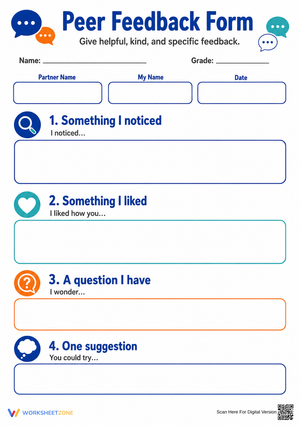
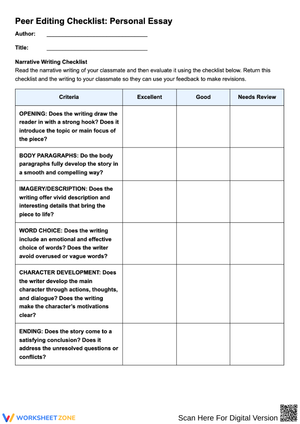
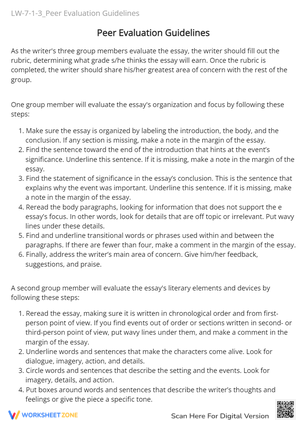
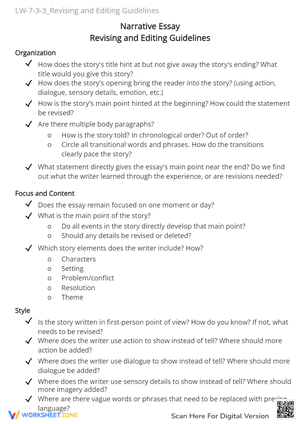
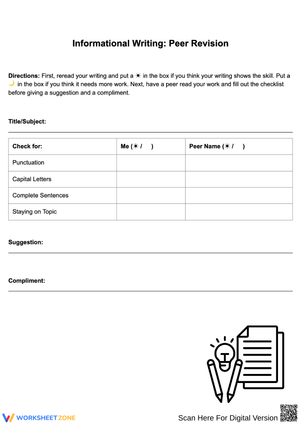
- Revising: Targeted questions push students past "add more details." Does the evidence connect to the claim? Does the conclusion do something beyond restating earlier points? Peer review forms fit here as well, giving partners a clear lens instead of vague feedback.
- Editing: Conventions checklists ask students to inspect their own drafts for punctuation patterns, pronoun clarity, verb consistency, and sentence boundaries — not just correct isolated drills.
- Publishing and reflection: Final-draft checklists, growth reflection prompts, and audience presentation planners close the cycle and remind students that writing is meant to be read by someone.
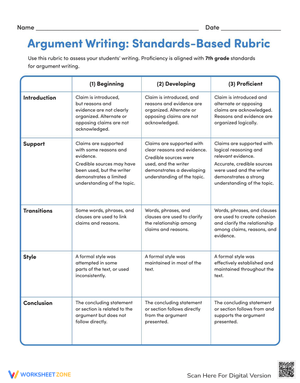
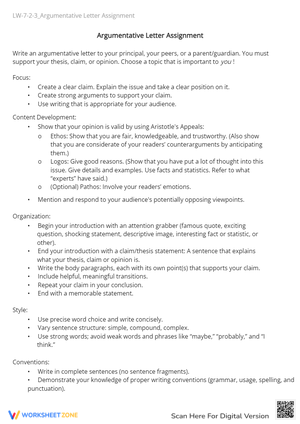
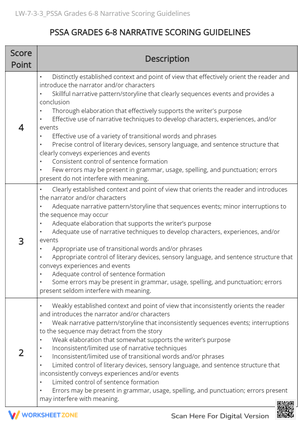
Genre shapes the specific tools at each stage. Argument writing calls for counterclaim organizers and reasoning revision checklists. Informative writing needs source note sheets and category breakdown charts. Narrative writing benefits from conflict-resolution planners and dialogue revision worksheets. The resources match the demands of the mode rather than applying one generic form across all three, so teachers pull the materials that fit the current unit's purpose.
Mistakes Students Make That These Worksheets Help You Catch
The most persistent error in 7th grade writing isn't mechanical — it's conceptual. Students treat revising and editing as the same task. Hand a seventh grader a draft and say "fix it," and most will spend the next ten minutes adding commas and capitalizing proper nouns while leaving their argument structurally confused. The real problem — a body paragraph that offers evidence without explaining how that evidence supports the claim — goes untouched. Keeping revision and editing on separate worksheets makes this visible in a way that a combined checklist never does. Students can't skip the hard thinking when each worksheet only asks revision questions.
A related pattern shows up in prewriting. Many students treat the prewriting worksheet as a formality — they fill it in quickly, then write whatever they originally planned to write anyway. When the organizer asks them to write out how each piece of evidence connects to the central claim rather than just list the evidence, the gap between planning and reasoning becomes harder to avoid. That single prompt change shifts the worksheet from a box-checking exercise to something that actually changes the draft.
Building These Worksheets Into Your Weekly Lesson Plans
The most effective use pattern for 7th grade writing process printable worksheets isn't to hand out a worksheet at the start of a unit and collect it at the end. Short, focused tasks work better as part of a clear instructional sequence. A typical 50-minute ELA block can open with a 5-minute mini-lesson on one writing concept, move into ten minutes of independent work on a focused worksheet, then return to the draft itself. That keeps each worksheet connected to actual writing rather than floating as separate seatwork.
Across the week, a teacher can rotate stages: prewriting Monday, drafting Tuesday, one round of revision Wednesday, editing Thursday, reflection or peer sharing Friday. This works especially well for intervention groups — pull three or four students for a single editing or revision worksheet while the rest of the class drafts independently. Because each worksheet targets a discrete skill, students who miss a day can catch up without needing the full sequence explained from the start.
The color-coding approach is worth mentioning here: when prewriting worksheets are one color family, revision worksheets another, and editing worksheets a third, students stop confusing the stages. Anchoring that system to a bulletin board anchor chart helps. By mid-unit, students can look at the color on their desk and remember what kind of thinking that worksheet requires — a faster cue than re-reading directions every time.
Standard Alignment
These worksheets align directly to CCSS.ELA-LITERACY.W.7.5, which specifies that seventh graders should "develop and strengthen writing as needed by planning, revising, editing, rewriting, or trying a new approach." W.7.5 is notable because it frames writing as recursive rather than linear — students may return to planning after a first draft, revise several times, and edit in stages. Worksheets that build in decision points ("which of these two approaches serves your argument better?") reflect that expectation more accurately than rigid step-by-step checklists do.
Supporting standards include W.7.1 (argument), W.7.2 (informative/explanatory), and W.7.3 (narrative), which define the genre-specific skills students develop at each stage. The worksheets address those standards by matching planning and revision tasks to the demands of each mode.
Adjusting the Worksheets for a Range of Learners
7th grade writing process printable worksheets work across readiness levels when teachers adjust the degree of support without changing the intellectual demand. For students who need more direction during prewriting, guided organizers with sentence stems and labeled boxes reduce the difficulty of getting started without removing the thinking. For students ready to work independently, open-ended checklists that ask them to justify each revision or identify a pattern in their own writing push the work deeper.
The support level can also shift by stage for the same student. A writer who drafts confidently may need the most help during revision — specifically, learning to read their own work as a reader would, noticing where logic breaks or transitions confuse. A student who struggles to generate ideas may need a structured prewriting worksheet but only a brief editing checklist later. Matching the level of support to the specific stage prevents over-supporting writers who are ready to move and under-supporting writers who are stuck.
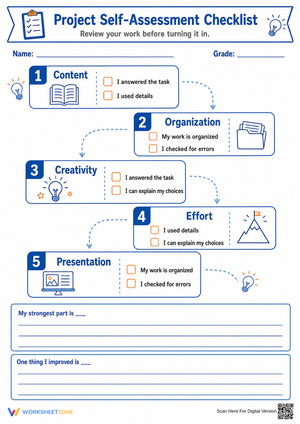
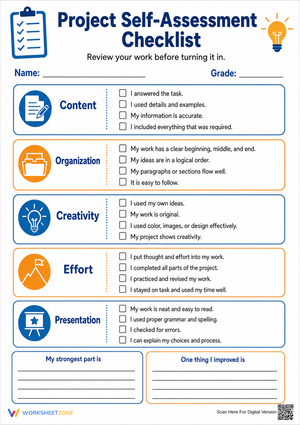
Self-assessment worksheets deserve more use than they usually get. When students mark what they believe is working and what still needs revision before a teacher conference, the conversation changes — the teacher spends less time diagnosing and more time coaching the next concrete step.
Frequently Asked Questions
Do these worksheets cover argument, informative, and narrative writing, or only one mode?
Each stage of the set includes genre-specific versions. Argument writing uses claim-and-counterclaim organizers and evidence-reasoning revision worksheets. Informative writing uses category charts, source note sheets, and explanation development tools. Narrative writing uses plot maps, character motivation worksheets, and pacing revision checklists. Teachers pull the worksheets that match their current unit's mode.
How many worksheets does it take to move a class through the full writing process?
That depends on the assignment length and the class's experience with writing workshop. A focused argument paragraph might need one prewriting worksheet, one drafting frame, and one revision checklist. A multi-paragraph essay unit might draw on five to seven separate worksheets across two weeks. Because 7th grade writing process printable worksheets are standalone resources, teachers build the sequence that fits the assignment rather than working through a fixed packet in order.
Can these worksheets be used for sub plans or homework?
Yes. Because each worksheet targets one specific stage and skill, students can complete them independently without live instruction to get started. Prewriting organizers and editing checklists work especially well as homework or sub-day tasks. Revision worksheets are more effective when a teacher or peer can respond to the decisions students make, so those fit better in class time when possible.
What's the clearest way to explain the difference between revising and editing to seventh graders?
Revising means improving the writing's ideas, structure, development, and clarity. Editing means correcting surface errors in punctuation, spelling, grammar, and capitalization. Seventh graders routinely treat them as the same task, spending revision time on comma errors while leaving the argument's reasoning undeveloped. Worksheets that keep the stages separate make the distinction concrete — students can't edit their way through a revision task when each worksheet only asks revision questions.












 Interactive Worksheet Maker
 Quiz Maker
 Word Search Maker
 Crossword Puzzle Maker
 Word Scramble Generator
 Sentence Scramble Generator
 Handwriting Worksheet Generator
 Name Tracing Generator
 Fill In The Blank Generator