These 6th grade organization and structure worksheets resources give teachers standalone, printable practice on text structure analysis and paragraph organization — the two skills that appear together in nearly every grade 6 reading and writing standard. Each worksheet targets one task: identifying structure in a short passage, sorting signal words by category, sequencing a scrambled paragraph, or drafting a brief organized response. No lengthy setup required; teachers can fold these into whatever part of the week needs reinforcement.
What's Inside the Set
The five text structures grade 6 students are expected to recognize — chronological order, compare and contrast, cause and effect, problem and solution, and description — each appear in short, readable passages built specifically for analysis work. Students don't just circle an answer; they mark evidence, name signal words, and write a sentence explaining why the structure fits. From there, the set builds toward writing: students either fix a poorly organized paragraph or draft one using the structure they just analyzed in reading.
- Text structure identification: Students read a passage, mark at least two signal words, and select and defend the structure used.
- Signal word sorting: Students categorize terms like consequently, however, initially, and as a result by the structures they signal — a task that surfaces gaps students didn't know they had.
- Paragraph sequencing: Students reorder scrambled sentences into a coherent paragraph using logical flow and transitions, not just topic recognition.
- Revision tasks: Students receive a weak paragraph, mark specific problems — missing transitions, an off-topic detail, a conclusion that restates nothing — and then rewrite.
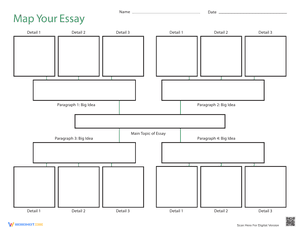
- Short writing application: Students plan and write a 4–6 sentence paragraph using a targeted structure, with a labeled planning box for organizing ideas first.
Mistakes Students Make That These Worksheets Help You Catch
The most consistent confusion at this level is between cause-and-effect and problem-and-solution. Both involve a "why" relationship between ideas, and students who label one correctly in isolation will often misidentify the other when both appear in the same review session. The distinction comes down to authorial intent: cause-and-effect explains what happened and why; problem-and-solution either proposes or describes a fix. When students articulate that difference out loud before completing the worksheet, accuracy improves noticeably.
A second error shows up in the writing tasks. Students who accurately identify chronological order in a reading passage will still write a paragraph that opens with a supporting detail, buries the topic sentence in the middle, and ends abruptly. Recognition and production are genuinely separate skills at this age — seeing structure in someone else's text does not automatically transfer to controlling structure in original writing. The revision worksheets in the set are especially useful for closing that gap because they ask students to diagnose problems in an unfamiliar paragraph before writing their own.
How to Work These Worksheets Into Your Lesson Plans
The most practical entry point is the bell ringer slot — the first 8–10 minutes of class before a reading lesson. A short text-structure identification worksheet runs easily in that window without cutting into instructional time, and it activates working memory before students encounter a mentor text. If Monday starts with a new cause-and-effect passage, begin with a worksheet using a different passage so students arrive at the mentor text with the structure already primed.
Revision worksheets fit best in the middle of a writing unit, right after students have submitted a first draft. Handing back a weak sample paragraph — not a student's own work — and asking the class to diagnose its organizational problems is a low-stakes way to build revision instincts before students apply those same instincts to their own writing. The sequencing tasks work well as center activities: cut the sentences apart, place them in an envelope, and students physically reorder them before recording an answer. That hands-on version often reaches students who stall when asked to number a list abstractly.
A well-organized 6th grade organization and structure worksheets collection gives teachers enough variety to cover the bell ringer, a center rotation, and a homework assignment from the same source — without hunting for materials that match different task formats. For homework specifically, assign worksheets covering a structure students have already encountered in class; sending home a structure they haven't seen yet tends to produce guessing rather than practice.
Standard Alignment
These worksheets address CCSS.ELA-LITERACY.RI.6.5, which asks students to analyze how a particular sentence, paragraph, chapter, or section fits into the overall structure of a text and contributes to the development of ideas. On the writing side, they connect to CCSS.ELA-LITERACY.W.6.4, requiring students to produce clear, coherent writing in which organization suits task, purpose, and audience. In classroom practice, RI.6.5 tends to receive explicit instruction during the informational reading unit and gets revisited before state testing; W.6.4 runs as a continuous expectation across every writing unit from September onward. A 6th grade organization and structure worksheets set that addresses both standards in the same task helps students see the reading-writing connection rather than treating the two as separate skill areas.
Adjusting the Set for Mixed Learner Profiles
Below-level students benefit most from narrowing the task: one structure at a time, shorter passages (6–8 sentences rather than 12–15), and a signal-word bank printed directly on the worksheet. Sentence frames like This text uses cause and effect because the author explains... help students produce a written response without stalling at a blank line. For writing tasks, a paragraph frame with clearly labeled slots — topic sentence, supporting detail, transition phrase, second detail, closing sentence — removes formatting uncertainty so students can focus entirely on content and sequence.
On-level students are ready for mixed-structure practice where no structure label is given in advance and two structurally similar passages appear side by side. The challenge there is distinguishing them in writing, not just in reading. Advanced students can work with passages where signal words are deliberately minimal — a text that reads like compare-and-contrast but is actually structured as problem-and-solution — and then write a short explanation of what made the identification difficult. That metacognitive layer is genuinely harder than surface-level recognition and gives students who have already mastered basic identification something substantive to do.
Frequently Asked Questions
Do these worksheets cover both reading and writing, or only one?
The set addresses both. Reading tasks ask students to identify and explain text structure in a passage. Writing tasks ask students to plan, draft, or revise a paragraph using a specific organizational pattern. Several worksheets combine both in a single task by asking students to analyze a passage and then mirror its structure in a short original response.
How long does each worksheet take to complete in class?
Most run 10–15 minutes for on-level students. Revision and writing application worksheets may take closer to 20 minutes when students are expected to produce a full paragraph. That range makes the set practical for bell ringers, the closing segment of a reading workshop block, or a focused center rotation.
Are these worksheets useful for small-group intervention?
Each text structure identification worksheet and each signal-word task is self-contained and focused on a single skill, which makes them well-suited to small-group reteaching. In that setting, teachers can work through the task alongside students, pausing to address specific confusion before students attempt the response independently. The short passage length also keeps reading demand manageable for students who struggle with extended texts.
Can these be used in content areas outside ELA?
The text structure work transfers naturally to science and social studies reading. A worksheet on sequential structure works equally well with a science lab procedure as with a literary nonfiction passage; a cause-and-effect worksheet applies to a historical event as easily as to a health article. That flexibility makes the 6th grade organization and structure worksheets set useful beyond the ELA block — science and social studies teachers who incorporate content-area literacy will find the format straightforward to adopt without modification.















 Interactive Worksheet Maker
 Quiz Maker
 Word Search Maker
 Crossword Puzzle Maker
 Word Scramble Generator
 Sentence Scramble Generator
 Handwriting Worksheet Generator
 Name Tracing Generator
 Fill In The Blank Generator