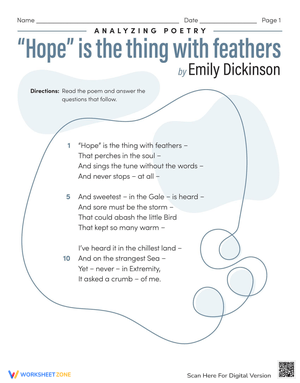
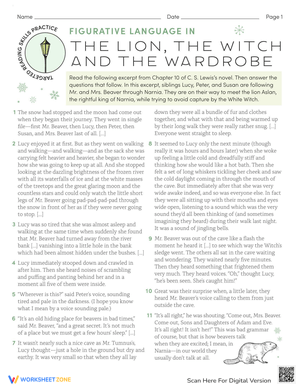
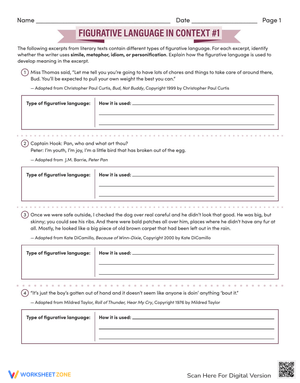
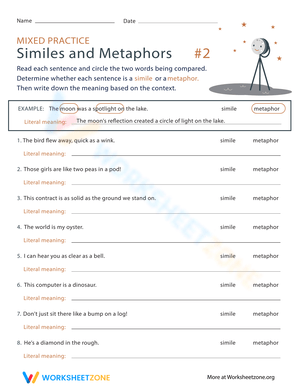
These 6th grade metaphors printable worksheets give ELA teachers a focused, reusable set of resources for moving students past figurative language labels into the interpretive work that grade 6 reading and writing genuinely requires. Each worksheet targets a specific layer of metaphor understanding — recognizing the comparison, unpacking what quality transfers between the two subjects, or constructing original examples — so teachers can drop them into existing instruction without rebuilding a lesson from scratch.
The Specific Skills Targeted
Metaphor work in sixth grade is less about definitions and more about interpretation. Students at this level are expected to read a metaphor inside a paragraph and explain how it shapes meaning — not just circle the figurative phrase. The worksheets build toward that expectation through a deliberate sequence of task types.
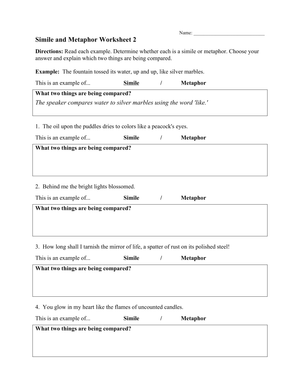
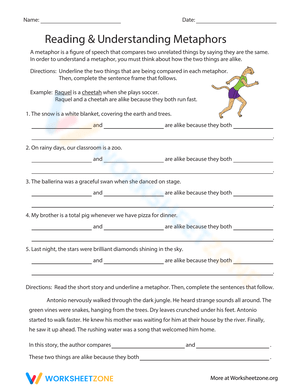
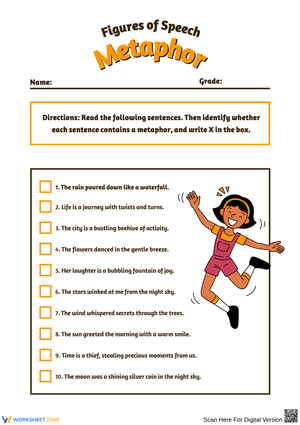
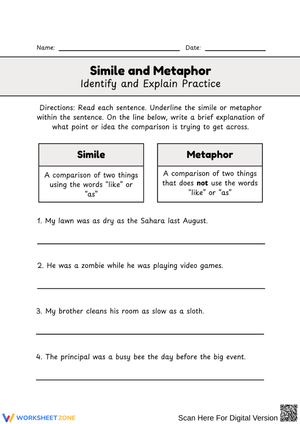
- Identification in isolation: Students read individual sentences and mark the metaphor, naming the two things being compared. This gives students a controlled entry point before metaphors appear embedded in longer text.
- Meaning-based explanation: Students write two to three sentences explaining what the metaphor suggests — about a character's state of mind, the mood of a setting, or the weight of an idea. These short-answer items are the core of the set.
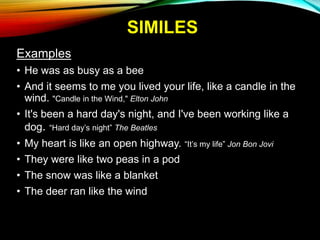
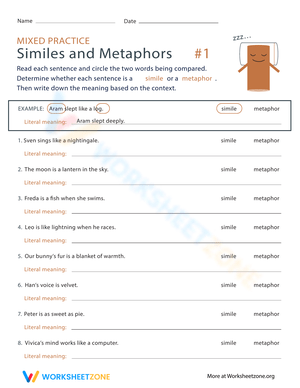
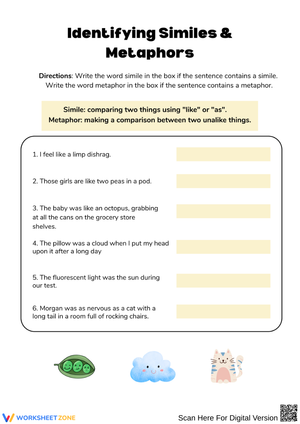
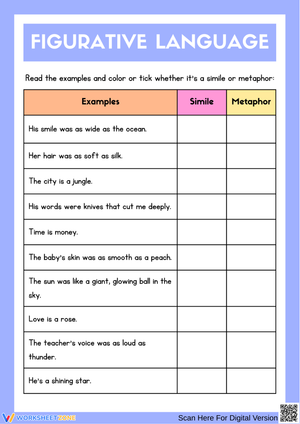
- Simile vs. metaphor distinction: Several worksheets place both forms side by side so students practice identifying structural clues and explain how the two forms create different effects in the same context.
- Metaphor in context: Students read a short passage and answer questions about how a specific metaphor contributes to character, tone, or theme — the kind of close-reading task that appears in standardized reading assessments.
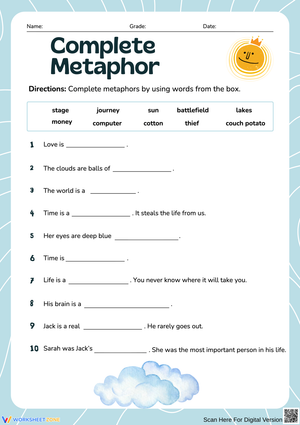
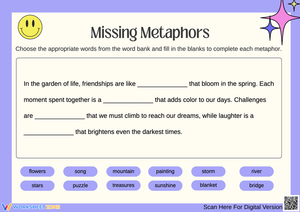
- Original composition: Completion and generation tasks ask students to finish a metaphor or write their own for a given subject, which connects directly to personal narrative and descriptive writing units.
The range across task types means a teacher using 6th grade metaphors printable worksheets for a poetry unit can return to the same set during fiction analysis or a writing revision block without the work feeling repetitive.
Student Errors Worth Anticipating Before You Teach This
The most persistent problem in sixth grade metaphor work is not confusion about what a metaphor is — most students can recite the definition by now. The problem is explanation. When asked why a writer described a character as "a crumbling building," students will often write "it means the character is like a crumbling building" and consider the question answered. They have restated the metaphor rather than interpreted it, and they genuinely do not see the difference yet.
A related pattern shows up when students identify the right quality but stop at the most obvious reading. "The classroom was a volcano" — students say it means the classroom was loud or explosive, which is partly right, but a volcano also implies pressure building before an eruption, which may be precisely what the author wanted to suggest about mounting tension. Pushing students to generate two or three plausible interpretations before settling on one is the move that breaks this habit, and the open-ended short-answer prompts throughout the set are structured to make that demand explicit.
There is also the literal-reading error, most visible in strong decoders who are newer to figurative language. A student who reads "her voice was silk" and writes "she has a silky voice" has paraphrased the image without unpacking its effect — preserved the metaphor's surface without analyzing what it does to the reader. That response pattern is far more diagnostic than checking whether a student circled the right phrase on an identification item.
Building These Worksheets Into the Week's Lesson Plan
The most efficient use of this set is as a short, purposeful routine rather than a full-period lesson. A bell-ringer format works well: two to three metaphor items at the start of class take eight to ten minutes, reactivate prior knowledge, and give teachers an immediate read on who is tracking the skill. During that window, circulating to read student explanations — not just answers — surfaces misconceptions before they get buried inside a full-class activity.
Small-group intervention is where these worksheets earn consistent use across the year. A group of four or five students who can identify figurative language but cannot yet explain it benefits from working through a meaning-focused worksheet while the teacher listens to their reasoning aloud. The short-answer format gives students something concrete to write, which keeps the conversation from staying too abstract. Teachers can then respond to what students actually produced rather than what they assume students understand.
These 6th grade metaphors printable worksheets also slot naturally into writing revision blocks. After students draft a descriptive paragraph, pairing that draft with a completion worksheet — where they finish metaphors for familiar subjects — surfaces whether students can generate figurative language on purpose. The move from recognizing metaphors in reading to choosing them in writing is one of the harder transitions in grade 6 composition, and having the worksheet as an intermediate step makes the ask more concrete than simply telling students to make their writing more vivid.
An efficient routine for any of these contexts: give students one literal sentence alongside one metaphorical sentence covering the same subject, then ask them to write two to three lines comparing the effect. That small design choice raises the cognitive demand meaningfully — students are no longer labeling language in isolation but analyzing how wording changes tone, clarity, and reader impact.
Standard Alignment
The primary anchor for this set is CCSS.ELA-LITERACY.L.6.5.A, which asks sixth graders to interpret figures of speech — including metaphors and similes — in context and explain their meaning. The standard draws a clear line between knowing a term and being able to explain what a figure of speech does inside a real sentence or paragraph. That distinction drives the task design throughout the set: identification items alone do not satisfy this standard; explanation and context-based interpretation do.
In practical classroom terms, L.6.5.A comes up during reading instruction whenever students analyze author's craft, and during writing instruction whenever teachers ask students to choose language deliberately. Worksheets that require written explanation give teachers usable evidence at both instructional moments — not only during a standalone figurative language lesson in isolation.
Adjusting the Set for Different Learner Levels
For students still working on the foundational distinction between metaphors and similes, the identification worksheets provide enough structure to build confidence before interpretation is added. Pairing those students with a brief reference card that shows both forms side by side — not a formal definition, just two contrast examples — reduces the working memory load of holding the rule in mind while simultaneously reading for meaning.
Students who identify and explain metaphors with ease benefit most from the passage-level and original-composition tasks. A strong extension move: give those students two metaphors describing the same subject — "the river was a mirror" versus "the river was a gray road" — and ask them to write about how the two choices produce different tones. That task demands genuine analytical thinking and produces the kind of response that transfers directly to strong literary analysis writing.
For students receiving reading support, 6th grade metaphors printable worksheets that feature shorter sentences and high-frequency subjects work as a starting point. The progression toward passage-level items, where metaphors appear inside more complex syntax, keeps expectations from being permanently lowered while still giving students a manageable entry into figurative analysis.
Frequently Asked Questions
Do these worksheets address similes, or are they strictly focused on metaphors?
Several worksheets in the set include both forms so students practice telling them apart by structure and effect — not just by scanning for "like" or "as." That mixed practice reduces guessing and pushes students to articulate why the two forms feel different when used inside a specific sentence.
At what point in a figurative language unit do these worksheets fit best?
Identification worksheets work well immediately after initial instruction, when students need controlled practice before encountering metaphors in longer texts. Interpretation and passage-level worksheets fit better mid-unit or as review, once students have had class discussion about how figurative language shapes meaning. Composition tasks fit naturally during a writing unit or toward the end of a figurative language sequence when students are ready to generate rather than just analyze.
Can these be assigned for homework, or do students need teacher support to complete them?
The identification and basic explanation worksheets work as independent homework once class time has introduced the skill. The passage-based and original-composition items are better used in class first, where teachers can respond to student thinking in real time and address the literal-reading error before it becomes a fixed habit. After that initial classroom exposure, those formats can move to homework as review.
How do these worksheets support students who tend to read everything too literally?
The most useful format for concrete thinkers is a worksheet that pairs a metaphorical sentence with a plain restatement of the same idea and then asks students to compare the two. That design makes the interpretive step visible rather than assumed, giving students a clearer path into figurative analysis than asking them to explain a metaphor cold with no reference point alongside it.












 Interactive Worksheet Maker
 Quiz Maker
 Word Search Maker
 Crossword Puzzle Maker
 Word Scramble Generator
 Sentence Scramble Generator
 Handwriting Worksheet Generator
 Name Tracing Generator
 Fill In The Blank Generator