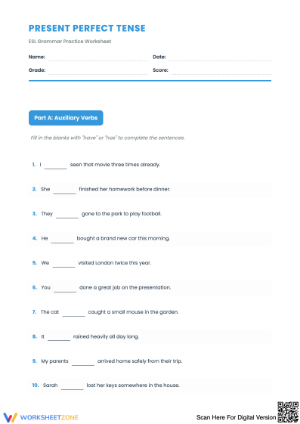
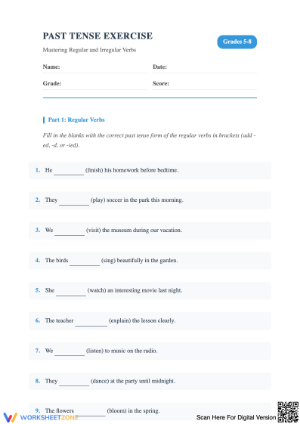
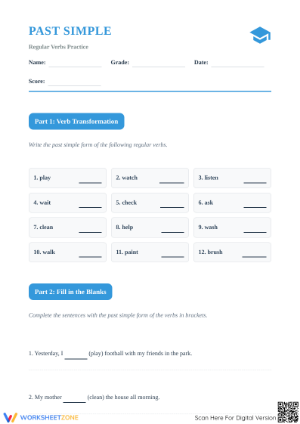
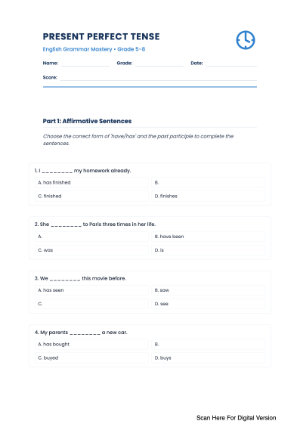
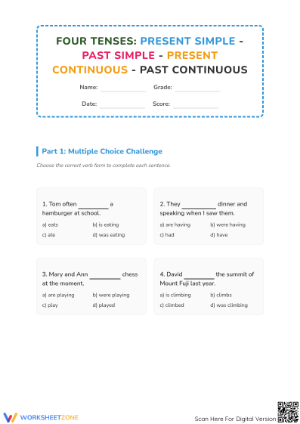
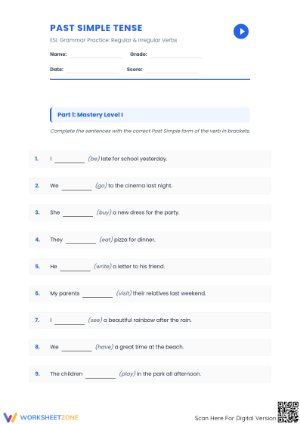
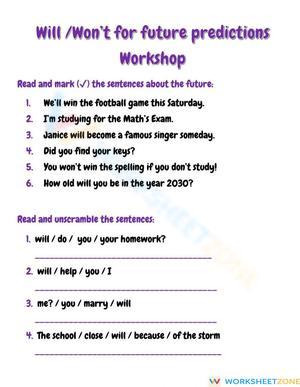
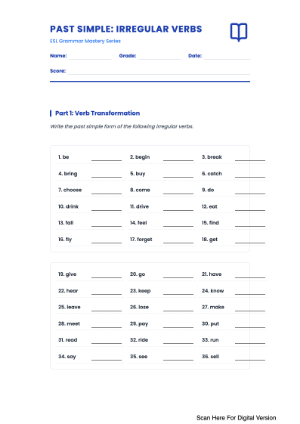
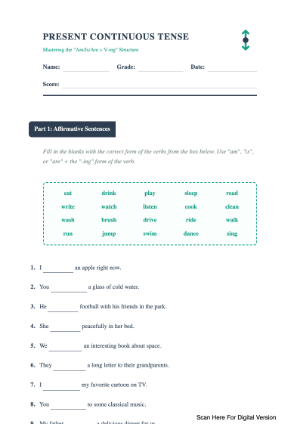
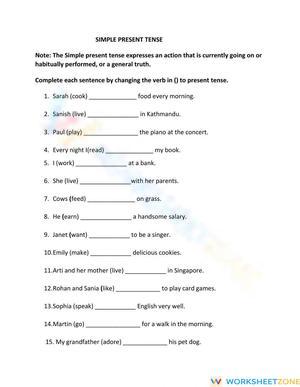
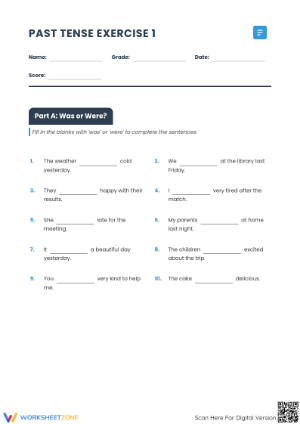
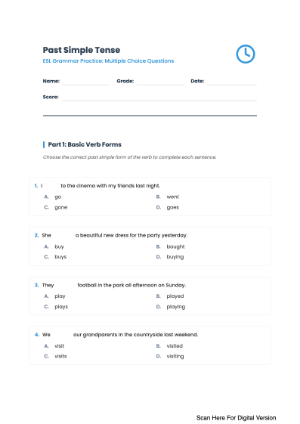
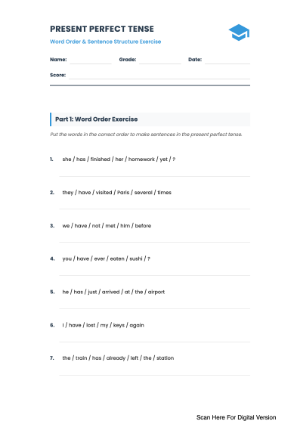
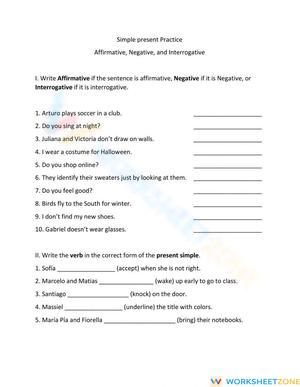
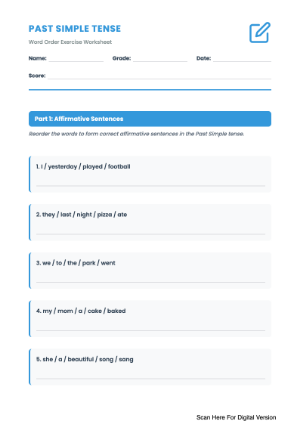
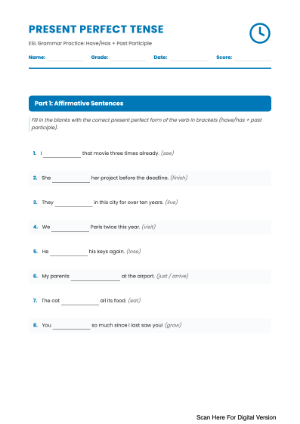
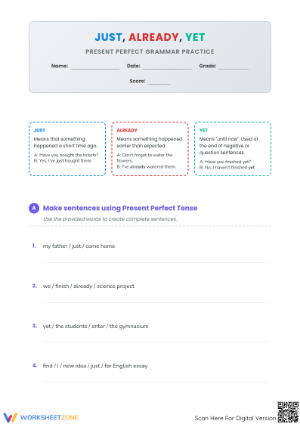
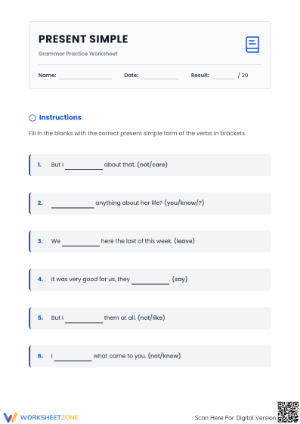
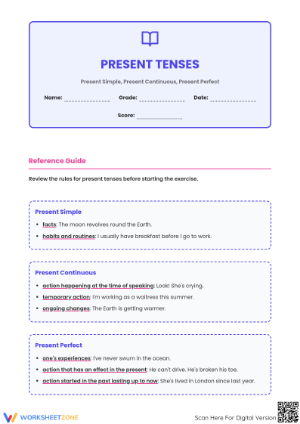
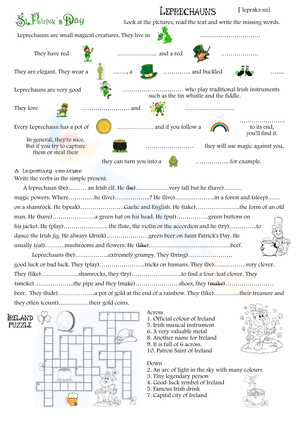
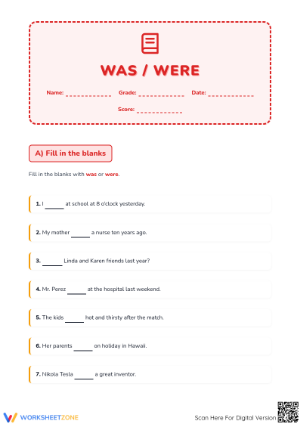
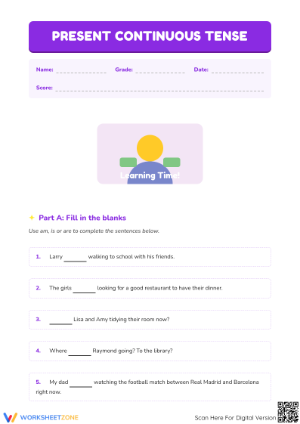
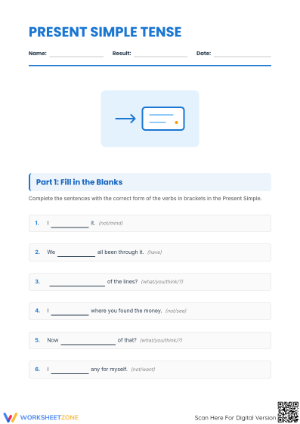
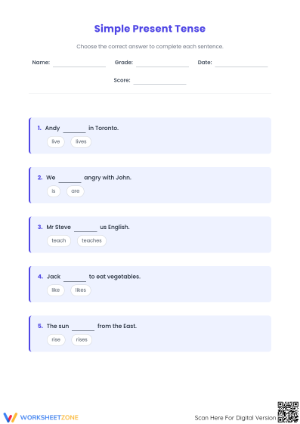
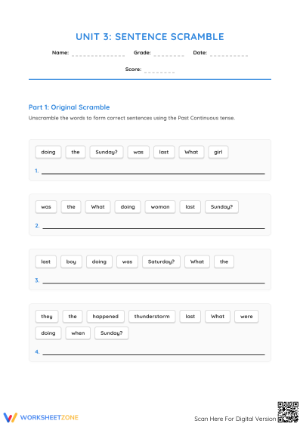
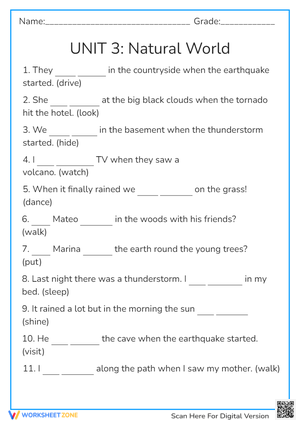
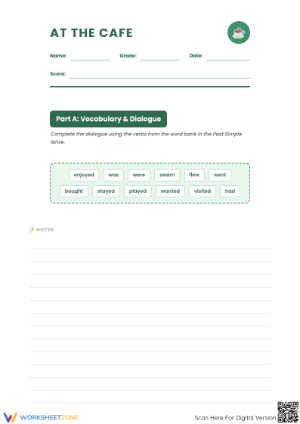
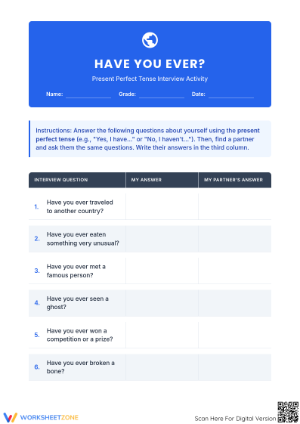
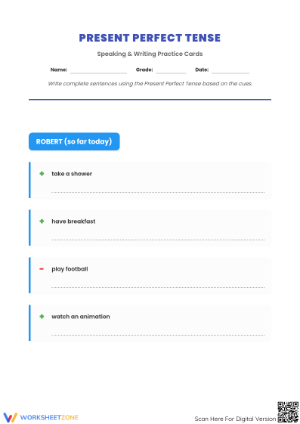
These tenses printable worksheets for 6th grade give teachers ready-to-use practice that goes beyond labeling verbs in isolation — each worksheet asks students to choose, correct, or rewrite based on the surrounding context that establishes the time frame. The set covers simple past, present, and future, along with past and present perfect, with particular attention to the cross-sentence consistency that Grade 6 writers are still internalizing. Teachers who have watched a student ace a grammar identification item and then write "She grabbed the key and runs toward the exit" in the same hour know exactly why contextualized practice matters more at this level than isolated drill.
The Specific Skills Each Worksheet Targets
At Grade 6, tense knowledge breaks down not on identification tasks but during drafting. A student who correctly identifies simple past in a multiple-choice item will still produce tense shifts mid-narrative because revision requires a different skill than recognition: actively monitoring the time frame across sentences rather than checking one verb at a time. Each worksheet in this set targets that monitoring habit directly.
Skill areas across the set include:
- Verb form selection in context: Students fill in the correct tense using surrounding sentence clues, not isolated prompts stripped of meaning.
- Shift identification and correction: Students underline the verb causing an inappropriate shift, rewrite the sentence, and on several worksheets record a one-sentence explanation of their choice.
- Simple vs. perfect form distinction: Students practice recognizing when past perfect is needed to show sequence and when simple past is sufficient.
- Paragraph editing: Students read a short passage, locate every inconsistent verb, and revise — the format most directly connected to the decisions writers make during revision.
The written justification item appears on several worksheets deliberately. When a student writes "I changed it to past perfect because this action happened before the other one," you have real information about their reasoning. When they cannot produce that sentence, you know the correction was a guess.
Frequent Verb Errors Worth Catching Before They Spread
The most consistent error pattern in Grade 6 writing is not confusion about what past tense is — it is mid-paragraph drift. A student opens a narrative in simple past, becomes absorbed in the scene, and shifts into present: "She opened the box. She looks inside and gasps." The shift does not come from ignorance; it comes from the writer mentally entering the story and narrating in real time. A good set of tenses printable worksheets for 6th grade makes this pattern visible in a low-stakes, named context — which is far more effective than a correction note in a draft margin because the student can see the error before it is attached to their own writing.
The second common error is harder to catch aloud: collapsing event sequence by dropping past perfect. Students write "He told her what happened" when they mean "He told her what had happened," and because both versions sound plausible when spoken, neither the student nor a peer editor flags it. That dropped past perfect flattens the timeline in ways that affect a reader's comprehension, not just grammatical tidiness. The paragraph editing worksheets in this set target that kind of error specifically because they show students the before and after of a timeline inside an actual passage — not as an abstract rule, but as a clarity problem a real reader would notice.
Where These Worksheets Fit in an Already-Full Week
Six minutes before the period ends is not the time to introduce a new concept. It is, however, exactly enough time for three or four sentence corrections. That is one of the most practical uses of printable tense practice — not the formal grammar block, but the recurring short moments where focused, retrieval-based work sticks because the stakes are low and the task is clear. On Monday morning after a weekend writing assignment, when tense shifts are already visible in a third of the returned drafts, pulling a warm-up that targets exactly that pattern takes less than two minutes to set up and gives students something concrete to think about before they open their notebooks.
Across a week, the worksheets distribute naturally:
- Monday bell ringer: A fill-in-the-blank section reactivates prior knowledge before anything new is introduced.
- Mid-week small group: A sentence correction worksheet targets students still confusing simple and perfect forms — one narrow contrast, controlled output.
- Thursday pre-draft: A paragraph editing worksheet runs for eight to ten minutes before students open their own writing, so revision habits are fresh and available when they need them.
- Friday exit ticket: Two items from any worksheet — students write the corrected sentence and a one-sentence explanation. Takes four minutes. Tells you who needs follow-up next week.
For teachers running multiple sections, printable formats support consistency without demanding identical pacing. One class works through each worksheet independently; another annotates the first half together before finishing alone. The skill focus stays the same; the level of support adjusts.
Standard Alignment
CCSS L.5.1d and L.5.1e — which address using verb tense to convey time and sequence, and recognizing and correcting inappropriate tense shifts — are introduced at Grade 5 and listed explicitly in the CCSS Language Progressive Skills as continuing into Grade 6 and beyond. That placement is meaningful in classroom terms: by Grade 6, these are not new concepts to introduce but established skills to deepen and apply under more demanding writing conditions — narrative scenes with multiple time frames, literary summaries that move between a text's past events and a present-tense analysis of those events. Tenses printable worksheets for 6th grade address that specific instructional moment: students already know the terminology, so the work shifts from naming tenses to applying and correcting them consistently inside real writing contexts.
Adjusting Each Worksheet for a Mixed-Ability Classroom
The simplest differentiation is output level. A student who needs reinforcement completes the fill-in-the-blank and sentence correction items on each worksheet. A student ready for more independence finishes the same worksheet and then writes a short original paragraph using three specified tenses. Neither student requires a separate resource; the adjustment is in what you ask them to produce after the printed task ends.
For intervention groups, narrowing the tense contrast reduces the cognitive load that works against learning. One session focused entirely on simple past versus simple present, followed in a later session by past perfect once those simpler forms feel automatic, moves students forward more reliably than full mixed review too early. One honest tradeoff worth noting: the paragraph editing format — the most valuable in the set for building revision habits — tends to frustrate students who can correct single sentences but shut down when asked to track a pattern across an entire passage. For those students, spending two or three sessions at the sentence correction level before moving to paragraph editing is more productive than pushing the longer format before they are ready for it.
Frequently Asked Questions
What verb tenses should 6th graders practice?
Grade 6 students should work with simple past, present, and future tenses, along with past perfect and present perfect in context. Equally important is mixed-review practice that places multiple tenses inside the same passage, so students learn to hold a time frame steady across a paragraph rather than selecting correctly only in isolated sentences.
How do these worksheets fit into a short grammar block?
Use one section of each worksheet as a bell ringer — three to five items — then model one correction together before students finish the remaining items independently or with a partner. A two-item exit ticket at the end, where students rewrite and explain a correction in their own words, provides immediate formative data and takes less than five minutes of class time.
Are these better suited for whole-class review, homework, or small-group intervention?
Tenses printable worksheets for 6th grade work reliably across all three settings. Mixed-tense editing worksheets hold up well for whole-class review and homework; single-contrast worksheets — simple past versus present, or simple versus perfect forms — are better suited to intervention groups that need focused, controlled practice before returning to full mixed review.
How does paragraph editing practice connect to students' own writing revision?
When students locate an inconsistent verb inside a passage, rewrite the sentence, and explain why the change is correct, they rehearse the same decision-making they need during writing workshop. The grammar exercise is not separate from writing — it is the same editorial judgment applied to someone else's text at lower cognitive stakes, which makes the habit more available when students return to their own drafts and face the same problem in their own words.












 Interactive Worksheet Maker
 Quiz Maker
 Word Search Maker
 Crossword Puzzle Maker
 Word Scramble Generator
 Sentence Scramble Generator
 Handwriting Worksheet Generator
 Name Tracing Generator
 Fill In The Blank Generator