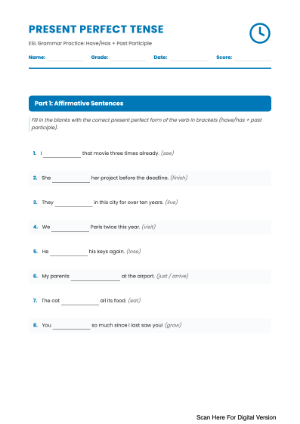
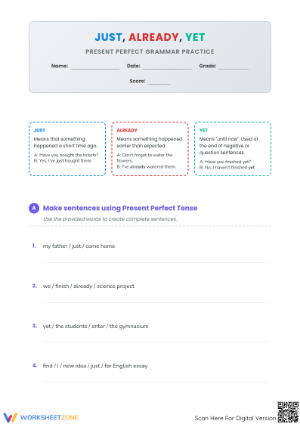
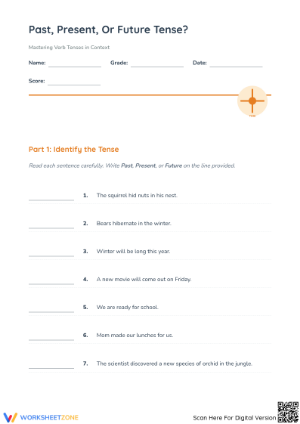
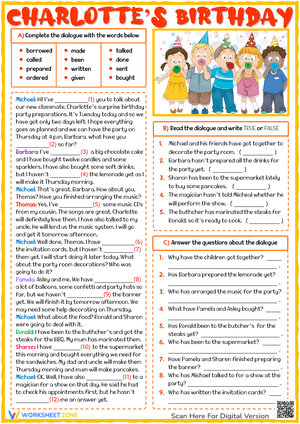
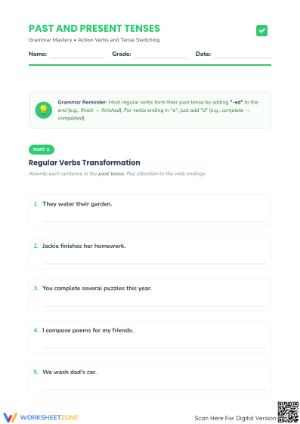
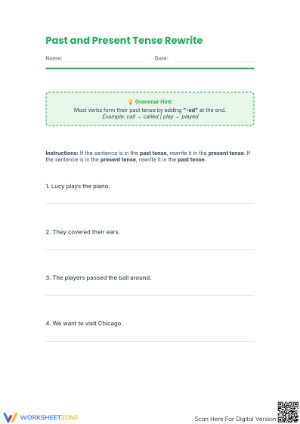
These present perfect tense pdf worksheets for 6th grade hand teachers a clean, printable set for the moments when verb tense practice needs to fit into a real lesson, not a whole unit. Sixth graders already recognize has and have, but present perfect trips them up because it looks like something they know and behaves like something they don't.
What These Worksheets Ask Students to Do
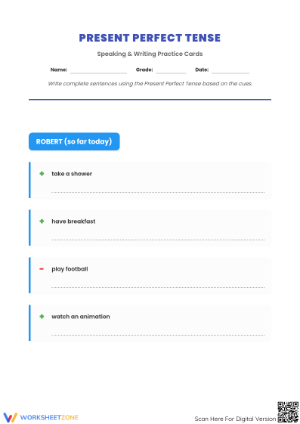
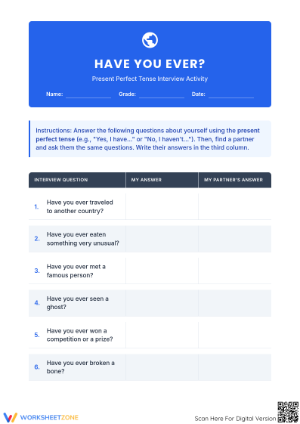
Each worksheet keeps the grammar target in plain view instead of burying it under complicated wording. Students work with sentences that sound like school, sports, reading logs, and weekend routines, so the only thing they have to puzzle out is the tense. When students see has walked or have finished, they have to hold two parts in their heads at once — the helping verb and the past participle — and then decide why a writer reached for that form over simple past.
The task types rotate on purpose so students don't fall into answering on autopilot:
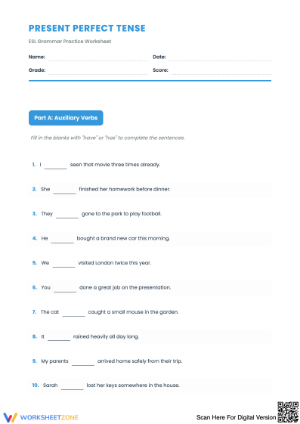
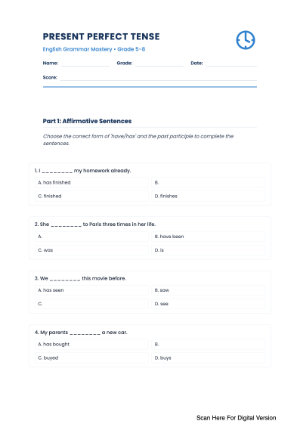
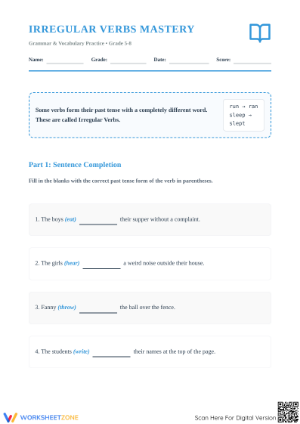
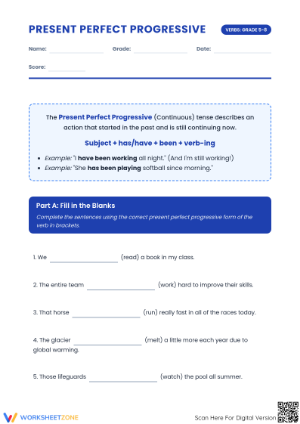
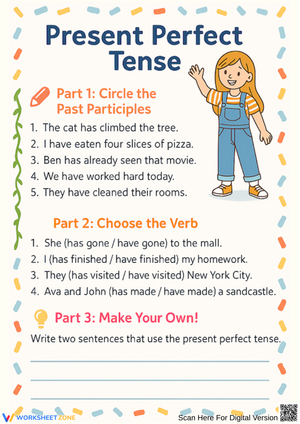
- Sentence completion: pick the right helping verb and the correct past participle.
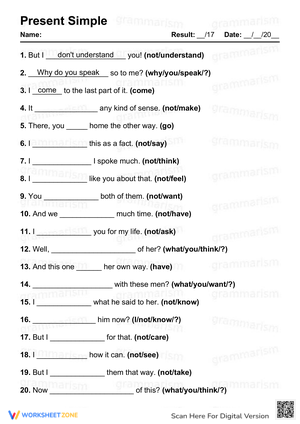
- Error correction: fix things like has went or have paired with a singular subject.
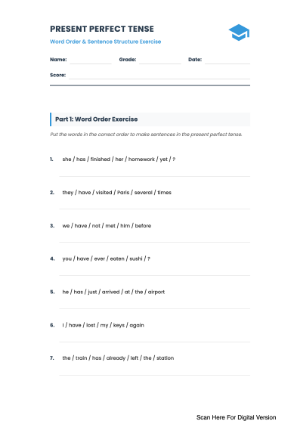
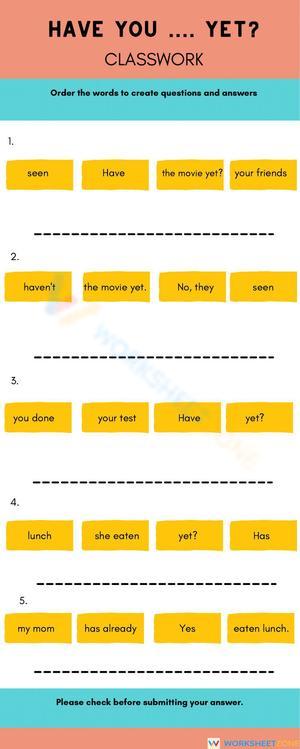
- Sentence rewriting: turn a simple past sentence into present perfect and say what changes in meaning.
- Short context items: read a few connected sentences and choose the form that fits the timeline.
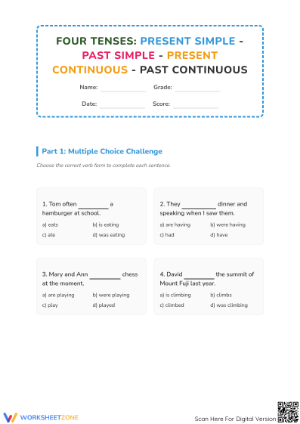
Choosing between has and have shows up repeatedly because subject-verb matching is where a lot of sixth graders stall. Several items put present perfect directly next to simple past, and that contrast is where I see the most movement — students stop guessing based on which form sounds more familiar and start reading the sentence for actual meaning.
Getting the Form Solid Before the Practice
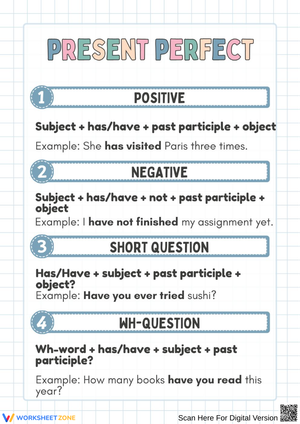
Before anyone fills in a blank, students need a quick reminder that present perfect is has or have plus a past participle. A two-sentence launch usually does it: write I lost my homework yesterday next to I have lost my homework. The first nails down a specific past time. The second is about the result right now — the homework is still gone. Saying that out loud is what makes the difference between recognizing the tense and understanding it.
One sequencing move that pays off in reteach groups: start with isolated verb phrases, then move to paired sentence contrasts, and only then assign independent work. That order keeps the mental load manageable — students identify the form first, weigh the meaning second, and apply it in context last. When a worksheet jumps straight to a full set of independent items, the same errors tend to come back even after extra practice.
Where These Fit in the Week
Match the worksheet to the moment. A half worksheet of quick sentence choices reactivates the rule for morning work without eating the period. For homework, a mixed worksheet with completion, editing, and one short writing item tells you who can transfer the skill on their own. In small-group intervention, fewer items and more conversation works better — have students underline the helping verb, circle the past participle, and box any time word in the sentence. Those small routines slow students down in a useful way.
The set is built to be reused. Keep one worksheet for first exposure, another for reteach, and a third for cumulative review. Because the directions stay predictable, these present perfect tense pdf worksheets for 6th grade drop cleanly into centers and substitute folders without a long explanation. For a fast formative check, pull three items and run them as an exit ticket. If students can explain why a sentence needs present perfect rather than simple past, they've moved past memorizing. If they can't, the next lesson revisits the contrast with a smaller chunk.
Common Misconceptions Worth Catching Early
The error I see most: students remember the ending of the main verb and drop the helping verb entirely, writing I finished my project already when they're reaching for the present perfect meaning. A close second is the irregular participle — has went, have ate, has took — because students apply simple past forms where the participle belongs. Subject mismatches round it out, with have attached to a singular subject. These worksheets surface all three repeatedly so the helping verb and the participle both stay visible.
There's also a quieter problem. Some students answer correctly on isolated blanks but lose tense consistency the moment they're reading a short passage, switching between present perfect and simple past mid-paragraph. That's exactly why the context items matter — recognition on a single sentence doesn't guarantee accurate use across a piece of writing.
Standard Alignment
Grade 6 language work asks students to command standard English grammar and usage as they speak and write, not just name rules. These present perfect tense pdf worksheets for 6th grade keep that focus by treating the tense as something students apply in real sentences, then explain. Present perfect is a two-part verb phrase — has or have plus a past participle — and that definition gives teachers one precise checkpoint to use during editing, conferencing, and sentence-level review. When practice runs through that standards lens, the worksheet becomes a focused tool for checking whether students handle the conventions in the kind of writing they actually produce in class.
Adjusting the Set for a Range of Learners
Not every sixth-grade class needs the same support. For students meeting the tense for the first time, start with the worksheets that highlight the form and give obvious time-word clues. For students who've seen it already, move to mixed review that asks them to correct errors and decide between present perfect and simple past. Readability matters more than people expect here — short directions, familiar vocabulary, and uncluttered spacing help you tell a real tense error apart from a reading problem, which saves time in intervention groups where that distinction changes how you reteach.
Because the present perfect tense pdf worksheets for 6th grade work for independent practice, partner checking, mini-lesson modeling, and quick assessment, one worksheet can do several jobs depending on the day. That flexibility is what makes them hold up across a busy middle school week.
Frequently Asked Questions
What is the present perfect tense at the sixth-grade level?
Students learn it as a verb tense formed with has or have plus a past participle. Most teachers introduce it as a way to show an action connected to the present, then set it beside simple past so students can hear and see the difference.
How do students tell present perfect apart from simple past?
Direct comparison is what works. Simple past points to a finished action at a specific time, while present perfect highlights a link to the present. Items that place both tenses side by side clear up the confusion faster than any rule explanation.
What skills should a worksheet on this tense cover?
Choosing between has and have, using the right past participle, correcting errors, rewriting simple past sentences, and reading short contexts. Together those tasks show whether students can both build the tense and use it accurately in their own writing.
Can these be used for homework or reteaching?
Yes. The printable format fits homework, morning work, intervention groups, substitute folders, and review before an assessment. Assign a short worksheet for independent practice, or pull selected items for small groups when students still need a cleaner contrast between present perfect and simple past.












 Interactive Worksheet Maker
 Quiz Maker
 Word Search Maker
 Crossword Puzzle Maker
 Word Scramble Generator
 Sentence Scramble Generator
 Handwriting Worksheet Generator
 Name Tracing Generator
 Fill In The Blank Generator