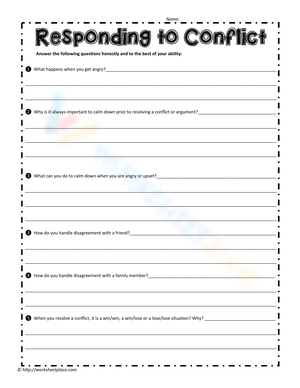
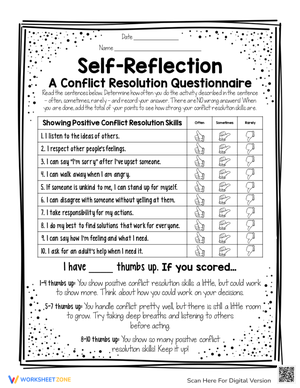
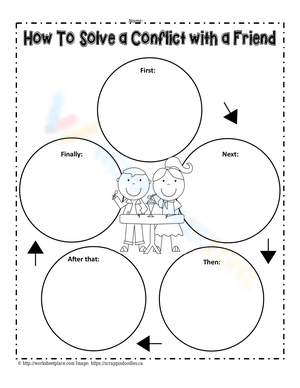
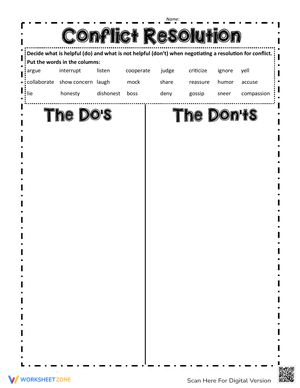
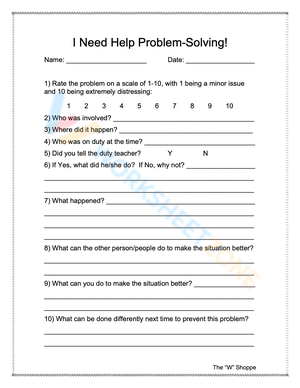
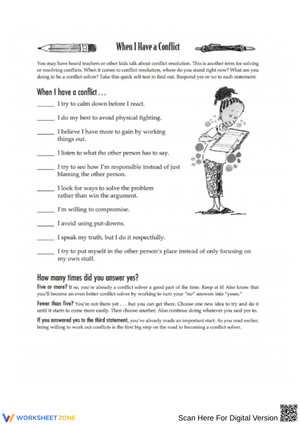
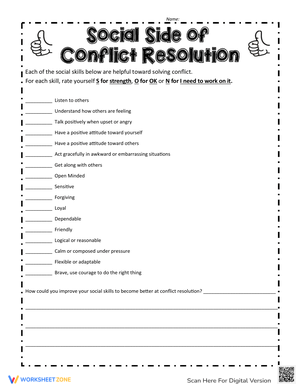
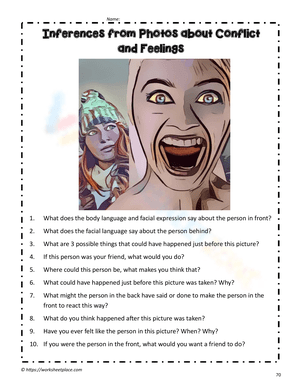
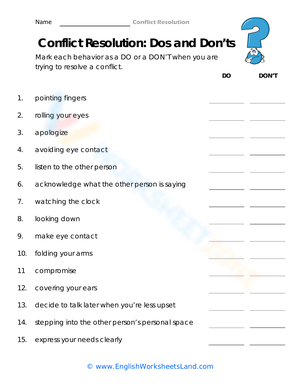
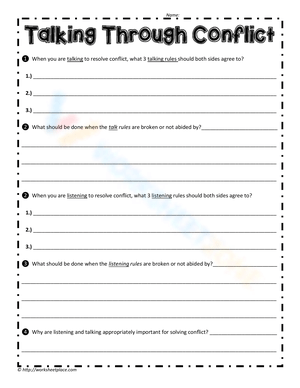
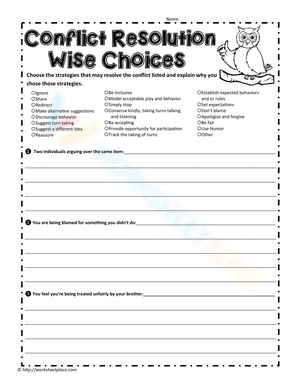
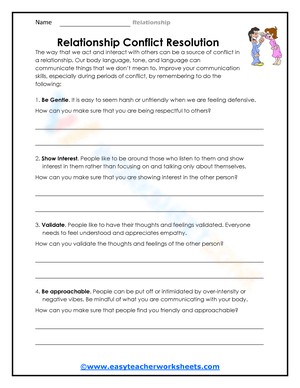
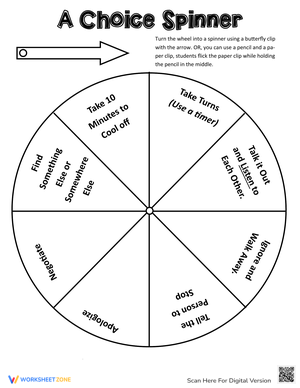
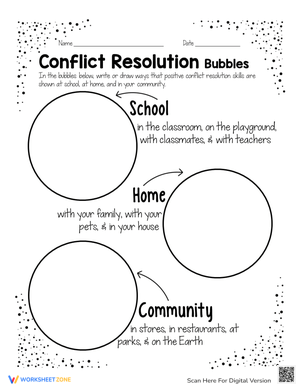
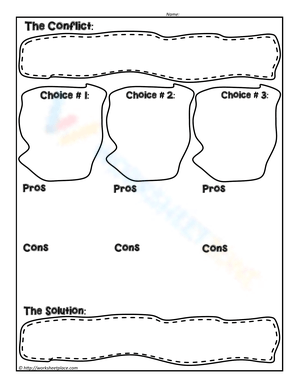
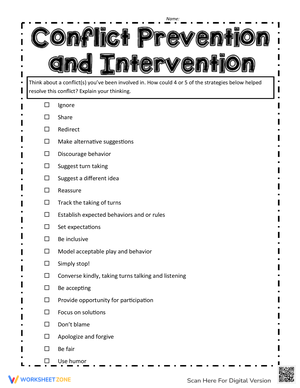
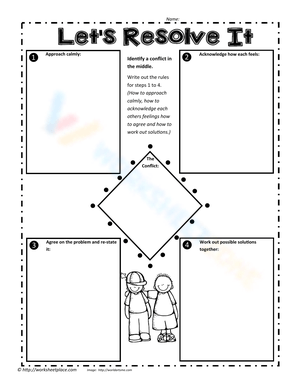
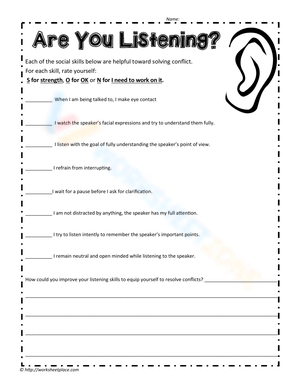
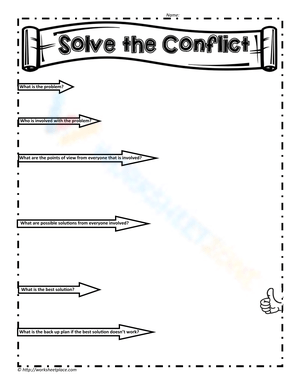
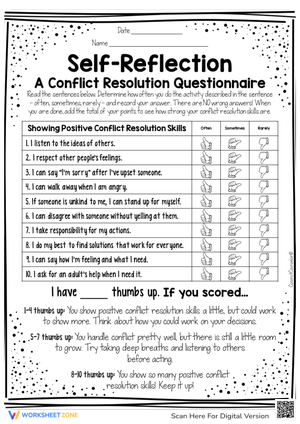
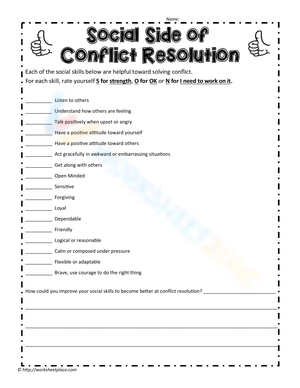
6th grade conflict resolution worksheets give teachers a concrete, repeatable process for turning peer disagreements into skill-building moments rather than discipline detours. In sixth grade, conflict tends to surface during group projects, hallway transitions, seat changes, and the social churn of friendship shifts—and students caught in those moments often know they are upset without knowing how to explain what happened or what to ask for next. These worksheets slow that moment down so students can practice the specific language and reasoning steps that make a productive peer conversation possible.
The Specific Skills Targeted
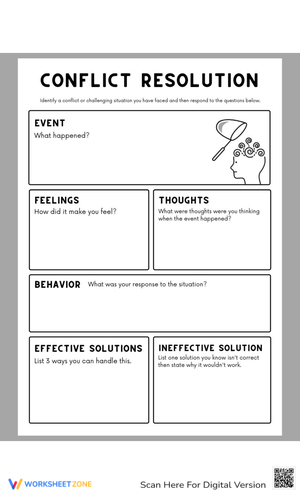
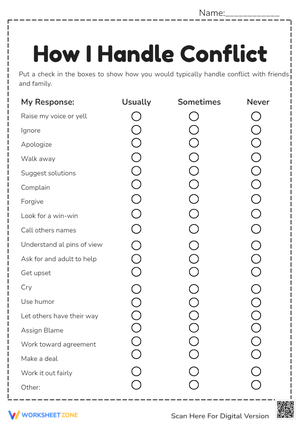
Each worksheet moves students through a sequence of communication and problem-solving steps rather than asking a generic question about behavior. The skills build on each other within a single exercise, which matters because a student who can name an emotion but cannot take another person's perspective will still walk into a conversation ready to argue rather than resolve.
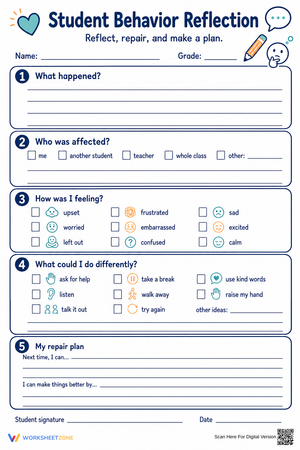
- Emotion identification: Students mark or write the emotion they experienced—embarrassed, ignored, frustrated, left out—rather than describing what the other person did.
- Perspective-taking: Prompted questions ask students to infer what the other person may have wanted, misunderstood, or felt—not to excuse the behavior, but to make sense of it.
- I-statement construction: Students use sentence frames that keep the focus on their own experience: "I felt ___ when ___ because ___."
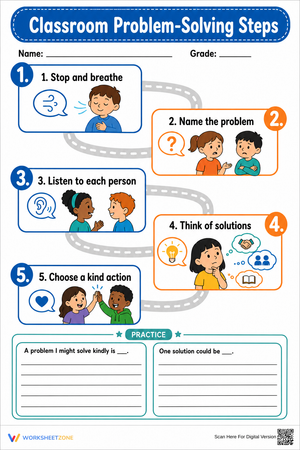
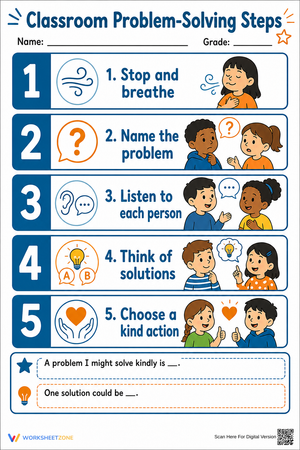
- Active listening steps: A short checklist—pause, restate, ask one clarifying question—gives students a visible protocol for the listening half of the conversation.
- Next-step planning: Each worksheet closes with a concrete repair action or agreement rather than an open-ended reflection prompt.
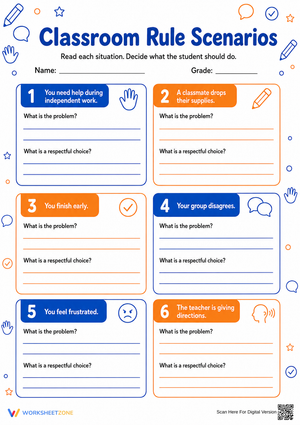
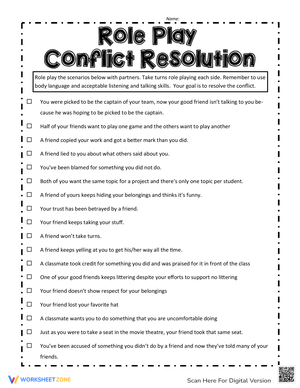
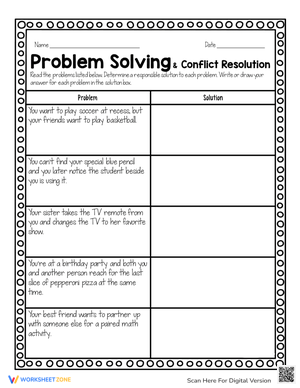
The scenarios across the set cover ordinary middle school friction: a group project where one student took over and another went quiet, a lunch table exclusion that carried into class, a hallway joke that landed badly, and a disagreement over shared materials. Scenarios that feel too young get dismissed; scenarios that feel too dramatic turn into performance. These land in the range where students engage seriously without airing private details in front of the class.
Student Errors That Surface the Fastest in This Work
The I-statement is the skill that trips up students most consistently, and the error has a specific shape: students learn the template quickly but fill it with blame rather than emotional content. A student writes "I feel like you were being rude" and considers it done. The word "feel" is there; the emotion is not. That phrasing keeps the focus on the other person's behavior rather than the student's own experience, which usually produces more defensiveness in a peer conversation, not less. Correcting this requires explicit modeling—showing the difference between "I feel like you ignored me" and "I feel hurt when I'm left out of a group decision"—before students hold the distinction reliably.
Perspective-taking questions generate a different problem. When asked what the other person may have thought or wanted, many students restate the conflict from their own point of view with slightly different wording. They describe what the other person "was doing wrong" rather than making a genuine inference about intent. One useful correction is asking the student to switch names and write the other person's account from scratch—in the other person's voice, not as analysis of them. That shift tends to produce more honest perspective-taking than abstract prompts alone.
Building These Worksheets Into Your Weekly Routine
The most practical entry point for 6th grade conflict resolution worksheets in a weekly schedule is advisory or homeroom, where the time is already set aside for relationship-building and the group is small enough for follow-up conversation. A single scenario and one I-statement frame runs about ten minutes and gives students shared vocabulary to carry into the rest of the day. In SEL or counseling settings, the same worksheet can anchor a longer session where students role-play a disagreement, compare two possible responses, and then reflect on which choice would actually repair the situation.
One pattern worth building into the routine: after a collaborative task that went sideways—a rough lab group, a debate that turned personal, a project peer review that stung—wait roughly two minutes before distributing a reflection worksheet. Students who process verbally right after a conflict often frame the exercise as a chance to keep winning the argument in front of an audience. A brief pause and a written task shifts the work from defending a position publicly to planning a response privately. That distinction matters at this age because peer status and fairness are usually both in play at once.
- Bell work: One scenario worksheet runs about eight minutes and can double as quiet transition time after morning meeting.
- Exit ticket: One I-statement plus one listening step captures whether students can apply the protocol after a tense cooperative lesson.
- Small-group reteach: Revisit the same format across several sessions with students who need more guided practice before they can use the steps without the worksheet in hand.
- Peace-corner folder: Keep a few blank process worksheets accessible so students can self-select when they need to work through a situation independently.
Fitting These Worksheets to Different Learners in the Room
Teachers who run 6th grade conflict resolution worksheets with mixed-ability groups will find the most mileage in a few targeted adjustments rather than entirely separate versions. For students who freeze at the emotion check-in because they have a limited vocabulary for feelings, add a word bank alongside the prompt. Fifteen to twenty terms covering common sixth-grade emotional experiences—dismissed, blamed, left out, misread, embarrassed—reduces blank-page paralysis without lowering the thinking demand. Students who struggle to name their feelings are not less capable of conflict resolution; they are often missing the specific vocabulary that makes the framework usable.
For students who complete the worksheet quickly and accurately, the more demanding extension is not a longer version of the same task. Ask them to rewrite the scenario entirely from the other person's perspective—not as analysis, but as a first-person account in the other person's voice. That task requires genuine inference and empathy rather than correct form-filling, and it tends to reveal whether the student's perspective-taking is real or procedural.
Students who are still developing English proficiency need the sentence frames more than any other feature. The I-statement structure and active listening prompts function as language production support that remains useful well beyond conflict resolution—students carry those frames into academic discussions, peer feedback, and teacher conferences. Keeping the frames visible on each worksheet rather than removing them as students gain fluency is the right call for most ELL students through at least the first semester.
Frequently Asked Questions
What should a strong conflict resolution worksheet include for sixth graders?
A realistic peer scenario, an emotion check-in, perspective-taking questions, sentence frames for speaking and listening, and a final step where students commit to a concrete repair action. Prompts should stay focused enough that students work through the entire worksheet rather than stalling halfway through. The goal is usable language students can carry into an actual conversation—not a polished reflective essay.
Where in the school day do these worksheets fit best?
Advisory and homeroom are the most natural homes because the group size and purpose support follow-up conversation. They also work in SEL blocks, counseling sessions, and as quick exit tickets after cooperative tasks that created friction. For behavior intervention, 6th grade conflict resolution worksheets work best when the goal is reteaching communication skills rather than assigning another consequence—students build fluency across multiple sessions, not a single one.
Are these worksheets appropriate for restorative practice or behavior support?
Yes, and the written format is part of what makes them useful in those contexts. When a student enters a restorative conference with language already rehearsed on paper, the conversation tends to move toward repair rather than defense. The writing also gives teachers and counselors a record of whether the student understood the trigger, recognized the other person's viewpoint, and identified a repair step that makes sense—information that is genuinely useful for deciding whether a student is ready for a direct peer conversation.
What conflict topics work best for sixth-grade practice?
Group work disagreements, lunch table exclusions, hallway misunderstandings, classroom interruptions that led to a sharp response, and arguments over shared supplies. These situations are familiar enough that students engage honestly without the exercise pulling private interpersonal details into the classroom. Scenarios that name common sixth-grade dynamics—peer status, fairness, public embarrassment—hold attention better than abstract or oversimplified examples.