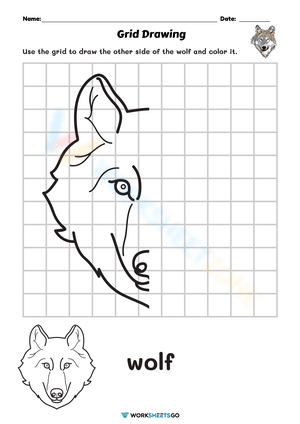
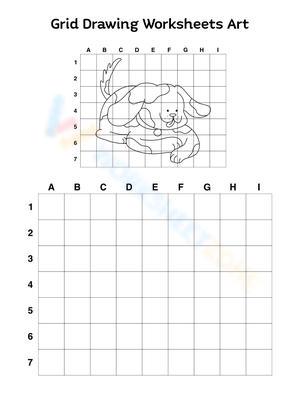
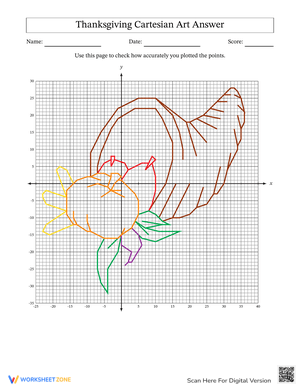
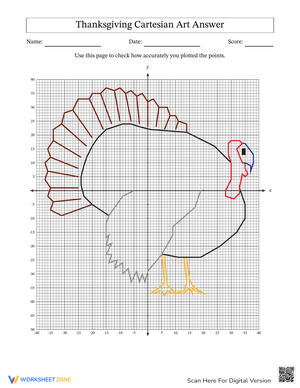
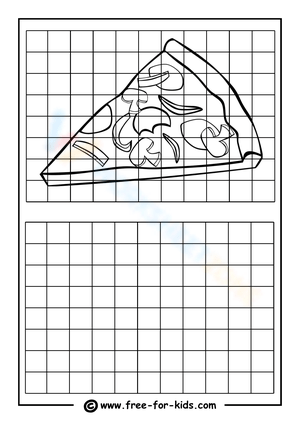
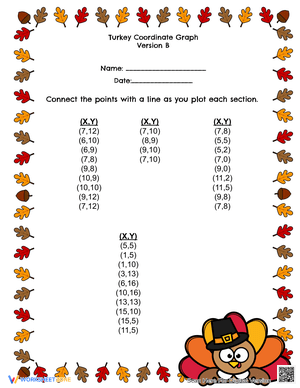
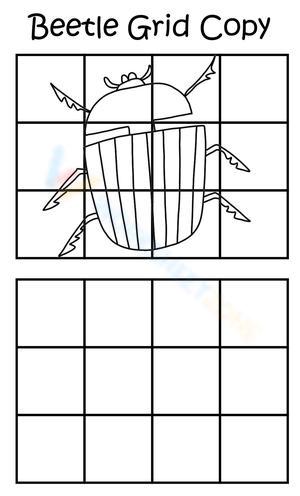
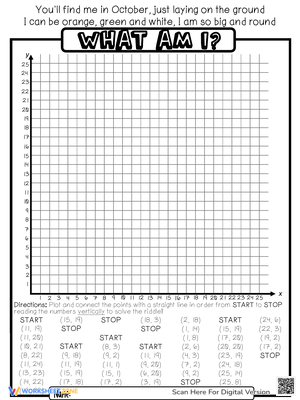
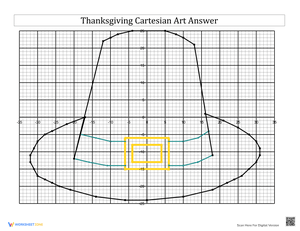
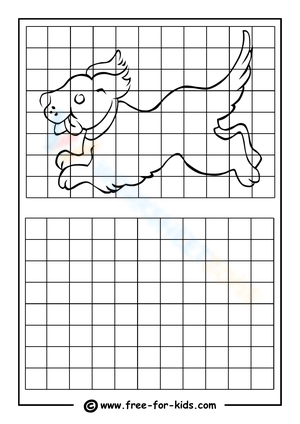
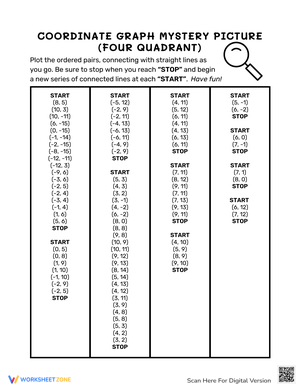
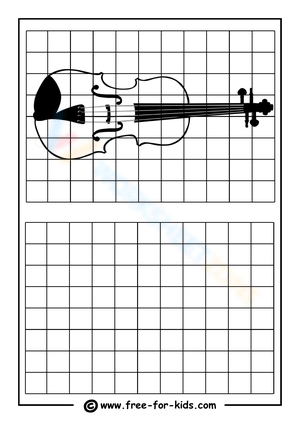
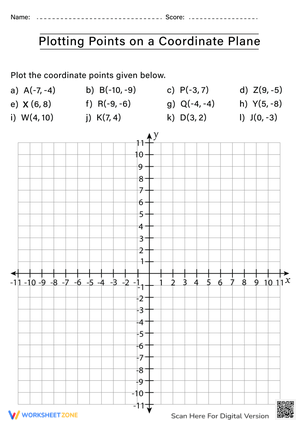
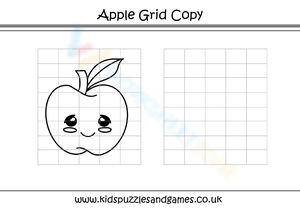
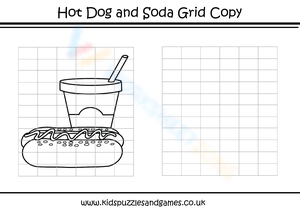
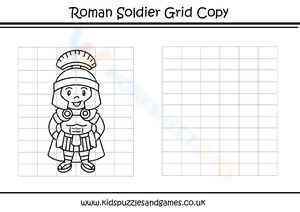
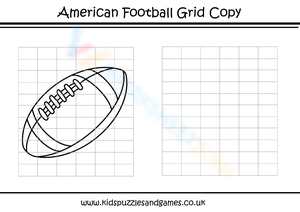
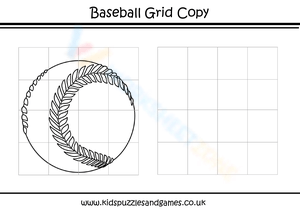
These 5th grade grid drawing worksheets printable resources give teachers a structured observational drawing activity that holds up equally well as a lesson anchor or a fallback in a sub plan. Students receive an image divided into labeled squares, a matching blank grid, and the same task every time: draw what you see, one square at a time. That consistency is part of what makes the format so teachable — and why it works with limited setup even on a rushed morning.
The Specific Skills These Worksheets Build
The grid does something a blank page cannot — it converts a complex image into discrete, answerable questions. On a 4 by 4 layout, students face 16 separate drawing decisions rather than one full-image copy task. Each square asks something narrow: where does this line enter the box, does it curve left or angle sharply, how close does it sit to the bottom edge? That sequence is where real proportion practice happens, not in the sweep of the overall picture.
Fifth graders are developmentally ready for this kind of checking. Students at ages 10 and 11 can hold a comparison between what they see and what they've drawn, catch a mismatch, and revise — a metacognitive move that is genuinely maturing at this grade level. Simpler copy activities don't demand that self-monitoring. The grid does, because it makes checking visible and expected rather than optional.
- Students compare line direction, entry points, and curve angles inside defined boundaries rather than estimating across an open page.
- They practice controlling short strokes — a half-curve, a sharp diagonal, a brief vertical — within confined spaces.
- They use spatial vocabulary naturally: top-left corner, center square, row two, diagonal from upper-right to lower-left.
- They build work stamina by watching a drawing grow through accumulated small corrections, not one sweeping attempt.
Fitting These Worksheets Into Your Weekly Lesson Planning
A short demonstration matters more than a long explanation. Before releasing the class, project the worksheet and model two or three squares aloud, narrating what you see: "This line enters from the upper-left corner, curves slightly right, and exits near the bottom edge." After two modeled squares, students understand the checking rhythm and can work independently while you circulate.
In an art room, one worksheet makes a strong 10 to 12 minute opening before a painting or mixed-media block — students settle, sharpen their eye, and arrive at the main activity already in a careful mindset. In a general education classroom, a small folder of 5th grade grid drawing worksheets printable options handles fast finishers, the last eight minutes before dismissal, and indoor recess days where you need a calm but genuinely engaging task. Because the directions compress to one sentence, these also travel well into sub plans without requiring the substitute to have any background in observational drawing.
Student Mistakes Worth Anticipating Before the Lesson
The most persistent error is drawing from memory rather than from the grid. A student copying an animal face, for instance, will often render the eye as a familiar oval even when the reference square shows a triangular sliver at an unexpected angle. The grid exposes this habit directly — the drawn square and the reference sit side by side, so the mismatch is hard to miss. Naming this tendency during the first modeling session redirects students toward actual looking rather than symbol substitution.
A second pattern worth watching: students who rush through early squares lose their alignment, and every square that follows compounds the drift. A brief mid-work pause — "find your hardest square so far and compare it directly to the reference" — keeps small errors from cascading into an unrecoverable whole. Upper elementary students often treat stopping to check as an admission of failure rather than part of the craft. Making the pause-and-check visible and routine during the first session changes that habit faster than correcting it square by square after the fact.
Standard Alignment
These worksheets connect most directly to the National Core Arts Standards anchor standard Creating — VA:Cr2.1, which at the fifth-grade level asks students to experiment with and apply art-making techniques with intention, not simply produce a finished piece. A grid drawing session addresses this concretely: students plan their approach square by square, monitor accuracy mid-process, and can articulate what they revised and why during a short closing reflection. The activity also touches VA:Re7.1 — perceiving and analyzing visual information — because every comparison between the reference square and the student's own mark is a small act of visual analysis. That dual alignment lets one session function as both an art-making and an arts-responding experience without requiring two separate lesson plans.
Adapting the Set for a Range of Student Readiness Levels
The format adjusts without requiring separate instructions for different groups, which matters when you are managing a full class. A bold two-color silhouette works for a student still building line confidence; a dense landscape with overlapping shapes and implied edges works for a student who finishes quickly and needs more to notice. Keep both types accessible and distribute by readiness without making the grouping visible — students rarely need to know they are working from different images.
- For students who need more support: images with clear, unbroken outlines and strong contrast between subject and background reduce the number of judgment calls per square.
- For students ready for more challenge: images where negative space shapes the composition, or where edges are implied rather than drawn, require slower and more deliberate looking.
- Let confident drawers enlarge the image onto a larger blank grid rather than copying at the same scale — that changes the spatial math without changing the process language the whole class is using.
- After completing the drawing, ask early finishers to add color, a simple background, or a written line about which square required the most adjustment and why.
One honest tradeoff: this format occasionally frustrates students who freeze when shown an unfamiliar image. Having worksheets with clearly recognizable subjects — a dog, a sneaker, a lighthouse — alongside more abstract options lets those students get started without extra teacher intervention while others work through more complex imagery.
Frequently Asked Questions
What makes grid drawing well-suited to 5th grade rather than earlier grades?
Fifth graders are ready for the metacognitive checking this format requires — comparing what they drew to what the reference shows, finding the mismatch, and correcting it deliberately. That self-monitoring process is less consistent in grades 2 and 3. The format also pairs well with the increased independence expected at this grade level. Many 5th grade grid drawing worksheets printable sets reflect that by keeping instructions minimal and the routine consistent across every worksheet in the set, so students can self-start after a brief whole-class model.
How long does a grid drawing session typically take?
Most students complete a standard 4 by 4 grid worksheet in 12 to 20 minutes, depending on image complexity and how carefully they work. Simpler images with bold outlines run closer to 12 minutes; denser images with fine texture and overlapping shapes can hold a focused student for 20 or more. That range makes the format flexible enough for both a short warm-up slot and a full independent work period within a single class block.
Can these worksheets support portfolio or progress documentation?
They work better as formative tools than as summative grades. The most useful information comes from watching how students check their work mid-process — whether they pause to compare, adjust errors, and push through difficulty rather than abandoning squares that feel wrong. A short closing reflection ("which square was hardest and what did you do about it?") captures that process more honestly than scoring the finished drawing. For teachers using 5th grade grid drawing worksheets printable resources across a semester, before-and-after comparisons over several sessions show growth more clearly than any single completed piece.
Do students need prior drawing experience to use these successfully?
No. The grid removes the need for prior confidence by replacing "draw a horse" with "draw what you see in this small box." That reframe is almost always enough to get reluctant students started. What helps more than experience is patience — students who work impulsively benefit from explicit modeling of the pause-and-check rhythm before they settle into the format. Once they understand that checking is part of the work rather than a sign of failure, most move through the activity with genuine engagement.












 Interactive Worksheet Maker
 Quiz Maker
 Word Search Maker
 Crossword Puzzle Maker
 Word Scramble Generator
 Sentence Scramble Generator
 Handwriting Worksheet Generator
 Name Tracing Generator
 Fill In The Blank Generator