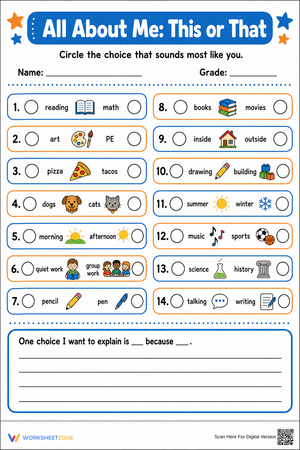
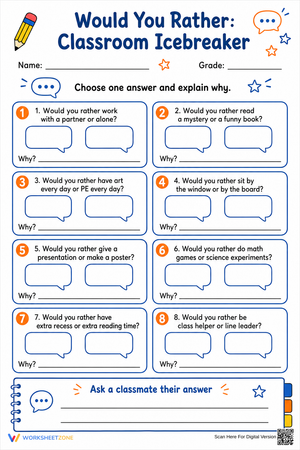
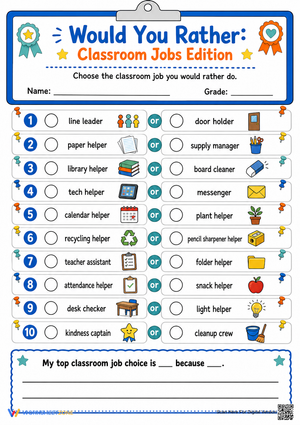
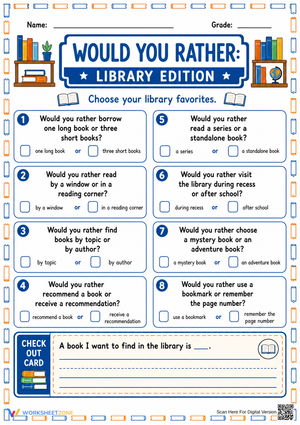
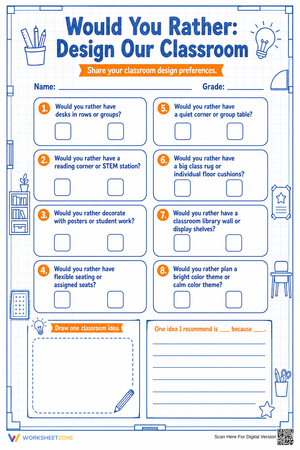
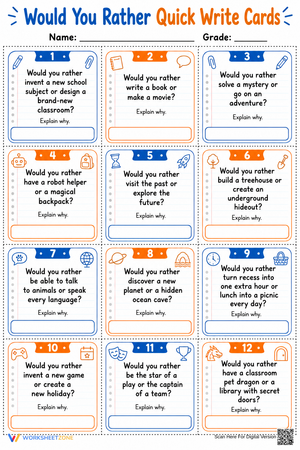
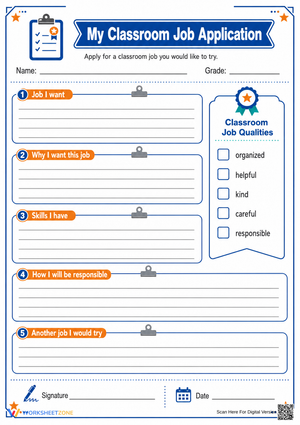
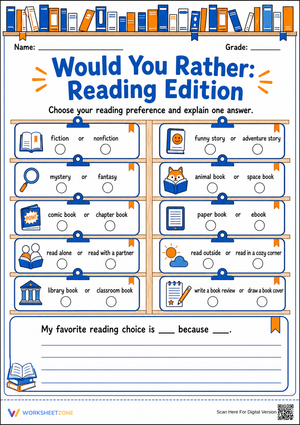
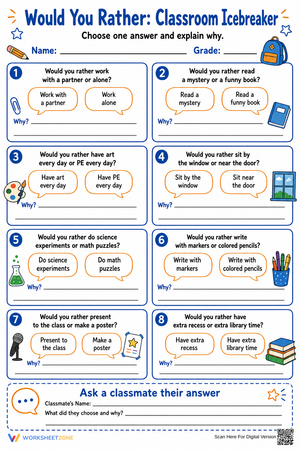
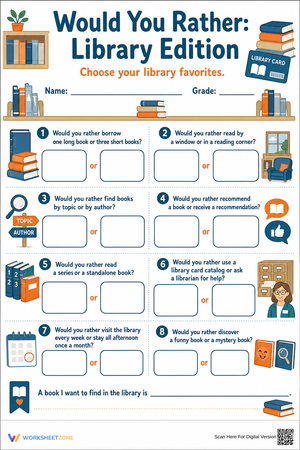
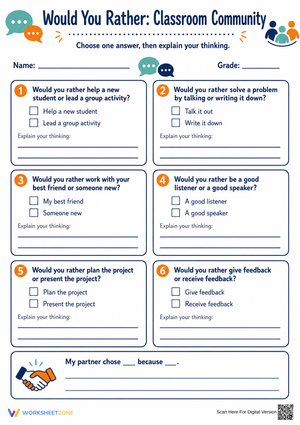
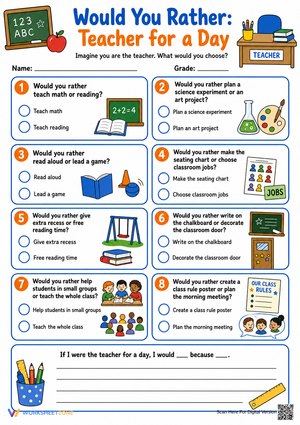
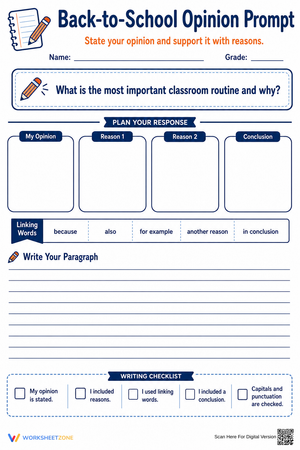
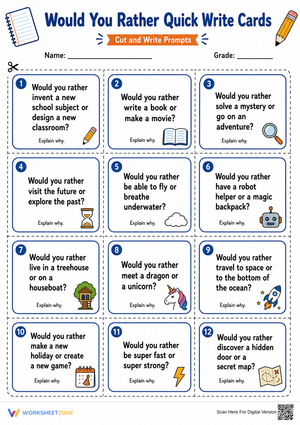
These 5th grade opinion writing printable worksheets give teachers a sequenced set of resources for every phase of the writing process — from staking a clear claim to writing a conclusion that closes an argument rather than just restating it. The set is built around the specific moves that separate grade 5 opinion writing from the simpler preference paragraphs students produced in third grade.
The Writing Moves Each Worksheet Targets
Grade 5 opinion writing demands more than a stated preference. Students need to construct a real argument: a specific, debatable position; reasons that directly support that position; facts or details that give each reason weight; connective language that ties ideas together; and a conclusion that signals resolution. Each worksheet targets one or two of these moves before asking students to combine them in a full response.
- Claim writing — Students practice writing a position that is specific and debatable, not just a broad topic sentence. Several worksheets ask students to compare a weak opinion to a stronger one and rewrite it.
- Reason development — Students identify two or three reasons that connect directly to the claim, not just related thoughts floating around the topic.
- Evidence attachment — Planning boxes prompt students to record a fact, example, or specific detail for each reason before drafting a single sentence.
- Linking language — Practice with transitions — for example, in addition, this shows that, as a result — builds the connective tissue that holds an argument together.
- Conclusion strategies — Worksheets on conclusions focus on restating the opinion in different words and signaling the end of the argument, not copying the opening sentence verbatim.
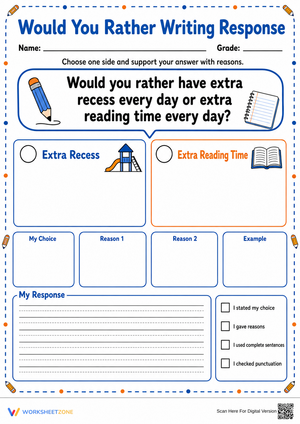
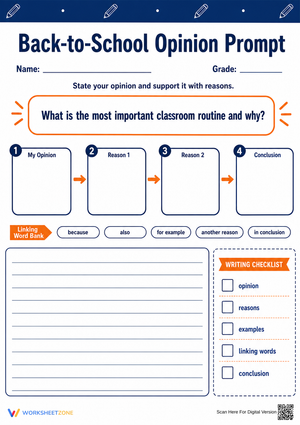
Some worksheets in the set focus narrowly — a graphic organizer that walks through claim, reason, and evidence for a single body paragraph, for instance. Others bring the full structure together in a drafting worksheet with space for all parts of the response. That range lets teachers target exactly the skill a class needs on a given day without pulling from multiple unrelated sources.
Mistakes Students Make That These Worksheets Help You Catch
The most consistent error in grade 5 opinion writing is not a missing claim. Students usually remember to state a position. The real breakdown happens in what we might call the "floating reason" — a student writes "one reason is that exercise is better for your health" and then moves immediately to the next reason, never explaining how, why, or what that connection means for the argument. The evidence step is where most grade 5 writers stall, and the worksheets that specifically ask students to write the reason, then the supporting detail, then a sentence beginning "This shows that..." address exactly that gap.
Conclusions produce a separate recurring problem. Students who know a conclusion is required will write "In conclusion, I still think [topic] is the best choice" — almost word for word from their opening sentence — and stop there. The worksheet that targets conclusions walks students through rewording the claim, briefly summarizing the reasoning, and adding a closing thought that goes beyond restating. That process produces conclusions that feel finished rather than cut off.
A third pattern worth watching: vague evidence. Phrases like "studies show" and "scientists say" appear frequently in grade 5 persuasive writing, with no specificity behind them. The planning worksheets that include a box labeled "My specific evidence is ___" push students to commit to a real example before they draft, which reduces the empty citations that accumulate in final pieces.
Smart Ways to Build These Worksheets Into Your Lessons
The most reliable entry point is the mini-lesson launch. A teacher models how to turn a broad topic into a debatable claim, then uses a graphic organizer for guided practice. The class works through claim and reasons together before students complete the evidence boxes independently. That 20-minute cycle produces solid formative data on who can generate reasons versus who can explain them — a distinction that matters when planning what to teach next.
In writing centers, pairing a planning worksheet with a drafting worksheet keeps groups productive without requiring constant teacher supervision. One group uses the organizer to plan a claim and two reasons; another drafts a paragraph from a completed planning page from the previous session. The structure carries the task forward so the teacher can confer rather than manage logistics.
These 5th grade opinion writing printable worksheets also hold up in intervention. When a student is stuck at the claim stage, pulling just that worksheet focuses the conversation on one skill without the pressure of a blank writing space. The format removes the setup burden — no notebook to open, no structure to remember from scratch — and keeps the session moving toward actual writing practice.
Standard Alignment
The set aligns to CCSS.ELA-LITERACY.W.5.1, which requires students to introduce a topic, state an opinion, supply logically ordered reasons backed by facts and details, use linking words and phrases, and provide a concluding statement. That standard names five distinct moves — not just opinion plus reasons — which is why a single blank prompt rarely generates the evidence of learning teachers need. The structured planning and drafting tools in the set make each of those five moves visible in student work, which simplifies scoring and makes it easier to document progress in a writing portfolio or explain performance at a parent conference.
Adapting the Set for a Range of Writers
The simplest adjustment for writers who are not yet generating reasons independently is removing one level of demand. A worksheet where the two reasons are partially provided and the task is to find supporting evidence for each one keeps the student working at grade level — practicing evidence use — without hitting a wall before the practice begins. That kind of targeted support works better than assigning a modified prompt and hoping the student figures out where to start.
For students who write fluently but produce shallow arguments, the same planning worksheet becomes a revision tool. Ask them to draft a response, then return to the planning page, identify which reason has the weakest evidence, rewrite it with a more specific example, and explain in one sentence why the revised version is stronger. That step builds the evaluative thinking grade 5 opinion writing actually demands — using the same resource without requiring a different worksheet.
When readiness spans a wide range — which is standard in any grade 5 writing unit — 5th grade opinion writing printable worksheets that include sentence frames can run alongside the open-response versions without restructuring the whole lesson. Both groups work on the same standard. The difference is how much of the writing structure is visible on the worksheet itself.
Using the Worksheets for Review and Timed Practice
Short opinion tasks are consistently useful during the weeks before a state writing assessment. Students respond to a focused prompt, plan quickly using a condensed organizer, and produce a short written answer that still includes claim, reasons, support, and conclusion. The task fits inside a single class period and generates enough student writing to see clearly whether the standard is sticking.
The most effective review approach is pairing a short prompt worksheet with the revision checklist. Students draft, then move to the checklist immediately — not as a final polish step but as a mid-draft check. If the conclusion is missing, they add it before moving on. That self-correction loop mirrors the revision habits students need on timed assessments. Repeating that structure across several 5th grade opinion writing printable worksheets over a two-week review cycle builds the kind of automatic planning routine that holds up under test conditions.
Frequently Asked Questions
What makes a claim appropriate for grade 5 opinion writing?
A strong grade 5 claim is specific and debatable — it takes a clear position that a reader could reasonably push back on. "Dogs make good pets" is too broad to anchor an argument. "Dogs are a better first pet for children than cats because they are easier to train" opens a real debate. Several worksheets in the set ask students to compare a vague opinion to a focused one and rewrite it, which builds that judgment before drafting begins.
Can each worksheet be used as a standalone assignment rather than part of a sequence?
Each worksheet stands on its own. There is no required order for daily or single-lesson use. A teacher can pull the transitions worksheet for one lesson, use the graphic organizer for a test-prep session, or send a prompt worksheet home as weekend writing practice. Running the full set in sequence produces the most coherent unit, but individual worksheets work independently without any setup from earlier lessons.
How do the worksheets support writers who struggle specifically with the evidence step?
The worksheets most useful for evidence development include a three-part planning box: reason, specific evidence, and a sentence connecting the evidence back to the claim. Students who write reasons fluently but then stall — the "floating reason" pattern — respond well to that format because it breaks evidence use into a visible, manageable step rather than leaving it as an implied expectation. After working through two or three of those structured organizers, most students begin including the connection sentence in their drafts without the prompt in front of them.












 Interactive Worksheet Maker
 Quiz Maker
 Word Search Maker
 Crossword Puzzle Maker
 Word Scramble Generator
 Sentence Scramble Generator
 Handwriting Worksheet Generator
 Name Tracing Generator
 Fill In The Blank Generator