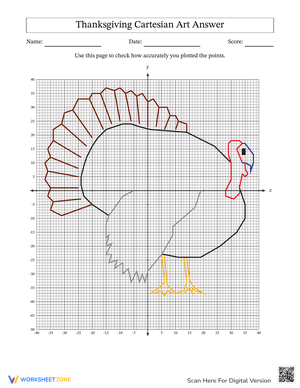
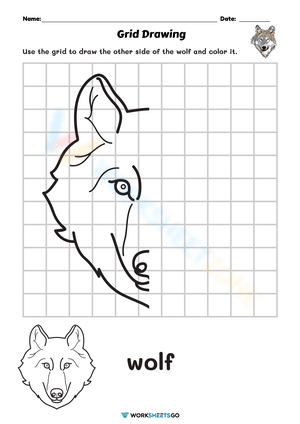
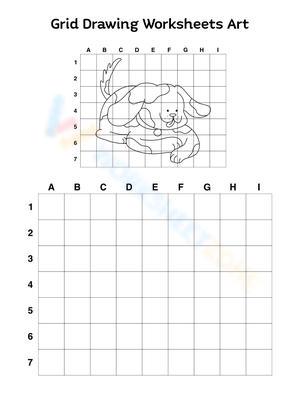
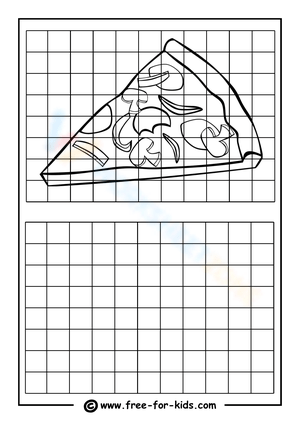
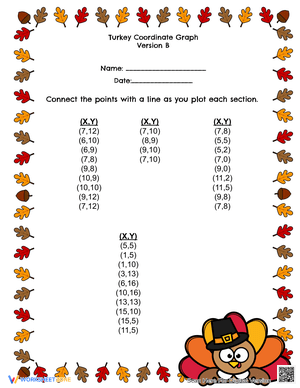
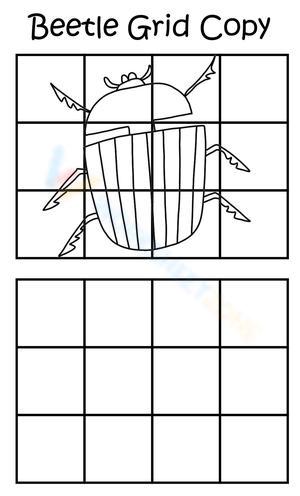
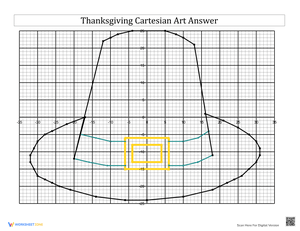
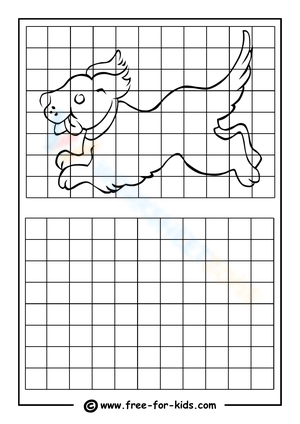
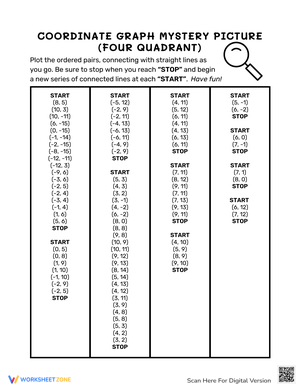
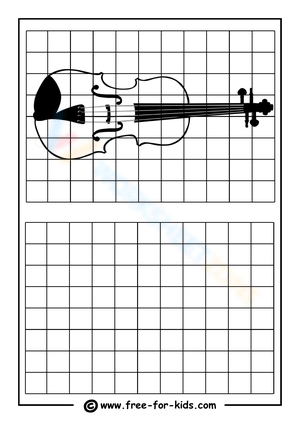
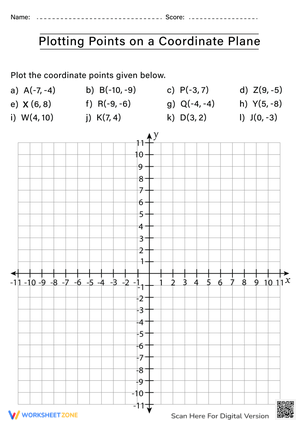
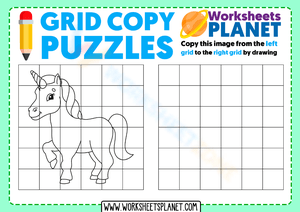
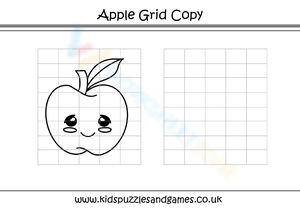
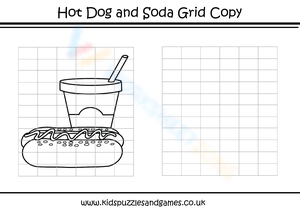
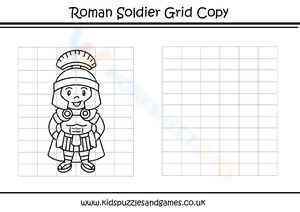
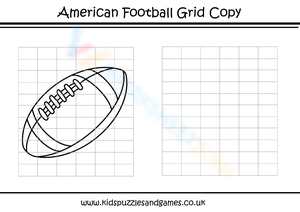
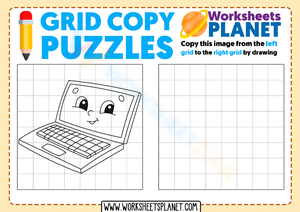
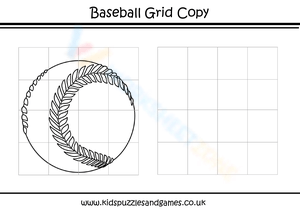
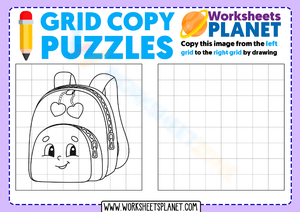
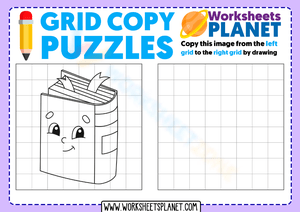
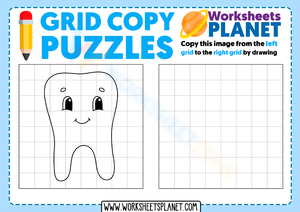
These 4th grade grid drawing worksheets pdf resources move students from the symbolic shorthand most 9- and 10-year-olds rely on — the lollipop tree, the house-box with a triangle roof — toward genuine observational drawing. Each worksheet pairs a labeled reference grid with a blank drawing grid so students can work square by square rather than attempting to reproduce an entire image from memory. Teachers get a complete practice set ready to print, sized for a standard art period without requiring students to construct their own grids before the real work begins.
The Specific Skills This Set Builds
Grid drawing asks students to do something that runs counter to their instincts at this age: ignore what they know an object looks like and draw only what they see inside one small square. That shift is the central skill, and these worksheets build up to it deliberately. Each worksheet targets a cluster of related abilities:
- Grid navigation: Reading a coordinate system where columns carry letter labels and rows carry numbers, then locating the matching square on the blank drawing grid without losing their place mid-session.
- Observational accuracy: Identifying where lines enter and exit a single cell — not guessing based on the whole shape — and replicating those entry and exit points precisely on the drawing grid.
- Pencil pressure control: Drawing grid lines lightly enough that they erase cleanly after the image is complete, which requires consistent, deliberate pressure rather than the heavy marks many students default to.
- Proportional reasoning: Understanding that each square represents an equal slice of the whole image, so rushing through some cells while overworking others produces visible distortion in the finished drawing.
- Self-correction habits: Comparing finished squares to the reference cell by cell before moving on, rather than waiting until the full drawing is done to notice that something has drifted.
The cross-curricular reach here is genuine, not incidental. When students identify a square as "C4" or "row 3, column B," they are working with the same coordinate logic that appears in 4th grade math under geometry and data representation. Art teachers who name this connection aloud often find that students who freeze in front of abstract coordinate grids in math become considerably more confident once they have located dozens of them inside a drawing task.
Grid Drawing in History — and Why It Matters to Introduce That Context Here
The grid method is not a classroom invention. Ancient Egyptian artists used it to maintain strict proportions across massive wall paintings, establishing a consistent unit of measure from one section of a tomb to the next. Albrecht Dürer built mechanical grid devices specifically to project accurate perspective into his engravings. Teaching 4th graders that working artists throughout history solved the same proportion problem they are solving — by breaking the image into a grid — gives the technique weight and purpose. Students who understand this tend to take the erasing seriously. If it was good enough for Renaissance masters to labor over proportion square by square, it is worth slowing down to get one cell right before moving to the next.
Lesson-Planning Strategies That Get the Most From These Worksheets
The index-card trick is worth building into every introductory lesson: cut a square out of the center of a standard index card the same size as one grid cell, and have students use it as a viewing window over the reference grid. When only one square is visible at a time, the brain stops seeing "a fish" or "a face" and starts seeing abstract line segments entering from the left edge and curving toward the lower-right corner. That shift usually takes three or four squares to click — then you can watch students visibly relax as the task stops feeling like drawing and starts feeling more like tracing shapes they have no emotional attachment to.
A 1:1 ratio — where the reference grid and the drawing grid use identical square sizes — is the right starting point for most of the class. Students do not need to calculate any scaling, so all their attention stays on observation and line placement. Reserve the last ten minutes of the first session for a brief class share: one square each student found difficult and one they found surprisingly easy. That conversation surfaces vocabulary students need ("the line comes in at the top-left corner, not the middle of the edge") and primes sharper looking during the next session.
Because the 4th grade grid drawing worksheets pdf format delivers immediate visible progress — students can see accurate sections building across the grid — even reluctant drawers stay engaged longer than they would with an open drawing prompt. The set fits neatly into Monday morning warm-ups after morning meeting, or as a focused 15-minute activity the day before a longer studio session when you need students to arrive in an observational frame of mind.
Errors Students Make That These Worksheets Help You Catch
The most consistent error is recognition override: a student looks at the reference square, notices it is part of an eye, and draws an eye rather than the three curved lines actually present in that cell. This happens most with faces and animals. You can spot it when a student's drawing looks vaguely correct from a distance but the line positions are all slightly wrong — curves start from the wrong edge, proportions drift, and the finished drawing ends up looking like a stylized interpretation rather than a careful copy. Asking students to describe what they see in words before they draw slows the recognition reflex enough to break the pattern: "a curved line starting at the bottom-left corner, rising toward the right, touching the top edge" forces them to see the abstraction instead of the face.
Pencil pressure is the second consistent problem. Many students draw grid lines with the same confident pressure they use for final lines, and by the time they try to erase, the grid is permanently impressed into the paper surface. Demonstrating this explicitly — pressing hard for a few visible grid lines, then erasing them in front of the class and showing the indentation that remains — lands harder than any verbal reminder.
Students also lose their place on the grid more often than expected, particularly in the lower half of a larger image. A simple fix: have them cross off each cell on the reference grid lightly with pencil once they have finished drawing it. It looks messy on the reference sheet, but it eliminates the confusion of trying to remember which squares are done after returning from a bathroom break or being interrupted mid-row.
Standard Alignment
These worksheets align most directly with VA:Cr2.1.4a from the National Core Arts Standards: students explore and apply art-making techniques with intention and growing control. Grid drawing sits at the intersection of creating and investigating — it requires students to use a systematic method rather than rely on guesswork, which is exactly what this standard asks 4th graders to practice. The coordinate-reading component also connects to CCSS Math 4.G.A, which covers drawing and identifying geometric figures and applying understanding of line relationships. That connection gives classroom teachers who integrate subjects a natural anchor point and strengthens the case for scheduling grid drawing during a cross-curricular block.
Adjusting the Set for a Range of Learners in One Classroom
The 4th grade grid drawing worksheets pdf set works across a fairly wide skill range without much modification. For students who struggle with the reference grid, reduce image complexity — a simple geometric object with straight edges is far less demanding than a photorealistic animal face, and the grid mechanics remain identical. For students who complete the 1:1 ratio worksheets quickly and accurately, introduce a 1:2 ratio challenge: the reference grid uses half-inch squares, the drawing grid uses one-inch squares, requiring the student to double every line measurement. This is a genuine proportional reasoning task, not just more drawing practice.
Students with fine motor challenges benefit from larger grid squares — one and a half inches rather than one inch — which allows more room for pencil strokes without changing the core skill. Removing the erasing requirement for those students by having them draw grid lines in a light blue colored pencil also lowers the frustration that comes from repeated erasing on thinner paper. The observational work remains intact; only the cleanup step changes.
Frequently Asked Questions
What image subjects work best for a first grid drawing lesson?
High-contrast images with clean edges work better than photographs with subtle gradients and value shifts. A bold line drawing of an animal profile, a simplified architectural shape, or a geometric still life gives students clear line entry and exit points in each square. Avoid faces for the first lesson — recognition override is strongest with faces, and students need a few sessions of grid work before they can resist the pull to draw what they know rather than what they actually see in the cell.
How do I handle students who finish early while others are still working?
Keep a more demanding worksheet nearby — one with a finer grid or a more complex reference image. A student who has finished the standard worksheet accurately can also be asked to add shading to the completed drawing using the same cell-by-cell method, this time observing light and dark within each square rather than just line placement. That extension task builds directly on the observational habits the original worksheet introduced, rather than simply adding more squares to fill.
Can these worksheets be used outside the art room?
A 4th grade grid drawing worksheets pdf fits easily into a science unit when the reference image is a biological specimen — a leaf with visible veining, an insect diagram, a cross-section of a seed. Social studies teachers have used them with historical artifact images. The grid technique transfers to any subject where students need to observe and reproduce a detailed visual accurately. The habits it builds — slow down, examine one section at a time, check your work against the reference before moving on — are useful well beyond art class.












 Interactive Worksheet Maker
 Quiz Maker
 Word Search Maker
 Crossword Puzzle Maker
 Word Scramble Generator
 Sentence Scramble Generator
 Handwriting Worksheet Generator
 Name Tracing Generator
 Fill In The Blank Generator