These research strategies worksheets for 4th grade give teachers a ready-made structure for one of upper elementary's most demanding skills: moving students through a short research project from a first focused question all the way to a drafted response. Each worksheet handles a distinct part of the process — question writing, source tracking, note-taking, fact sorting — so students can build the routine step by step rather than holding every expectation in their heads at once. The printable PDF format means teachers can pull individual worksheets based on a project's scope instead of running the full sequence every time.
The Specific Skills Each Worksheet Builds
Grade 4 is often the first year students encounter a structured research assignment, and the gap between what teachers ask and what students can actually do shows up quickly. These worksheets address six moves that fourth graders need direct practice with:
- Writing focused research questions — narrowing a broad topic ("sharks") into something answerable ("How do sharks locate prey?") using tiered question stems.
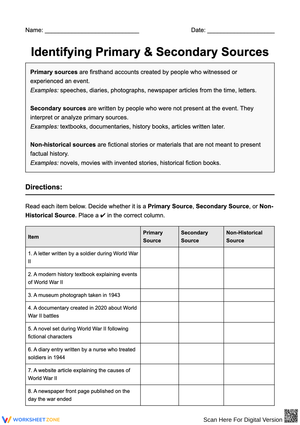
- Recording source information — title, source type, and the date accessed, building early citation habits without requiring full bibliography formatting.
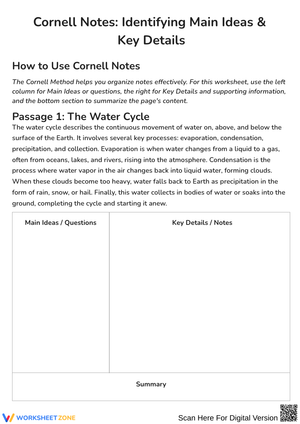
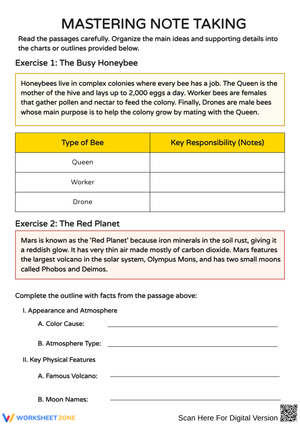
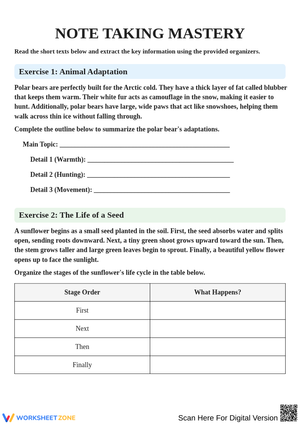
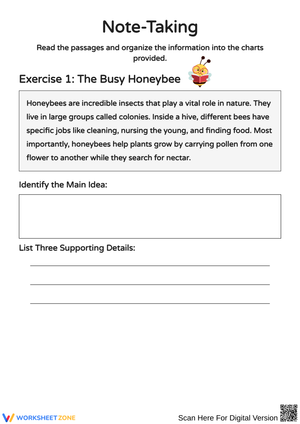
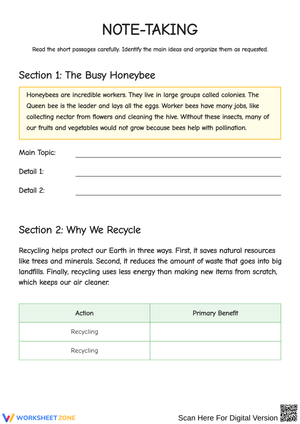
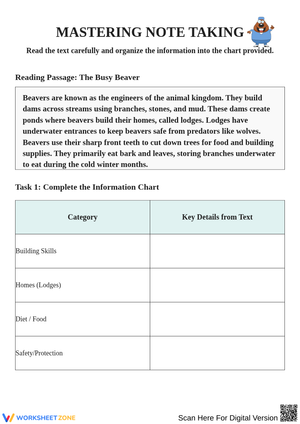
- Taking notes in phrases — capturing facts in a few words rather than lifting full sentences from a source.
- Sorting facts by subtopic — distributing notes across labeled categories before any drafting begins.
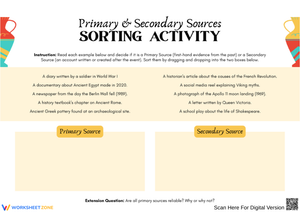
- Comparing two sources — identifying what each source adds and where both agree.
- Writing from notes — using evidence organizers to turn brief phrases into complete, source-grounded sentences.
What the set deliberately avoids is asking students to perform multiple cognitive moves inside the same worksheet. When a note-taking worksheet also demands a full paragraph summary at the bottom, most students skip the notes and write from memory — exactly the habit the practice is meant to interrupt.
Student Errors Worth Anticipating Before You Assign
The most persistent problem at this grade level is wholesale copying. A student told to "write down facts" will often transcribe three sentences from a single paragraph word for word, then look up with genuine confidence the task is done. A note-taking worksheet that limits each entry box to two or three lines pushes back on this directly — students simply cannot fit a full copied sentence into a two-inch box, which forces them to decide what actually matters in the text.
The second recurring issue is vague question writing. Left without a model, many fourth graders produce questions like "What is climate change?" or "Tell me about Abraham Lincoln" — questions any sentence in any source could technically answer. A question-writing worksheet with tiered stems ("How does...?", "What causes...?", "Why did...?") gives students a structure they can apply independently after two or three rounds of practice.
A third error is less visible but equally damaging: students who find one strong source and mine it exclusively, skipping the second source they located. Source-comparison organizers interrupt this pattern by requiring at least one fact from each source before the student can move forward. When students fill in both columns, comparing information becomes a natural byproduct of the format rather than an additional instruction teachers have to keep repeating.
Building These Worksheets Into Your Research Unit
A five-day sequence works well for a short project. Day one: students complete the question-writing worksheet, generating three or four focused questions to guide their reading. Day two: they use the source-tracking worksheet alongside teacher-selected materials — classroom nonfiction, class articles, or a reference site like Britannica Kids. Day three: one note-taking worksheet organized by subtopic. Day four: a fact-sorting activity where students mark their strongest evidence. Day five: drafting from the evidence organizer worksheet.
The real diagnostic value of this structure shows up when the final writing is weak. Instead of guessing where things went wrong, you can move backward through the worksheets — was the topic too broad? Did the student rely on a single source? Did the notes stay too close to the original wording? Each worksheet leaves a visible record of student thinking that a blank piece of paper never would.
One classroom-tested move worth building in early: ask students to skip a line between every note entry. That empty space becomes a natural slot for adding a second fact from a different source the following day, which turns a small formatting habit into a built-in prompt for comparing information across sources.
Standard Alignment
These worksheets align directly with CCSS.ELA-LITERACY.W.4.7, which asks fourth graders to conduct short research projects that build knowledge through investigation of different aspects of a topic. The question-writing and source-tracking worksheets address that "investigation" expectation head-on. Equally central is CCSS.ELA-LITERACY.W.4.8, which requires students to gather information from print and digital sources, take notes, categorize information, and provide a source list. The note-taking and sorting worksheets map directly to that standard's language.
Both standards sit in the Writing strand under Research to Build and Present Knowledge — a strand that Grade 4 introduces formally after students spend K–3 building narrative and informational writing fluency. That placement explains why research strategies worksheets for 4th grade carry a heavier instructional load than similar resources at earlier grades: students are encountering structured research for the first time, not reinforcing an existing routine.
Adjusting the Set for Students at Different Readiness Levels
Students who struggle to begin benefit from pre-labeled category boxes rather than blank note columns. Instead of deciding how to organize their facts, they drop information into provided subtopics — a structure that reduces the decision load and lets them concentrate on the reading. For the question-writing worksheet, a word bank of question starters alongside one completed example gives hesitant students a launching point without removing the expectation that they write their own questions.
Students who finish quickly can move to the source-comparison worksheet ahead of others, or work with open-ended note organizers that have no pre-set categories — they name their own subtopics, which requires a more sophisticated understanding of the material. The modular design of the set makes this manageable: teachers assign the worksheets that match the current stage of work rather than running through all of them in fixed order every time.
For students receiving support services, pairing research strategies worksheets for 4th grade with a shared reading or read-aloud removes the decoding barrier while keeping the research skill intact. The student still decides what to record, paraphrases the fact, and sorts evidence — that cognitive work stays in place even when the reading itself is supported.
Frequently Asked Questions
How many worksheets does a short research project typically need?
A four- or five-day project usually calls for four to five individual worksheets: one for question writing, one for source tracking, one or two for note-taking by subtopic, and one for drafting or summarizing. Longer projects might add a source-comparison worksheet and a revision checklist. There is no required minimum — some teachers use a single note-taking worksheet as a standalone lesson well before assigning a full project later in the year.
What makes a note-taking worksheet different from a general graphic organizer?
A note-taking worksheet is source-facing — it has fields for the source name, space for categorized facts, and boxes sized to discourage full-sentence copying. A general graphic organizer often works at the drafting stage, helping students arrange already-gathered notes into a writing plan. Several worksheets in this set bridge both jobs by including source fields at the top and a short drafting frame at the bottom, which works well once students are familiar with the two-step routine.
Can these worksheets handle digital and print sources at the same time?
Yes. The source-tracking worksheets include fields for both titles and website names, so students researching with a classroom book and a reference site can record both in the same worksheet. The note-taking format is source-neutral — students write facts regardless of where those facts came from. Teachers using Britannica Kids alongside nonfiction leveled readers have found this flexibility especially useful during content-area writing units.
What should I do when a student freezes in front of an unfamiliar source?
This is one of the most common sticking points when using research strategies worksheets for 4th grade. Pre-reading each source before distributing it and marking one or two sections likely to yield relevant facts makes a real difference. A brief sticky note on the article — "check paragraph 3 for habitat information" — points the student toward productive reading without doing the thinking for them. The worksheet still requires the student to decide what is worth recording.












 Interactive Worksheet Maker
 Quiz Maker
 Word Search Maker
 Crossword Puzzle Maker
 Word Scramble Generator
 Sentence Scramble Generator
 Handwriting Worksheet Generator
 Name Tracing Generator
 Fill In The Blank Generator




 BACK TOSCHOOL