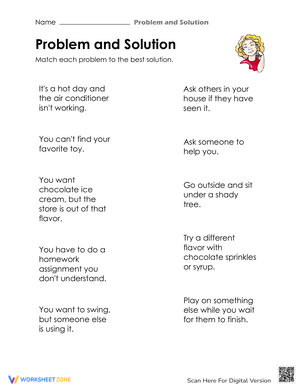
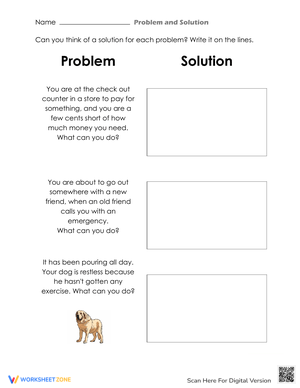
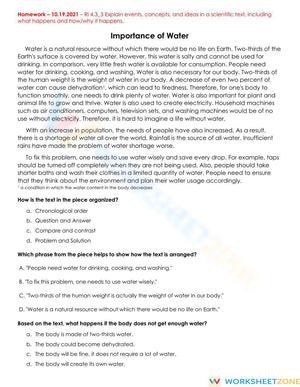
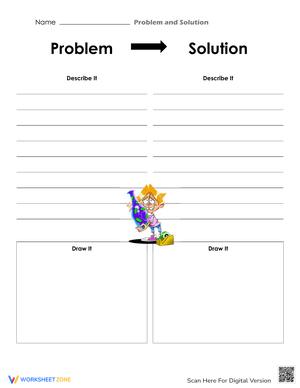
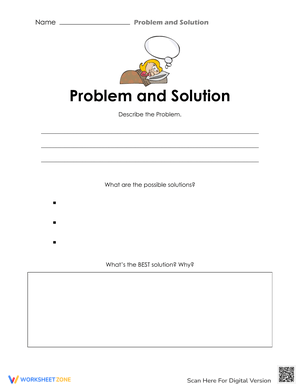
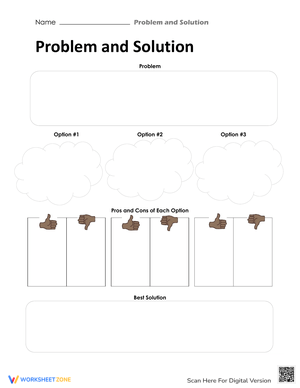
These problem and solution in nonfiction worksheets for 4th grade address one of the trickier comprehension skills in the grade 4 ELA year — not because the concept is abstract, but because fourth graders consistently conflate the subject of a passage with the actual problem it describes. A student who reads about drought in California will often write "the problem is drought" when the passage is really about how one farming community ran out of irrigation water during a specific dry season. These worksheets build the precision that kind of close reading demands.
The Specific Skills Each Worksheet Targets
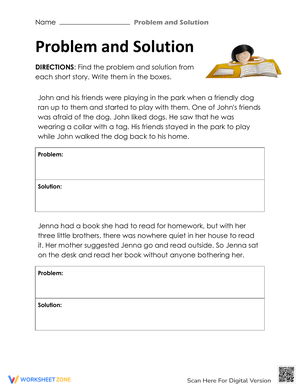
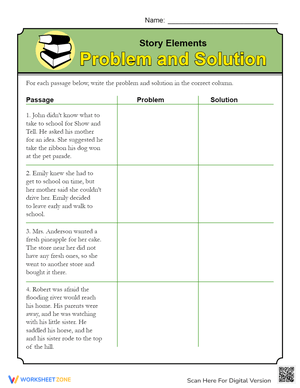
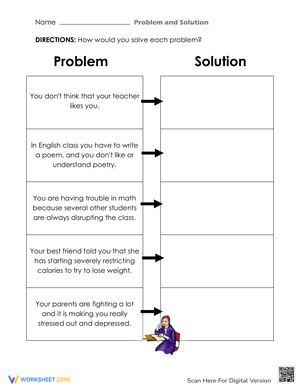
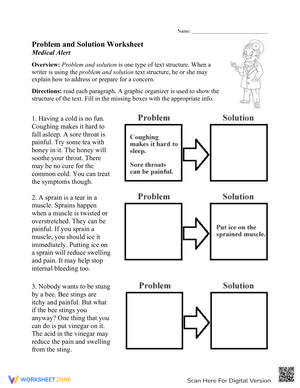
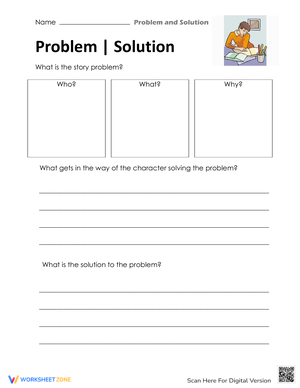
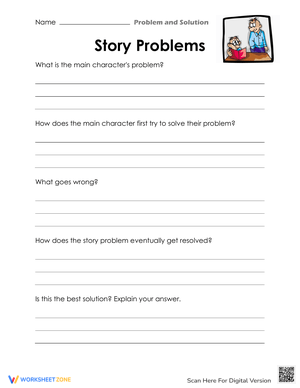
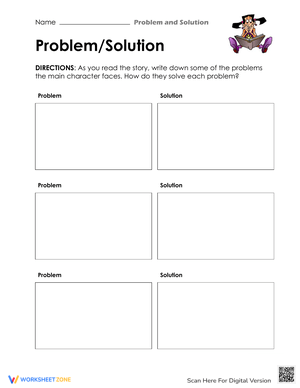
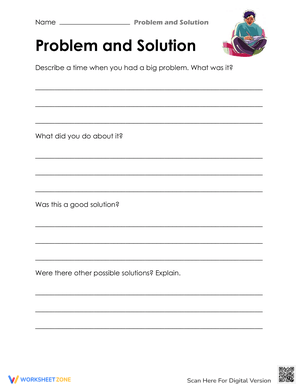
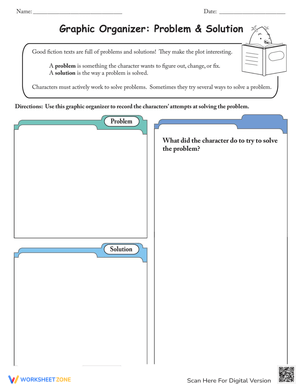
Each worksheet pairs a short nonfiction passage with questions that require students to do more than recall facts. Students identify the central problem — not the topic — and name the solution or solutions the text proposes. They locate text evidence, quoting or paraphrasing the sentence that supports their answer. They notice signal words like problem, issue, challenge, as a result, and in response to, learning to treat those words as structural markers rather than isolated vocabulary. In stronger worksheets within the set, students also evaluate whether the proposed solution fully addresses the problem or only reduces it — a judgment that pushes grade 4 readers toward analytical rather than purely literal thinking.
What separates this skill from general comprehension practice is that students must hold two distinct roles in mind simultaneously: the thing that is wrong and the action taken to fix it. That dual-tracking requirement is part of why text structure instruction yields measurable comprehension gains. When students learn to expect that informational text is organized around a structure — not just a subject — they read with more purpose and retain more of what they encounter.
Student Mistakes That Show Up Every Time
The most common error is writing the topic as the problem. A worksheet passage about ocean pollution, for instance, might describe a specific issue: microplastics entering the food chain through fish consumed by humans. Students will write "the problem is ocean pollution" — accurate in a surface sense, but not the claim the text actually makes. The questions in this set press students toward the specific argument, not the general category.
A second error appears when students confuse problem-and-solution with cause-and-effect. Both structures ask readers to track relationships between events or conditions. The difference is orientation: cause-and-effect explains why something happened, while problem-and-solution focuses on what someone did about it. Students who understand this distinction read differently from the first sentence rather than waiting for a signal word to appear. A quick paired example before students begin — one passage framed as cause-and-effect, one as problem-and-solution on the same topic — sharpens that distinction faster than any written definition.
A third pattern worth watching: students who locate signal words correctly but still produce vague answers. A student might circle as a result and then write "they fixed it" without specifying what the fix involved. Building an evidence-citation habit — requiring students to write the actual sentence from the passage that names the solution — is the most reliable way to push past that kind of shallow response before it becomes a testing habit.
Fitting These Worksheets Into Your ELA Week
The most effective use starts before students read independently. Project one passage and read it aloud, pausing after each paragraph to ask two questions: "Is the text telling me what went wrong, or what happened next?" and "Is there a response to this problem, or just an explanation of it?" That think-aloud, done in under ten minutes, gives students a repeatable process they carry into independent work. Then students complete the remaining questions on their own or with a partner. The whole sequence — model, guided practice, independent — fits inside a 40-minute ELA block with a few minutes left for a brief debrief.
For small-group work, choose a single passage and have students use two colored highlighters: one for any sentence that describes the problem, another for sentences that describe the solution or response. That physical sorting step works well for readers who read accurately but struggle to organize what they've taken in. In a literacy center rotation, each worksheet stands alone as a complete task — students read, respond, and check their answers against a key without needing teacher direction mid-rotation.
Teachers also use these problem and solution in nonfiction worksheets for 4th grade as quick formative checks. A single passage with one short constructed response shows almost immediately whether a student understands the structure or is pattern-matching from keywords. If the written answer names the topic rather than the specific problem, that's a diagnostic signal to return to modeling — not to advance to the next skill.
Standard Alignment
These worksheets address CCSS.ELA-LITERACY.RI.4.5, which requires fourth graders to describe the overall structure of events, ideas, concepts, or information in a text or part of a text. Problem-and-solution is one of the five primary text structures assessed under this standard, alongside description, sequence, compare-and-contrast, and cause-and-effect. In a standard informational text unit, this skill is typically introduced after students have had initial exposure to text structure through shared reading and before text-structure questions appear in on-demand assessments — placing these worksheets squarely in the middle of the instructional sequence rather than at the beginning or end of it.
Adjusting the Set for the Full Range of Readers in Your Class
Differentiation works best here when the thinking task stays constant and the support changes. Struggling readers benefit from a sentence-level approach: read the passage aloud together, then ask them to mark only the sentence where the author first states that something is wrong. From that foothold, the path to identifying the solution is shorter. Sentence stems — "The problem the author describes is ___" and "The text says this was addressed by ___" — reduce the cognitive load of producing a written response while keeping the structural reasoning intact.
On-level students work through each worksheet with standard questions and evidence boxes. For students ready to go further, push them past summary toward evaluation: does the solution the text proposes actually solve the problem, or does it only reduce the damage? That follow-up requires students to re-read critically rather than just locate information — and it surfaces something honest about good informational writing: solutions are often partial, contested, or still in progress.
If you are selecting problem and solution in nonfiction worksheets for 4th grade for a mixed-ability class, look for resources where passage length and sentence complexity can be adjusted without changing the question prompts. A shorter passage with simpler syntax and the same three core questions gives below-level readers access to the same structural reasoning without requiring an entirely separate worksheet.
Frequently Asked Questions
How is problem-and-solution different from cause-and-effect in fourth-grade nonfiction?
Cause-and-effect explains a relationship between events: X happened, and that caused Y. Problem-and-solution frames a situation as something that needs to be fixed and then describes what was done about it. The same facts can appear in both structures, which is why students need direct comparison practice rather than isolated exposure to one. A passage about flooding, for example, could be written as cause-and-effect (heavy rain caused the levee to break) or problem-and-solution (engineers redesigned the levee system to prevent future flooding). Knowing which structure a specific text uses changes how a reader organizes information while reading — and changes what the author expects the reader to take away.
What signal words should students watch for?
The most reliable signals include problem, issue, challenge, solution, in order to solve, as a result, in response to, and to address this. Students should learn that signal words are useful starting points, not final answers. Some informational texts convey a problem-and-solution structure without using any of these phrases explicitly — the structure comes through in how the author orders information, not just in specific word choices.
Can these worksheets function as assessment, or are they practice only?
Each worksheet works as either practice or a formative assessment depending on how it is administered. When a teacher reads the passage aloud and students discuss answers together, it operates as guided practice. When a student completes the questions independently, it produces written work a teacher can analyze for genuine understanding. The problem and solution in nonfiction worksheets for 4th grade that include a constructed-response item alongside shorter-answer questions give the clearest diagnostic picture — they show whether a student can articulate structural understanding in their own words, not just select a correct answer.
What passage length works best at this grade?
For most fourth graders, a passage between 150 and 250 words keeps the task focused on text structure rather than reading stamina. Worksheets with shorter passages also work well as 10-minute warm-ups or closing reviews. Passages above 300 words are better reserved for end-of-unit assessments once students have practiced the skill with shorter, more targeted texts and can apply what they know without the added demand of sustained reading.












 Interactive Worksheet Maker
 Quiz Maker
 Word Search Maker
 Crossword Puzzle Maker
 Word Scramble Generator
 Sentence Scramble Generator
 Handwriting Worksheet Generator
 Name Tracing Generator
 Fill In The Blank Generator