Easter Grammar Eggs-hibition: Reviewing Third-Grade Parts of Speech
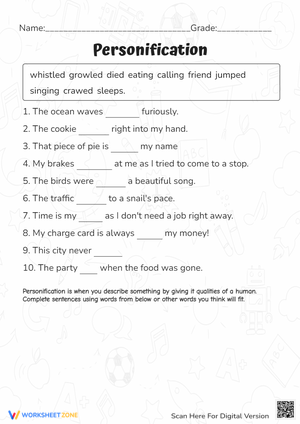
Incorporating festive elements into daily lessons can transform a standard grammar drill into an exciting learning opportunity. To make this seasonal transition productive, many elementary teachers rely on the 3rd grade easter language worksheets to engage their students. These targeted resources combine the fun of spring themes with rigorous parts of speech practice, helping children reinforce their understanding of nouns, verbs, and adjectives.
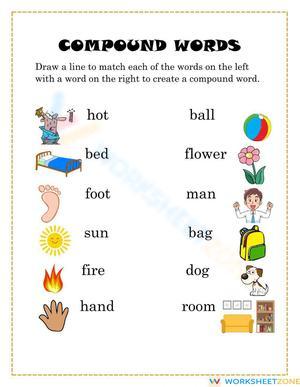
Active vocabulary engagement during this season often centers on identifying and categorizing nouns and verbs. In third-grade classrooms, students learn to match festive nouns like "basket," "bunny," and "egg" with lively action verbs such as "hop," "paint," and "hide." By connecting these seasonal words, children construct stronger, more dynamic sentences. This hands-on application ensures that the concept of parts of speech becomes a natural part of their writing toolkit rather than just a memorized definition.
Descriptive adjectives play an important role in these activities. Words like "fluffy," "colorful," and "pastel" allow third-grade writers to expand simple sentences into rich descriptions. Utilizing printable worksheets that prompt students to describe holiday traditions encourages creative expression. As students select adjectives to describe a decorated egg or a spring garden, they develop a more sophisticated vocabulary.
Holiday Capitalization and Punctuation Hunt: Printable PDF Activities
Third-grade ELA guidelines specify that students must consistently capitalize proper nouns, including the names of holidays. Using a festive theme like a holiday capitalization hunt is a highly effective method for teaching children that "Easter" always requires a capital letter. These exercises help students notice the subtle differences in sentence mechanics, paving the way for polished writing habits.
Many elementary teachers utilize paragraph editing activities to reinforce these punctuation and capitalization rules. In a typical edit-and-write exercise, students read short, holiday-themed sentences containing deliberate errors, such as lowercase holiday names or missing periods. Rewriting these sentences correctly provides direct practice with sentence structure and mechanics. By actively correcting errors in a low-stakes, engaging context, students learn to pay close attention to capitalization and punctuation in their own daily writing.
Punctuation practice is further enhanced through worksheets focusing on comma usage and ending punctuation. Third-grade students practice separating items in a list, such as naming spring flowers or holiday treats. Choosing between periods, question marks, and exclamation points are vital skills. These printable PDF activities provide clear frameworks that help students organize their thoughts and apply punctuation rules accurately.
Spring Vocabulary Sprout: Easter Synonyms, Antonyms, and Word Relationships
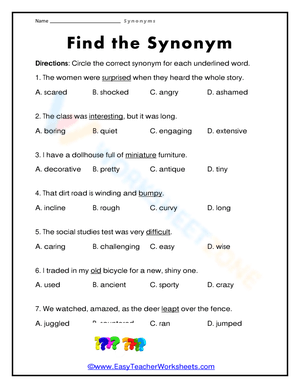
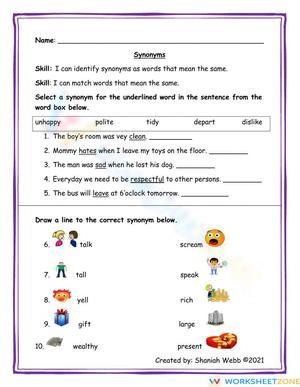
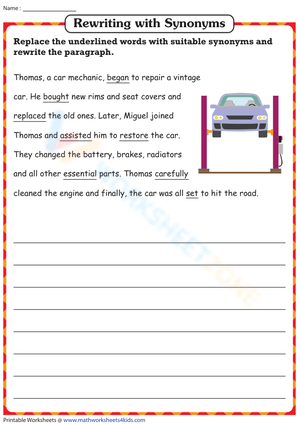
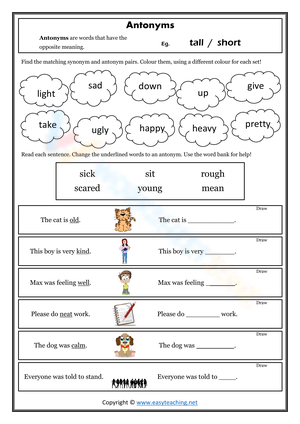
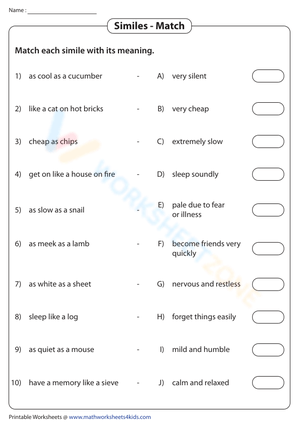
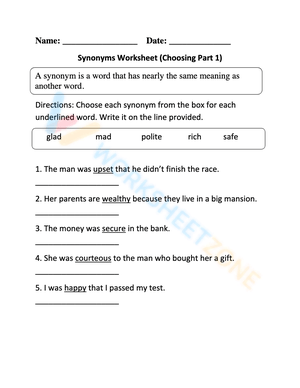
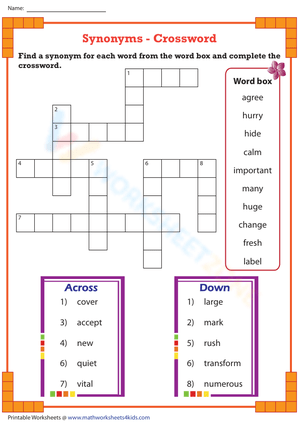
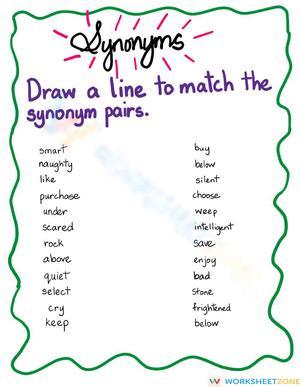
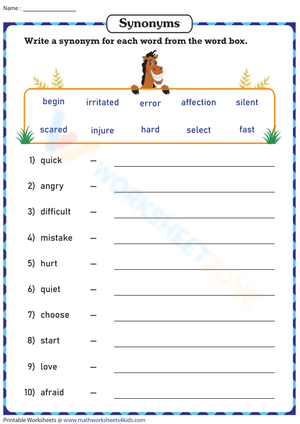
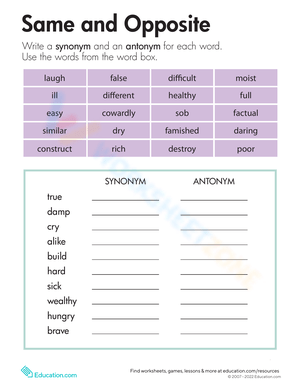
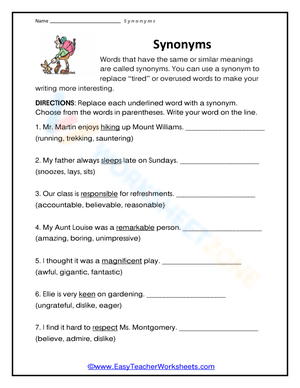
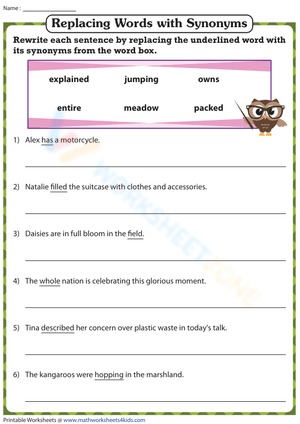
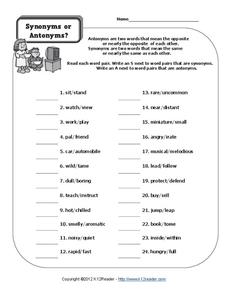
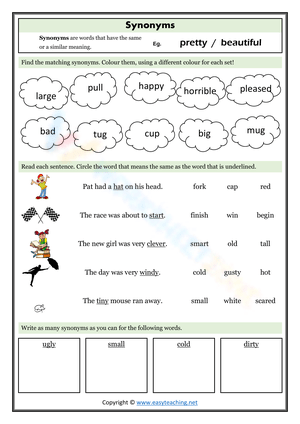
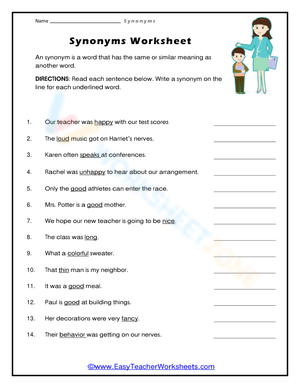
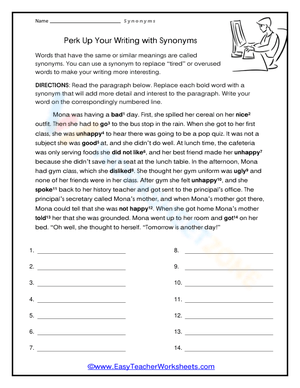
Expanding vocabulary in the spring requires engaging word association activities that connect to students' seasonal excitement. Third-grade vocabulary development benefits greatly from exercises focusing on spring-themed synonyms and antonyms. By exploring word relationships, students learn to select more precise terms in their writing and reading. Utilizing themed worksheets helps children make these semantic connections, enriching their language skills through enjoyable, spring-themed word play.
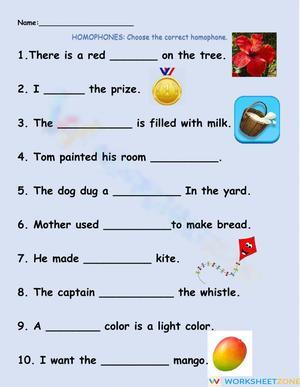
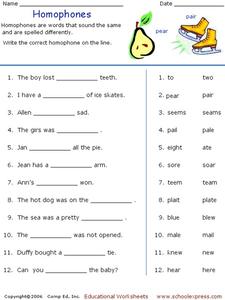
Understanding irregular plural nouns is another critical milestone in elementary grammar. Transitioning from singular nouns like "bunny" and "lily" to their plural forms "bunnies" and "lilies" can often puzzle young writers. Printable PDF language worksheets provide structured exercises where students practice these spelling transitions. Repeating these word transformations in a holiday context helps students internalize spelling rules, making it easier for them to apply these rules in independent writing tasks.
Context clues within short spring passages support vocabulary acquisition and reading comprehension. When students read a short story about a spring egg hunt, they encounter unfamiliar terms and must use surrounding sentences to infer meanings. This strategy helps students become self-reliant readers. Combining context clues with festive themes ensures that third-grade students remain motivated to decode challenging words.
Teacher Tips
Organizing a themed ELA block can be achieved by utilizing short, focused activities that fit into existing daily schedules. Setting up classroom rotation stations allows teachers to address specific grammar skills in small groups while other students work independently on vocabulary sheets. This rotation model ensures that every student receives targeted instruction while keeping the rest of the class productively engaged in seasonal learning activities.
Differentiating instruction is simplified by using a varied 3rd grade easter language worksheets pdf set. Advanced students can focus on complex paragraph editing and creative writing prompts, while peers who need support can work on matching parts of speech. Having a diverse selection of printable materials on hand allows educators to quickly adapt lessons to meet the needs of all learners in their classroom.
Timing these holiday ELA activities is key to maintaining classroom focus. Delivering these exercises during the final hour of the school day or during the week leading up to spring break channels excitement into meaningful practice. By transforming holiday anticipation into a structured grammar hunt, teachers can maintain a productive learning environment even on high-energy school days.
Frequently Asked Questions
1. Which grade-level language standards do these third-grade Easter worksheets address?
These resources focus on several vital third-grade language standards, including proper noun capitalization, identifying and categorizing parts of speech, using irregular plural nouns correctly, and understanding word relationships. By practicing these skills in a seasonal context, students build a strong grammar foundation that supports their reading and writing development throughout the school year.
2. Can these Easter language worksheets be integrated into independent classroom learning centers?
Yes, these printable PDF worksheets are perfectly suited for independent learning centers, morning work, or rotation stations. Because the exercises are self-explanatory and themed, students can complete them with minimal teacher assistance. This independence allows educators to focus on delivering targeted, small-group instruction to students who need extra support.
3. What specific grammar and vocabulary concepts are practiced in these holiday PDFs?
The holiday PDFs cover key concepts like matching Easter-themed nouns with active verbs, identifying descriptive adjectives, practicing irregular plural noun transformations, and using context clues to decode spring vocabulary. These varied exercises ensure that students receive a comprehensive review of essential third-grade language arts skills in an engaging format.