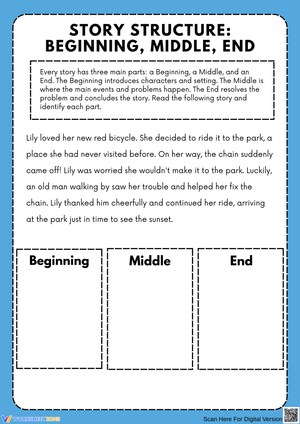
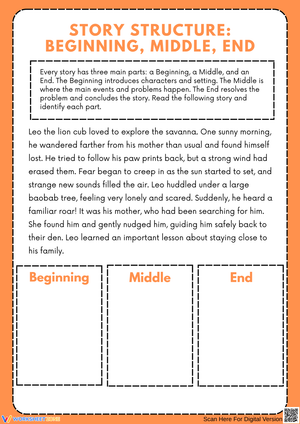
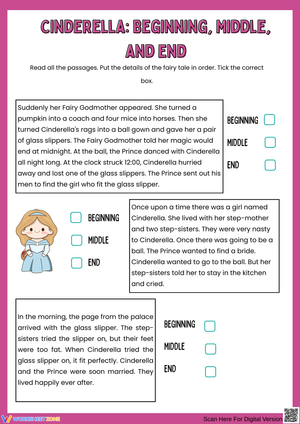
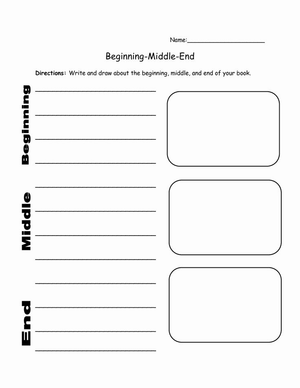
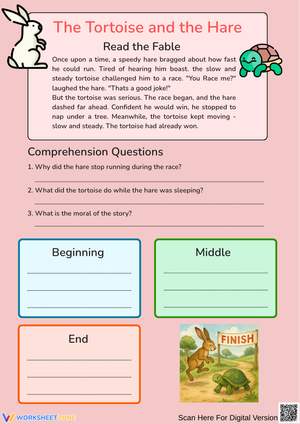
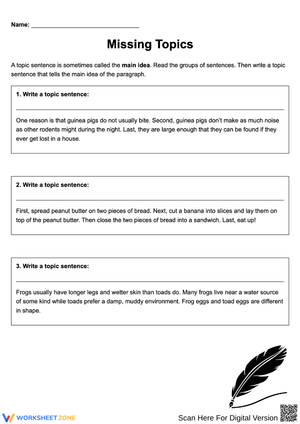
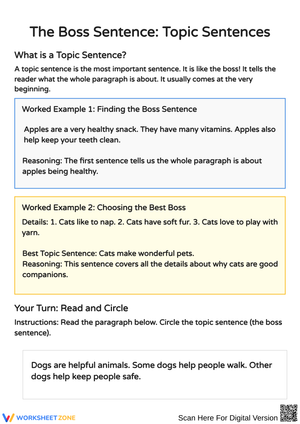
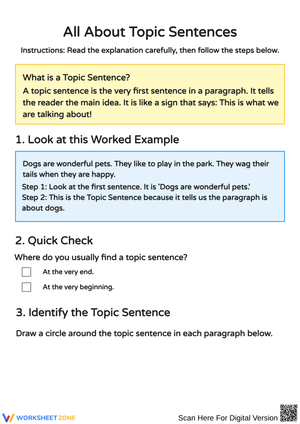
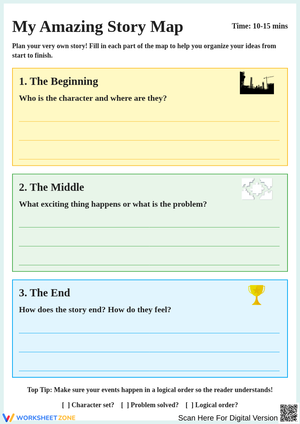
These 3rd grade beginning middle end printable worksheets resources give teachers a ready structure for one of the trickiest comprehension habits to build at this age — selecting the events that actually matter, not just the ones students remember most vividly. Third grade is the point where retelling shifts from "tell me about this book" to "explain what happened in order," and the gap between those two tasks is larger than it first appears. The set gives students a consistent three-part frame they can return to across reading and writing, rather than approaching each new text as a separate puzzle.
The Specific Skills Each Worksheet Builds
Each worksheet asks students to do something more precise than "summarize." They identify the key event that sets a story in motion, trace the central change or action in the middle, and articulate how the situation resolves. That three-step process trains the habit of reading for structure rather than just reading for plot.
- Event selection: Deciding which moments carry the story forward versus which are background detail students should leave out of a retelling
- Sequence accuracy: Placing events in the order they actually occur in the text, not the order they surface in memory
- Written retelling: Expressing each part in complete sentences with enough detail to make sense to a reader who hasn't seen the source text
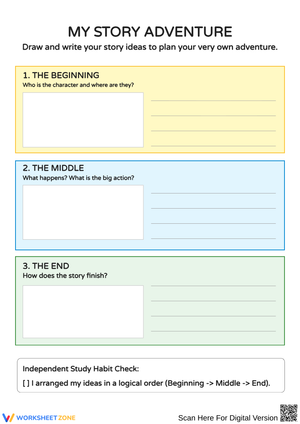
- Narrative planning: Using the same three-part frame to organize an original story before drafting — the organizer moves naturally between reading and writing instruction
- Transition language: Connecting the three sections with time-order words rather than listing disconnected sentences
Student Errors That Surface During This Work
The most common mistake isn't getting the order wrong — it's choosing the wrong events entirely. Students who loved a funny or dramatic scene will write about that scene in all three boxes because it was memorable, not because it was structurally important. The worksheet frame helps set boundaries, but teachers still need to coach students to ask: "If I left this event out, would the story still make sense?" When the answer is yes, the event probably doesn't belong in the organizer.
A second pattern that shows up consistently: students who write a clear beginning and a decent ending but fill the middle with everything they can recall. "In the middle, they went to the market, and then they got lost, and then a dog barked, and then..." The middle box becomes a running log rather than a summary of the central action. One targeted correction is asking students to name the single most important change that happened in the middle — the moment things shifted for the characters. That question usually cuts the list down sharply and produces a much cleaner retelling.
A third error is worth watching for in early practice: students who treat the middle as nearly optional, jumping from the opening situation directly to the resolution without explaining what happened between. A worksheet with enough writing space for two or three sentences — not a cramped one-line slot — naturally discourages that omission because students feel the blank space waiting to be filled.
Building These Worksheets Into Your Week
The most effective approach is gradual release over several days rather than dropping an independent retelling task on day one. Start with a shared read-aloud — something short enough to finish in fifteen minutes — and complete the organizer together as a class, thinking aloud at each box. What counts as the beginning? Why that event and not the other one? That conversation, done once or twice, teaches students how to use the frame rather than just how to fill it in.
Partner work earns its place on the second day. Pairs talk through the events before anyone writes, which surfaces disagreements about what belongs in the middle — and that disagreement is genuinely useful. When two students debate whether a particular moment is "beginning" or "middle," they are doing exactly the kind of structural thinking the standard requires. Moving through the room during that conversation makes it easy to spot which pairs need redirection before independent work begins.
The 3rd grade beginning middle end printable worksheets set fits naturally into the ten minutes before a read-aloud begins, as a literacy center task during rotations, or as a brief exit check after guided reading — wherever there is a small pocket of structured practice time. Friday is a natural day to flip the frame: instead of retelling a text, students use the same organizer to plan their own narrative. That transition from comprehension tool to writing planning tool is one of the more efficient moves available in a busy ELA block because students don't need to learn a new format.
Standard Alignment
These worksheets address CCSS.ELA-Literacy.RL.3.3, which asks students to describe characters and explain how their actions contribute to the sequence of events. A beginning-middle-end organizer makes that standard concrete: students must identify what initiates the story, what the character does in response, and how events unfold toward resolution. The standard is not just about order — it's about causation — and a worksheet that asks "what changed?" in the middle box pushes students toward that deeper work.
The retelling strand connects directly to CCSS.ELA-Literacy.RL.3.2, which asks students to recount stories and determine the central message. Sequence practice builds the retelling habit that makes central-message work possible; students who can't reliably order events struggle to answer the deeper question of what a story means. On the writing side, CCSS.ELA-Literacy.W.3.3 calls for narratives that establish a situation, use event sequences that unfold naturally, and provide a sense of closure — the three parts of the organizer map directly onto those requirements. Teachers can use 3rd grade beginning middle end printable worksheets resources in both reading and writing instruction without switching between frameworks, which keeps planning simpler and keeps the skill transfer visible to students.
Adjusting the Set for a Range of Learners
The three-part structure stays constant across all levels; what changes is the amount of support built around it. For students who are still building reading fluency, picture-supported versions — where key moments from a text are illustrated — let them focus on sequencing rather than decoding. Cut-and-paste formats, where students arrange three pre-written event sentences into the correct boxes, serve as a useful intermediate step between picture sequencing and open-ended writing.
- Students who need extra support: Sentence starters ("In the beginning, the story starts when..."), highlighted passages with key events already marked, and oral rehearsal with a partner before writing
- On-grade students: Open-ended boxes with the expectation of two complete sentences per section, drawn from a short leveled text or read-aloud passage
- Students ready for extension: A fourth prompt asking students to identify the central problem and explain how the beginning introduced it and the ending resolved it — this moves toward RL.3.2 without changing the organizer's core structure
One honest limitation worth naming: students who are strong readers but struggle with written output often find the blank space in each box more daunting than the actual thinking. Offering a choice — bullet notes or full sentences — gets those students producing something usable without removing the analytical demand entirely.
Frequently Asked Questions
Can these worksheets be used with nonfiction texts?
Yes, though the framing shifts slightly. With fiction, students look for character-driven events: what situation opens the story, what happens in response, how it resolves. With nonfiction, the same structure works to retell a sequence of events, a process, or a cause-and-effect chain. The organizer doesn't change; the language students use in each box does, and naming that difference explicitly in your modeling session prevents confusion.
What if students can't agree on which event belongs in the middle?
That disagreement is worth slowing down for. When two students argue about whether a particular scene is "still the beginning" or "already the middle," they are analyzing story structure — which is the actual learning goal. Use those moments as brief whole-class discussions. There is usually more than one defensible placement, and talking through why one choice might be stronger than another builds the flexible thinking the standard asks for.
How do I use these as a formative assessment?
A completed worksheet shows three things at once: whether students can identify main events, whether they can sequence them accurately, and whether they can express each part clearly in writing. That combination tells you more than a multiple-choice comprehension check does. Students who write strong beginnings and endings but leave the middle vague need a different conversation than students who retell correctly but can't write in complete sentences — and the worksheet separates those two problems cleanly.
Do these work in intervention settings?
The 3rd grade beginning middle end printable worksheets format holds up well in intervention because the task is bounded and transparent. Students know exactly what they are being asked to do, which reduces the cognitive load that comes with open-ended writing prompts. In a pull-out session of twenty to thirty minutes, a teacher can model one box at a time using a very short text and have students complete the remaining two with guided support — all within a single sitting, with something finished at the end.












 Interactive Worksheet Maker
 Quiz Maker
 Word Search Maker
 Crossword Puzzle Maker
 Word Scramble Generator
 Sentence Scramble Generator
 Handwriting Worksheet Generator
 Name Tracing Generator
 Fill In The Blank Generator