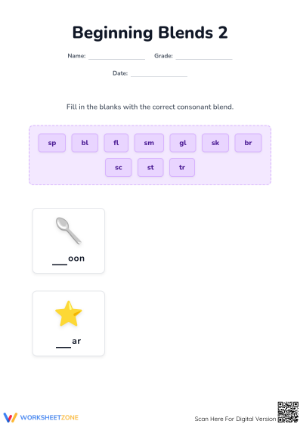
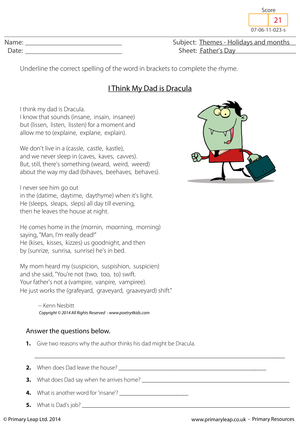
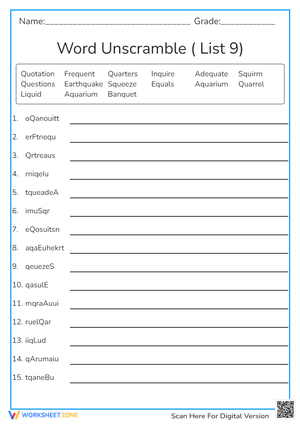
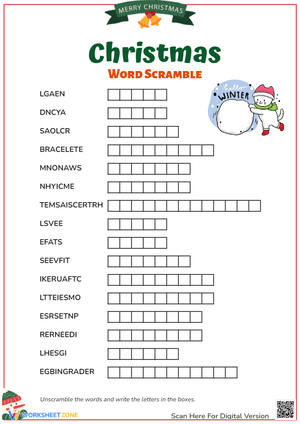
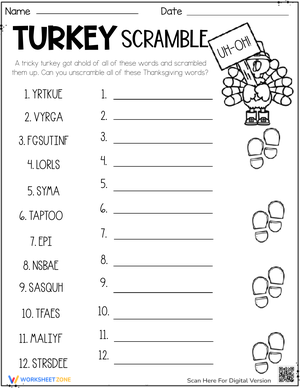
These 3rd grade spelling patterns worksheets resources give teachers targeted practice sets for the word structures third graders are expected to master by year's end — vowel teams, r-controlled vowels, silent letter clusters, and the morphological units that connect spelling to meaning. Each worksheet isolates one pattern and builds toward transfer, so students stop treating every unfamiliar word as a fresh guessing problem.
The Specific Skills Targeted
Four pattern families anchor the set: vowel teams, r-controlled vowels, silent letter clusters, and prefixes with suffixes. Each family gets its own worksheets rather than being folded into a general word-study mix, because third graders need consistent exposure to a single pattern before applying it reliably in independent writing.
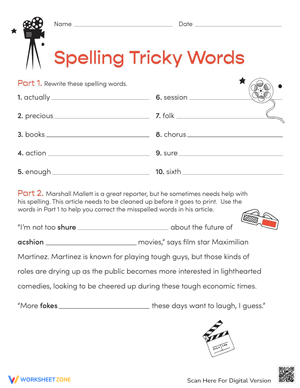
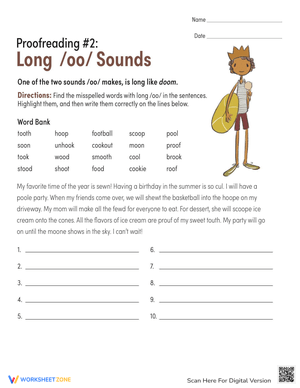
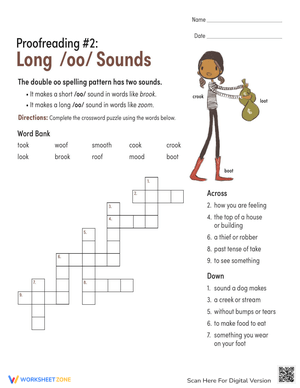
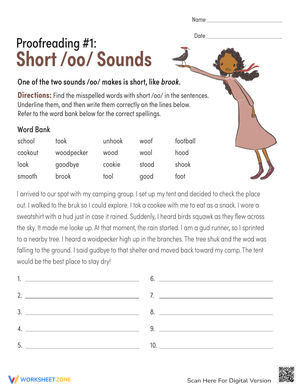
Vowel team worksheets ask students to sort and write words grouped by target digraph — ai vs. ay, ee vs. ea, oa vs. ow. The central instructional problem here isn't sound recognition; it's spelling direction. A student who reads "rain" and "day" fluently can still write "rane" or "dai" on a first draft because reading and spelling draw on different cognitive processes. These worksheets close that gap by requiring students to produce the correct letter string, not simply recognize it. R-controlled vowel worksheets address the five core patterns through picture-word matching, fill-in-the-blank sentences, and word-completion tasks. Silent letter worksheets — covering kn-, wr-, and -mb — rely on repeated look-write-cover-check cycles because the content is non-phonetic and must be built through visual memory rather than phonetic logic.
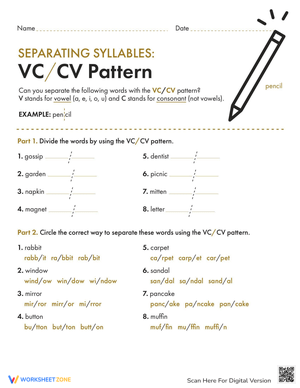
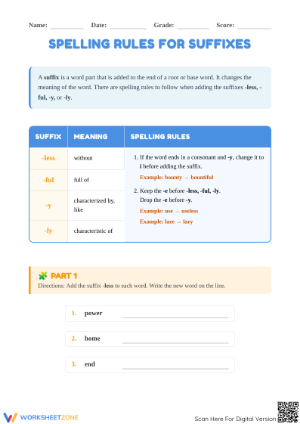
Prefix and suffix worksheets go past simple add-on tasks. Students work with spelling changes at the morpheme boundary: the drop-the-final-e rule before vowel suffixes, and consonant doubling before -ing and -ed. Knowing that re- means "again" helps a student understand rewrite on first encounter, but spelling rewriting correctly requires a second layer of knowledge these worksheets address directly.
Frequent Student Errors Worth Watching For
On vowel team worksheets, the most predictable error isn't random substitution — it's systematic over-reliance on a single spelling. A student who knows that long-a has two common spellings will often default to ai in every position, producing "maik" for "make" and "plai" for "play." The word-position cue corrects this: ay almost always closes a syllable, ai sits in the middle. Once students hear that stated plainly, they start self-correcting before lifting the pencil.
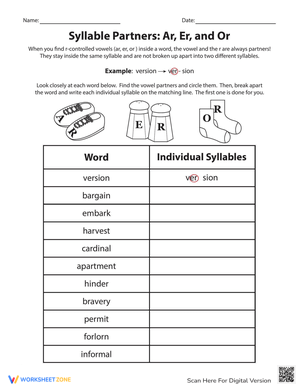
R-controlled vowels produce a different kind of frustration. Because -er, -ir, and -ur are phonetically identical in most American dialects, students who have internalized phonics logic — "spell what you hear" — hit a wall. They write "berd" instead of "bird" and feel like the language is cheating them. Organizing words by spelling family rather than by sound, which is how these worksheets are structured, helps students build separate mental categories for each pattern instead of treating all /er/ words as a single undifferentiated list.
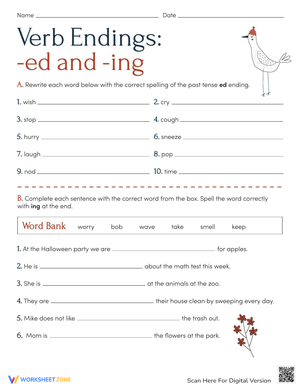
The morpheme-boundary errors on suffix worksheets are the most instructionally important to catch. Third graders almost universally spell "running" correctly because they've encountered it hundreds of times. But "begging," "gripping," and "dripping" split a class in half. Students know the doubling rule in familiar words without knowing the rule itself — so when they hit an unfamiliar base verb before -ing, they fall back on analogy and get it wrong about half the time. These worksheets surface the rule explicitly and give practice with genuinely unfamiliar base words, pushing the knowledge from recognition to independent application.
Building These Worksheets Into Your Weekly Lesson Plans
Word study works best in short, daily blocks. Fifteen minutes at the start of the literacy period — before the read-aloud or independent reading rotation — gives spelling instruction a consistent home without crowding other ELA components. Most third graders complete one worksheet in ten to fifteen minutes, which fits cleanly into a morning warm-up slot or a center rotation.
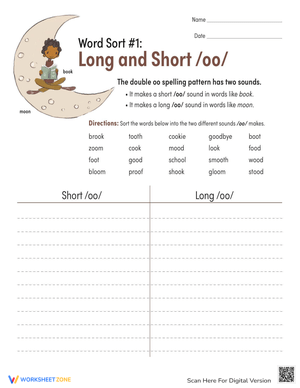
Word sort worksheets work well as whole-class launch activities. Students sort words into columns on their own worksheets, then the class compares results and works through the edge cases — the words that could plausibly go in two columns. Those arguments are often the most productive five minutes of spelling instruction in a given week. Fill-in-the-blank and sentence-writing worksheets are better suited to independent practice once a pattern has been introduced, because they ask students to retrieve the target spelling without any visual anchor present.
One sequence worth trying: use a 3rd grade spelling patterns worksheets as the Monday introduction, then return to the same pattern with a differently formatted worksheet later in the week. Spaced retrieval — revisiting a pattern two or three days after initial exposure rather than massing all practice into one session — produces measurably stronger long-term retention. The mixed-pattern review worksheets in the set serve that second-encounter role well, especially as Friday check-ins before moving on to a new pattern.
Tiering the Practice Across Different Ability Levels
For students who are still developing phonemic awareness alongside spelling, word sort tasks offer the most accessible entry point. Sorting asks for a binary judgment — does this word belong here or there? — which is more manageable than generating a spelling from scratch. These students often succeed on a sort worksheet and carry that momentum into writing tasks on subsequent lessons.
Students who are moving through grade-level patterns quickly benefit most from the morphology-focused worksheets. Prefix and suffix work connects to vocabulary in a way that pure phonics-pattern practice doesn't, and high-performing third graders are ready to notice those connections. Extending the 3rd grade spelling patterns worksheets practice with a short writing task — "use three of today's -tion words in sentences that tell me something specific" — deepens the work without requiring different materials.
For students in intervention, the silent letter worksheets benefit from a reduced-target approach. Instead of the full word list on each worksheet, mark five or six words and have the student concentrate on those, completing the look-write-cover-check cycle three times per word. The worksheet structure stays intact; the volume adjusts. This avoids overwhelming a student who is still building the visual memory that non-phonetic spellings require.
Standard Alignment
These worksheets address CCSS ELA-Literacy L.3.2f, which requires students to use spelling patterns and generalizations — including word families, position-based spellings, syllable patterns, ending rules, and meaningful word parts — when writing words. The vowel team, r-controlled, and silent letter worksheets map directly to that standard's named examples. The prefix and suffix worksheets also connect to L.3.4b, which asks students to determine the meaning of new words by applying knowledge of common affixes and root words. In instructional terms, that overlap is meaningful: spelling instruction and vocabulary instruction share real content on these worksheets because morphology genuinely lives at both addresses.
Frequently Asked Questions
What spelling patterns should third graders know before the end of the year?
By spring of third grade, students should recognize and apply vowel teams (ai, ay, ee, ea, oa, ow), r-controlled patterns (ar, er, ir, or, ur), silent letter clusters (kn-, wr-, -mb), and the most common derivational affixes. They should also know the spelling-change rules that apply when vowel suffixes attach to base words — drop-the-final-e and consonant doubling. These are exactly the targets CCSS L.3.2f names, and they're the same patterns this set covers.
How do I sequence these worksheets across a unit?
Start with the pattern that has the most predictable phoneme-grapheme relationship for your class — typically r-controlled vowels, since the /ar/ sound in "car" is highly consistent. Vowel teams come next, because choosing between two spellings for the same sound requires students to move past pure phonics logic. Silent letters belong after students have solid phonetic footing, so non-phonetic patterns don't destabilize their confidence. Save prefix and suffix worksheets for the second half of the year, when students have enough base-word knowledge to see the morphological relationships as meaningful rather than arbitrary.
Can these worksheets serve as formative assessments?
A completed 3rd grade spelling patterns worksheets shows far more than a score. It shows exactly where a student's logic broke down — whether they applied the right pattern in the wrong word position, chose the correct letter combination but missed the morpheme boundary, or bypassed the rule entirely and guessed. That diagnostic detail drives re-teaching decisions in a way a single Friday test score never can. Collect worksheets at the end of independent practice, look for error patterns across the class, and use what you find to decide what needs a second approach before moving forward.
Do these worksheets fit into a structured literacy program?
Yes. The explicit, pattern-focused format of each worksheet aligns with what structured literacy research consistently recommends — systematic, cumulative instruction on spelling-sound and spelling-meaning relationships. Students who receive intervention support typically need more repetition and more multisensory reinforcement alongside the written task: pairing a worksheet with magnetic letter building or oral rehearsal before the pencil hits the page helps considerably. For students with identified language-based learning differences, these worksheets work as a written-practice component within a broader program rather than as a standalone intervention.












 Interactive Worksheet Maker
 Quiz Maker
 Word Search Maker
 Crossword Puzzle Maker
 Word Scramble Generator
 Sentence Scramble Generator
 Handwriting Worksheet Generator
 Name Tracing Generator
 Fill In The Blank Generator