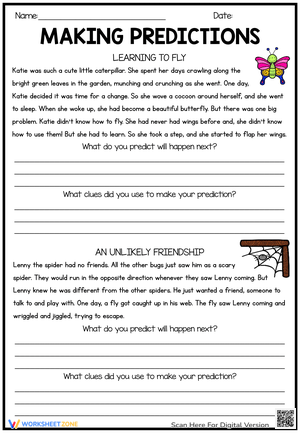
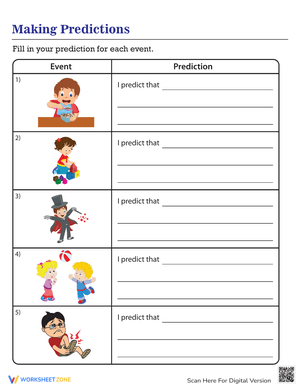
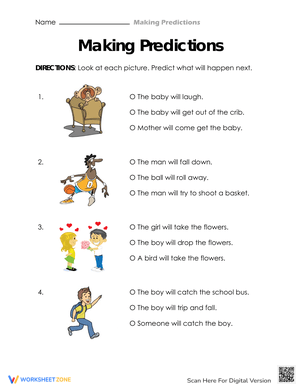
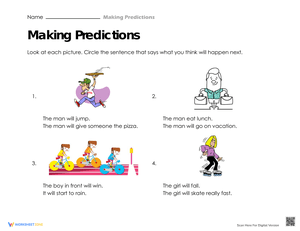
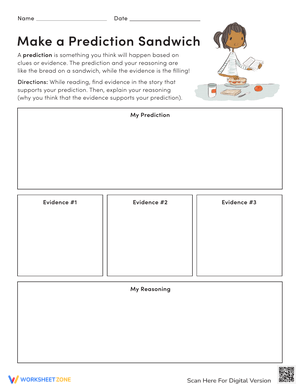
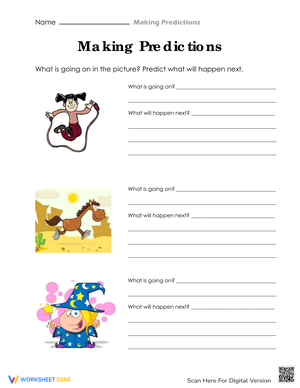
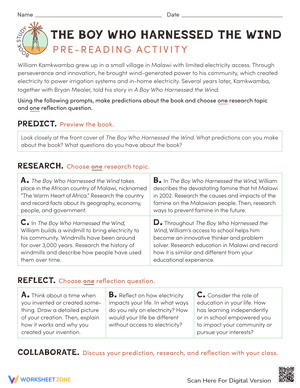
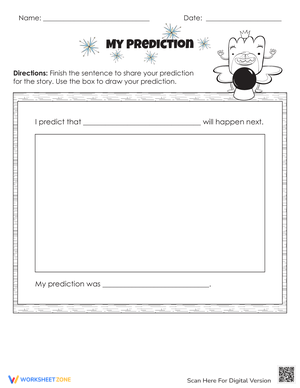
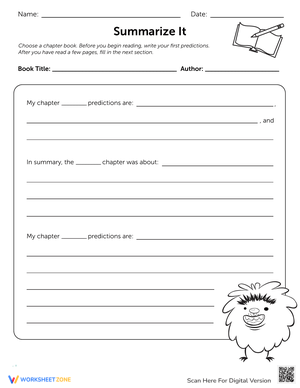
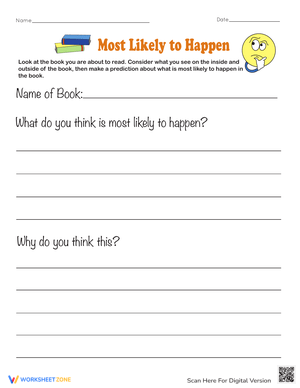
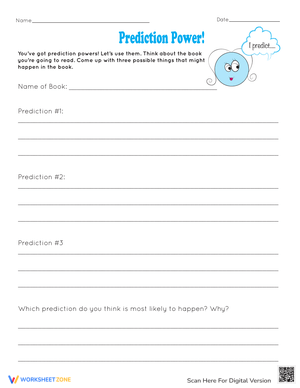
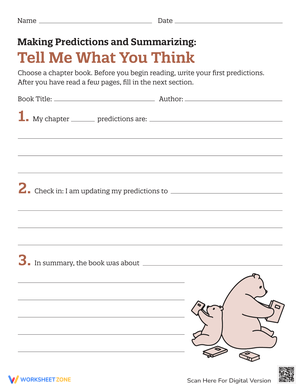
These making predictions in nonfiction worksheets for 3rd grade address a comprehension gap that catches many third graders off guard: because nonfiction has no plot, the prediction habits that served students well in story-based reading don't transfer cleanly to informational text. The set gives teachers ready-made practice centered on reading text features purposefully — using structural and visual cues to anticipate what an author will explain rather than guessing at story events.
Why Third Grade Is the Turning Point
By third grade, informational text volume increases sharply across reading programs, science, and social studies. Students who can't orient themselves before reading move through content passively — collecting isolated facts without building connected understanding. Predicting in nonfiction is essentially a pre-reading organizing strategy: it activates prior knowledge and creates a mental structure to receive new information. A student who reads the subheading "The Diet of a Desert Tortoise" and expects a list of specific plants or foods reads that section with a different kind of attention than one who just starts at the first word. Building this habit in third grade means students carry it into every content-area class that follows.
Skills Covered Across the Set
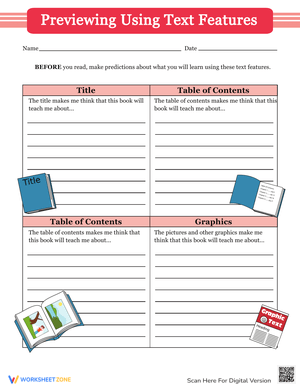
Each worksheet focuses on a specific type of text feature as the prediction anchor. Students learn what different features signal, because each one does different work:
- Headings and subheadings announce the topic of the following section — the most direct tool for generating a specific expectation before reading.
- Photographs with captions often deliver more concrete information than the surrounding body text does; a student who reads the caption first frequently has better context than one who begins with the paragraph.
- Diagrams and labeled illustrations signal that a process, sequence, or comparison is about to be explained.
- Bold vocabulary terms flag language the author considers central to understanding the passage, and anticipating what those terms mean before encountering them in context is a secondary comprehension move the worksheets practice as well.
Students also work through a confirm-or-revise cycle — they record a prediction before reading and return to it afterward. This reframes prediction as a reading tool rather than an accuracy test, which matters for students who shut down whenever they fear being wrong. One worksheet introduces a reverse-prediction task: headings are removed from a short passage, and students write what those headings should say based on the body text alone. That task requires genuine synthesis and gives teachers a fast picture of whether students understood the organizational logic of what they just read — not just the surface facts.
Mistakes Students Make That These Worksheets Help You Catch
The most persistent error is importing story logic into informational reading. A student who has spent two years predicting narrative events will look at a photograph of a volcanic eruption and predict "the volcano will destroy the town" — a plot prediction, not a nonfiction one. The informational version would be: "This section will explain what causes an eruption." Getting students to flip from event-predicting to topic-predicting is the central instructional challenge here, and the sentence stems built into each worksheet — "Based on this heading, I think the author will explain..." — redirect that habit without requiring a long verbal correction each time a student drifts.
A second pattern is prediction by vague association. A student notices a photograph of a bear and says "I predict this is about bears" — technically correct but not useful. The move the worksheets push toward is one level deeper: not just naming the topic but anticipating what the author will say about it. A productive prediction sounds like "I think this section will explain what bears eat during winter, because the caption says 'preparing for hibernation.'" That shift — from topic identification to content anticipation — is exactly what distinguishes an active informational reader from one who is only passively present.
Lesson-Planning Ideas to Get the Most From These Worksheets
A reliable starting point is whole-class think-aloud. Project one worksheet, work through it out loud, and narrate the reasoning directly: "I see a heading that says 'Arctic Survival Strategies' — so I'm predicting this section will explain specific behaviors or body features that help animals withstand cold temperatures, not just tell me that the Arctic is cold." Making the "because" visible is the key move. Students often understand what a prediction is but skip the evidence-linking step entirely unless they hear it modeled repeatedly, with the teacher pointing at the exact feature that triggered the reasoning.
Teachers who rotate making predictions in nonfiction worksheets for 3rd grade into Monday morning warm-ups find that the habit becomes automatic by midyear. A brief prediction task on a science or social studies topic at the start of the week sets a purposeful reading tone without depending on preparation from home. These worksheets also work well during small-group reading time, where students compare their predictions aloud before reading the passage — a conversation that surfaces different reasoning and gives the teacher useful formative information about where students are actually drawing their evidence from.
Standard Alignment
RI.3.1 requires students to ask and answer questions about a text using explicit evidence. Practiced this way, prediction is a form of pre-reading question-setting — and the confirm-or-revise step requires students to return to the text and evaluate what they expected against what the author actually wrote. RI.3.5 requires students to use text features to locate and interpret information; each worksheet treats a specific feature as the primary evidence source for a prediction, directly addressing the standard's expectation that students understand what different features contribute to an informational text. Teachers who need to document RI.3.5 instruction at the individual student level get a written record of that skill in every completed worksheet.
Adjusting the Worksheets for a Range of Learners
For students still building confidence with informational text, start with worksheets centered on a single prominent feature — a large photograph with a clear caption is easier to work with than a worksheet that includes three subheadings, a diagram, and a glossary sidebar simultaneously. Providing a small reference card with sentence stems removes the language barrier for students who understand the thinking but freeze when writing from scratch. Pull those supports gradually as students internalize the routine and start generating their own prediction language without prompting.
Making predictions in nonfiction worksheets for 3rd grade also extend well for students reading above grade level. Ask those students to predict and then evaluate the author's organizational choice — not just whether the prediction was accurate, but whether the heading actually delivered what it promised. That second layer pushes toward RI.3.8 territory and keeps strong readers doing substantive analytical thinking rather than moving through a task that offers them no resistance.
Frequently Asked Questions
Should predictions be graded on whether they turned out to be correct?
No. A prediction earns credit based on the quality of the evidence behind it, not on whether it matched what the author wrote. A student who predicts "this section will explain how dolphins communicate using sound" because the heading reads "Dolphin Language" — and then finds the section covered visual signals instead — has done the task correctly. Marking that prediction wrong trains students to avoid committing to predictions at all, which is the opposite of the intended outcome.
Can these worksheets be used during science or social studies time?
Yes, and that cross-curricular use is where they pay off most efficiently. Science and social studies texts are the primary informational reading students encounter in third grade. Using a prediction worksheet during a science unit on the water cycle, for example, reinforces the ELA skill and the content reading habit at the same time. The teacher isn't adding a separate ELA block — the prediction practice is the science reading work.
What if a student has very little background knowledge about the passage topic?
Limited prior knowledge is actually a useful diagnostic condition. A student who can still form a reasonable prediction based purely on a heading or photograph — without knowing anything about the subject — is using text features correctly rather than just retrieving what they already know. The sentence stem "Based on this heading, I predict the author will explain..." works even when the topic is completely unfamiliar. Using making predictions in nonfiction worksheets for 3rd grade on topics outside a student's experience tests whether the skill is genuinely transferable or whether the student has been relying on prior knowledge to mask a gap in text-feature reading.
How long does each worksheet take to complete?
Most students finish each worksheet in 15 to 20 minutes, which fits a warm-up block, a reading rotation, or the opening portion of a guided reading session. Teachers using them as exit tasks typically allow 10 minutes and focus on a single prediction — that shorter format works well when the goal is a quick formative check rather than a full practice cycle.












 Interactive Worksheet Maker
 Quiz Maker
 Word Search Maker
 Crossword Puzzle Maker
 Word Scramble Generator
 Sentence Scramble Generator
 Handwriting Worksheet Generator
 Name Tracing Generator
 Fill In The Blank Generator