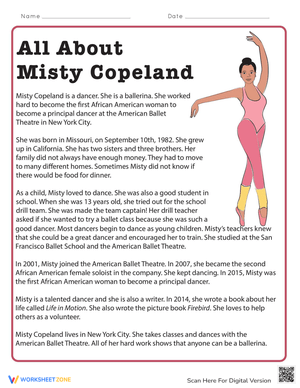
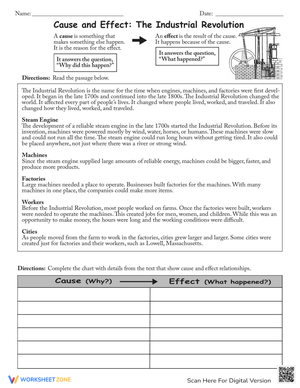
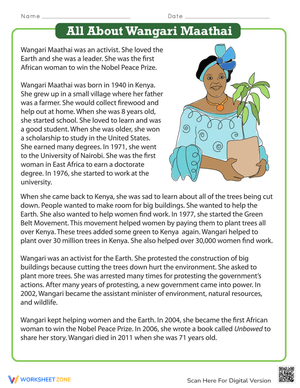
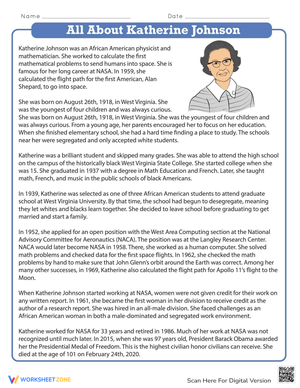
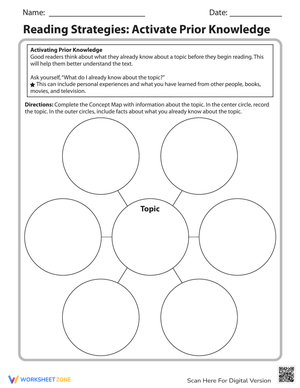
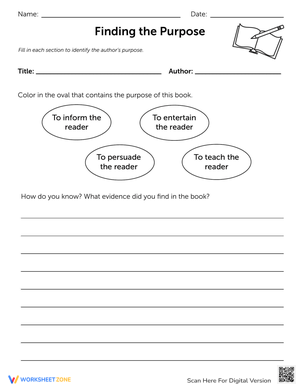
These 3rd grade making connections in nonfiction worksheets give teachers a ready set of structured practice tools for one of the trickiest comprehension skills in the informational reading strand — getting students to link facts on the page to something they already carry in their heads. The set addresses all three connection types: text-to-self, text-to-text, and text-to-world, all situated in nonfiction contexts so students practice the skill where it's actually hard, not just where it's comfortable.
The Specific Skills Each Worksheet Builds
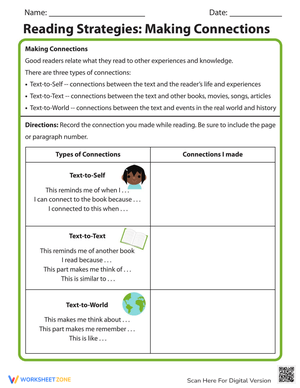
Students work through progressively more demanding prompts across the set. Early worksheets ask students to read a short nonfiction passage — two to three paragraphs — and identify one text-to-self connection using a sentence frame: "This fact about ___ reminds me of ___ because..." The "because" is non-optional. Students can't just name a memory; they have to explain how that memory helps them understand the text. Later worksheets remove the sentence frames entirely and ask students to write the connection type label themselves before explaining their thinking.
Text-to-text worksheets present two short paired passages on the same topic — for example, one paragraph about how honeybees communicate and another from a social studies article about cooperation in communities. Students underline matching ideas in each passage, then annotate the margin with the connection they're drawing. This trains the exact skill RI.3.9 actually measures: not just recognizing that two texts cover similar ground, but pinpointing how the key points from each interact with each other.
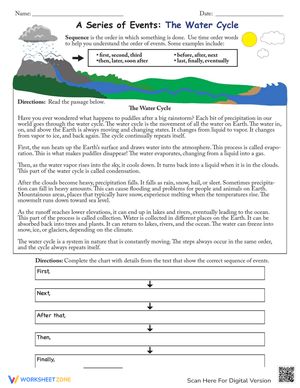
Text-to-world worksheets are structured differently. Because third graders don't have deep background knowledge of global events, these worksheets include a short "world knowledge prompt" — a sentence or two of context — before the main passage. Students read the prompt, read the passage, then explain how the two fit together. This avoids asking an eight-year-old to connect a passage about the water cycle to drought policy without any foundation to work from.
Mistakes Students Make That These Worksheets Help You Catch
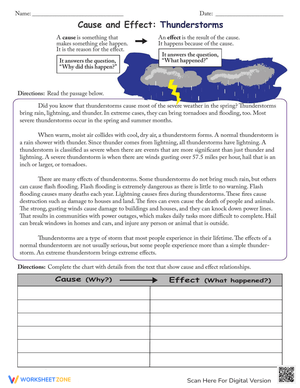
The most predictable error in third grade is the tangential connection — a link that feels real to the student but does nothing for comprehension. A student reading about wolf pack hierarchy writes, "This reminds me of my dog, Max." The emotional logic is there, but the student hasn't engaged with the actual concept: cooperative hunting behavior, how wolves divide roles, what social rank means for survival. These worksheets catch that error because students must complete the prompt with a second clause — "...and this helps me understand [specific idea from the text]." That clause forces them back to the passage.
Text-to-text connections produce a different problem. Students often confuse "I read another book about wolves" with a genuine connection. The connection has to do cognitive work — it has to clarify or extend something specific. If a student can't explain what the second text adds, they've named a memory of reading, not made a connection. That gap shows up clearly in the explanation column of the graphic organizer, which makes it easy to spot during a quick scan of student work before small-group time.
A third error is specific to nonfiction: students treat text-to-self connections the way they do in fiction — emotionally rather than factually. Reading about rainforest layers, a student writes, "I feel sad for the animals losing their habitat." That's a valid feeling, but it's not the comprehension skill being measured. A stronger academic response looks like this: "When I read that the canopy gets the most sunlight, I thought of our photosynthesis unit, and now I understand why the tallest trees spread their leaves out so wide." Watching students make that shift — from emotional response to factual integration — is one of the clearest signals that the strategy is taking hold.
How to Build These Worksheets Into Your Lesson Plans Without Losing Instructional Time
The worksheets fit naturally into a small-group reading rotation. During a 20-minute guided reading block, introduce the passage as a group read-aloud, pause at one key paragraph, and model a think-aloud connection before releasing students to complete the worksheet independently. The think-aloud piece matters — third graders often need to hear the cognitive process before they can replicate it on paper. After two or three sessions of that structure, pull the modeling and let students work the worksheet cold. Their errors at that point become your clearest formative data of the unit.
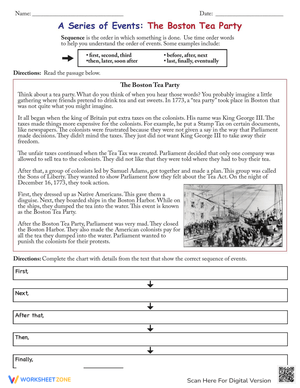
These worksheets also work well as Monday warm-ups following a content unit. If students spent Thursday and Friday on a social studies read about early American settlements, a text-to-world connection worksheet on Monday requires them to retrieve that content while applying it to new material — spaced retrieval in a low-stakes format. The 3rd grade making connections in nonfiction worksheets format handles this well because each worksheet is self-contained, so you can sequence them around whatever informational reading your class just finished rather than following a predetermined order.
Standard Alignment
RI.3.1 asks students to ask and answer questions about a text by citing it directly. When students explain their connection using a specific quote or fact from the passage, that is RI.3.1 work — the explanation column does exactly this. RI.3.3 targets the relationships between scientific concepts, historical events, or procedural steps. Making text-to-text and text-to-world connections requires students to articulate those relationships explicitly rather than sense them vaguely. RI.3.9 is the most direct match: comparing and contrasting key points across two texts on the same topic, which the paired-passage worksheets practice in a concrete, annotation-based format. Teachers addressing a specific standards gap will find RI.3.9 the clearest entry point; RI.3.1 and RI.3.3 work is embedded in the explanation columns throughout the set.
Adjusting the Worksheets for a Range of Learners
For students still developing reading fluency, shorten the passage rather than changing the task. Most worksheets in the set use passages of 150 to 200 words. Pulling a 75-word excerpt from the same text keeps the connection-making task intact while reducing the decoding demand. English language learners benefit from having the sentence frames present even when the rest of the class is working without them. The 3rd grade making connections in nonfiction worksheets format makes this straightforward — you can print two versions for the same lesson without drawing attention to the difference.
For students working above grade level, the most productive extension is requiring two connections per worksheet — one from different categories — followed by one sentence explaining which connection gave them more information and why. That comparative reflection moves the task toward evaluation, closer to the fourth-grade standard, without jumping ahead of third-grade content.
Frequently Asked Questions
Do these worksheets require specific passages, or can I use them with my own nonfiction texts?
Each worksheet includes its own passage, so no outside text is needed. If you want to pair the graphic organizer format with a chapter from your science or social studies textbook, the column structure transfers easily — students write the relevant detail from their own reading in the "from the text" column instead of pulling from a printed passage.
How do I help a student who keeps making the same superficial connection on every worksheet?
During a small-group session, ask the student to read their connection aloud, then ask: "Does knowing that actually help you understand this part of the passage better?" Most students can feel immediately that the answer is no. Once they experience the difference between a helpful connection and a surface-level one, the pattern shifts. The explanation column in each worksheet makes that coaching conversation concrete — the evidence is right there on the paper.
Are these 3rd grade making connections in nonfiction worksheets files print-ready, or do they need formatting before use?
The files download ready to print at standard 8.5 by 11 inches with no reformatting required. If you're projecting them for a whole-class think-aloud, the graphic organizer columns are large enough to read clearly from the back of a typical classroom.
Can these be used for assessment, or are they better suited to practice?
Either works. Used as practice, each worksheet gives you in-process data on where students are getting stuck — the explanation column tells you far more than a simple correct/incorrect mark. Used as a brief performance assessment at the end of a nonfiction unit, look at two criteria: whether students are citing text evidence in their explanations, and whether the connection they've named actually clarifies something about the passage. Those two criteria give you a clean snapshot of each student's standing on RI.3.1 and RI.3.3.












 Interactive Worksheet Maker
 Quiz Maker
 Word Search Maker
 Crossword Puzzle Maker
 Word Scramble Generator
 Sentence Scramble Generator
 Handwriting Worksheet Generator
 Name Tracing Generator
 Fill In The Blank Generator