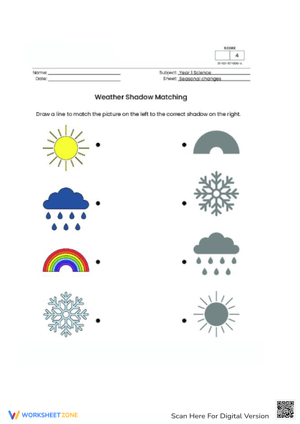
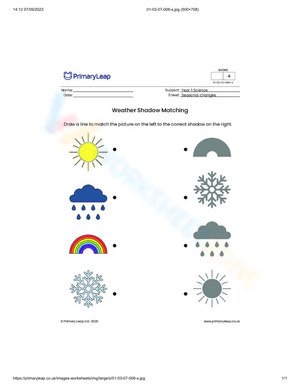
These 2nd grade shadow work worksheets resources give teachers a ready-to-use set of activities for a light-and-shadow unit — covering material properties, shadow direction, sun-position patterns, and basic measurement. Each worksheet targets a distinct concept, so teachers can pull individual ones as needed rather than running the full set in sequence.
What the Set Covers
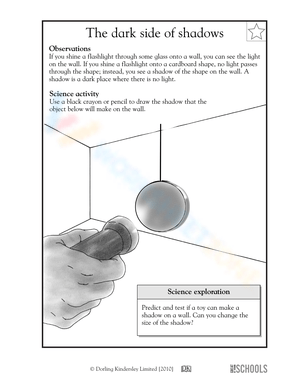
The materials-and-light worksheets ask students to sort familiar classroom objects — wax paper, aluminum foil, a cotton ball, a clear plastic cup — into opaque, translucent, and transparent categories, then predict which will produce the darkest shadow. The sorting task builds vocabulary before any flashlight time, so the hands-on experiment doesn't stall while students are still working out the labels.
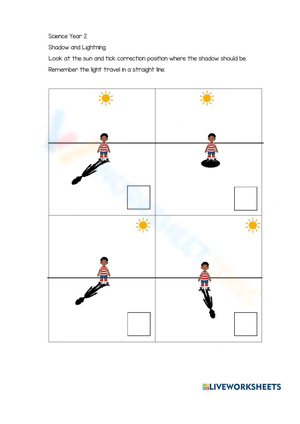
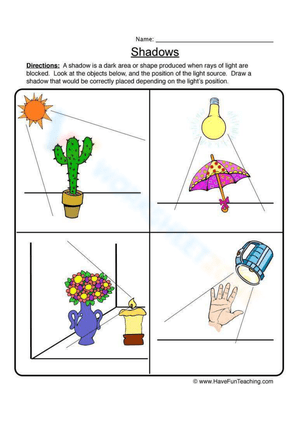
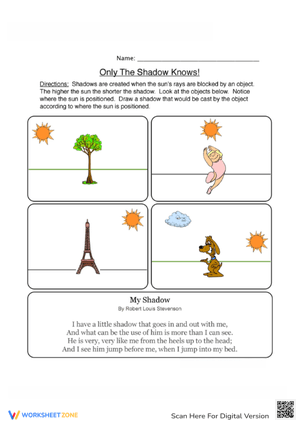
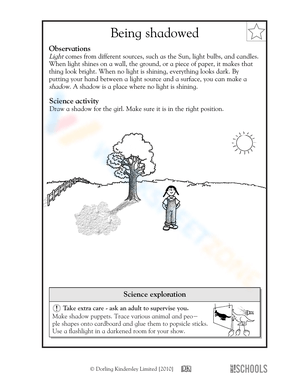
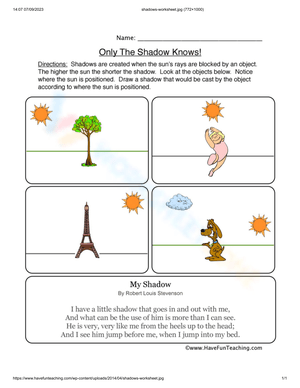
Shadow direction worksheets show a positioned light source and an object; students draw where the shadow falls. A companion set reverses the task — students examine an existing shadow diagram and identify where the light source must be. That reversal requires harder reasoning and is worth saving for the second or third day of instruction.
The measurement worksheets ask students to record shadow lengths at three points in the school day using non-standard units (linking cubes, paper clips), then order the results from shortest to longest. Several worksheets in the set extend this into graphing — students transfer recorded data to a bar graph and respond to written comparison questions about which measurement is greater and by how much.
Mistakes Students Make That These Worksheets Help You Catch
The most consistent error with shadow direction: students understand that shadow falls away from the light source, but they draw it projecting from the middle of the object rather than from its base. A worksheet showing a standing figure with the sun positioned to the left will produce drawings where the shadow stretches from the torso rather than from the feet. Verbal correction alone doesn't fix this — students need a side-by-side comparison of a correct and an incorrect diagram before the distinction sticks.
Translucent and opaque get tangled regularly. A student who marks wax paper as "opaque" on the sorting worksheet is telling you exactly what to address before the flashlight experiment: they haven't grasped that partial light transmission defines translucent, not the mere absence of full transparency. The completed sort surfaces that gap in writing rather than forcing you to infer it from behavior during the experiment.
A third pattern worth watching: students often predict that moving an object farther from the light source makes its shadow larger. When they run the experiment and record the opposite result, the collision between prediction and data does real instructional work. That friction is part of why keeping the prediction step in the sequence matters — it isn't just a warm-up.
Building These Worksheets Into Your Lesson Sequence
The prediction worksheets fit the opening lesson. Students record their expectations before any observation takes place, which surfaces misconceptions while there is still time to address them. On a second pass after the hands-on session, returning to those initial predictions and annotating what actually happened is a low-prep closure move that makes the shift in thinking visible.
For station rotations, the shadow direction and measurement worksheets run well as independent tasks alongside a flashlight experiment station. One group works through the 2nd grade shadow work worksheets diagram tasks independently while another runs the flashlight procedure and a third handles the graphing extension. That structure means having only one or two flashlights available doesn't hold up the whole class.
For the time-of-day tracking activity, three brief outdoor windows — roughly 9:00 AM, 11:30 AM, and 1:30 PM on a clear day — give students enough spread in their data to see a real pattern. Each window takes 8 to 10 minutes when the recording worksheet is already on students' clipboards before they head out.
Standard Alignment
The light-and-materials content aligns to NGSS 1-PS4-3, which calls for students to investigate how objects made of different materials respond when placed in the path of a beam of light. That standard is coded at first grade, but most second-grade science curricula revisit and extend it — specifically by foregrounding observable patterns, a core NGSS crosscutting concept that threads through the sun-tracking component. When students record shadow lengths at three points in the day, order those measurements, and predict what would happen at a fourth point, they are doing exactly what that crosscutting concept requires: noticing regularities in the natural world and using them to anticipate what comes next.
Adjusting the Worksheets for a Range of Learners
Students who freeze on the shadow direction diagrams benefit from having a concrete setup to reference: a small object and an LED flashlight positioned on the desk while they work through the worksheet. The physical model removes the spatial demand of mentally rotating a light-source scenario, which is a real cognitive load for second graders working purely from a printed diagram.
The measurement worksheets extend naturally for students ready to push further. After recording and ordering shadow lengths, those students can compute the difference between morning and afternoon measurements and write a sentence explaining what caused the change. The written explanation — not the subtraction itself — is where deeper science understanding surfaces, and it gives you something more substantive to assess than a correct number alone.
A 2nd grade shadow work worksheets set adapts well for ELL students when material names on the sorting worksheet are paired with small sketches, or when students can handle actual physical samples — a square of wax paper, a folded piece of aluminum foil — while completing the sort. A student who correctly categorizes the samples has demonstrated the concept before the vocabulary label is fully in place.
Frequently Asked Questions
Why does a shadow shrink when the object moves away from the light source?
As an object moves farther from a light source, it intercepts fewer of the spreading light rays, so the blocked area on the surface behind it shrinks. Moving the object closer intercepts more rays, producing a larger shadow. Students can verify this with a flashlight and one hand — keeping the wall distance fixed while moving the hand closer and farther is one of the most immediate demonstrations in the whole unit.
What do I do when cloud cover cancels the outdoor shadow-tracking session?
Overcast conditions produce diffuse, directionless light, so distinct shadows fade or disappear entirely. That absence is worth observing and recording rather than waiting for a better day. Have students note that no sharp shadow is visible, then ask them to explain why — there is no single directional light source casting rays from one angle. Treating a cloudy day as data rather than a disruption reinforces the core concept more durably than repeating a clear-day observation would.
Are these worksheets appropriate for first-grade classrooms covering NGSS 1-PS4-3?
The sorting and prediction worksheets transfer to first grade without adjustment. The measurement and graphing worksheets assume students can use non-standard units with some accuracy, which is a reasonable second-grade expectation in most curricula. First-grade teachers working with this material often pull the sorting and direction worksheets early in the unit and hold the measurement recording sheets for later in the year. The 2nd grade shadow work worksheets label is an approximate level guide — not a ceiling.












 Interactive Worksheet Maker
 Quiz Maker
 Word Search Maker
 Crossword Puzzle Maker
 Word Scramble Generator
 Sentence Scramble Generator
 Handwriting Worksheet Generator
 Name Tracing Generator
 Fill In The Blank Generator