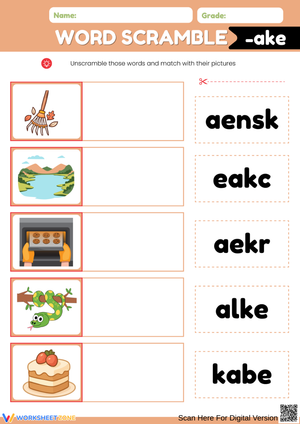
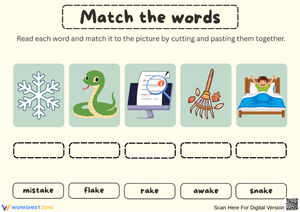
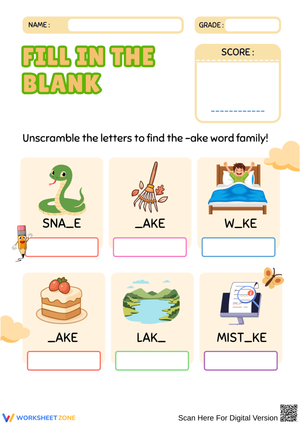
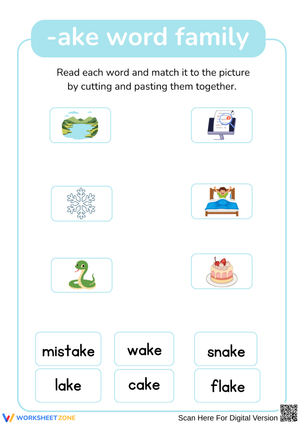
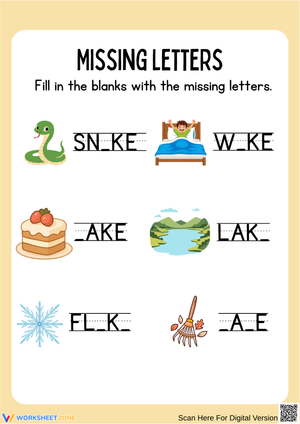
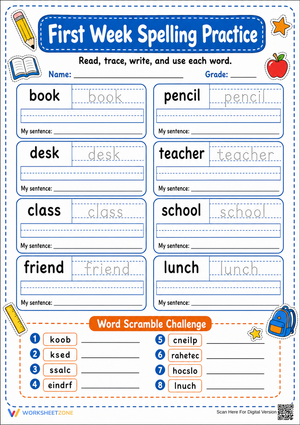
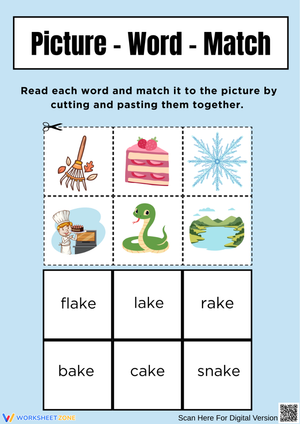
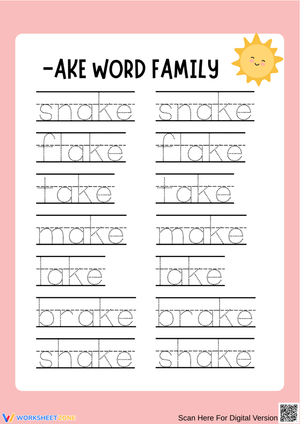
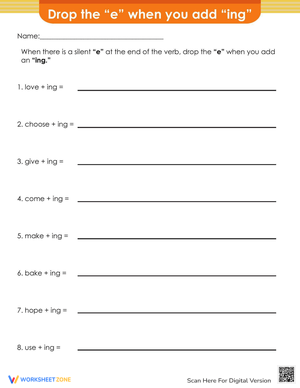
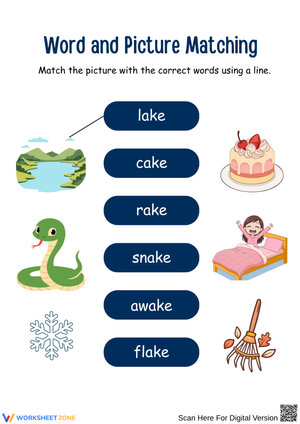
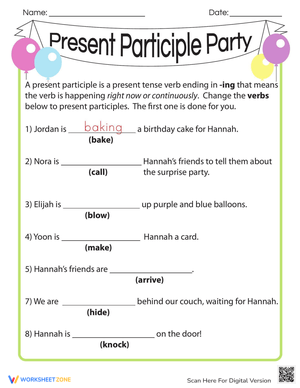
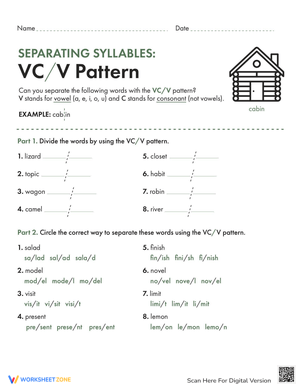
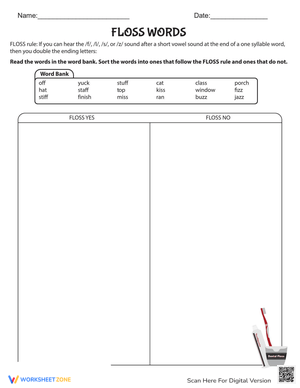
These spelling patterns pdf worksheets for 2nd grade target the vowel pattern work that occupies most of Grade 2 word study — long vowel teams, r-controlled vowels, and diphthongs — across a range of exercise formats that move students from recognition to independent application. The set gives teachers printable resources for word sorts, cloze sentences, and guided writing tasks that fit directly into literacy centers, phonics groups, and morning work without extra prep. Students mark, sort, and write with each pattern before encountering combinations.
What's Inside the Set
Each worksheet focuses on a single pattern family from the Grade 2 sequence. The major categories covered:
- Vowel teams: "ai" and "ay" for long /a/, "ee" and "ea" for long /e/, and "oa" for long /o/. Position distinguishes the pairs — "ai" typically falls in the middle of a syllable while "ay" closes it — and the word sort tasks make that contrast explicit rather than incidental.
- R-controlled vowels: All five bossy-R patterns — "ar," "er," "ir," "or," and "ur" — with dedicated worksheets for each. The three overlapping /er/ sounds get separate treatment before students encounter them side by side.
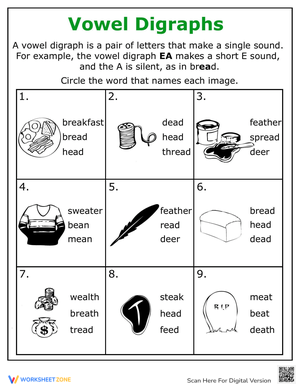
- Diphthongs: "oi" and "oy" for the /oi/ sound, "ou" and "ow" for the /ow/ sound. Positional cues guide the choice between each pair, and the worksheets build that awareness through categorization before asking students to produce the spellings in writing.
- Complex vowel spellings: The "igh" trigraph — as in "light," "might," and "night" — and high-frequency words where the long-vowel pattern departs from the most common rule.
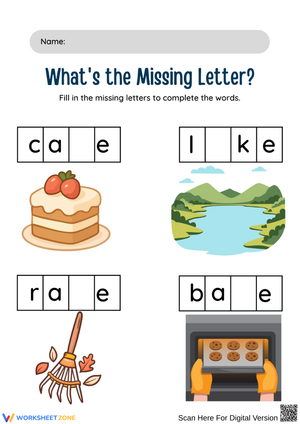
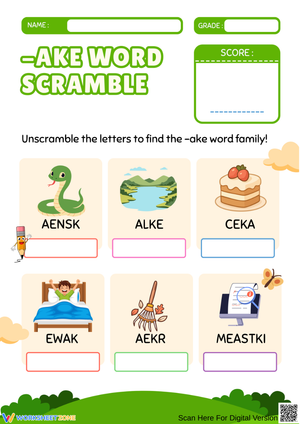
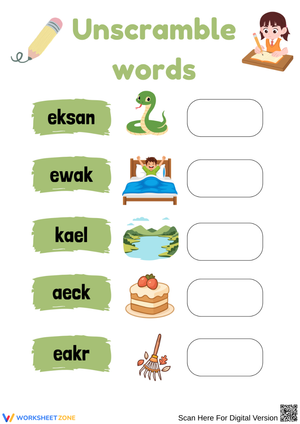
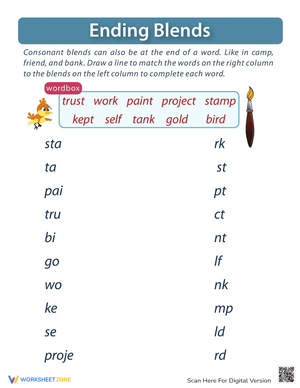
Exercise types vary across the set: word sorts, fill-in-the-blank with a word bank, open-ended sentence writing, and pattern identification inside short connected passages. That last format — marking a known pattern in running text — is where practice starts connecting to real reading and writing rather than staying in isolated drill.
Common Misconceptions to Watch For and Correct
The r-controlled vowel cluster produces the most consistent errors in Grade 2 writing. Students who write "her" without hesitation will still write "berd" for "bird" and "sorf" for "surf" in the same paragraph, because they have memorized individual words without internalizing "ir" and "ur" as distinct pattern units. That gap shows up in independent writing even after word sorts go smoothly — the sort task reads the words; the blank page requires retrieving the pattern from memory. These worksheets give students repeated pattern-retrieval practice rather than only pattern-identification practice.
Vowel team errors follow a different logic. Students know the long /a/ sound but don't know which spelling to reach for, so they guess: "rayn," "daiy," "plaiy." The ai/ay positional rule is the kind of generalization that takes multiple encounters to stick, not a single phonics lesson. The same is true for "oi" versus "oy" — a student who confidently spells "boy" will write "oyl" for "oil" if they have only encountered the positional contrast in reading and not in writing.
One category of error that's easy to miss when marking student work: over-generalization of the vowel team concept. Students who know "two vowels often go together" will write "boet" for "boat" or "roead" for "road" — not because they don't know patterns exist, but because they're applying the concept too broadly. Keeping each worksheet to a single valid pair, rather than mixing pattern families in the same task, limits that over-generalization before it becomes habit.
Where These Worksheets Fit in Your Teaching Week
Literacy centers are the natural home for these resources. The most effective setup pairs a word sort worksheet with physical letter tiles or index cards: students manipulate the words first, then record their sorted categories in writing. That sequence — hands-on manipulation followed by written record — reinforces the pattern through two distinct channels and gives teachers a quick artifact to review without interrupting center rotation. For worksheets focused on r-controlled vowels, add a color-coding layer: give students two highlighters and ask them to mark "ar" words in one color and "or" words in another. That visual categorization is especially useful for students who read the patterns correctly but still confuse them when writing independently.
During guided phonics groups, use each worksheet as a shared anchor during the teaching portion, then release students to the independent practice side while you observe. Those 8 to 10 minutes of independent work time function as a live formative check: a student who writes "chirp" correctly after the model word, then writes "chorp" on a new word, is still retrieving by memory rather than by rule. The worksheet surfaces that distinction in a way a group discussion won't.
Monday morning warm-ups work well for the simpler cloze-format worksheets — the structure is familiar enough that students start without needing instruction. Save open-ended sentence writing for mid-week, after the pattern has been introduced and students have enough grounding to write something beyond "The bird sat." Those sentences are worth collecting. A student who independently writes "The farmer started to stir the jar" has a stronger grip on the ar/ir contrast than a student who filled in three correct blanks from a word bank.
Spelling patterns pdf worksheets for 2nd grade also travel well as take-home practice. The format is self-explanatory enough that a parent can sit beside a child and work through the task without a teacher's guide. A word sort completed at home on Tuesday tends to show up as stronger recall during Thursday group work — that spaced retrieval effect is worth building into planning rather than leaving to chance.
Standard Alignment
These worksheets address CCSS.ELA-LITERACY.L.2.2.D, which requires second graders to generalize learned spelling patterns when writing words. The operative word in that standard is "generalize" — not memorize, but transfer. Every exercise format in the set is structured toward that goal: word sorts build the rule, cloze sentences require applying it to new words, and open-ended writing asks students to retrieve and use the pattern without any prompt. Teachers working toward L.2.2.D need resources that move students past list memorization, and that is the explicit aim of this sequence.
The standard sits within the broader Grade 2 Language strand, which treats conventions as tools for writing rather than isolated skills. Using these worksheets alongside writing workshop or interactive writing gives L.2.2.D a home in real composition — which is where the standard is ultimately applied and assessed.
Fitting These Worksheets to the Range in Your Classroom
For students still consolidating earlier phonics skills, moving through one pattern family at a time — completing all "ai/ay" worksheets before introducing r-controlled vowels — reduces the cognitive demand of managing multiple rules simultaneously. Pairing each worksheet with a personal word wall card for the target pattern gives those students a reference to check against during independent work. That removes the retrieval bottleneck from the actual task of practicing the pattern.
Students who move through the grade-level sequence quickly benefit most from the open-ended sentence writing tasks. Add a constraint: the sentence must use at least two words with the target pattern and be interesting enough to read aloud. That small shift from fill-in practice to generative writing pushes toward the transfer that CCSS.ELA-LITERACY.L.2.2.D actually demands. For the most advanced students, mixing two related pattern families in a single sorting task — "oi/oy" and "ou/ow" side by side — surfaces any remaining confusion between the diphthong families before it appears in independent writing.
One honest limitation: the word sort format stalls students who freeze when they encounter an unfamiliar word. For those students, preview the word list orally before distributing the worksheet so the reading demand doesn't block the spelling task. The goal of spelling patterns pdf worksheets for 2nd grade is pattern recognition and production — not cold reading of unknown vocabulary — and that oral preview keeps the focus intact.
Frequently Asked Questions
What patterns does the set cover, and does teaching sequence matter?
The set covers four major Grade 2 pattern families: long vowel teams (ai/ay, ee/ea, oa), r-controlled vowels (ar, er, ir, or, ur), diphthongs (oi/oy, ou/ow), and complex vowel spellings including the "igh" trigraph. Sequence matters. Long vowel teams build on the understanding that vowels can say their name — something most students establish in Grade 1. R-controlled vowels introduce a disruption to that understanding, since the /er/ sound in "bird" doesn't behave like a standard long vowel, so teaching them after vowel teams gives students a stable base to contrast against rather than starting from scratch.
How does spelling practice with these patterns connect to reading fluency?
Spelling and reading draw on the same underlying pattern knowledge. When students practice producing the "oa" pattern in writing, they train themselves to recognize "oa" as a single unit during decoding — instead of processing each letter separately. That unit recognition speeds up decoding and frees working memory for comprehension. The connection shows up in reading assessments: students who have practiced a pattern in writing read words containing that pattern faster and more accurately than students who encountered the pattern only in reading.
Can these be used in a literacy center while I work with a small group?
Yes. The word sort and cloze formats are structured enough for students to work through independently. To extend the life of each worksheet in a center, laminate a few and let students write answers in dry-erase marker — you can reuse them across multiple groups throughout the week. Pairing the written task with physical letter tiles first, so students sort before they record, gives the center more active quality than a stationary written task alone.
Why does pattern-based instruction produce better retention than weekly word lists?
A student who memorizes ten words for a Friday quiz knows those ten words. A student who internalizes the "oa" pattern can spell "boat," "coat," "road," "foam," and "groan" — words that were never on a list. Pattern instruction builds a generative rule rather than a fixed inventory. That is why spelling patterns pdf worksheets for 2nd grade focus on categorization and writing within each pattern family rather than isolated list review: the goal is a rule students can apply to words they have never seen before, which is exactly what Grade 2 writing demands of them.












 Interactive Worksheet Maker
 Quiz Maker
 Word Search Maker
 Crossword Puzzle Maker
 Word Scramble Generator
 Sentence Scramble Generator
 Handwriting Worksheet Generator
 Name Tracing Generator
 Fill In The Blank Generator