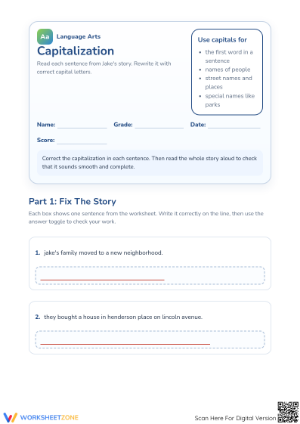
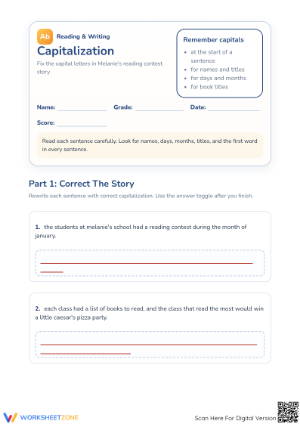
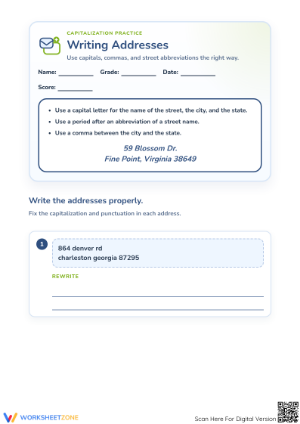
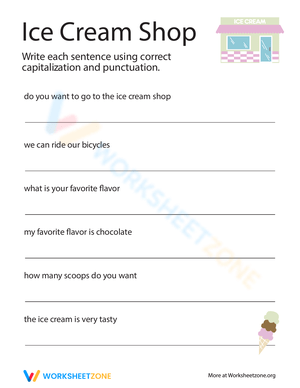
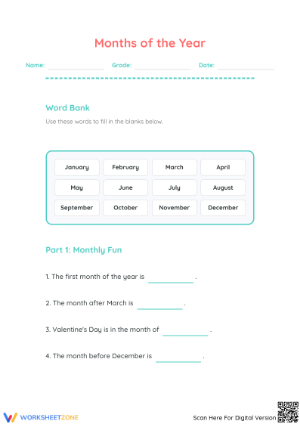
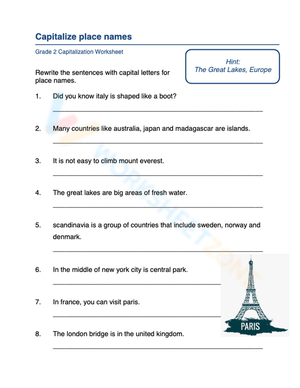
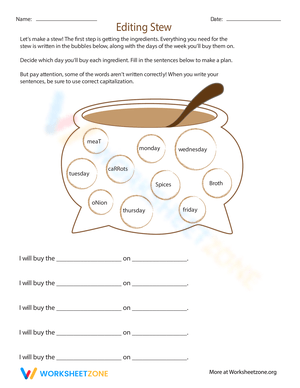
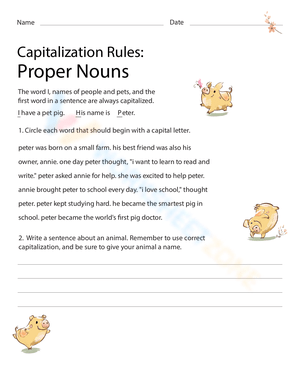
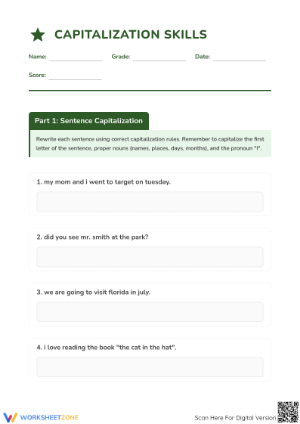
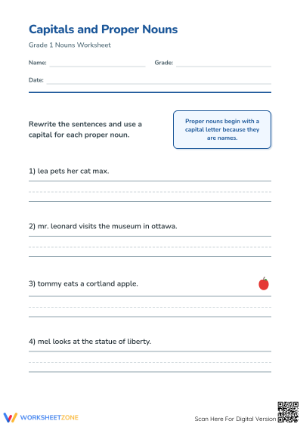
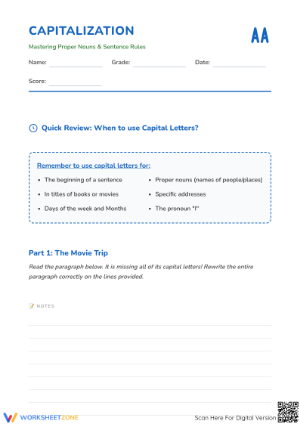
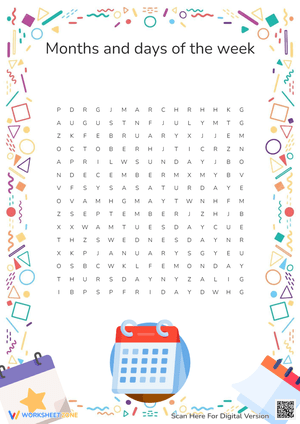
These capitalization printable worksheets for 2nd grade target the full range of L.2.2 mechanics — sentence starters, the pronoun I, days and months, holidays, product names, and geographic locations — in focused, standalone exercises that work anywhere in the day. Each worksheet isolates one rule or pairs a small cluster for review, so students aren't sorting through unrelated grammar at the same time they're trying to apply a specific convention.
The Specific Rules Each Worksheet Targets
The set spans the capitalization categories 2nd graders are expected to control by the end of the year:
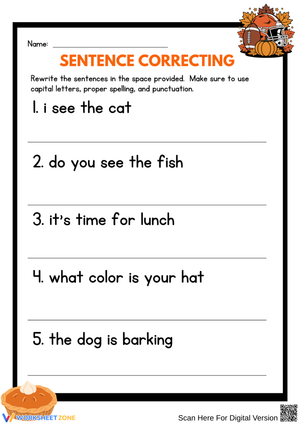
- First word of every sentence, including after a period or question mark
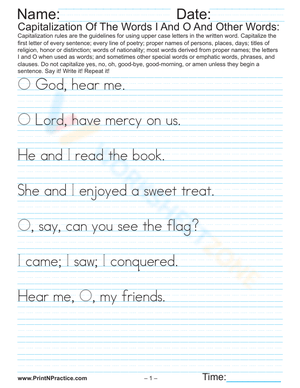
- The pronoun I in both isolated exercises and multi-sentence editing tasks
- Days of the week and months of the year
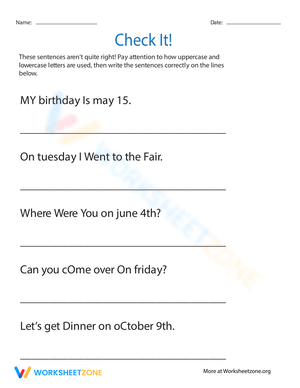
- Specific holidays — including the ones students treat as common nouns, like fourth of july or thanksgiving
- Product names contrasted with their generic category: a cookie versus Oreo, a building toy versus LEGO
- Geographic names: cities, states, countries, and named bodies of water
- Salutation and closing lines in friendly letters
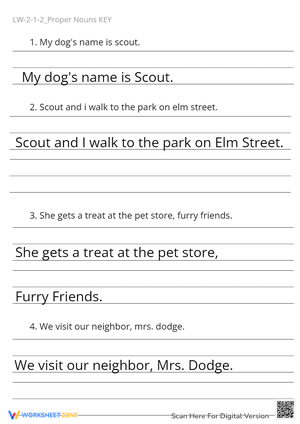
Task formats range from sentence rewriting to short paragraph editing, giving students practice in isolation — where one rule is the only target — and in connected text, which is what their actual writing demands.
The Capitalization Errors That Follow Students Into Their Writing
The lowercase i is the first casualty in longer writing. A student who correctly capitalizes I on a short exercise will revert to i partway through a paragraph when attention is split between spelling and story. The paragraph-level editing worksheets in this set create exactly that condition, which makes the error surface in a controlled setting rather than only in a final draft you're reading at 9 p.m.
Holiday names are trickier than days of the week for most students. Monday gets corrected often enough that it holds. Fourth of July is another story — students write it in all lowercase because it reads like a description, not a proper name. Product names follow the same logic: students capitalize McDonald's because they've stared at the logo, but they write lego or oreo in lowercase because those words feel like object names to them. Each worksheet that addresses product names pushes students to draw that line between category and brand — a distinction that doesn't click from explanation alone.
Standard Alignment
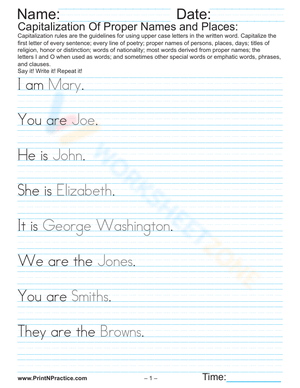
CCSS ELA-Literacy L.2.2.A requires 2nd graders to capitalize holidays, product names, and geographic names. That standard lands here because students at this level are developmentally ready to extend the concept of a "name" beyond people. They've understood for a year or more that Maria gets a capital because it's a specific person — not just any person, but that one. The worksheets build directly on that understanding by asking: what else functions like a name? A holiday does. A brand does. A city does. The sequencing starts with categories students find more intuitive — days and months — before moving into multi-category editing tasks where a single sentence might contain a geographic name, a holiday, and a product name at once.
Getting the Most from These Worksheets When You're Planning the Week
The fix-it warm-up is the format most teachers land on: display one sentence or short passage at the start of the period, give students two minutes to mark the errors independently, then discuss as a class. That's a complete review cycle before morning meeting ends. Because each worksheet is self-contained, capitalization printable worksheets for 2nd grade also slide into writing workshop without disrupting the workshop structure — hand one to a student during a conference when you've flagged the same capitalization error twice in their draft, and send them back to their seat for three minutes of targeted practice before they return to writing.
During a letter-writing unit, the salutation and closing worksheets pay for themselves quickly. Students who understand the idea of letter format still write dear grandma, with a lowercase d in their actual letters. A worksheet that shows the error in print, explains the rule, and asks them to rewrite two more examples corrects the habit faster than a verbal reminder does.
Differentiating the Worksheets Across a Range of Learners
For students still working on sentence-level basics, the most useful adjustment is narrowing the task: two or three sentences instead of a full paragraph, with pre-marked line numbers so they know where to look. Those students should start with the I and sentence-starter worksheets before touching proper noun categories. The full range of skills covered across the capitalization printable worksheets for 2nd grade set means you can match the specific worksheet to where a student actually is without pulling from a separate resource or redesigning the task from scratch.
Students who have sentence conventions solid benefit from the multi-category worksheets, where a single passage contains a holiday, a geographic name, and a product name in the same paragraph. A strong extension for that group: after they correct the worksheet, ask them to write two original sentences that each require at least two different capitalization rules. That shifts the work from identification to production — and the gap between those two things is where most 2nd graders still have room to grow.
Frequently Asked Questions
Which capitalization rules should 2nd graders have solid by year's end?
By the end of 2nd grade, students should consistently capitalize the first word of every sentence, the pronoun I, days of the week, months of the year, specific holidays, product names, and geographic locations. Letter salutations and closings also fall within the expected range. Most teachers address sentence conventions first, then work through the proper noun subcategories in the second half of the year once the foundational habits are stable.
How do these worksheets fit into a writing workshop model?
They work well during the editing stage as targeted support. When a student is revising a draft and you've marked the same error twice, pulling the worksheet that addresses that specific rule is more efficient than re-explaining it verbally. The capitalization printable worksheets for 2nd grade also work as a Monday review before students pick up long writing projects they left on Friday — a five-minute reset that keeps mechanics visible without eating into drafting time.
How often should students work through these?
Short and frequent beats long and occasional for 2nd graders. A five-minute warm-up every day does more than a thirty-minute block once a week. The goal is keeping the rules active enough that students begin self-monitoring in their own writing — which takes repeated, low-stakes practice more than any single lesson does.
Can these worksheets challenge students who are already ahead in grammar?
The multi-category editing worksheets push advanced students further, but the real stretch comes from the extension task: correct the worksheet, then write original sentences that require three different types of capitalization without any prompting. That production task reveals whether a student actually controls the rules or just recognizes violations when they see them — and those are genuinely different skills, even if a student's score suggests otherwise.












 Interactive Worksheet Maker
 Quiz Maker
 Word Search Maker
 Crossword Puzzle Maker
 Word Scramble Generator
 Sentence Scramble Generator
 Handwriting Worksheet Generator
 Name Tracing Generator
 Fill In The Blank Generator