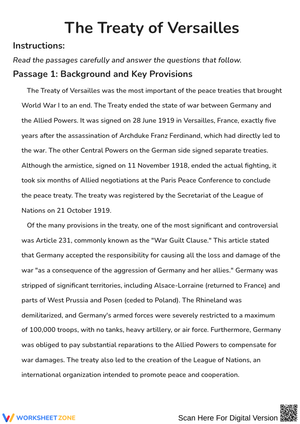
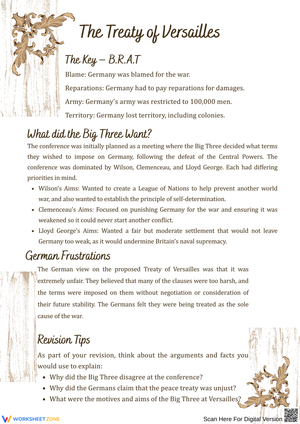
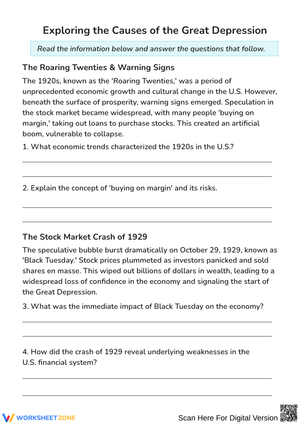
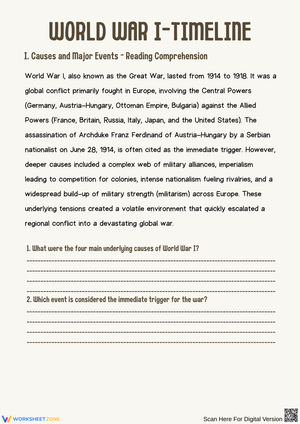
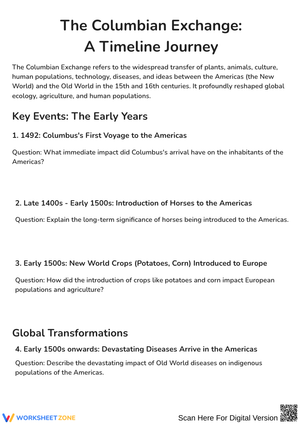
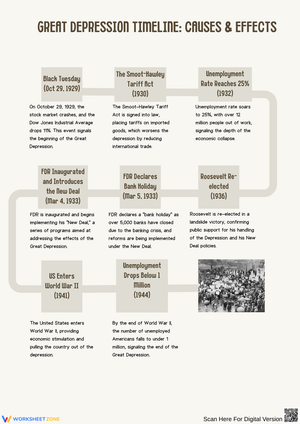
These history worksheets for 10th grade cover the units that define most secondary world history courses — industrialization, imperialism, the world wars, the Cold War, and decolonization — and they ask students to do actual historical thinking rather than fill in blanks from a word bank. The resources print cleanly and hold up equally well as daily classwork, guided reading checks, or leave-behind plans for a substitute.
Topics and Skills the Set Builds
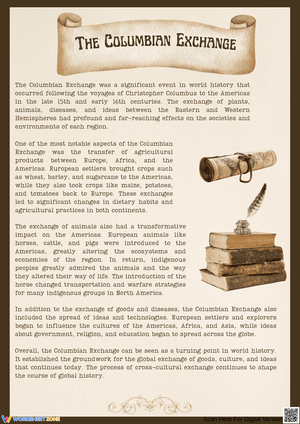
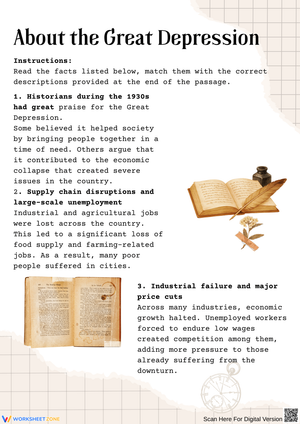
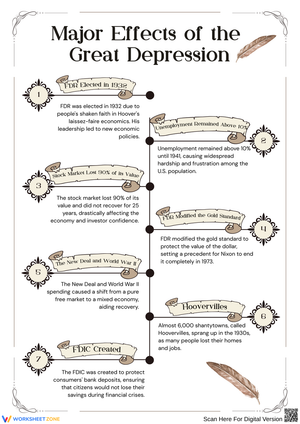
Each worksheet targets a combination of content knowledge and a transferable history skill. The content side covers the standard Grade 10 units: the causes and consequences of industrialization, European imperialism and colonial resistance, the trigger and escalation of World War I, the rise of totalitarianism and the path to World War II, Holocaust documentation and testimony, Cold War ideology and proxy conflicts, and post-war decolonization across Africa and Asia.
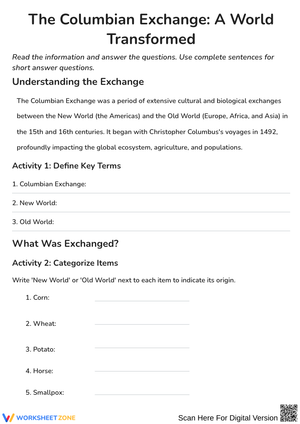
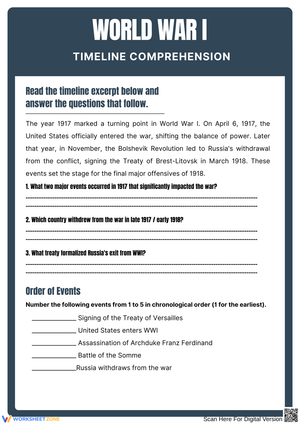
The skill side is where these worksheets do their real work. Students underline evidence in primary sources, mark turning points on timelines, sort causes by category (economic, political, social), annotate maps showing territorial control, compare the stated goals of competing powers, and write claim sentences backed by document evidence. Those are the moves that matter in a history class and that carry directly into writing assignments and Socratic seminars.
Mistakes Students Make That These Worksheets Help Surface
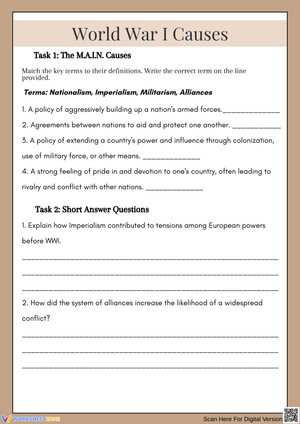
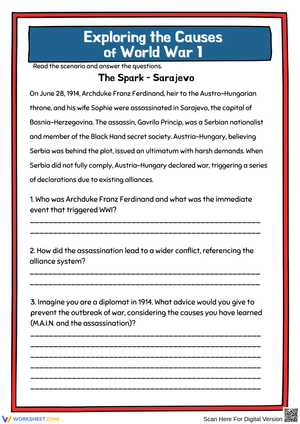
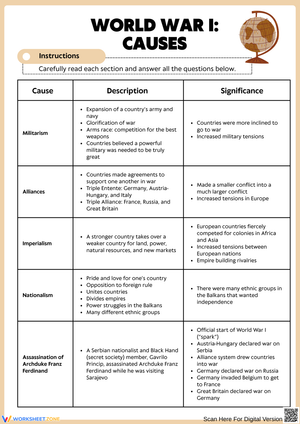
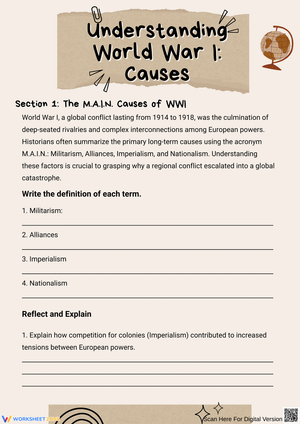
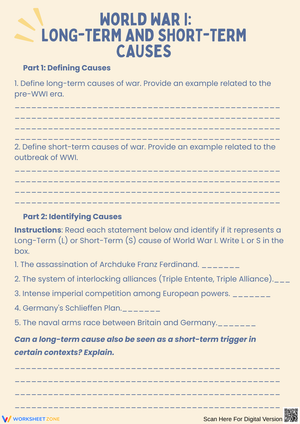
In WWI cause analysis, the most persistent error is collapsing the assassination of Archduke Franz Ferdinand and the underlying structural tensions of the MAIN factors into one cause. Students write "the war started because of the assassination" and leave it there, treating a trigger as a root cause. A cause-and-effect worksheet that forces students to place long-term and short-term causes in separate columns is when you see who genuinely understands the distinction and who is just moving names between boxes.
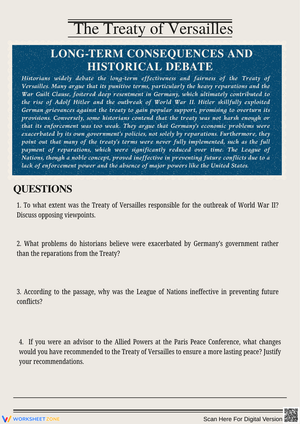
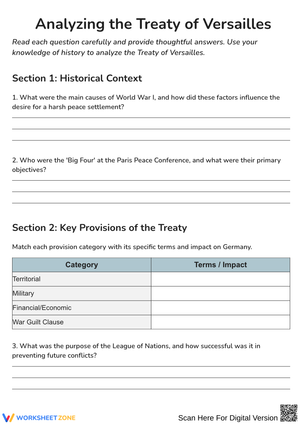
On primary source worksheets, the chronic problem is summarizing instead of analyzing. A student reads an excerpt from the Fourteen Points and writes "Wilson wanted peace." That response shows reading but not sourcing. Worksheets that include a structured evidence frame — asking students to identify the speaker's purpose and intended audience before they write any interpretation — consistently produce better analysis in the class discussion that follows. Without that frame, even strong readers tend to treat a historical document like a reading passage rather than an artifact with a context and an argument.
In Cold War work, students frequently treat all communist states as interchangeable Soviet allies. Worksheets that ask students to briefly compare, for instance, Cuba's and China's relationships with the Soviet Union surface this misconception early enough to address before a writing task begins.
Recommended Uses Across the Lesson Cycle
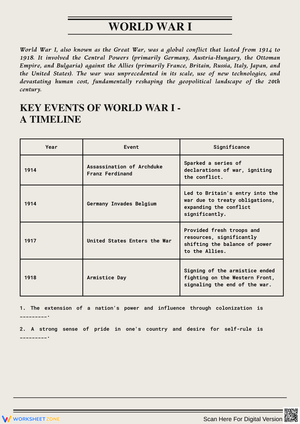
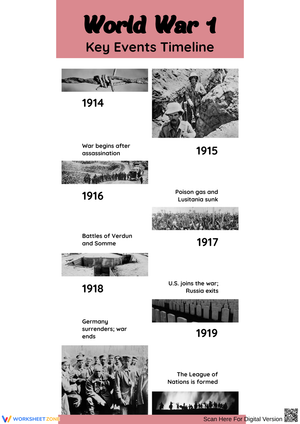
Most teachers settle into a few reliable places for these resources. At the start of a unit, a background-building or anticipation worksheet activates prior knowledge and gives a quick read on what students already believe — genuinely useful before launching a lesson on imperialism or the Holocaust, where students often arrive with either strong preconceptions or very little context. In the middle of a unit, guided reading and source analysis worksheets help students process dense content in manageable steps rather than reading a full chapter and emerging with nothing organized. Near the end, timeline activities and comparison charts compress a unit's key relationships into one worksheet that doubles as a study tool.
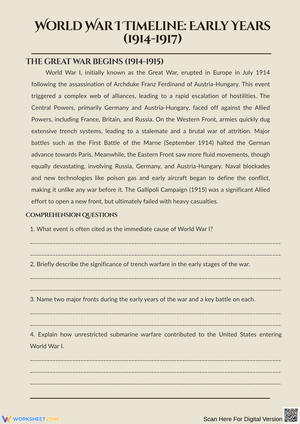
The last eight minutes of a block period are often where these resources earn their keep. A short written reflection or map-labeling task keeps students productively occupied without requiring a new setup, and the completed work tells you exactly where the gaps are before the next class. History worksheets for 10th grade also work well in station rotations — one station for document analysis, one for map work, one for timeline practice — and the PDF format makes reprinting for small groups quick.
Adjusting the Worksheets Across Learner Levels
The most practical adjustment for mixed-ability classes is to print two versions of the same worksheet: one with structured question frames (something like "According to the source, the author believes ___ because ___") and one with open-ended prompts that require students to build their own argument structure. The historical content stays the same, the source stays the same, and the class stays together for discussion — only the degree of support differs. That is far easier to manage than preparing two entirely separate activities for the same period.
For students who need vocabulary reinforcement before they can engage with a source, a brief glossary column at the margin of the worksheet removes that barrier without watering down the historical task itself. For students working above grade level, replacing one structured question with an open historical question — "What does this source leave out, and why might that matter?" — raises the ceiling without creating a separate assignment. History worksheets for 10th grade lend themselves to these small adjustments because editing and reprinting a PDF takes very little time.
Standard Alignment
These worksheets align with the Common Core State Standards for Literacy in History/Social Studies at grades 9–10, particularly CCSS.ELA-LITERACY.RH.9-10.1 (citing textual evidence to support analysis), RH.9-10.6 (comparing point of view across historical sources), and RH.9-10.8 (assessing the reasoning and evidence in primary and secondary texts). They also support the C3 Framework's Dimension 2 History standards, including D2.His.1.9-12 (analyzing how historical context shapes events and actors) and D2.His.5.9-12 (explaining how and why perspectives changed over time). In classroom terms, RH.9-10.6 and RH.9-10.8 are the standards most teachers are actively building toward when they assign document analysis — and the source-based worksheets in this set target exactly those two skills most directly.
Frequently Asked Questions
What history topics do these worksheets cover?
The set spans the standard Grade 10 world history curriculum: industrialization, imperialism and colonial resistance, World War I, World War II and the Holocaust, Cold War ideology and proxy conflicts, and post-war decolonization. Each worksheet is organized around one of these units, so teachers can pull what they need by topic without sorting through unrelated material.
Do the worksheets include primary source analysis tasks?
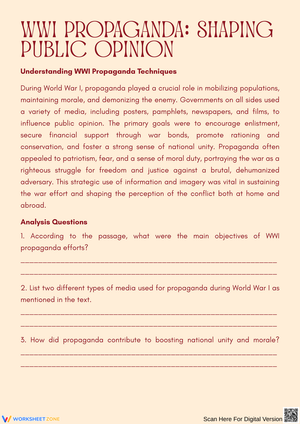
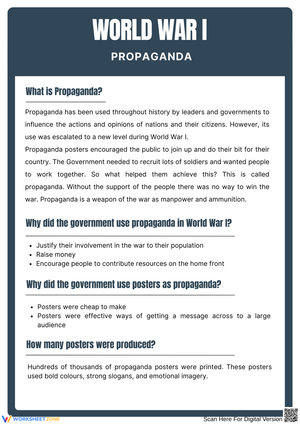
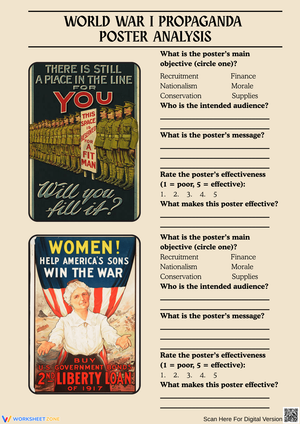
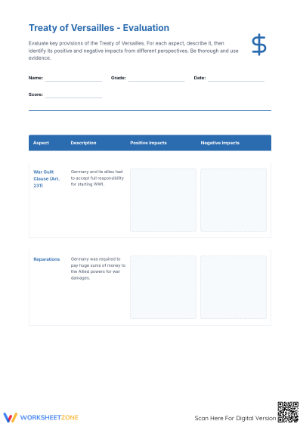
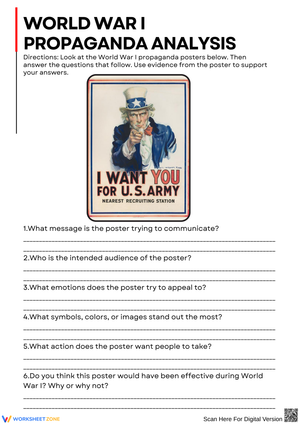
Yes. Several worksheets ask students to read and interpret speeches, political cartoons, photographs, treaty excerpts, and propaganda posters. The analysis tasks include sourcing questions (author, audience, purpose) and interpretation questions that ask students to connect document evidence to broader historical context. Library of Congress Teachers and National Archives Educator Resources are consistent models for this kind of work at the secondary level, and the source-based worksheets here follow a similar structure.
How do these work for substitute or emergency lesson plans?
Any worksheet with a clear, step-by-step structure works for a sub day. Timeline activities, map-labeling tasks, and reading checks are the most reliable because students can complete them independently without needing to ask procedural questions. The PDF format stays consistent across any school printer and does not require a digital setup, which matters when the substitute has limited tech access. History worksheets for 10th grade that include an answer key make sub days even more manageable, since a non-specialist can facilitate a brief review at the end of class without needing to know the content cold.
Can these worksheets be used digitally as well as in print?
Yes. PDFs can be shared through a learning management system and completed digitally using annotation tools or typed responses. Some teachers print for in-class annotation and share digitally for students who are absent — the consistent formatting means the experience is equivalent either way, which simplifies planning when a class runs both in-person and remote on the same day.












 Interactive Worksheet Maker
 Quiz Maker
 Word Search Maker
 Crossword Puzzle Maker
 Word Scramble Generator
 Sentence Scramble Generator
 Handwriting Worksheet Generator
 Name Tracing Generator
 Fill In The Blank Generator




 BACK TOSCHOOL