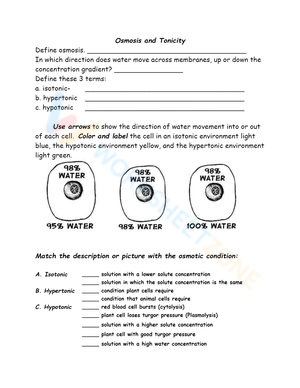
These 10th grade environment worksheets resources give teachers a working set of practice materials for the three core units that dominate most sophomore Earth and environmental science sequences: ecosystem dynamics, biogeochemical cycles, and human impact on Earth's systems. Each worksheet targets one manageable concept rather than bundling overlapping content together — which matters when students are already moving between dense topics like nitrogen fixation and trophic energy transfer in the same unit. The set runs from foundational ecosystem modeling through climate data interpretation and finishes with resource sustainability, a natural arc that mirrors how most state frameworks sequence the content.
What Each Worksheet Targets
The five major content areas covered by the 10th grade environment worksheets set map directly to the high school environmental science units where teachers typically spend the most instructional time.
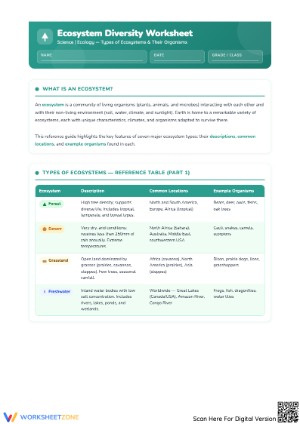
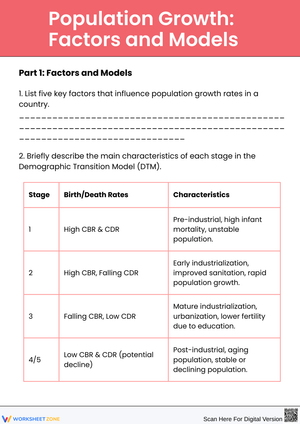
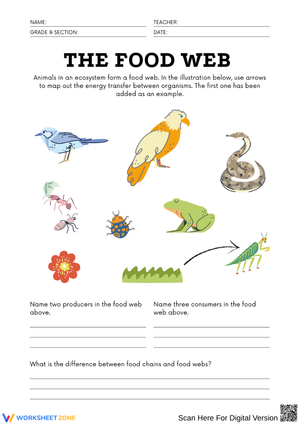
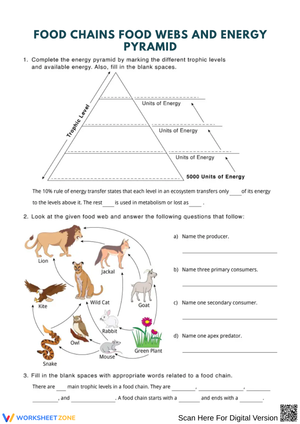
Ecosystem dynamics and energy flow worksheets ask students to model how energy moves through trophic levels, apply the 10% rule to calculate biomass at each level, and trace matter through multi-species food webs. Several worksheets present removal scenarios — a keystone predator is eliminated, or a primary producer collapses — and students predict ripple effects on dependent populations. This kind of cascading analysis requires genuine systems thinking rather than recall.
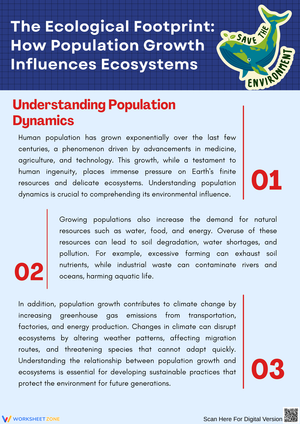
Biogeochemical cycle worksheets cover carbon, nitrogen, and phosphorus separately. Each one asks students to label reservoirs, identify the processes shuttling the element between them, and distinguish fast-cycling pathways like photosynthesis and nitrification from long-term storage like fossil fuel formation and deep ocean sequestration. A separate worksheet examines how human activity disrupts these cycles — specifically how fertilizer runoff amplifies the phosphorus cycle and triggers downstream hypoxia.
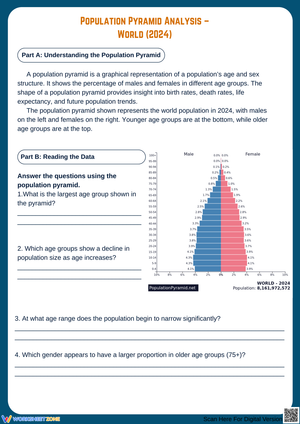
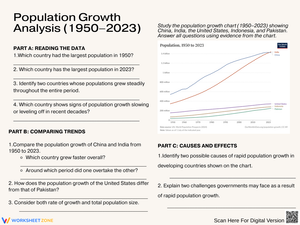
Climate data interpretation worksheets give students actual data formats: temperature anomaly records, CO₂ concentration curves from Mauna Loa, and ice core proxy data. Students interpret trends and write short explanatory paragraphs connecting mechanisms — albedo feedback, ocean heat absorption, permafrost methane release — to the data they have just analyzed.
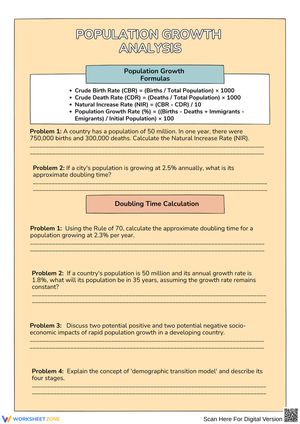
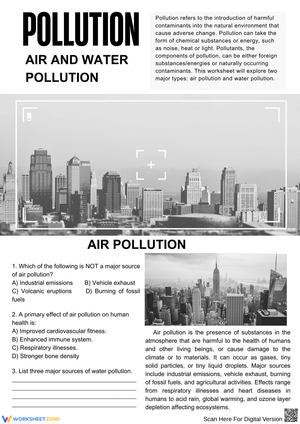
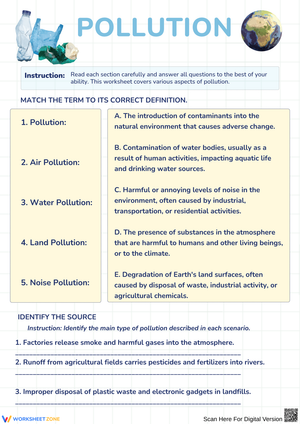
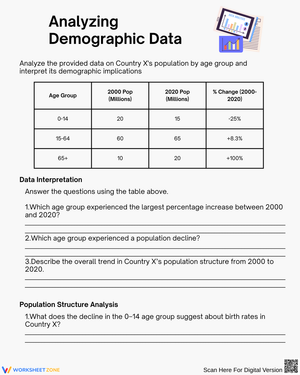
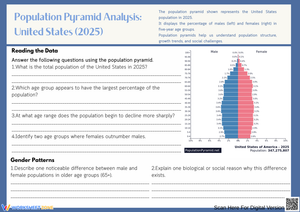
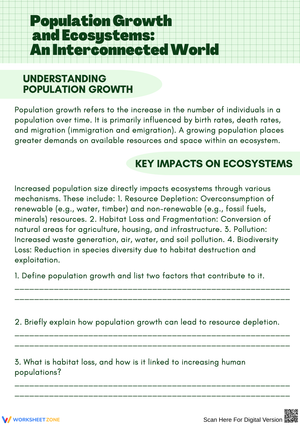
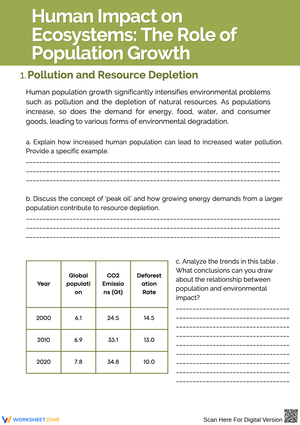
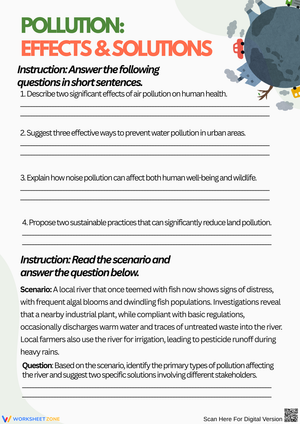
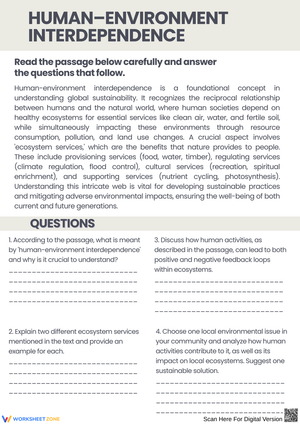
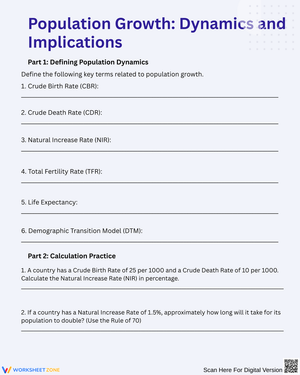
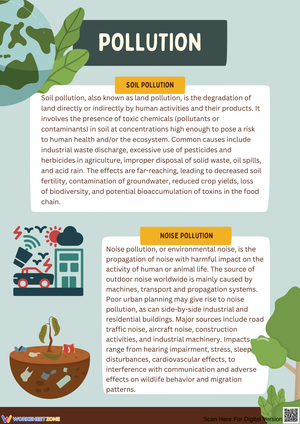
Human impact worksheets use case studies tied to HS-ESS3: tropical deforestation, agricultural runoff and hypoxic zone formation, acid deposition effects on aquatic pH, and particulate concentrations in urbanized watersheds. Students analyze provided data and develop written responses identifying mitigation strategies with supporting reasoning.
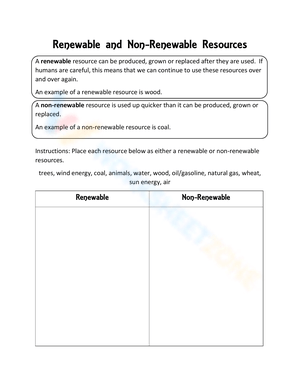
Resource management and sustainability worksheets ask students to calculate personal ecological footprints, compare energy sources using side-by-side efficiency and emissions data, and evaluate sustainable land-use and water management scenarios. These tend to generate more student engagement than other sections because the footprint calculation connects directly to household choices students recognize.
Building These Worksheets Into Your Weekly Lesson Plans
The strongest use of these materials is as formative checkpoints, not summative tasks. A short worksheet on nitrogen cycle processes used at the close of a direct instruction block tells you immediately whether students have the bacteria-driven steps straight before the class moves into disruption and eutrophication — content that builds directly on those steps. Assigning the worksheet, running a quick group share, and addressing the predictable confusion around nitrification versus denitrification takes about 15 minutes and prevents those misconceptions from compounding across the next two lessons.
The cascade-effect ecosystem worksheets work particularly well in collaborative groups of three. Assign each student a different tier to track: one monitors primary producers, one tracks consumer populations, one watches decomposer dynamics. That division mirrors how ecologists actually approach systems analysis and keeps every student reading the scenario carefully rather than letting one person carry the whole task.
For climate data worksheets, spend three minutes before releasing students to work independently on what the baseline represents in a temperature anomaly graph. Students who have never seen that format don't know what zero means in that context, and they misread the trend as a result. These worksheets are also reliable choices for the last 10–12 minutes of a period when there isn't time to launch a new concept but students need active retrieval rather than passive review.
Errors Students Make That These Worksheets Help Surface
The 10% rule produces a persistent calculation error. Students understand that energy decreases moving up trophic levels, but many reverse the direction when working through a specific problem. They will correctly state that only 10% of energy passes to the next level and then write that the tertiary consumer has more energy available than the secondary consumer. The question phrasing triggers it — "how much energy is available to the eagle?" reads to some students as asking what the eagle gains, not what the previous level passes on. Worksheets that require students to build the full trophic column as a labeled diagram before doing any calculations reduce this error consistently.
On carbon cycle worksheets, time scale is the recurring confusion. Students learn that photosynthesis and respiration are short-cycle processes, but they frequently place fossil fuel combustion in the same category as plant respiration — both release CO₂, so they feel equivalent. A worksheet question that asks students to trace a single carbon atom from a Carboniferous swamp plant through coal formation to a power plant stack makes the 300-million-year gap impossible to blur over.
Climate data worksheets surface a subtler problem. When students see that atmospheric CO₂ has risen by roughly 50% since preindustrial levels while global average temperature has increased by about 1.2°C, several conclude the relationship must be weak or coincidental — the numbers don't scale proportionally, so something seems off. This is exactly the right moment to introduce logarithmic forcing and feedback dynamics, but that conversation only happens productively when students are sitting with actual data rather than a diagram that smooths everything into a clean arrow.
Standard Alignment
HS-LS2 (Ecosystems: Interactions, Energy, and Dynamics) anchors the ecosystem dynamics and biogeochemical cycle portions of the set. The relevant performance expectations ask students to use mathematical representations to support explanations of how carbon, hydrogen, oxygen, and nitrogen cycle through Earth's systems, and to evaluate evidence that ecosystem services are essential to human well-being. HS-ESS3 (Earth and Human Activity) covers the human impact, climate, and sustainability worksheets. HS-ESS3-5 specifically calls for students to analyze geoscience data and global climate model outputs to make evidence-based projections about the rate and consequences of climate change — which is the core task of the climate data interpretation worksheets in this set.
NGSS places both clusters in the 9th–10th grade band by design. By sophomore year, students have enough chemistry background to handle energy transfer calculations and enough biology background to work with ecosystem models, but the course is still foundational rather than AP-level. These worksheets reflect that placement: the emphasis is on conceptual clarity and data reasoning, not the quantitative depth an advanced course would require.
Adjusting the Set for a Range of Learners
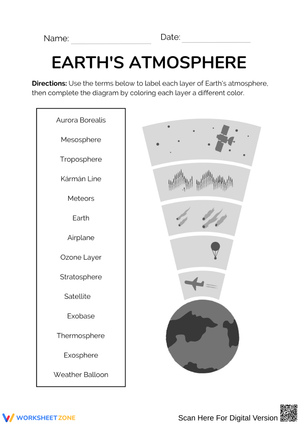
For students who need additional support with the diagram-labeling worksheets, providing a completed word bank alongside the blank diagram reduces the cognitive load of vocabulary retrieval so students can focus on understanding the process itself. They still have to place each term correctly and explain what is happening at each stage — the thinking remains intact. Removing the vocabulary barrier keeps them from stalling before they reach the actual science.
Advanced students who move through the standard version quickly can extend any human impact worksheet by locating current data from the EPA, NOAA, or Global Forest Watch that updates or complicates the scenario the worksheet presents. A student who pulls current deforestation figures and writes a paragraph comparing them to the worksheet's data set is doing something substantively different from filling in boxes. These topics are genuinely open-ended, which makes that kind of self-directed extension clean to assign without elaborate preparation.
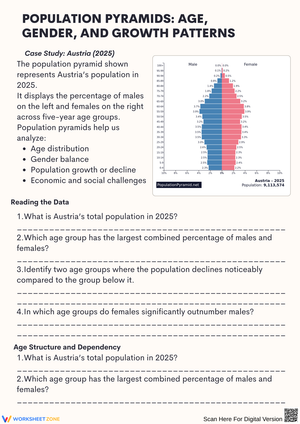
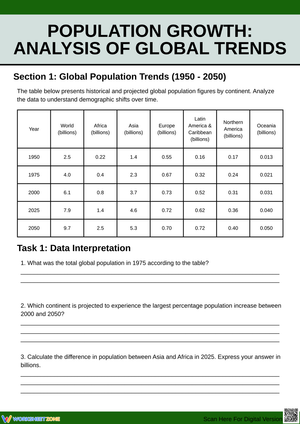
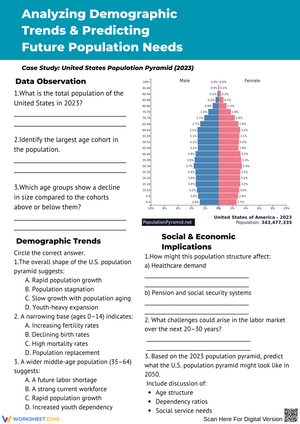
For English language learners, the climate and ecosystem worksheets built around graphs and data tables rather than dense reading passages serve as productive entry points. Visual data analysis carries a lower language demand without reducing the science demand — the right tradeoff at this level.
Frequently Asked Questions
Do these worksheets include answer keys for data interpretation tasks?
Answer keys are included with the 10th grade environment worksheets set, covering the climate graph analysis, trophic energy transfer calculations, and ecological footprint worksheets. For tasks requiring short written explanations rather than single-answer responses, the keys provide model answers with the core reasoning identified — useful when evaluating multiple students' responses during a tight grading window.
Are these materials appropriate for students moving toward AP Environmental Science?
The set builds the foundational reasoning skills AP Environmental Science requires — systems thinking, data interpretation, and evidence-based argumentation — but does not reach the quantitative depth of an AP course. Students arriving in AP APES with this background will have solid conceptual grounding in cycles, energy flow, and human impact; they will still need additional exposure to the mathematical relationships and the breadth of specific case studies the AP exam covers.
Can individual worksheets be used independently, or do they work only in sequence?
Each worksheet stands alone. A teacher who needs only the nitrogen cycle worksheet or the deforestation case study can pull that one worksheet without the rest of the set. The 10th grade environment worksheets collection is organized thematically rather than as a locked sequence, so individual worksheets fit cleanly into existing unit materials without requiring the full set.












 Interactive Worksheet Maker
 Quiz Maker
 Word Search Maker
 Crossword Puzzle Maker
 Word Scramble Generator
 Sentence Scramble Generator
 Handwriting Worksheet Generator
 Name Tracing Generator
 Fill In The Blank Generator