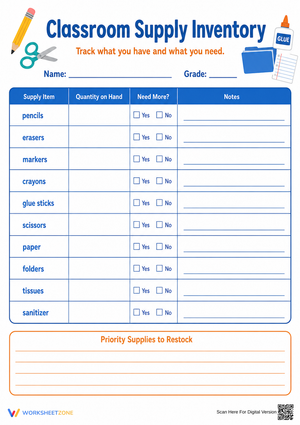
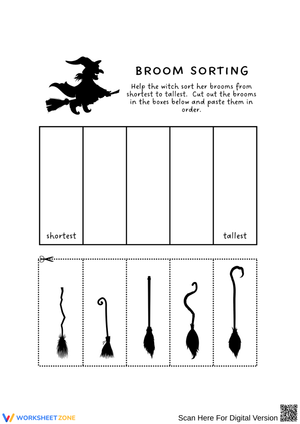
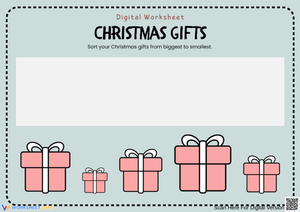
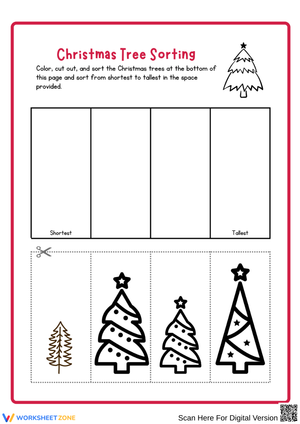
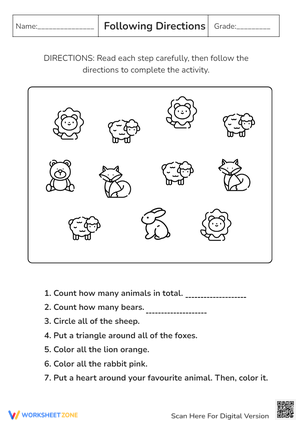
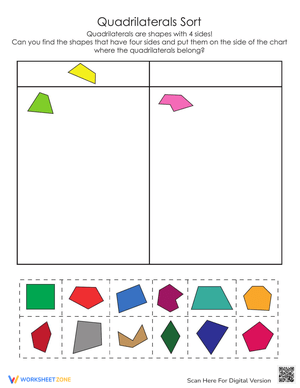
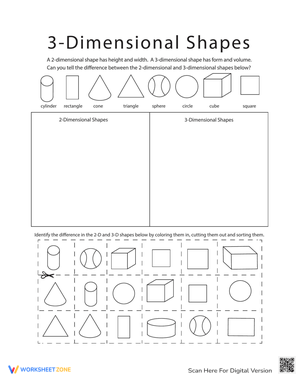
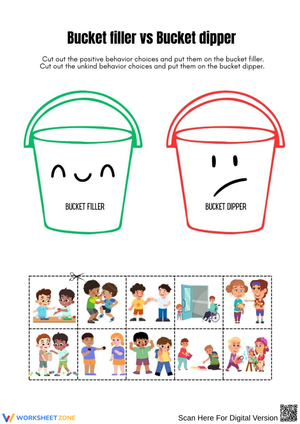
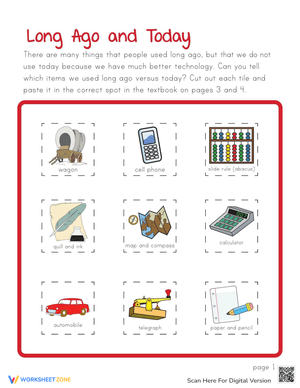
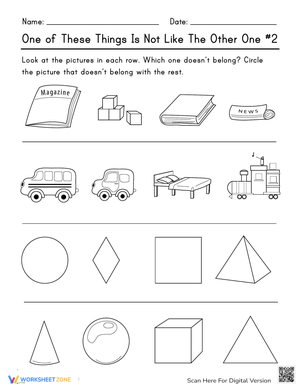
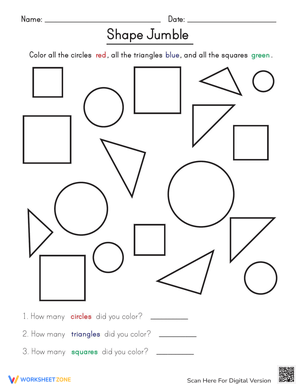
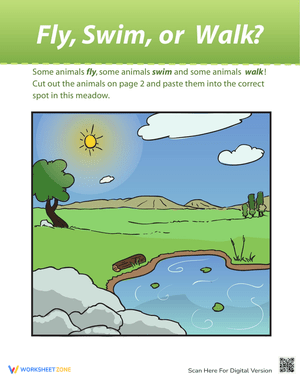
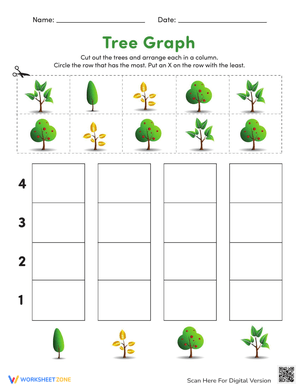
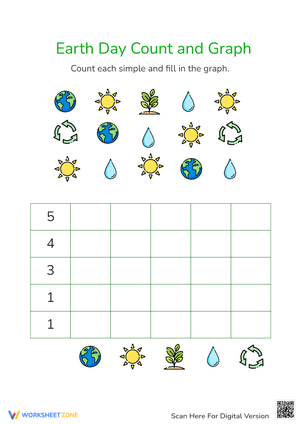
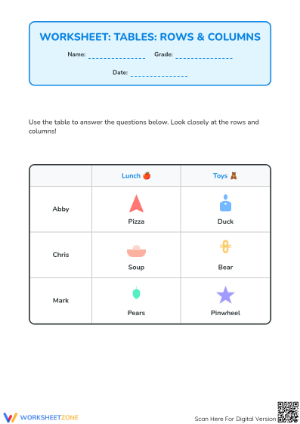
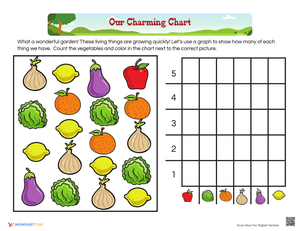
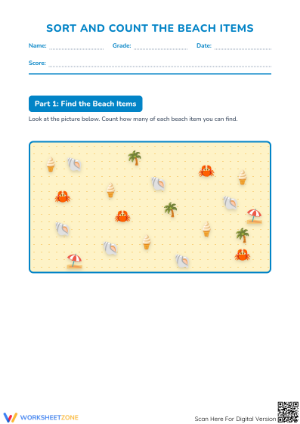
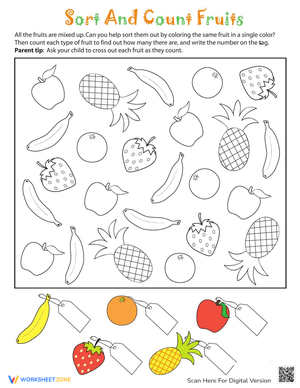
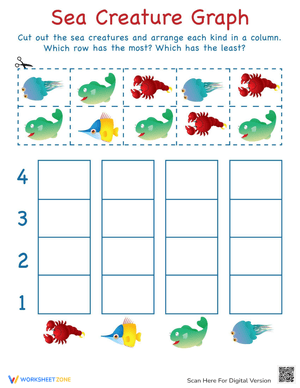
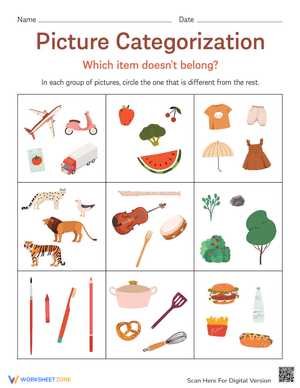
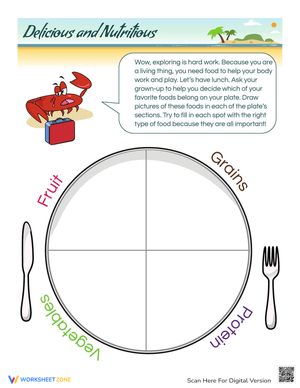
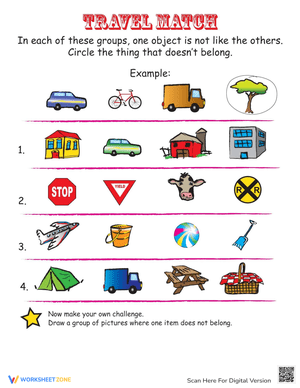
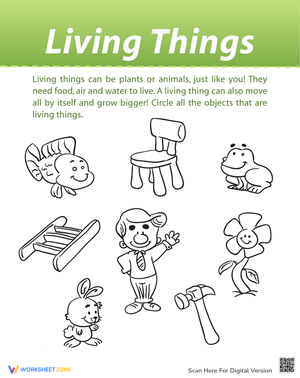
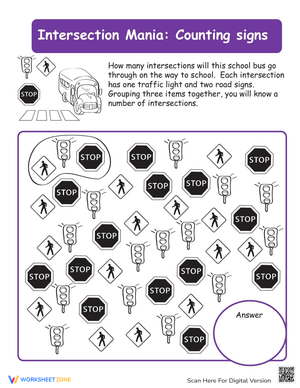
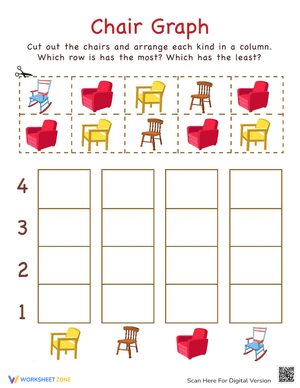
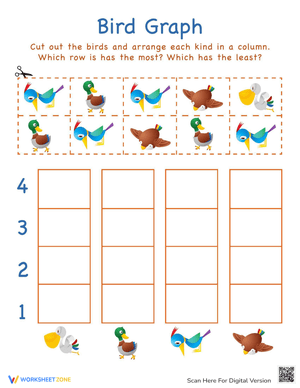
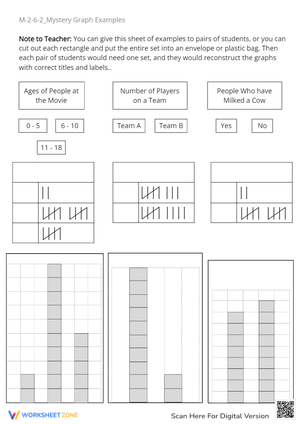
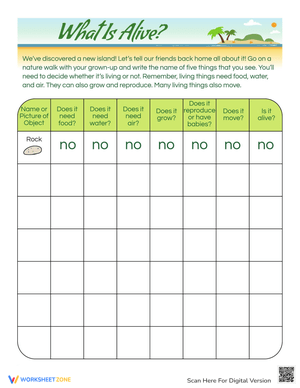
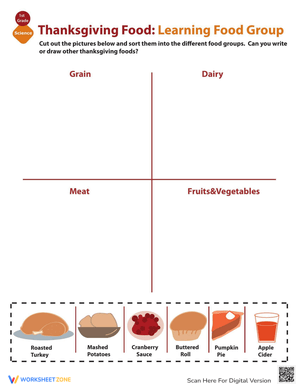
Sorting data printable worksheets for 1st grade give teachers a concrete bridge between the carpet-sorting routines most first graders love and the recording skills students need before graphing work begins. These worksheets ask students to classify picture sets, count category totals, and compare groups—three moves that appear repeatedly across early data units. The set works equally well for math centers, small-group reteaching, morning warm-ups, and sub plans.
The Specific Skills These Worksheets Target
First-grade data work begins with observation. Students notice that a pile of buttons can be split by color, by size, or by number of holes—and every one of those splits produces a sortable set. That observation habit is what these worksheets train, starting with visually obvious attributes and moving toward ones that require closer attention.
- Attribute identification: Students examine each picture and name what differs—color, shape, size, or object type—before placing anything in a category.
- Category placement: They assign each item to a group based on one stated rule and mark or paste it in the correct column or box.
- Accurate counting: After sorting, students count how many items land in each category, a step that connects directly to the tallying and graphing skills that come next.
- Quantity comparison: They record which group has more and which has fewer, using the exact language that reappears when students build picture graphs.
- Explaining a sort: Written or oral prompts ask students to state the rule they used, building mathematical vocabulary alongside the classification skill itself.
That last point matters more than it looks on paper. A student who writes "big" and "small" on a worksheet has shown sorting. A student who says, "I put the elephants and giraffes together because they both have four legs," has shown flexible categorical thinking. The worksheet creates the occasion; the discussion surfaces the understanding.
Mistakes Students Make That These Worksheets Help You Catch
The most predictable error in first-grade sorting is attribute drift: a student begins sorting by color, places three red items correctly, then encounters a red-and-blue striped picture and either freezes or assigns it to whichever column has fewer items so the groups "look even." This is not a random mistake. It tells you the student has not yet internalized the sorting rule as fixed—a gap worth catching before picture graph work begins, because the same confusion resurfaces when students try to assign two-attribute data points to a single-row tally.
A second pattern shows up on count-and-compare pages. Many students sort six animals and four vehicles accurately but then write "more" for both groups—one more than the other and both more than zero—because they do not yet treat "more" as a relational claim requiring a named referent. Asking them to complete the sentence frame There are more ___ than ___ surfaces this immediately and gives you a teaching moment before the phrasing matters on a formal assessment.
Cut-and-paste formats reveal a third issue: students who sort correctly during the physical manipulation but then glue pictures into the wrong column because they lost track of which column is which. That gap is not a sorting error—it is a working-memory issue. Color-coded column headers, or simply having students point and name each category aloud before gluing, closes the gap without softening the mathematical task.
How to Build These Worksheets Into Your Math Block
The most effective sequence with this age group is concrete before paper. Spend five to eight minutes having students sort real objects—linking cubes by color, small animal figures by number of legs, picture cards by food versus not food—then hand out the worksheet as the recording step. Students who have already made the physical sort understand what the task is asking. The printable becomes evidence of understanding rather than an introduction to a concept they are still working out.
During small-group reteaching, sorting data printable worksheets for 1st grade work best when each student has a set of manipulatives beside the page. A student who sorts picture tokens into two piles and then transfers the count to the worksheet is doing classification twice—once concretely, once abstractly—which is exactly the kind of repeated exposure that cements early data vocabulary. Reserve that format for students who struggled in whole-group instruction; on-level students benefit more from attempting each worksheet independently and comparing answers with a partner afterward.
For Friday review blocks or the ten minutes before transitions, a two-category sort with a single compare question functions as a fast formative check. Keep a rotation of two or three different picture themes ready—seasonal topics like fall leaves versus acorns, or winter mittens versus boots, give the same data routine a fresh feel without shifting the mathematical expectation.
Why This Format Works at This Grade Level
Cognitive load matters here. When sorting data printable worksheets for 1st grade use large, clear pictures, minimal text, and a predictable page layout, students spend working memory on the classification decision rather than on decoding directions or interpreting a cluttered design. Consistent formatting across sessions means students arrive at the task faster and leave with stronger data vocabulary because that vocabulary got more practice time inside each lesson.
There is also a developmental argument for sorting before graphing. Six-year-olds understand belonging to a group before they understand representing a group as a bar. Moving from a physical sort to a recorded sort to a picture graph follows the natural direction of mathematical abstraction at this age. Cutting that sequence short—jumping to a graph without the sorting step—is a common pacing error that produces students who can color in bars without understanding why the bars exist.
Differentiating the Set Across Ability Levels
Two-category sorts with bold visual contrast are the right starting point for students who need additional support. Red versus blue. Circle versus triangle. The attribute needs to be immediately visible so students do not stall before they begin. Pre-reading category labels aloud and having students touch each picture while naming its attribute removes the decoding barrier without softening the math. Placing counters on each sorted picture before counting prevents the overcounting that appears when students track with a finger and lose their place.
Students ready for more can work with three- or four-category pages or with attributes that require inference rather than simple observation—sorting animals by what they eat, sorting clothing by season, sorting vehicles by where they travel. A follow-up prompt deepens the work further: "Could you re-sort this same set using a different rule?" reveals whether a student understands categorization as a deliberate choice or as a property fixed to the objects. Many first graders are genuinely surprised that their animal set can be sorted first by habitat and then by diet and still be mathematically valid both times.
Sorting data printable worksheets for 1st grade also adapt well across response modes. Students with fine motor challenges can circle, draw a connecting line, or use dot markers instead of cutting and gluing. English learners benefit from picture-supported labels and sentence frames posted at eye level. The mathematical core—classify, count, compare—stays identical; the response method shifts to match what each student can access without changing the rigor of the task.
Frequently Asked Questions
Do students need hands-on materials before using these worksheets?
Not always, but a short concrete warm-up makes the paper task noticeably more productive for most first graders. Even two minutes of sorting real picture cards on a desk gives students a physical reference for what the worksheet is asking them to record. Skip the manipulatives only when the format is already very familiar and you are using each worksheet as a quick formative check rather than initial instruction.
What picture topics work best for Grade 1 sorting sets?
Animals, foods, shapes, toys, and classroom supplies work well because first graders recognize them without any background knowledge gaps. Seasonal themes—pumpkins and leaves in fall, beach and snow items in winter—add novelty while keeping attributes visible. Avoid picture sets where the category distinction is subtle or culturally specific; those introduce background knowledge variables that pull students' attention away from the math.
How long should a sorting worksheet take during math centers?
Most two-category sort-and-count pages take first graders eight to twelve minutes when the format is familiar. If students finish in under six minutes consistently, the number of categories or items is probably too low for the group. If they run past fifteen minutes regularly, the sorting attribute is likely ambiguous or the response format is adding unnecessary steps—often a sign to simplify the recording section rather than the sort itself.
Can sorting worksheets substitute for graph instruction, or are they preparation for it?
Preparation, clearly. These worksheets build the classification and counting habits students need before they represent data in a picture graph or bar graph. A student who has sorted dozens of times and can state which category has more is ready to understand why a longer bar means "more." Jumping to graphs before that foundation is in place tends to produce students who can fill in bars but cannot explain what the bars represent.













 Interactive Worksheet Maker
 Quiz Maker
 Word Search Maker
 Crossword Puzzle Maker
 Word Scramble Generator
 Sentence Scramble Generator
 Handwriting Worksheet Generator
 Name Tracing Generator
 Fill In The Blank Generator