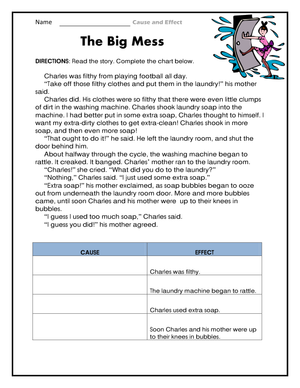
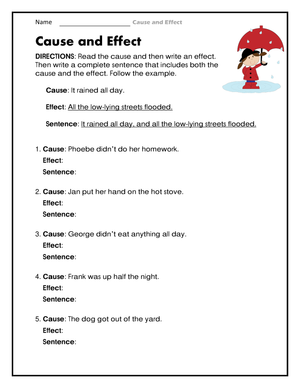
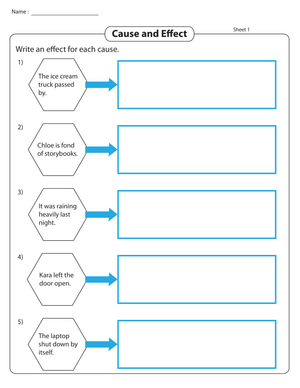
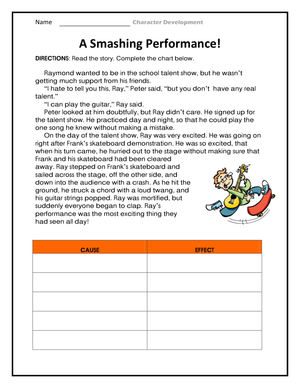
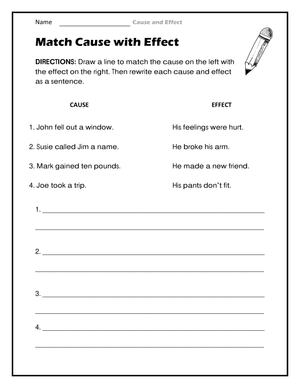
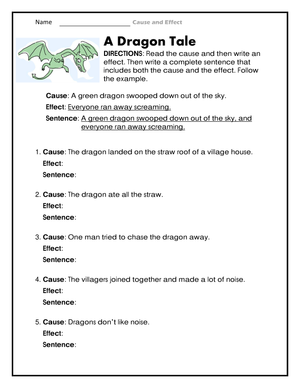
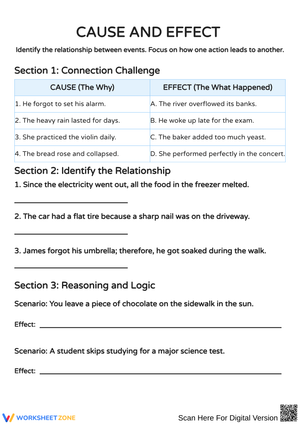
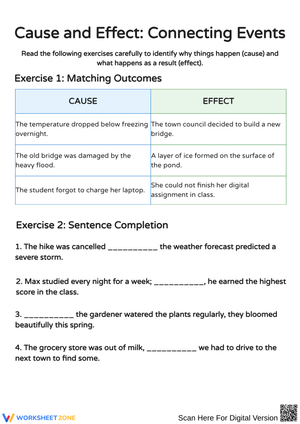
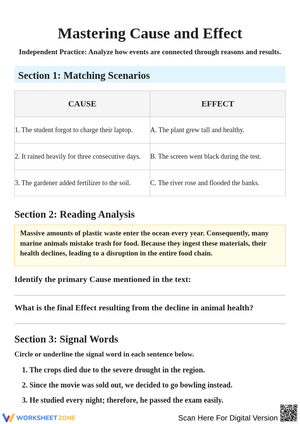
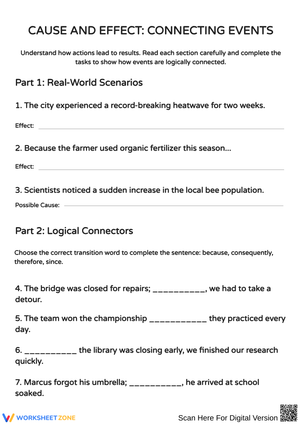
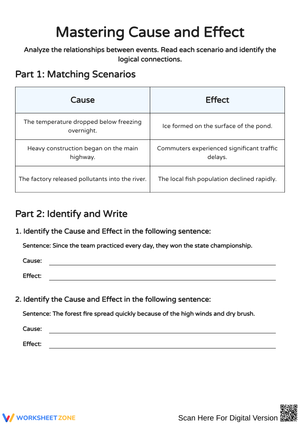
The transition from anecdotal observation to quantifiable reading growth begins with structured tools that translate comprehension into measurable benchmarks. Cause and effect worksheets give teachers and parents a high-precision instrument for capturing how accurately a student identifies relationships within a passage. Each worksheet is engineered to operate as both a focused learning task and a reliable assessment metric, surfacing exactly where logical reasoning succeeds and where targeted reteaching is required across the classroom.
Every page in the set follows a deliberate progression that begins with single-sentence pairings and advances toward multi-paragraph passages with embedded relational signals. Students isolate the trigger event, label the resulting outcome, and then defend the connection using textual evidence drawn from the prompt. This structured sequence converts an abstract reading skill into observable behaviors, allowing instructors to pinpoint whether a learner struggles with vocabulary cues, sequencing, or distinguishing correlation from causation during analysis.
Each set ships with a clear answer key and a scoring rubric calibrated to grade-level expectations, which compresses grading time and removes ambiguity from feedback cycles. Teachers can run a complete formative check on a thirty-student roster and return marked papers within a single planning block. The accompanying reading comprehension skills tip sheet outlines how to translate raw scores into instructional adjustments rather than treating them as final outcomes.
Performance can be tracked across multiple exercises to build a longitudinal record of how each student handles increasingly complex relational reasoning. The fiction-focused identifying causal links in narrative texts set complements these worksheets by extending the same analytical lens into longer passages, supporting differentiated lesson plans for both intervention groups and accelerated learners working at their own pace.
Worksheetzone organizes the entire collection so that students, parents, and teachers can move from baseline measurement to targeted intervention with minimal preparation time. Begin with a diagnostic page, log the score, assign a matched practice set, and then re-measure within the week. This data-driven cycle turns cause and effect worksheets into a repeatable engine for documented reading growth across every grade band represented in the printable library available now.
Frequently Asked Questions
Question 1: What grade levels do these cause and effect worksheets best support?
The collection spans grades two through eight, with single-sentence pairings designed for early elementary readers and multi-paragraph passages aligned to middle grade comprehension standards. Teachers can map each printable to a specific grade band using the included rubric, which makes differentiation straightforward and helps parents select pages that match their child current reading stage without unnecessary guesswork during weekly planning sessions.
Question 2: How do these worksheets fit into a structured reading curriculum?
Each printable is built to slot into existing comprehension units as either a warm-up, a formative check, or a closing assessment. The progression from explicit signal words to inferred relationships mirrors standard scope-and-sequence documents, so teachers can pair the worksheets with current novels, basal readers, or informational texts without rewriting lesson plans or introducing competing instructional frameworks during the school week.
Question 3: Can parents use these worksheets effectively at home?
Yes. Parents receive a clear answer key, a short scoring guide, and brief teacher-style prompts that explain how to discuss each response with the student. The format supports short, focused sessions of fifteen to twenty minutes, which matches typical at-home study windows. Families can document scores in the included tracker to share progress directly with classroom teachers during conferences.
Question 4: How should teachers measure progress over multiple worksheets?
Record each score in a simple spreadsheet alongside the worksheet difficulty tier and the date completed. Reviewing three to five entries reveals whether a student is gaining accuracy on inferred relationships, struggling with vocabulary, or plateauing at a specific tier. This longitudinal view turns isolated grades into actionable instructional data and supports targeted small-group rotations within a structured guided reading block weekly.












 Interactive Worksheet Maker
 Quiz Maker
 Word Search Maker
 Crossword Puzzle Maker
 Word Scramble Generator
 Sentence Scramble Generator
 Handwriting Worksheet Generator
 Name Tracing Generator
 Fill In The Blank Generator