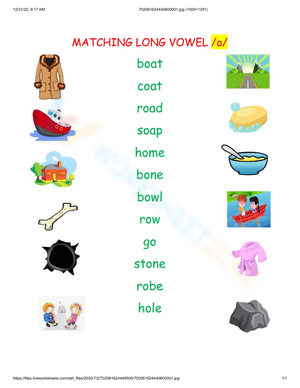
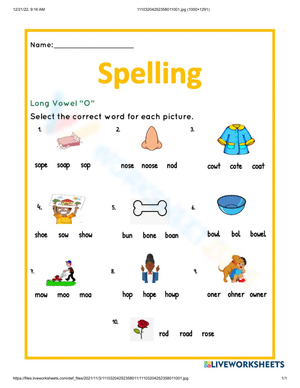
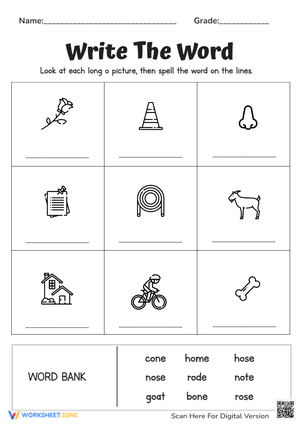
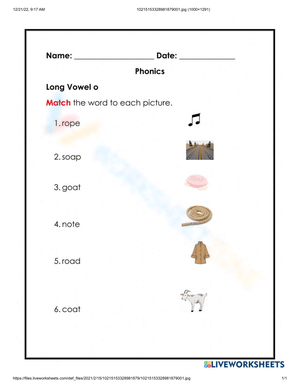
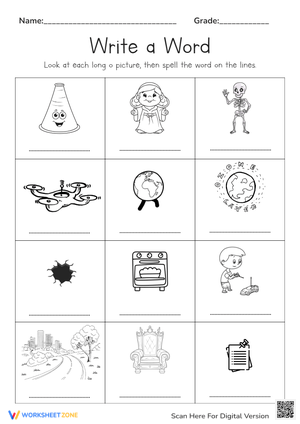
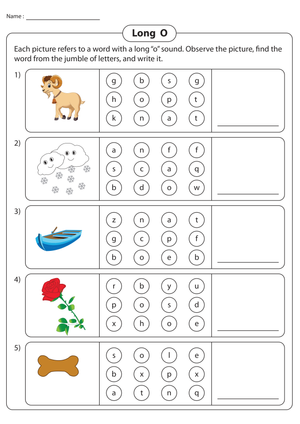
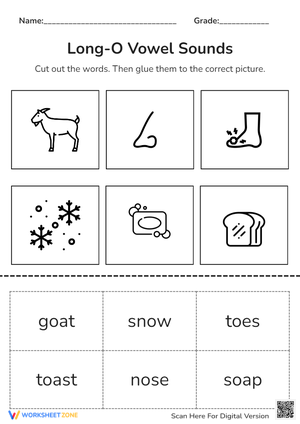
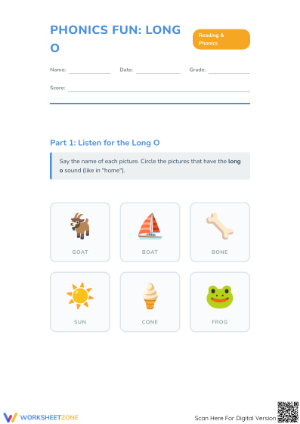
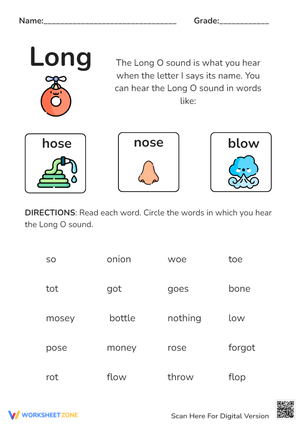
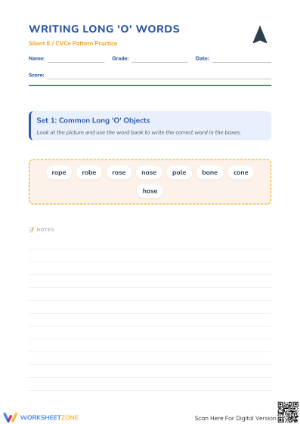
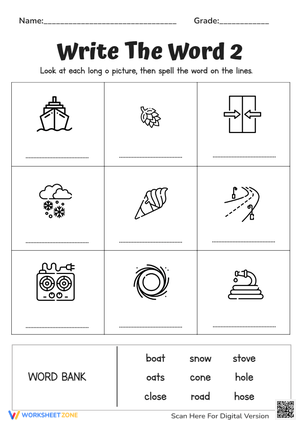
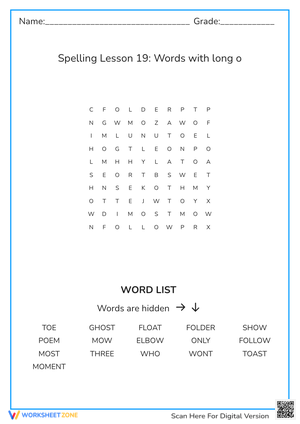
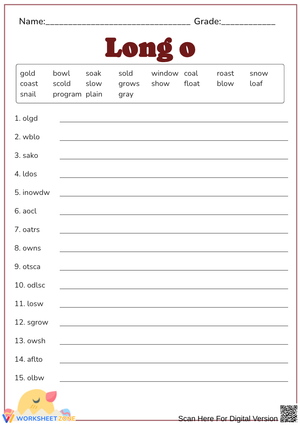
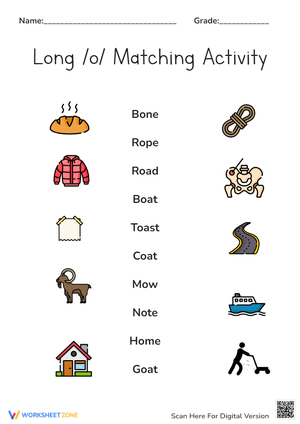
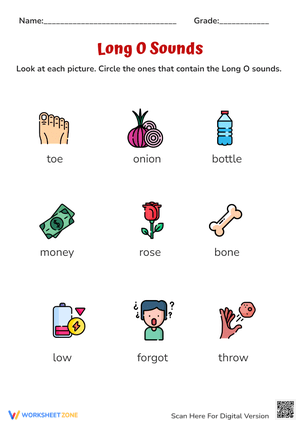
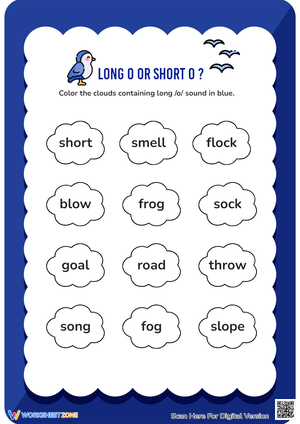
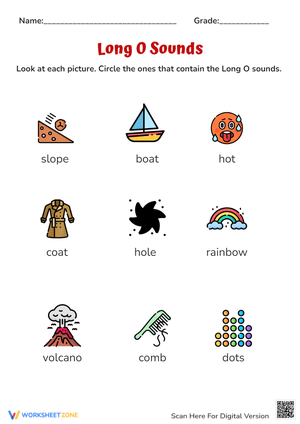
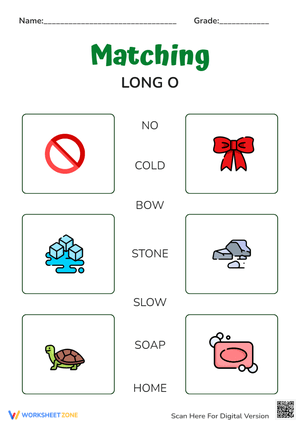
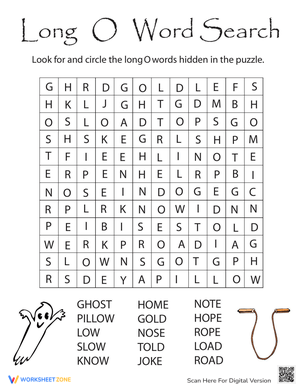
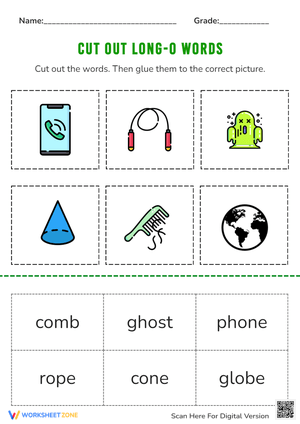
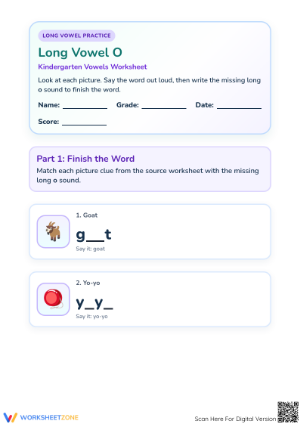
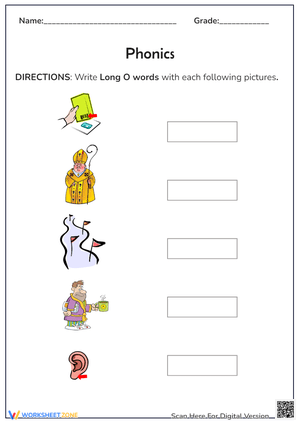
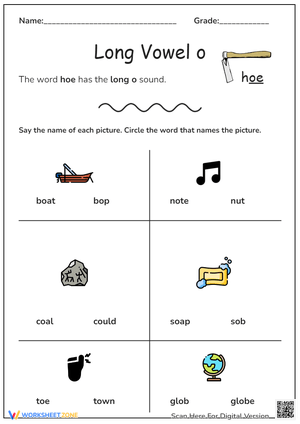
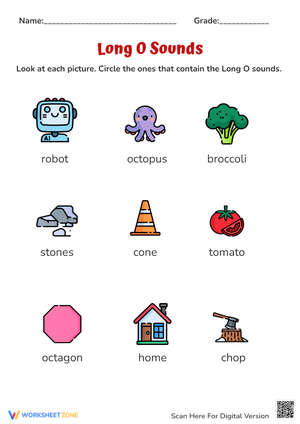
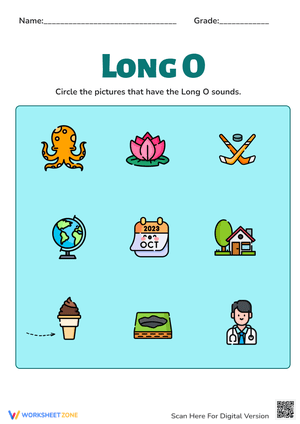
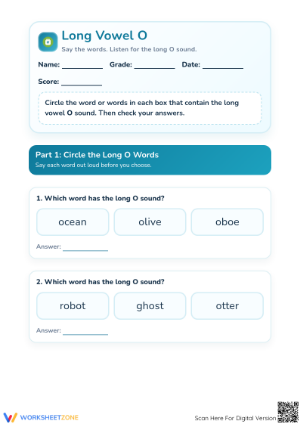
When a first grader stalls out on the word boat, the trouble is rarely the vowel sound itself. Most K-2 students can say long o without hesitation. The real obstacle is the spelling pattern sitting inside the word, and whether they have practiced enough examples of that specific pattern to recognize it on sight. Long o worksheets earn their place in a phonics block because they let you isolate one spelling at a time, then blend patterns together once each one is secure.
Teaching Students to Tell Oa and Ow Apart
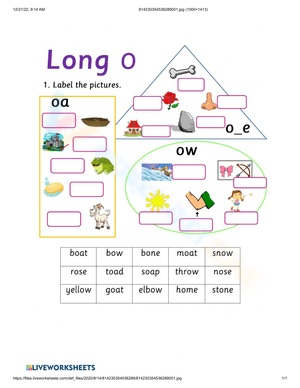
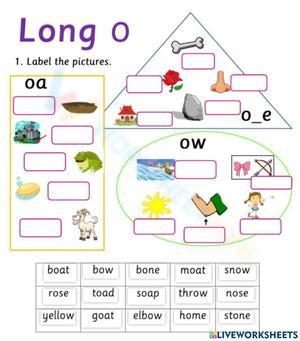
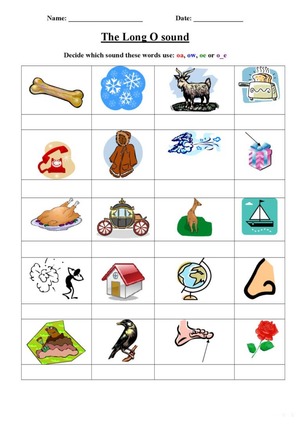
One of the most common questions in a long o unit is why boat uses oa while snow uses ow, when both make the same sound. The pattern has a reliable positional cue that is worth teaching directly rather than leaving students to guess. The oa spelling typically shows up at the beginning or middle of a syllable, while ow typically appears at the end of a syllable. Worksheets that sort words by position, rather than by sound alone, give students a decoding strategy they can apply independently.
- Words like coat, road, and goal show oa in the middle of the syllable.
- Words like grow, snow, and know show ow at the end of the syllable.
- Practice sorts that separate beginning/middle from end-of-syllable examples reinforce this rule without requiring memorization of every word individually.
Contrasting Short O and Long O to Prevent Errors
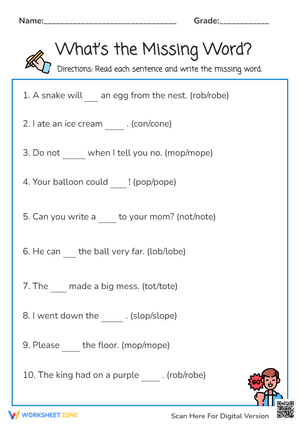
Short o and long o confusion is one of the most frequent decoding errors in early elementary reading, especially for students who are still building automaticity with vowel sounds. A worksheet built purely around long o words misses a chance to address this directly. Pairing minimal pairs, such as hop and hope, or not and note, forces students to attend to the vowel spelling rather than guessing from context or picture support.
Frequently Asked Questions
1. What are the main spelling patterns for the long o sound?
The three most common patterns are o_e as in bone, oa as in boat and road, and ow as in snow and grow. A fourth pattern, oe, appears in only a small number of words like toe and hoe.
2. What grade level typically works on long o phonics worksheets?
Long o worksheets are most commonly used in kindergarten through second grade classrooms, with o_e often introduced first since it follows the same silent-e rule as other long vowel patterns students have already learned.
3. How can teachers help students tell oa and ow apart?
Teach the positional rule directly: oa typically appears at the beginning or middle of a syllable, while ow typically appears at the end of a syllable. Sorting worksheets by this rule, rather than by sound, gives students a strategy instead of a guess.
4. How should long o worksheets be used in small-group intervention?
Group students by which specific pattern they have not yet mastered, then use short, focused practice sets of 10 to 15 words per session rather than mixed worksheets covering every pattern at once.
5. How do long o worksheets fit into a broader phonics scope and sequence?
They typically follow short o and other magic-e long vowel patterns, since o_e reuses a rule students already know. Oa and ow are introduced next as vowel-team alternatives, with the rare oe spelling folded into review rather than taught as a standalone unit.












 Interactive Worksheet Maker
 Quiz Maker
 Word Search Maker
 Crossword Puzzle Maker
 Word Scramble Generator
 Sentence Scramble Generator
 Handwriting Worksheet Generator
 Name Tracing Generator
 Fill In The Blank Generator