Noun Rules: Ready-to-Print Plurals Worksheets for Every Grade
Building Strong Grammar Foundations with Plurals
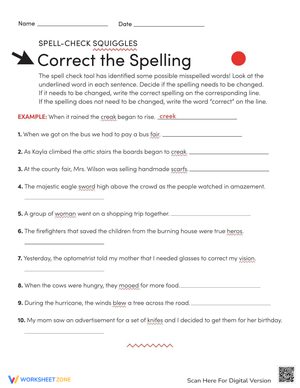
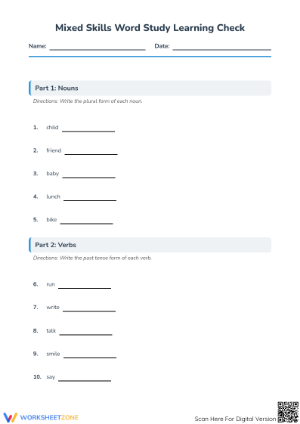
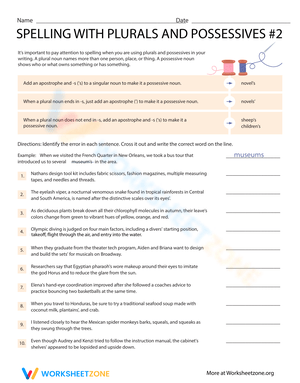
When teaching English language arts, guiding students toward a firm grasp of noun forms remains a cornerstone of effective grammar instruction. Transitioning from singular to plural might seem straightforward to seasoned readers, but for emerging writers, the myriad spelling rules can pose a significant challenge. Having access to a reliable plurals worksheets ensures teachers can provide the exact level of practice needed to solidify these foundational concepts. Rather than hunting for assorted exercises, relying on systematically organized printables allows you to focus on direct instruction and small-group support. These materials help learners internalize the conventions that govern how nouns transform, directly supporting their broader reading comprehension and writing fluency. Targeted practice is essential, as students often encounter these patterns sporadically in their reading. By isolating the specific spelling conventions through focused worksheets, you offer learners the repetition necessary for mastery. Whether you are reviewing basic conventions with early elementary students or tackling the nuances of irregular nouns with older groups, having structured, print-ready resources streamlines your lesson planning and maximizes instructional time.
The Core Convention: Simply Adding the Letter S
For the vast majority of nouns in the English language, indicating more than one is as simple as attaching an 's' to the end of the word. This is the primary rule introduced to early learners, and it serves as the baseline from which all other exceptions deviate. Teaching this core convention involves direct modeling, where students see familiar words like book, cat, and apple transformed into books, cats, and apples. A high-quality plurals worksheets will typically start by reinforcing this basic pattern before introducing complexity. Repetition at this stage builds confidence. Students need ample opportunities to read, write, and trace these standard nouns to develop automaticity. When planning your literacy block, utilizing targeted exercises allows students to independently practice this rule, freeing you to work with students who might need more intensive phonetic support. It is important to emphasize that while this rule is the most common, students must be vigilant in analyzing the final letters of a base word before automatically attaching an 's'. Grounding their understanding in this primary rule provides a solid framework for the subsequent spelling variations they will inevitably encounter in more advanced texts.
Navigating the Complexities of Specific Consonant Endings
Once students have mastered the standard 's' ending, they must learn to navigate words that conclude with specific consonants and digraphs. Nouns ending in -ch, -sh, -x, -s, and -z require the addition of -es to form their plural counterparts. This phonological adaptation ensures the plural form remains pronounceable. Without the added vowel, words like box or church would be incredibly difficult to articulate clearly. Teaching this rule effectively often involves having students vocalize the singular and plural forms to hear the extra syllable created by the -es ending.
According to research from Grammarly, 73% of primary teachers note that teaching the -es spelling rule significantly improves students' phonemic awareness and decoding skills (Grammarly, 2026). This shift means explicit instruction using targeted practice materials is essential for long-term reading success.
Providing a targeted plurals worksheets that focuses exclusively on these challenging endings allows students to categorize and sort words based on their structural properties. Sorting activities, fill-in-the-blank sentences, and word hunts are excellent ways to reinforce this concept. By offering consistent, structured practice, teachers can help students move beyond memorization and toward a deeper understanding of the phonetic principles underlying English spelling conventions.
Handling Tricky Terminations: The Y and F Rules
As students progress in their grammatical understanding, they encounter nouns that require more significant morphological changes. Words ending in a consonant followed by a 'y' demand that the 'y' be dropped and replaced with '-ies' to form the plural. Examples like baby becoming babies or city becoming cities often trip up emerging writers who try to simply add an 's' or '-es'. Similarly, nouns ending in '-f' or '-fe' frequently transition to a '-ves' ending, as seen with half turning into halves or wolf transforming into wolves. Providing a comprehensive plurals worksheets that explicitly contrasts these rules with the standard conventions is vital for clarity. Students benefit greatly from visual cues and clear examples that model the transition process. Dedicated practice sheets that prompt students to identify the base word's ending before applying the correct rule encourage analytical thinking rather than rote guessing. These exercises can easily be integrated into morning work, literacy centers, or homework packets to ensure continuous exposure to these specific morphological shifts. The goal is to build automaticity so that students can smoothly incorporate these words into their independent writing without halting their creative flow.
Mastering the Nuances of Irregular Plurals
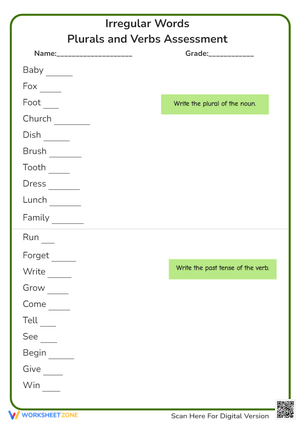
Beyond the predictable patterns of suffixes lie the irregular plurals, words that completely defy standard spelling conventions. These nouns do not follow the typical rules and instead undergo internal vowel changes or remain entirely unchanged. Examples such as child changing to children, tooth to teeth, and mouse to mice require direct instruction and frequent exposure. Because these words cannot be decoded using standard morphological rules, students must rely on memorization and contextual practice. Utilizing a plurals worksheets that specifically targets these irregular forms provides the essential repetition needed to commit them to memory. Effective worksheets often employ matching exercises, sentence completion tasks, and reading passages that embed these irregular nouns in natural contexts. It is highly beneficial to provide students with a reference list or cheat sheet of common irregular plurals to keep in their writing folders. By consistently encountering and practicing these exceptions through well-designed printables, students gradually internalize the unique forms, preventing common errors like 'childs' or 'mouses' from becoming ingrained habits in their writing.
Classroom Implementation
Effectively integrating grammar printables into your daily routine requires strategic planning and purposeful application. Rather than using these materials merely as busy work, consider them as formative assessment tools that guide your instructional decisions. Start by introducing a single rule, such as the '-es' ending, and use a targeted plurals worksheets during guided practice. Once students demonstrate understanding, transition the materials into independent literacy centers for continued reinforcement. Grouping worksheets by grade level ensures that the vocabulary remains accessible, allowing students to focus on the grammar mechanics rather than struggling with decoding unfamiliar terms. Furthermore, always provide access to answer keys, enabling students to self-correct and take ownership of their learning process. This immediate feedback loop is critical for correcting misconceptions before they solidify.
When analyzing student errors on these worksheets, experienced teachers look beyond the spelling mistake to identify phonetic misunderstandings; often, a student who incorrectly writes 'foxs' instead of 'boxes' is struggling with syllable segmentation rather than the spelling rule itself, indicating a need for phonemic intervention before further grammar instruction.
Creating a Rich Environment for Grammatical Growth
To truly solidify these concepts, the work done on paper must extend into the broader classroom environment. While a plurals worksheets offers essential structured practice, teachers should also point out these grammatical structures during read-alouds and shared reading sessions. When you encounter a word like 'leaves' or 'berries' in a text, pause to discuss the base word and the rule applied to change its form. Encourage students to become grammar detectives, hunting for specific plural forms in their independent reading books. Integrating these concepts into spelling tests and vocabulary instruction further reinforces their importance. By creating a classroom culture that values precise language and celebrates the understanding of spelling rules, you empower students to become confident and capable communicators. This holistic approach, grounded in targeted worksheet practice and expanded through authentic reading and writing experiences, ensures that students build a resilient foundation in English grammar.
Frequently Asked Questions
1. What are the basic rules for forming plurals?
The fundamental rule for most English nouns is simply adding an '-s' to the end of the word. However, if a word ends in '-ch', '-sh', '-x', '-s', or '-z', you must add '-es'. A reliable plurals worksheets helps students practice these foundational variations systematically.
2. How do irregular plurals work, and can I get a list of common ones?
Irregular plurals do not follow standard suffix rules. Words like 'child' become 'children', and 'tooth' become 'teeth'. These require memorization and frequent exposure. High-quality printables often include a cheat sheet of common irregular nouns for students to reference during independent writing activities.
3. Are there plurals worksheets available for different age groups?
Yes, effective educational materials are categorized by grade level. Early elementary resources focus on basic '-s' and '-es' rules using simple vocabulary, while upper elementary materials explore complex irregular forms and advanced '-y' or '-f' morphological changes to ensure appropriate rigor.
4. Do these plurals worksheets include answer keys?
Comprehensive resources typically provide answer keys alongside the main exercises. Having immediate access to solutions allows teachers to efficiently grade assignments and empowers students to engage in self-correction, which is an important step in reinforcing accurate spelling habits.
5. What are common mistakes students make when learning plurals?
Students frequently overgeneralize the '-s' rule, leading to errors like 'boxs' or 'ponys'. They also struggle with dropping the 'y' and adding '-ies'. Using a targeted plurals worksheets helps isolate these specific challenges, providing the focused repetition needed to overcome common misconceptions.
Clear All