


























Views
Downloads

Printable DNA Mutations Worksheet | Grade 10 Biology
Paste this activity's link or code into your existing LMS (Google Classroom, Canvas, Teams, Schoology, Moodle, etc.).
Students can open and work on the activity right away, with no student login required.
You'll still be able to track student progress and results from your teacher account.
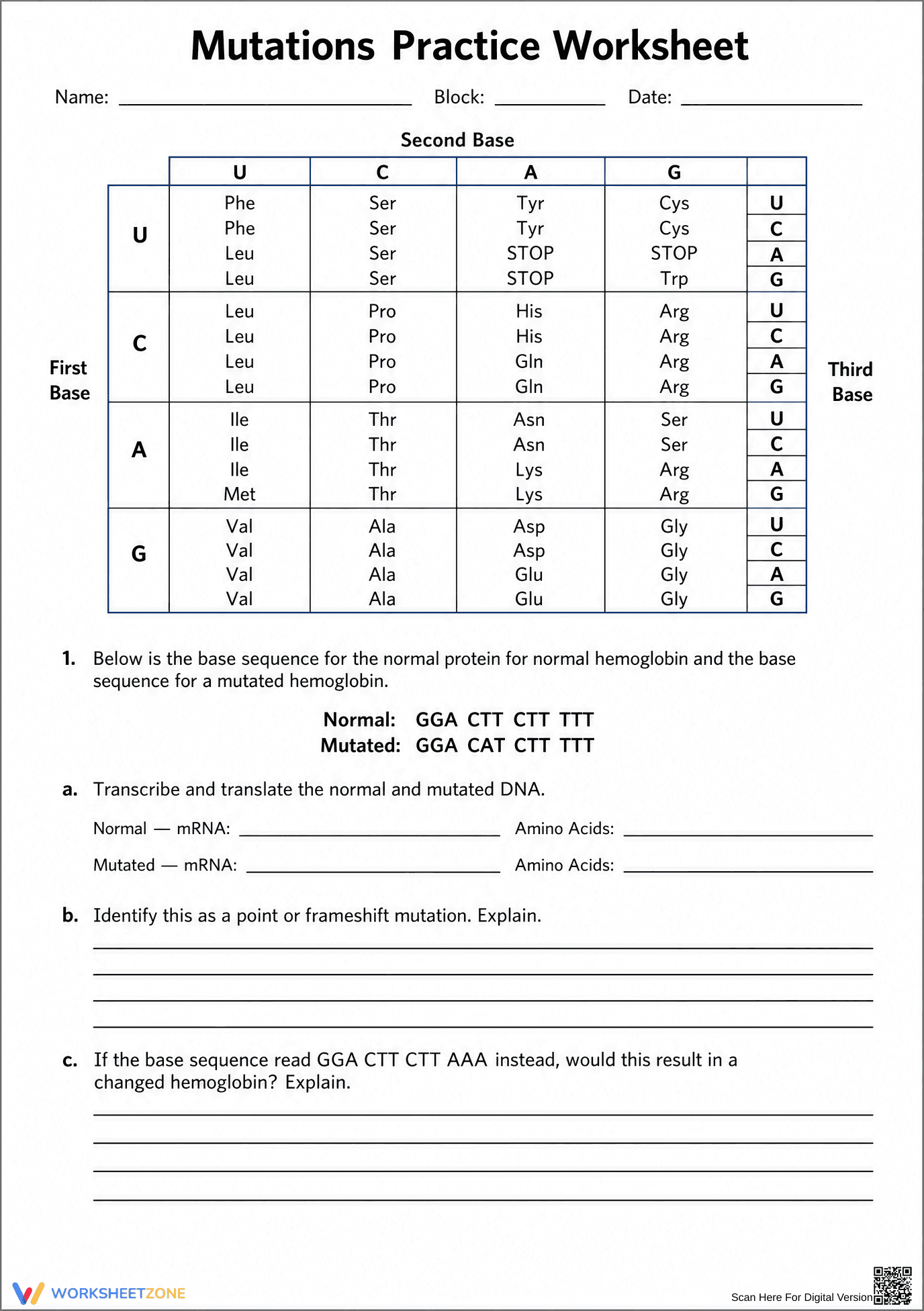
This comprehensive biology worksheet equips students with the essential skills to identify and analyze DNA mutations. By transcribing mRNA and translating amino acid sequences using a provided codon chart, learners will clearly see how point and frameshift mutations impact protein synthesis and overall genetic expression.
At a Glance
- Grade: 10 · Subject: Biology
- Standard:
HS-LS3-2— Analyze how genetic variations result from replication errors or mutations.- Skill Focus: Identifying DNA mutations and translating codons
- Format: 4 pages · 15 problems · Answer key included · PDF
- Best For: Independent practice and review
- Time: 30–45 minutes
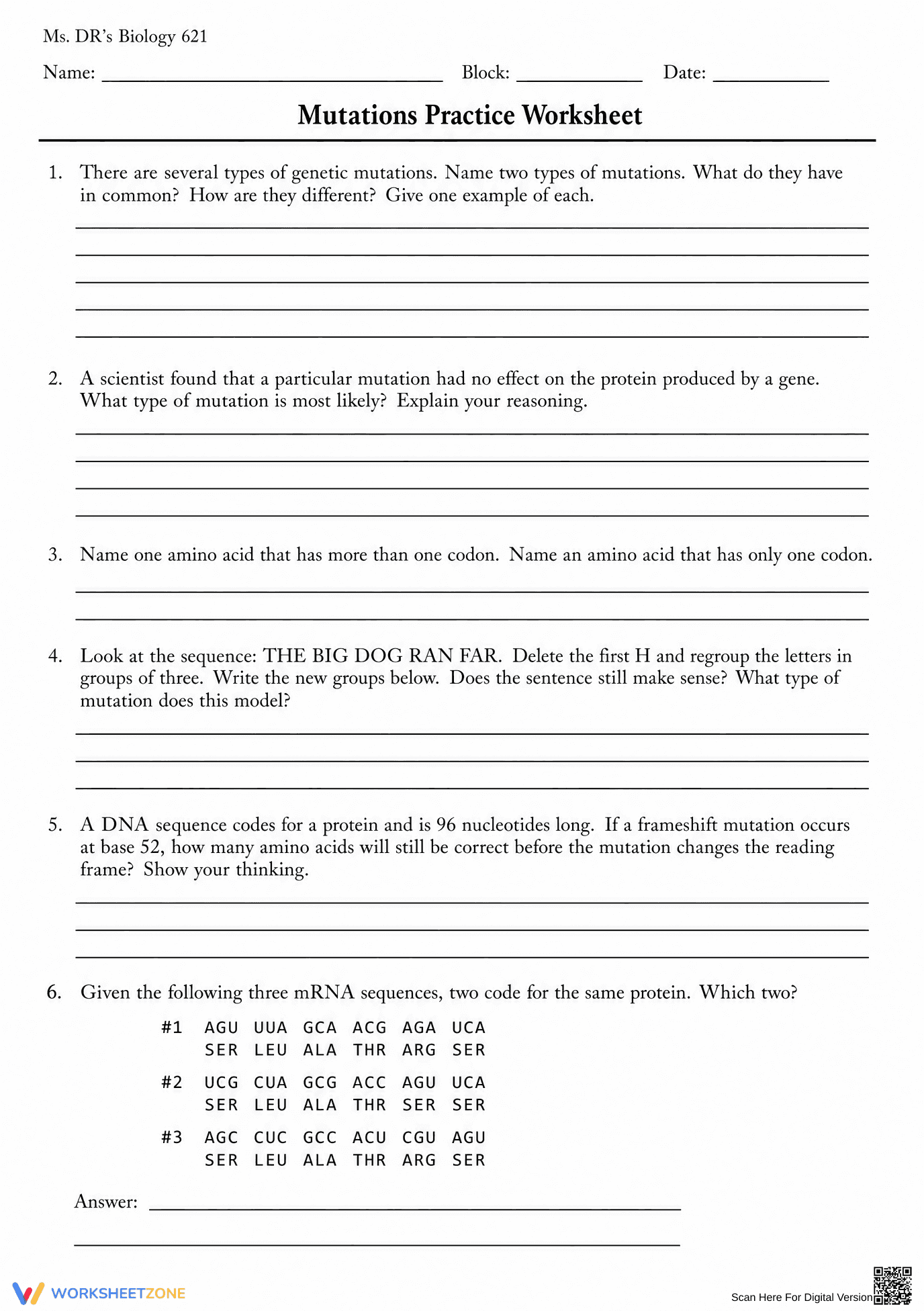
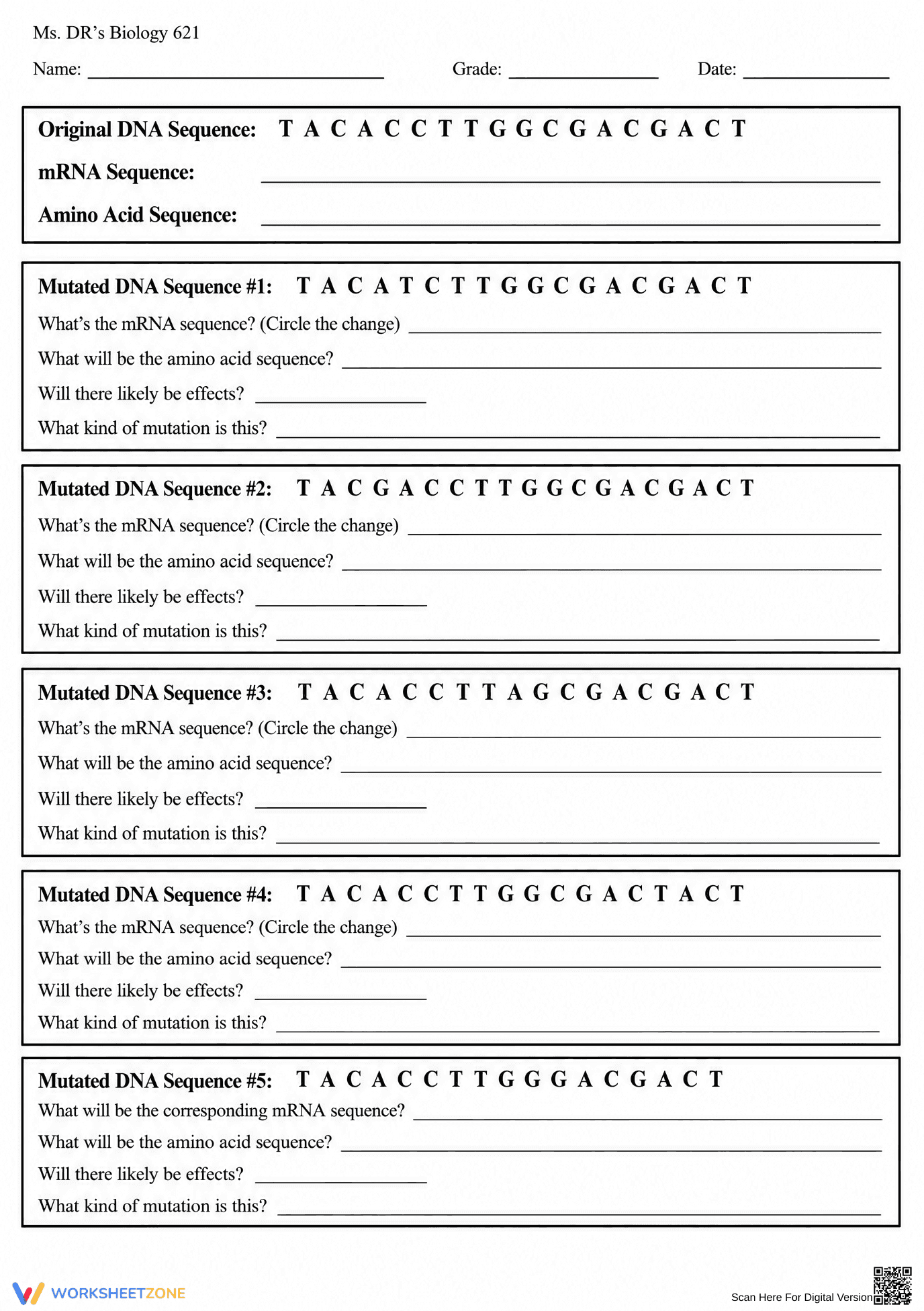
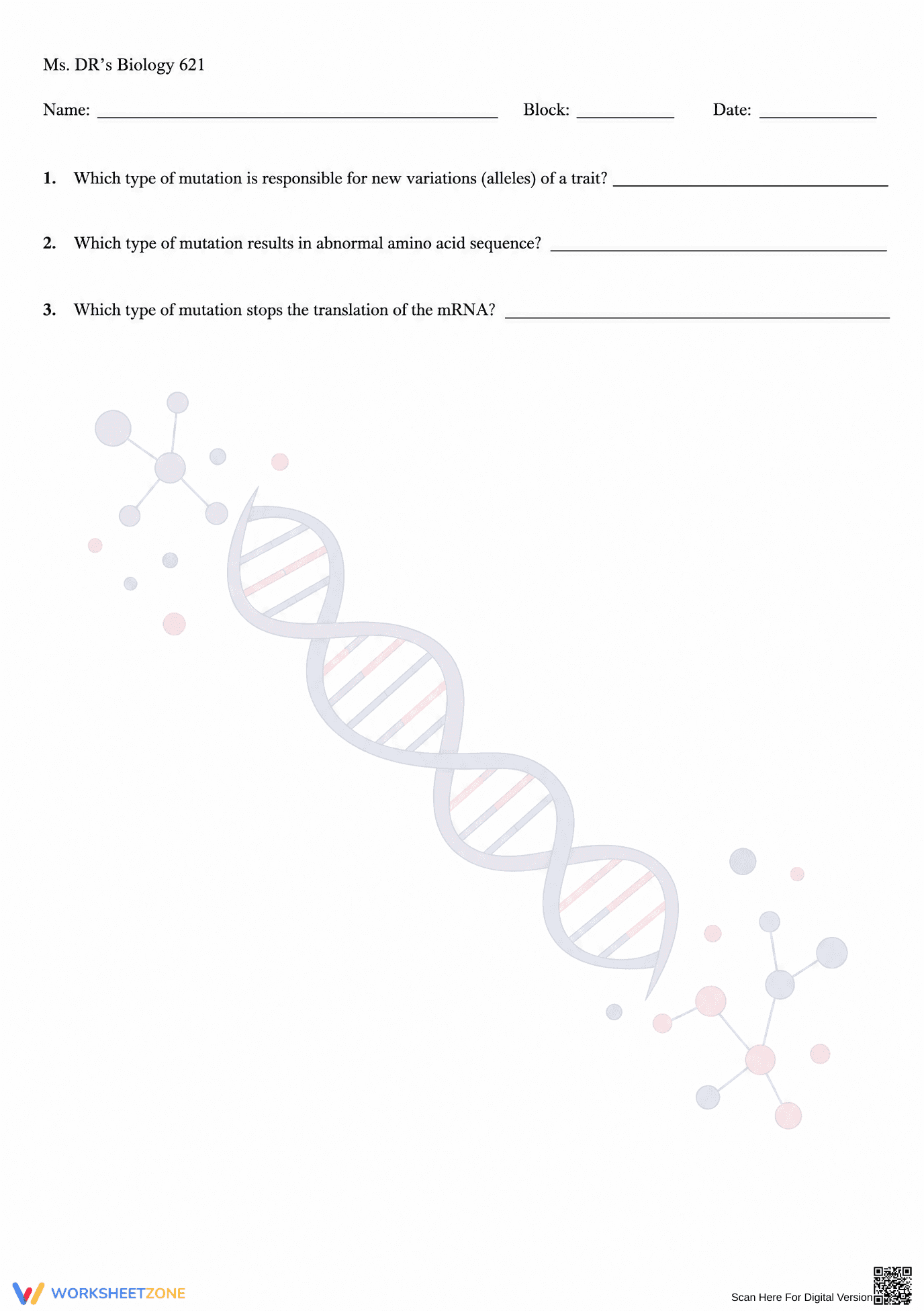
This four-page resource provides a robust set of exercises centered around molecular genetics. It features a built-in codon chart, allowing students to transcribe normal and mutated DNA sequences into mRNA and determine the resulting amino acids. The packet includes fifteen multi-part problems ranging from short-answer questions to sequence analysis, where students classify mutations as substitutions, insertions, or deletions. A complete answer key is included.
- Guided practice: The first section introduces a comparison of normal and mutated hemoglobin DNA, guiding students to transcribe, translate, and identify the mutation.
- Supported practice: Students tackle short-answer questions and sentence analogies to visualize how deletions cause frameshifts.
- Independent practice: The final pages challenge learners to analyze five mutated DNA sequences, predicting effects on the amino acid chain and classifying the mutation type.
This gradual-release approach ensures students build confidence before applying knowledge to complex sequences.
This resource is directly aligned to HS-LS3-2: Make and defend a claim based on evidence that inheritable genetic variations may result from viable errors occurring during replication and/or mutations. It specifically targets the mechanics of how these viable errors (insertions, deletions, substitutions) alter the genetic code and subsequent protein production. Both standard codes can be copied directly into lesson plans, IEP goals, or district curriculum mapping tools.
Deploy this worksheet during your molecular genetics unit after direct instruction on transcription and translation. It serves as an excellent independent practice assignment or a collaborative station activity where students debate the severity of different mutations. As a formative assessment tip, monitor students as they use the codon chart; ensuring they transcribe DNA to mRNA first is a common stumbling block. Expect completion in 30 to 45 minutes.
This practice packet is designed for high school biology students mastering the central dogma of genetics. To differentiate for learners needing extra support, teachers can highlight the mutated bases in advance or provide a pre-filled mRNA sequence for the more complex problems. It pairs perfectly with interactive DNA modeling labs or visual anchor charts detailing the steps of protein synthesis.
Understanding the precise mechanisms of genetic variation is a fundamental cornerstone of high school life sciences. Standard HS-LS3-2 requires students to analyze how genetic variations result from replication errors or mutations. By engaging with concrete examples of substitutions, insertions, and deletions, learners bridge the gap between abstract molecular processes and observable phenotypic changes. According to a recent ScienceDirect TpT Analysis, structured practice that requires students to repeatedly map DNA to mRNA to amino acids significantly improves their long-term retention of the central dogma of biology. This targeted repetition helps solidify the critical concept that a single nucleotide shift can drastically alter a protein's structure and function. Providing students with clear, sequential problem sets ensures they can confidently identify mutation types and predict their biological consequences in both classroom assessments and standardized testing environments.


