


























Views
Downloads

Multiple Allele Crosses Worksheet | Essential Biology
Paste this activity's link or code into your existing LMS (Google Classroom, Canvas, Teams, Schoology, Moodle, etc.).
Students can open and work on the activity right away, with no student login required.
You'll still be able to track student progress and results from your teacher account.
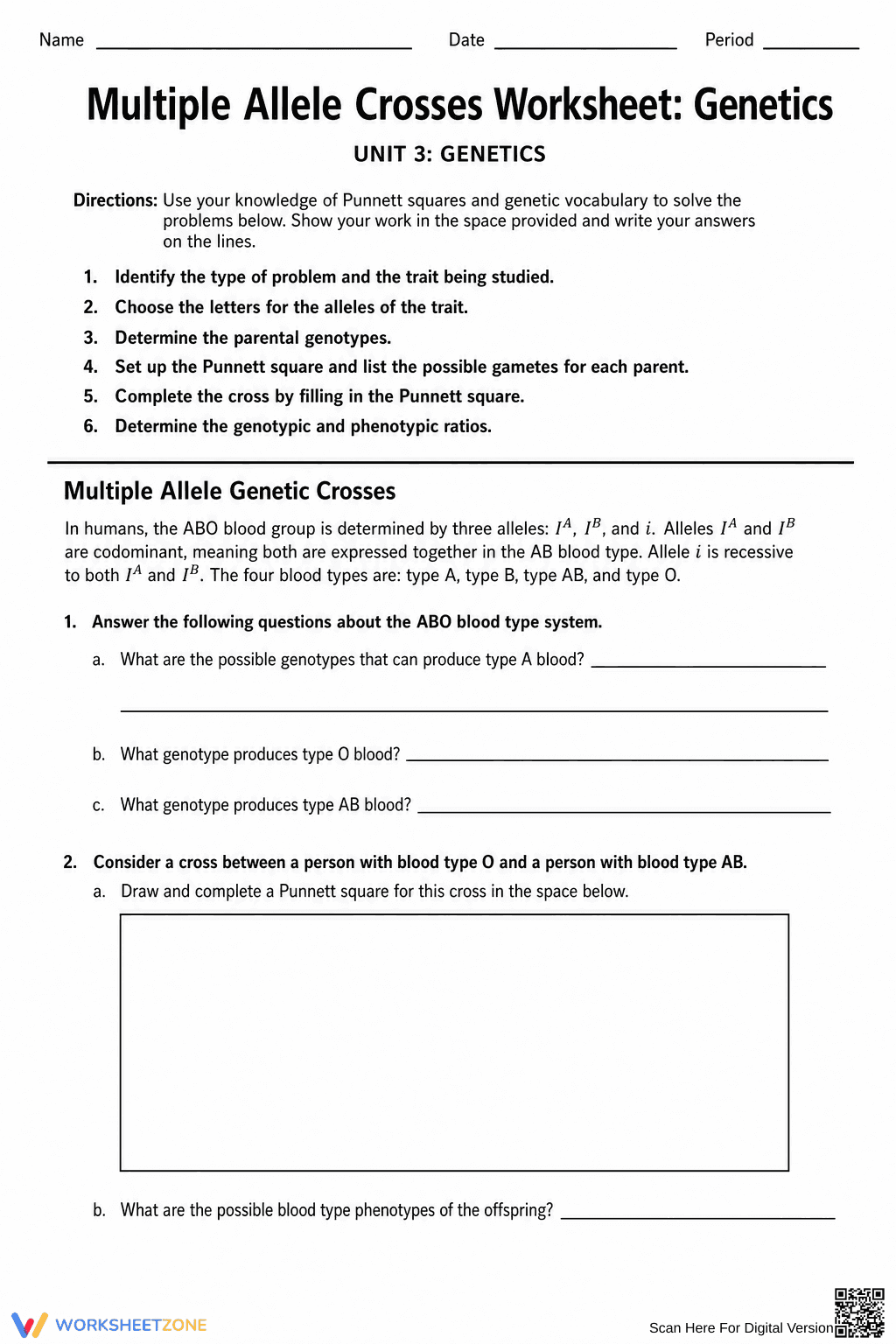
This Multiple Allele Crosses worksheet provides a comprehensive practice set for students to master the complexities of ABO blood type inheritance. By applying Punnett squares to scenarios like paternity tests and hospital mix-ups, learners develop a deep understanding of codominance and multiple allele patterns before moving to complex labs.
At a Glance
- Grade: 9–12 · Subject: Biology
- Standard:
HS-LS3-3— Predict the variation and distribution of expressed traits in a population- Skill Focus: ABO Blood Type Genetics
- Format: 3 pages · 7 problems · Answer key included · PDF
- Best For: High school genetics unit practice
- Time: 30–45 minutes
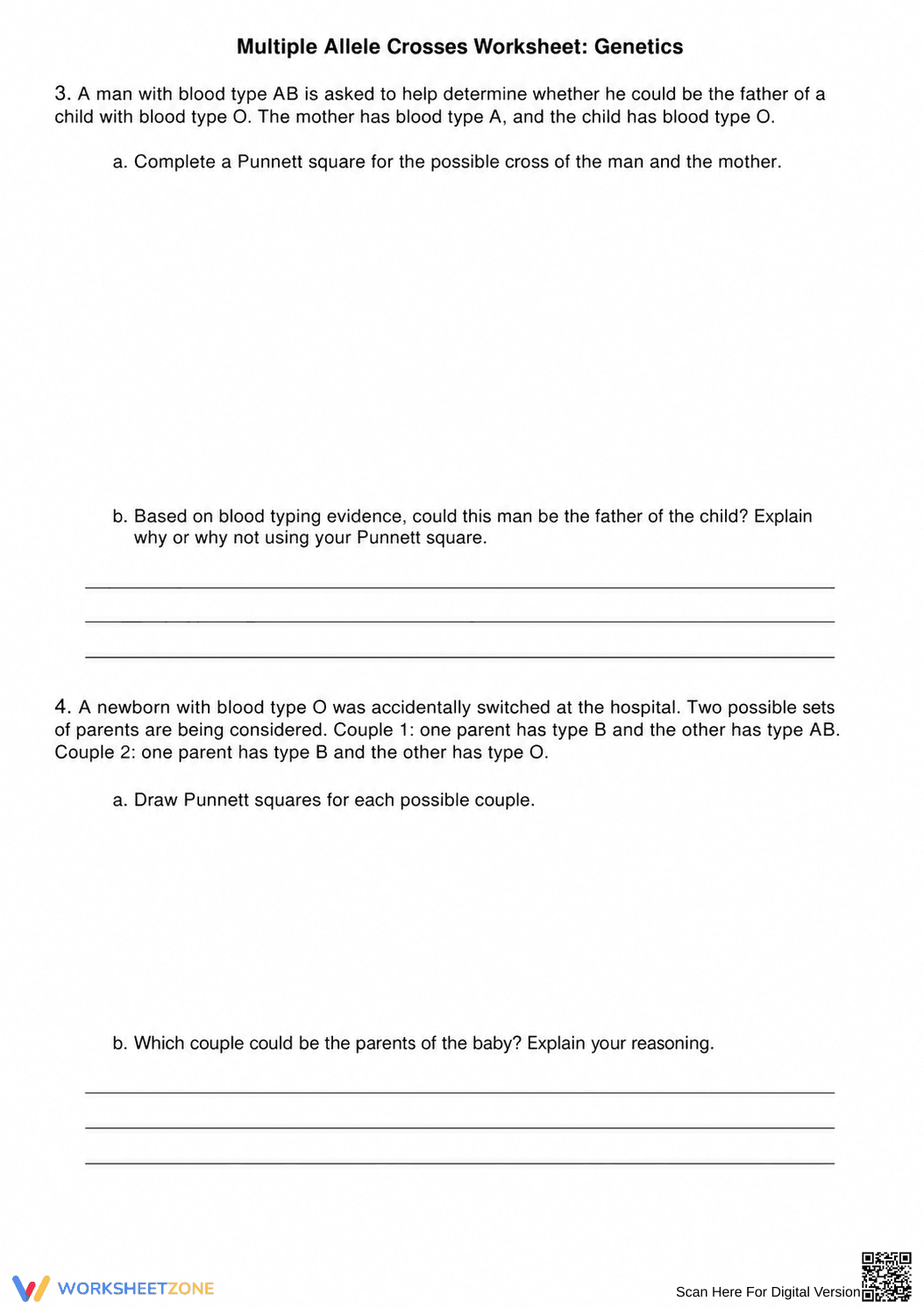
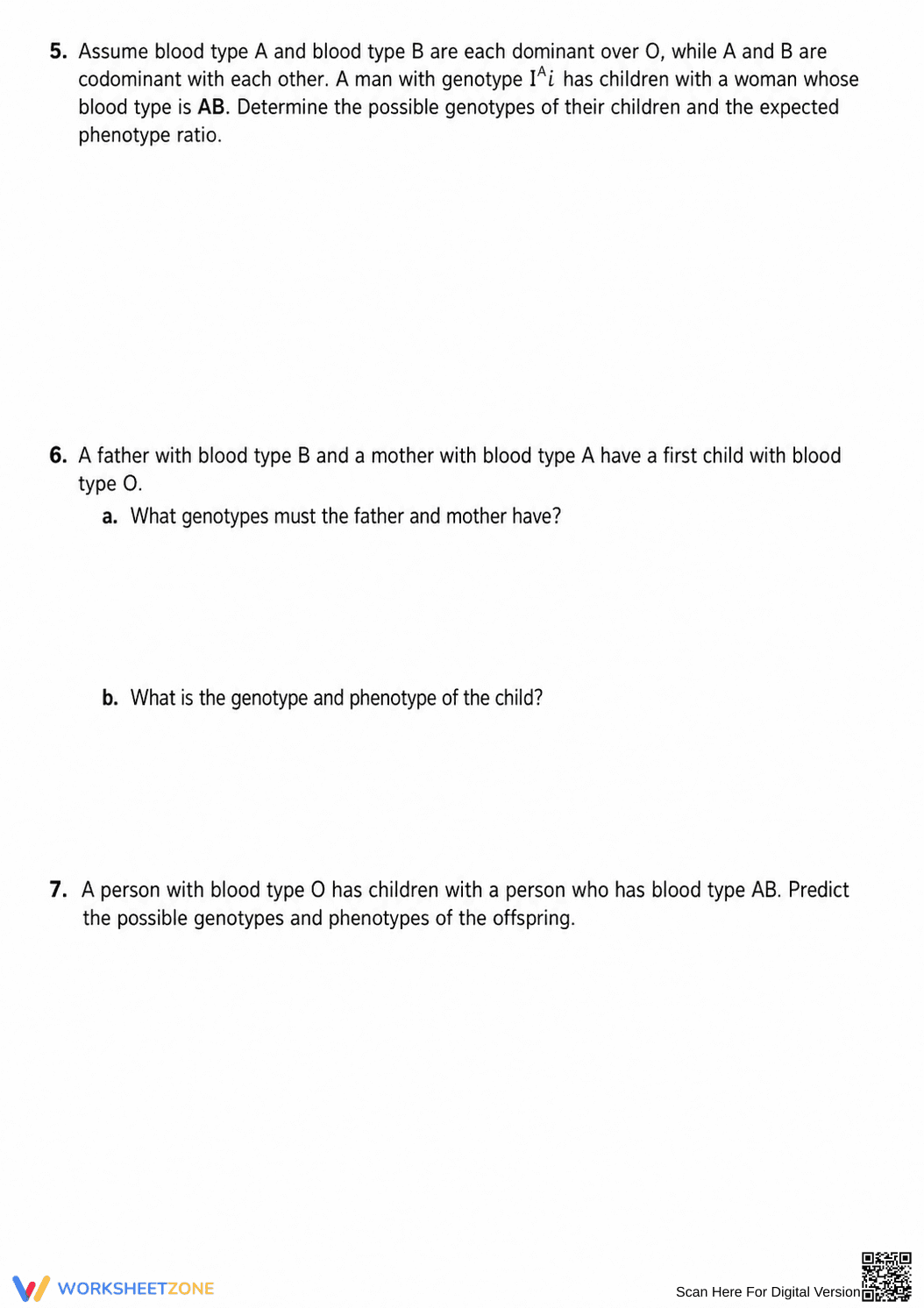
This 3-page PDF includes 7 multi-part problems ranging from basic genotype identification to complex word problems. Students are guided through the ABO system's three alleles (IA, IB, and i) and must construct Punnett squares to determine phenotypic ratios. The layout provides ample space for student work, and a full answer key is provided for quick grading or self-correction.
Skill Progression
- Guided practice: The first section defines the ABO alleles and asks students to identify all possible genotypes for specific phenotypes, such as Type A or Type O blood.
- Supported practice: Problems 2 and 3 provide structured Punnett square boxes for crosses between specific blood types, requiring students to predict offspring phenotypes.
- Independent practice: The final problems present complex scenarios, including a hospital "switched baby" case, requiring students to justify their reasoning through genetic evidence.
This worksheet follows a gradual-release model to ensure students build confidence before tackling higher-order analysis and independent problem-solving.
Standards Alignment
This resource is aligned with `HS-LS3-3`, focusing on the use of probability to explain the variation and distribution of expressed traits. It specifically addresses how multiple alleles and codominance deviate from standard Mendelian patterns. Both standard codes can be copied directly into lesson plans, IEP goals, or district curriculum mapping tools.
How to Use It
Use this worksheet as a mid-unit formative assessment after introducing codominance. It works well as a collaborative activity where pairs solve the "hospital switch" problem together. Teachers should observe if students correctly identify the heterozygous genotypes for Type A and Type B blood. Completion typically takes 40 minutes in a standard high school biology setting.
Who It's For
This is designed for high school biology students or advanced middle school life science classes. It is an excellent pairing for a lecture on non-Mendelian inheritance or as a supplemental resource for students needing extra practice with Punnett squares and allele notation.
According to the RAND AIRS 2024 report, structured practice in genetic modeling significantly improves student retention of non-Mendelian inheritance patterns. This worksheet targets the HS-LS3-3 standard by requiring students to predict trait distribution using the ABO blood group system. By engaging with multiple allele crosses, learners move beyond simple dominant-recessive relationships to understand the nuances of codominance. Research from Fisher & Frey (2014) emphasizes that applying these concepts to real-world scenarios, such as the paternity and hospital problems included here, fosters higher-order thinking and better prepares students for standardized science assessments. This 3-page resource provides the necessary scaffolding to bridge the gap between basic Punnett square mechanics and complex biological analysis, making it a vital tool for any secondary biology curriculum focused on hereditary variation and genetic probability.


