




























Views
Downloads
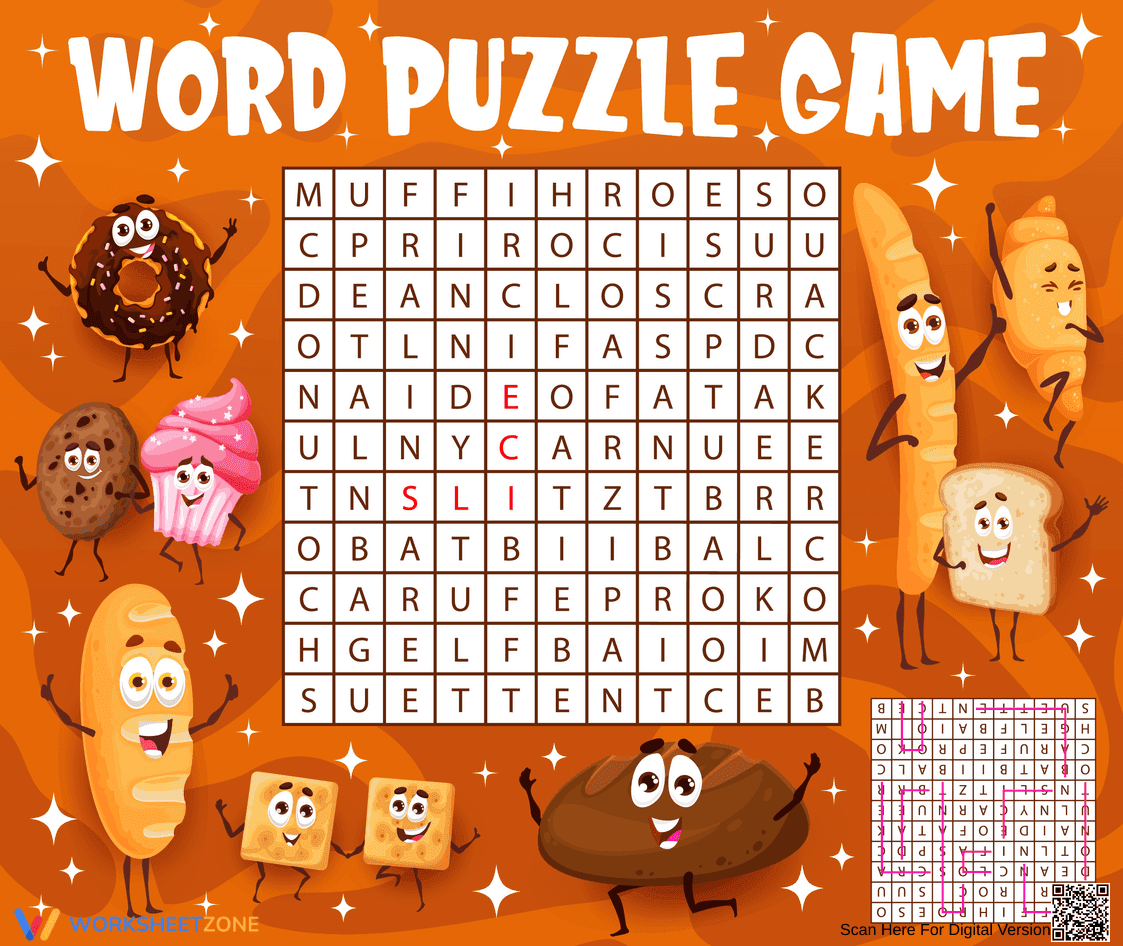

Printable Bakery Word Search Puzzle | Grade 2-3

Paste this activity's link or code into your existing LMS (Google Classroom, Canvas, Teams, Schoology, Moodle, etc.).
Students can open and work on the activity right away, with no student login required.
You'll still be able to track student progress and results from your teacher account.
This printable bakery word search puzzle helps elementary students build spelling accuracy and vocabulary recognition. By identifying ten themed words hidden in the grid, children reinforce letter-pattern recognition and visual tracking skills. This engaging activity strengthens word-retention capabilities and supports early reading development in a fun, food-themed context.
At a Glance
- Grade: Grade 2 - Grade 3 · Subject: ELA & Vocabulary
- Standard:
CCSS.ELA-LITERACY.L.2.6— Use grade-appropriate conversational, general academic, and domain-specific words- Skill Focus: Word recognition and spelling
- Format: 1 page · 10 words · Answer key included · PDF
- Best For: Morning work or fast finishers
- Time: 10–15 minutes
This single-page PDF features a clean 10-by-11 grid filled with letters hiding ten bakery-themed vocabulary terms, including muffins, cupcakes, cookies, and donuts. The worksheet includes playful illustrations of baked goods to maintain student engagement. An upside-down answer key is printed directly on the bottom right corner of the page, allowing students to self-correct their work independently without requiring teacher intervention.
Zero-Prep Classroom Workflow
This activity is designed for immediate classroom integration with less than two minutes of total preparation time. First, print the single-page PDF document, which takes under one minute. Second, distribute the sheets directly to students during transition periods or morning arrival. Third, review the completed puzzles using the built-in answer key, taking less than one minute of grading time. This self-contained layout makes the worksheet an ideal option for emergency substitute plans, rainy day recess, or independent desk work.
Standards Alignment
This activity aligns directly with the Common Core State Standard CCSS.ELA-LITERACY.L.2.6, which requires students to acquire and use grade-appropriate conversational, general academic, and domain-specific words and phrases. Additionally, it supports CCSS.ELA-LITERACY.RF.2.3 by encouraging students to apply grade-level phonics and word analysis skills in decoding words. Both standard codes can be copied directly into lesson plans, IEP goals, or district curriculum mapping tools.
How to Use It
Use this worksheet as a warm-up activity before direct instruction in spelling to activate prior knowledge of word structures. Alternatively, assign it as an independent task after a vocabulary lesson to reinforce word familiarity. While students work, observe their scanning patterns to identify those struggling with visual tracking or letter sequencing. Most students will complete the puzzle within 10 to 15 minutes.
Who It's For
This resource is designed for second and third-grade students developing foundational reading skills. It serves as an excellent tool for English language learners acquiring basic food-related vocabulary. Pair this puzzle with a read-aloud book about baking or a classroom anchor chart detailing common spelling patterns to provide additional context and support for struggling readers.
This vocabulary worksheet targets CCSS.ELA-LITERACY.L.2.6 by engaging students in active word recognition and spelling practice. According to research by Fisher & Frey (2014) on vocabulary acquisition, structured word puzzles serve as effective cognitive tools that reinforce orthographic mapping and lexical retrieval. By searching for specific letter sequences, young learners solidify their mental representations of words, which directly supports reading fluency and spelling accuracy. The inclusion of immediate feedback via the integrated answer key aligns with evidence-based practices for self-regulated learning, allowing students to monitor their own progress. This resource provides a practical, low-stakes environment for students to interact with domain-specific vocabulary, making it a valuable addition to any early elementary literacy curriculum or spelling intervention program.


