




























Views
Downloads
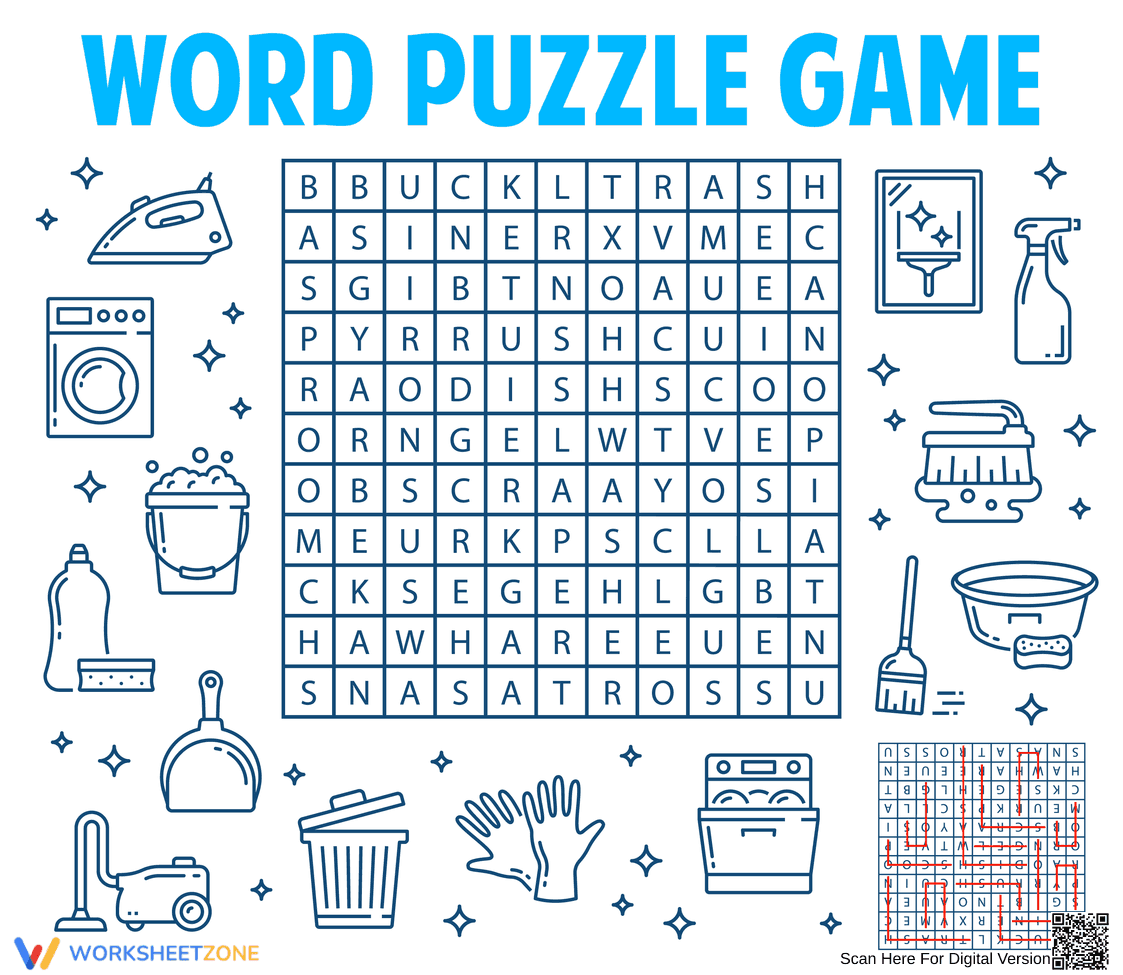

Printable Household Word Search | Grade 2

Paste this activity's link or code into your existing LMS (Google Classroom, Canvas, Teams, Schoology, Moodle, etc.).
Students can open and work on the activity right away, with no student login required.
You'll still be able to track student progress and results from your teacher account.
This printable word search worksheet helps early elementary students build foundational spelling and vocabulary skills. By searching for household-themed words, learners actively practice recognizing consonant clusters and vowel combinations. This engaging activity reinforces letter-sound correspondence while keeping students focused on a fun, visually supported puzzle.
At a Glance
- Grade: 2 · Subject: ELA
- Standard:
CCSS.ELA-LITERACY.RF.2.3— Apply grade-level phonics and word analysis skills- Skill Focus: Spelling and Vocabulary
- Format: 1 page · 1 puzzle · Answer key included · PDF
- Best For: Independent practice
- Time: 10–15 minutes
This single-page resource features a comprehensive word search grid surrounded by engaging illustrations of common household cleaning items, such as a vacuum, broom, and washing machine. Students use the visual cues to identify the target vocabulary words hidden within the puzzle. A convenient, inverted answer key is located directly on the bottom right corner of the page, allowing for immediate self-checking or quick teacher review without needing a separate document.
Zero-Prep Workflow
This worksheet is designed for immediate classroom implementation with absolutely no teacher setup required.
- Print (1 minute): Simply print the single-page PDF. The answer key is already integrated into the design.
- Distribute (1 minute): Hand the puzzle out to students along with pencils or highlighters. The visual clues make instructions self-evident.
- Review (1 minute): Students can self-correct using the inverted key, or teachers can quickly scan completed grids.
Total teacher prep time is under two minutes, making this an ideal, reliable option for emergency sub plans, morning work, or early finisher packets.
Standards Alignment
This activity aligns with CCSS.ELA-LITERACY.RF.2.3, requiring students to know and apply grade-level phonics and word analysis skills in decoding words. By scanning for specific letter sequences, learners reinforce their understanding of common spelling patterns, consonant digraphs, and vowel teams. Both standard codes can be copied directly into lesson plans, IEP goals, or district curriculum mapping tools.
How to Use It
This puzzle serves as an excellent morning work activity to settle students into the day while activating their language skills. It also functions perfectly as an independent literacy center station after direct instruction on new phonics patterns. As a formative assessment tip, observe which students struggle to find words diagonally or backwards, as this can indicate difficulties with visual tracking or working memory. Expected completion time ranges from 10 to 15 minutes depending on the student's reading level.
Who It's For
This resource is primarily designed for first through third-grade students developing their spelling and vocabulary proficiency. For students needing extra support, teachers can provide a written word bank to accompany the visual clues. Advanced learners can be challenged to write a descriptive sentence for each household item they find. This puzzle pairs naturally with a direct instruction lesson on household chores or community helpers.
Integrating visual puzzles into literacy routines provides measurable benefits for early readers. According to Fisher & Frey (2014), instructional frameworks that include structured, independent practice activities like word searches help solidify foundational skills through repeated exposure. When students engage with CCSS.ELA-LITERACY.RF.2.3 to apply grade-level phonics and word analysis skills, they are not just memorizing lists; they are actively decoding and recognizing orthographic patterns in a low-stakes environment. This specific cognitive task—scanning for consonant clusters and vowel combinations—strengthens the neural pathways required for fluent reading and accurate spelling. By combining visual vocabulary cues with a classic puzzle format, educators can foster sustained attention and improve orthographic mapping, ensuring that students build the automaticity necessary for more complex reading comprehension tasks later in their academic journey.


