


























Views
Downloads

Wise Mind States Worksheet | Grade 9-12 Essential
Paste this activity's link or code into your existing LMS (Google Classroom, Canvas, Teams, Schoology, Moodle, etc.).
Students can open and work on the activity right away, with no student login required.
You'll still be able to track student progress and results from your teacher account.
This high school mindfulness worksheet helps students identify and balance their emotional and logical thought patterns. By exploring the concepts of Reasonable Mind, Emotion Mind, and Wise Mind, learners develop critical self-awareness and emotional regulation skills necessary for healthy decision-making and reflective writing.
At a Glance
- Grade: 9-12 · Subject: Behavior Activities
- Standard:
CCSS.ELA-LITERACY.W.9-10.10— Write routinely for reflection and self-awareness- Skill Focus: Emotional Regulation
- Format: 4 pages · 3 problems · No answer key · PDF
- Best For: SEL lessons and therapy
- Time: 15–20 minutes
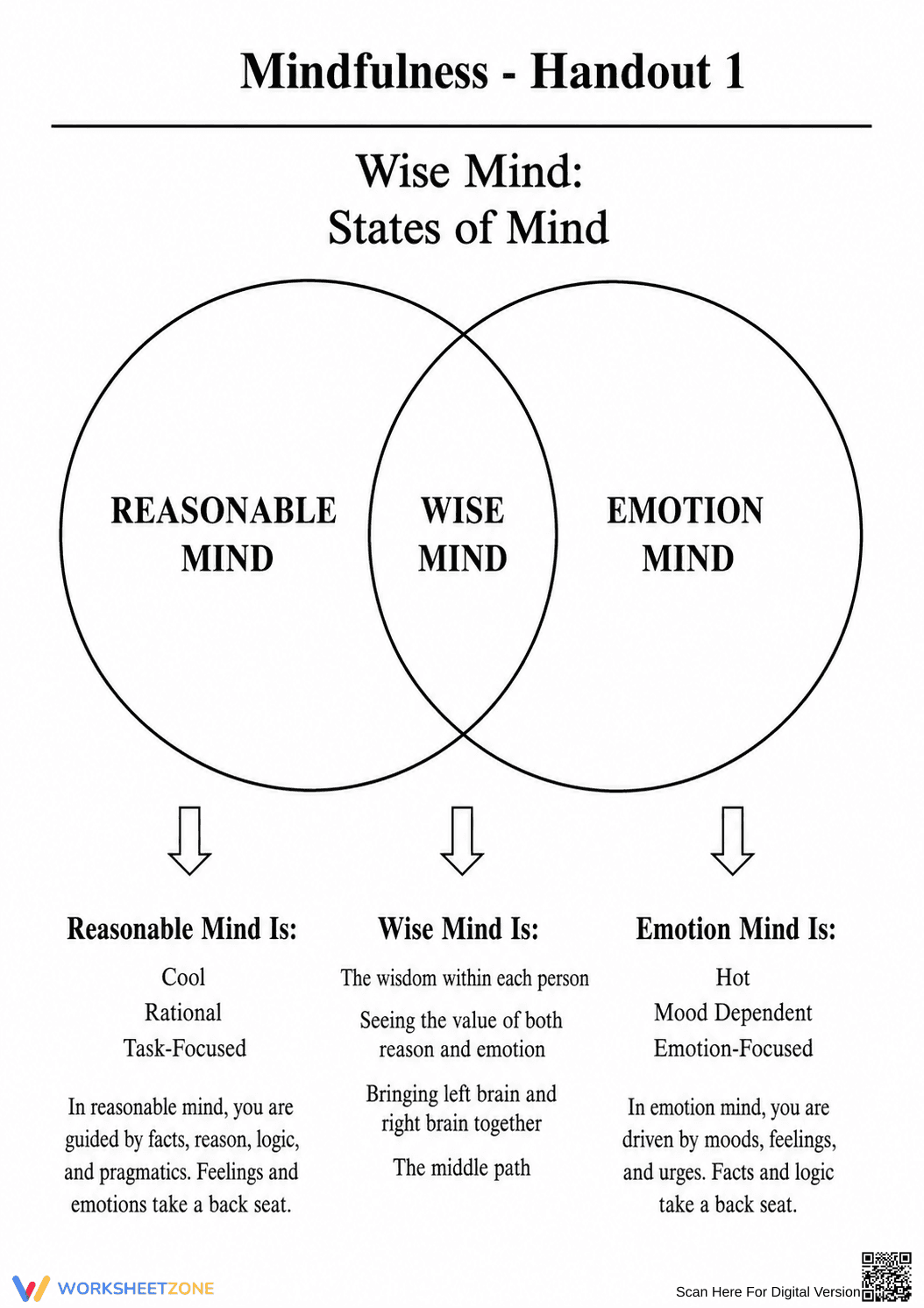
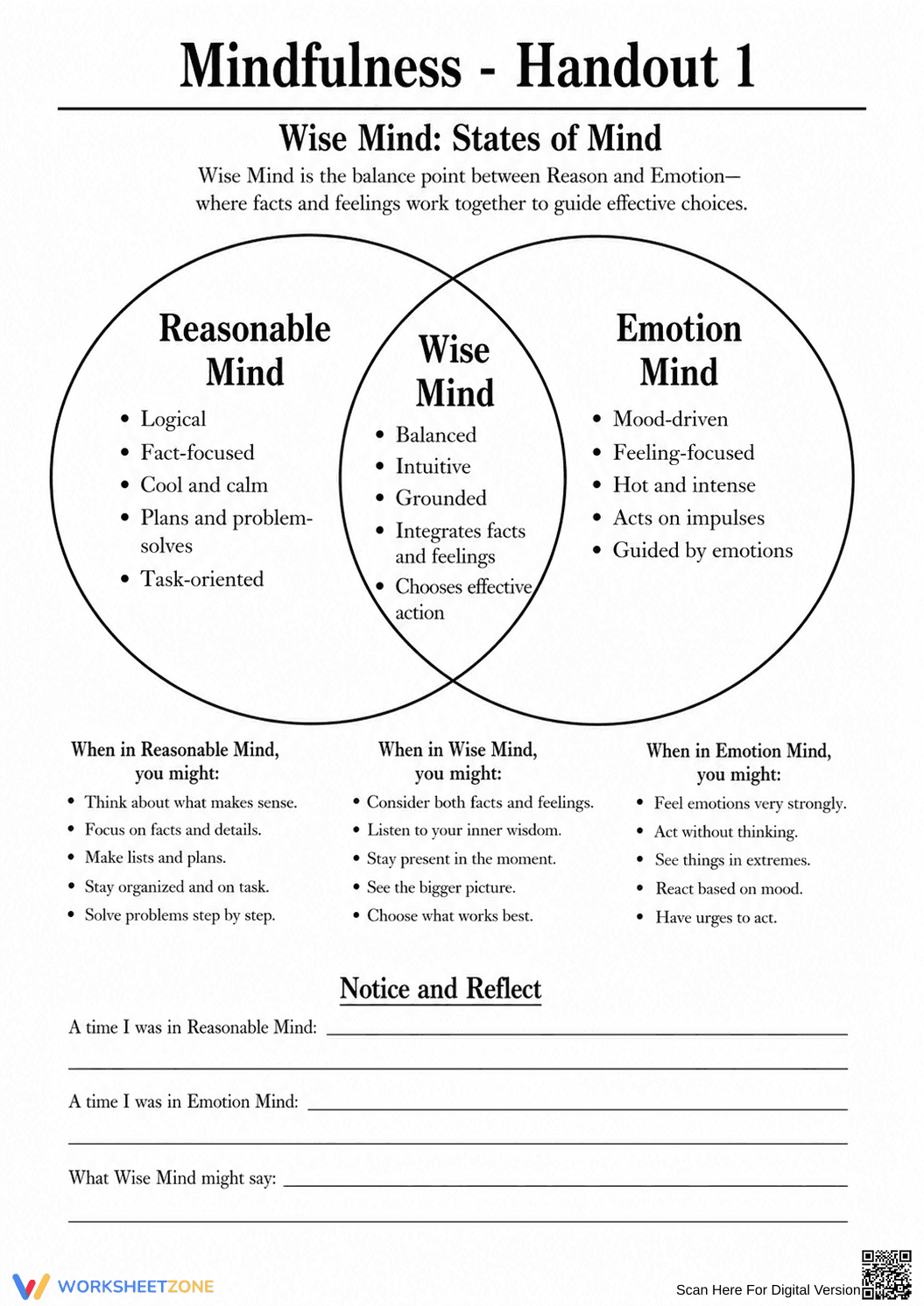
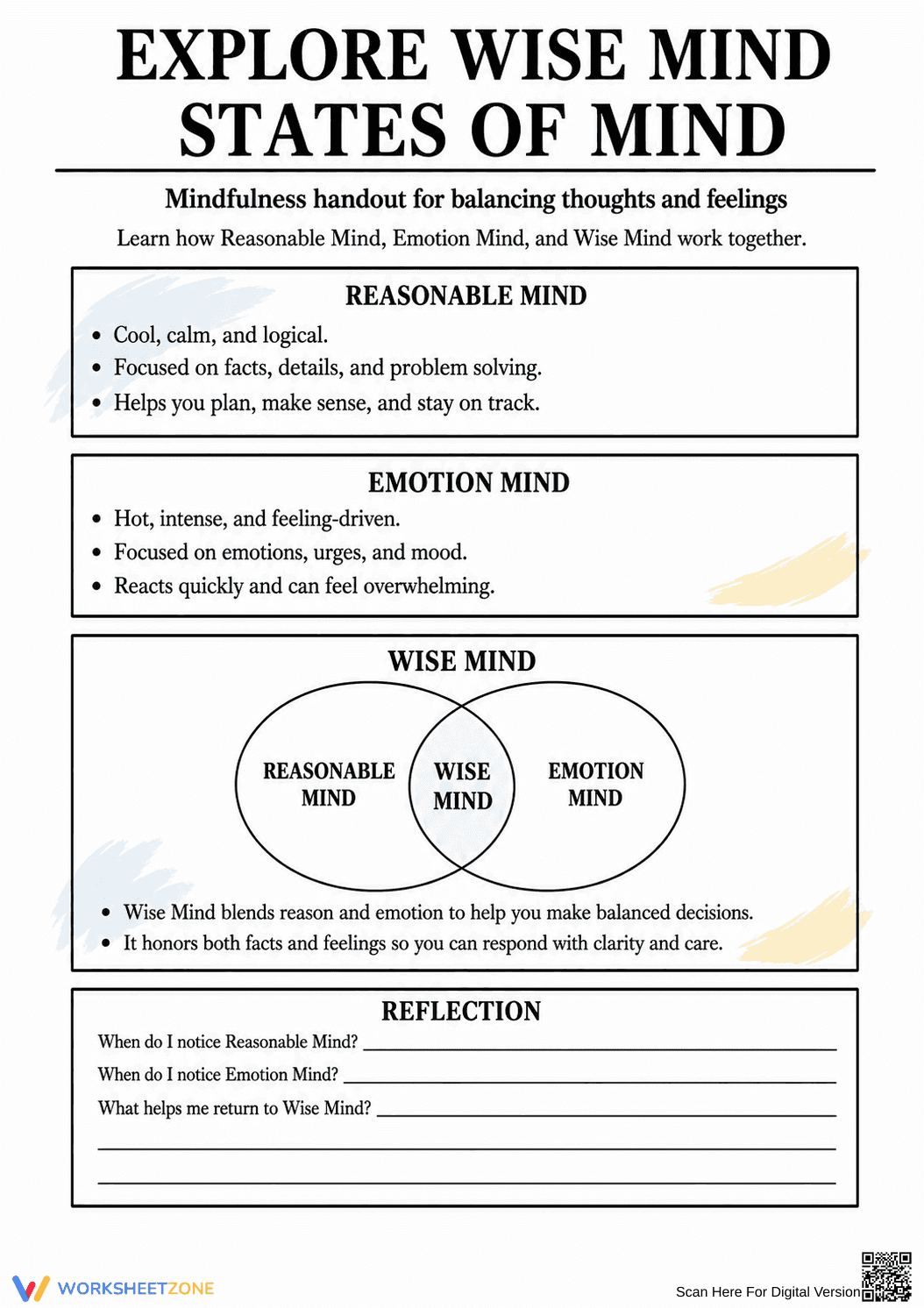
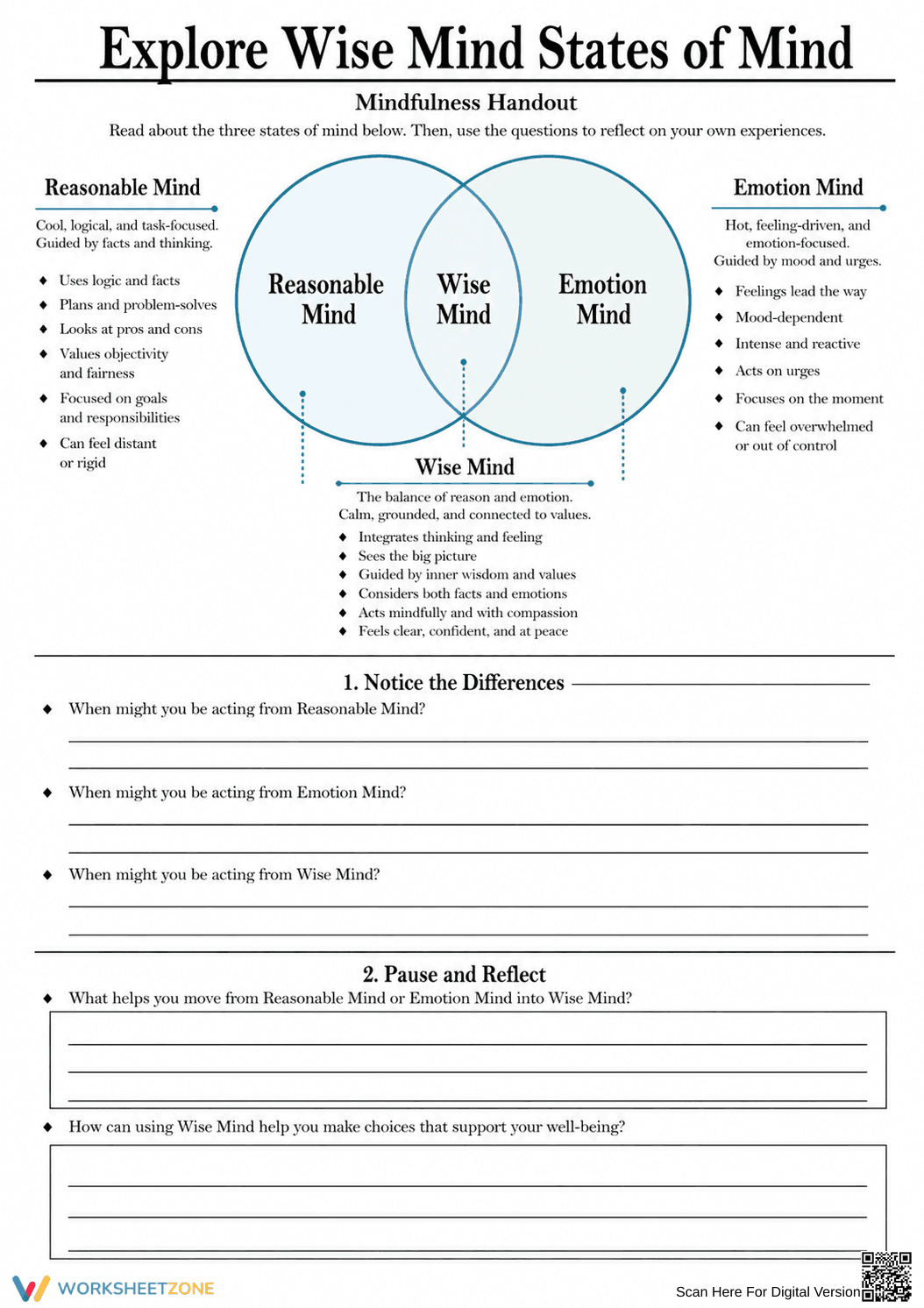
This comprehensive four-page resource includes detailed handouts and interactive Venn diagrams that visually break down the three states of mind. Students receive clear definitions of logical and emotion-driven behaviors, followed by structured reflection prompts. The packet offers multiple layout variations, allowing educators to choose the format that best fits their specific classroom or clinical needs without requiring any additional setup.
Implementing this resource requires minimal effort, making it an excellent choice for busy educators.
- Print (1 minute): Select the preferred handout variation and print copies for the class.
- Distribute (1 minute): Hand out the worksheets at the beginning of an advisory period or SEL block.
- Review (3 minutes): Briefly read the definitions together before students begin their independent reflection.
Total teacher prep time is under two minutes, making this an ideal, self-explanatory activity for emergency sub plans or impromptu mindfulness sessions.
Aligned to CCSS.ELA-LITERACY.W.9-10.10, this activity requires students to write routinely over shorter time frames for a range of tasks, purposes, and audiences. By articulating their personal experiences with different mental states, students practice clear, coherent reflective writing. Both standard codes can be copied directly into lesson plans, IEP goals, or district curriculum mapping tools.
This worksheet serves as an excellent introductory activity before direct instruction on conflict resolution or stress management. Alternatively, use it during a dedicated advisory period to help students process a recent challenging event. As students complete the reflection questions, observe their ability to differentiate between facts and feelings—this provides valuable formative assessment data on their emotional maturity. Expect the reading and writing components to take 15 to 20 minutes to complete.
Designed primarily for high school students (grades 9-12) and young adults, this resource supports individuals developing their social-emotional competencies. The clear visual aids provide excellent scaffolding for students who struggle with abstract psychological concepts. Pair this handout with a guided meditation exercise or a direct instruction lesson on cognitive behavioral strategies for maximum impact.
Integrating structured mindfulness activities into the daily curriculum significantly impacts student well-being, behavioral outcomes, and overall academic focus. Addressing CCSS.ELA-LITERACY.W.9-10.10, this resource prompts learners to write routinely for reflection and self-awareness, effectively bridging the critical gap between emotional intelligence and expressive writing. According to a comprehensive recent RAND AIRS 2024 report, students who consistently engage in regular, structured self-reflection exercises demonstrate markedly improved emotional regulation and a much higher capacity for complex problem-solving in rigorous academic settings. By explicitly teaching the psychological framework of the Wise Mind, educators directly equip adolescents with the precise vocabulary needed to accurately articulate their complex internal experiences. This foundational cognitive skill not only supports a significantly calmer and more focused classroom environment but also actively fosters the deep psychological resilience required for long-term personal growth and sustained academic success.


