


























Views
Downloads

Grade 3 Word Scramble — Printable No-Prep Worksheet
Paste this activity's link or code into your existing LMS (Google Classroom, Canvas, Teams, Schoology, Moodle, etc.).
Students can open and work on the activity right away, with no student login required.
You'll still be able to track student progress and results from your teacher account.
This engaging word scramble worksheet helps students build spelling fluency and seasonal vocabulary recognition. By unscrambling themed words across three distinct categories, learners reinforce their understanding of letter patterns and word structures. This activity provides a fun, focused way to strengthen essential language skills while celebrating the season.
At a Glance
- Grade: 3 · Subject: ELA
- Standard:
CCSS.ELA-LITERACY.L.3.2— Demonstrate command of standard English spelling- Skill Focus: Spelling and seasonal vocabulary
- Format: 3 pages · 20 problems · Answer key included · PDF
- Best For: Morning work or early finishers
- Time: 15–20 minutes
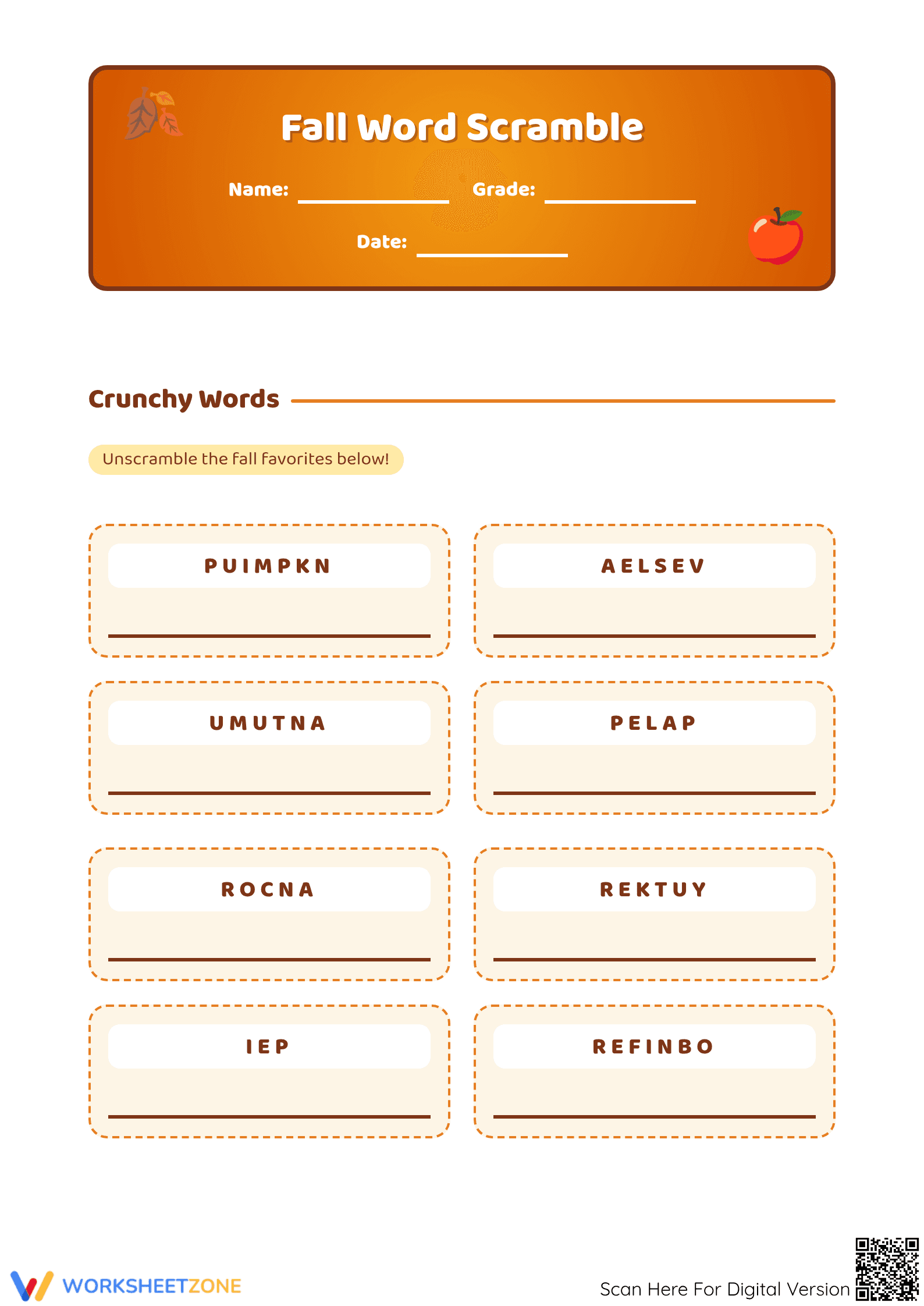
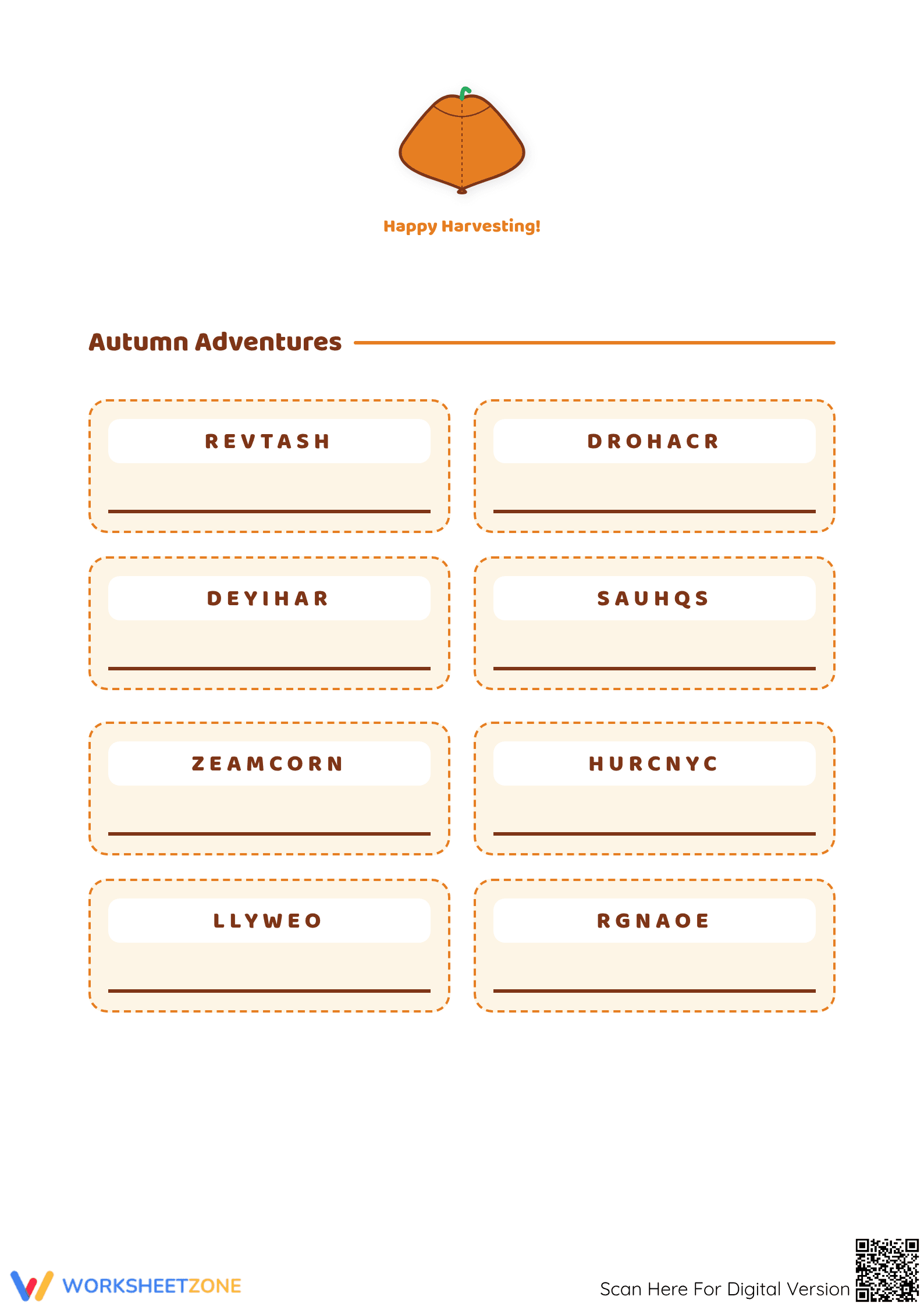
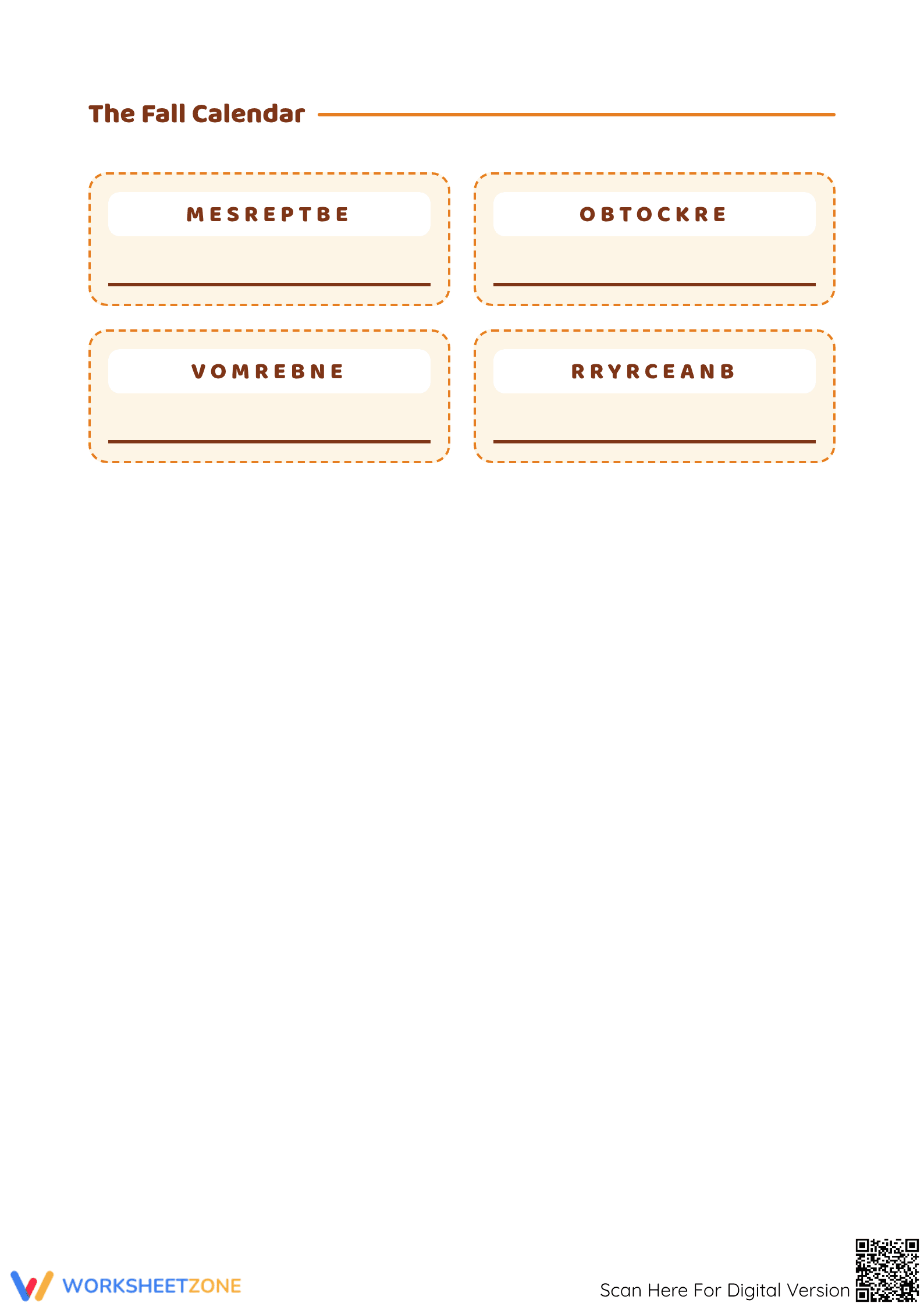
This comprehensive resource includes three pages of themed spelling challenges, categorized into "Crunchy Words," "Autumn Adventures," and "The Fall Calendar." Students will tackle a total of 20 scrambled words, ranging from simple seasonal items to more complex months of the year. A complete answer key is provided for all three pages, ensuring quick and accurate grading for educators or easy self-checking for students.
Designed for maximum efficiency, this activity requires absolutely no advance preparation.
- Print (1 minute): Simply download the PDF and print the three-page set along with the answer key.
- Distribute (1 minute): Hand out the packets to students as they arrive or transition between subjects.
- Review (3 minutes): Use the included answer key to quickly verify student responses or project it on the board for self-correction.
With a total teacher prep time of under two minutes, this resource is an ideal addition to any emergency sub plan or last-minute schedule change.
This worksheet is aligned to primary standard CCSS.ELA-LITERACY.L.3.2, which requires students to demonstrate command of the conventions of standard English capitalization, punctuation, and spelling when writing. By decoding and correctly writing these seasonal terms, students actively apply their knowledge of spelling patterns and phonics. Both standard codes can be copied directly into lesson plans, IEP goals, or district curriculum mapping tools.
This versatile activity fits perfectly into morning meeting routines or as a calming transition exercise after recess. Teachers can assign it as independent practice for early finishers who need a constructive, skill-building task while classmates complete their primary assignments. As a formative assessment tip, observe how students approach the longer words on the calendar page; this can reveal their grasp of syllable patterns and common vowel teams. Expected completion time ranges from 15 to 20 minutes.
This resource is primarily designed for third and fourth-grade students developing their spelling and vocabulary skills. It serves as an excellent tool for diverse learners, as the familiar seasonal context provides helpful background knowledge for English Language Learners. Pair this activity with a seasonal read-aloud or a creative writing prompt to create a comprehensive, themed literacy block.
Integrating thematic vocabulary exercises like this word scramble directly supports the development of orthographic mapping and spelling automaticity. Aligned with CCSS.ELA-LITERACY.L.3.2, this activity requires students to demonstrate command of standard English spelling by actively manipulating letter sequences. According to Fisher & Frey (2014), providing students with structured, engaging opportunities to interact with vocabulary significantly increases word retention and retrieval speed. When learners unscramble words, they are forced to analyze letter patterns, vowel teams, and consonant blends, which reinforces their foundational decoding skills. This cognitive process bridges the gap between phonetic knowledge and fluent writing. By embedding these spelling challenges within a seasonal context, educators can maintain high levels of student engagement while delivering rigorous, standards-aligned literacy practice that strengthens overall reading comprehension and written expression.


