




























Views
Downloads

Essential Wild Animal Riddle Worksheet | Grade 1 Ready

Paste this activity's link or code into your existing LMS (Google Classroom, Canvas, Teams, Schoology, Moodle, etc.).
Students can open and work on the activity right away, with no student login required.
You'll still be able to track student progress and results from your teacher account.
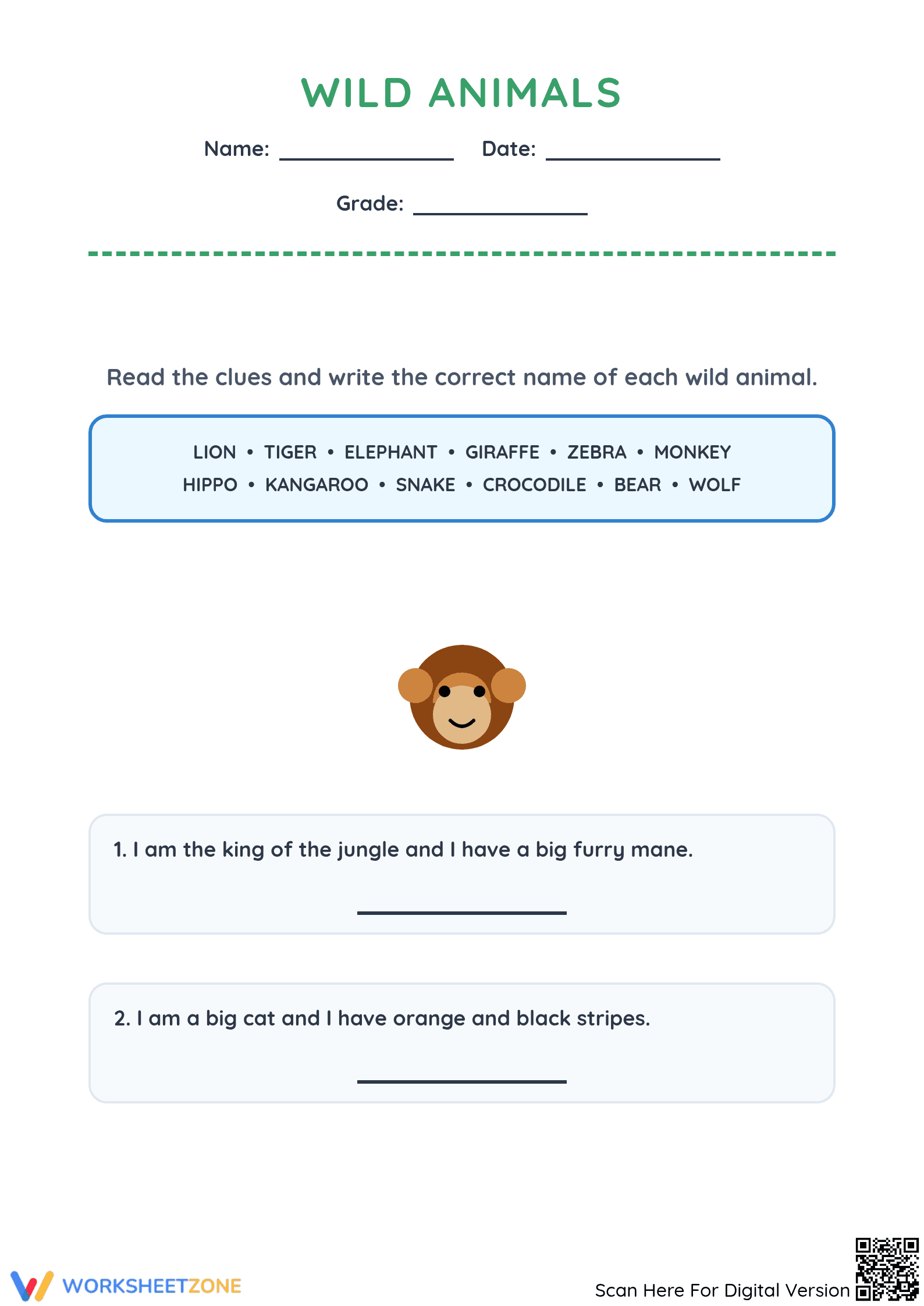
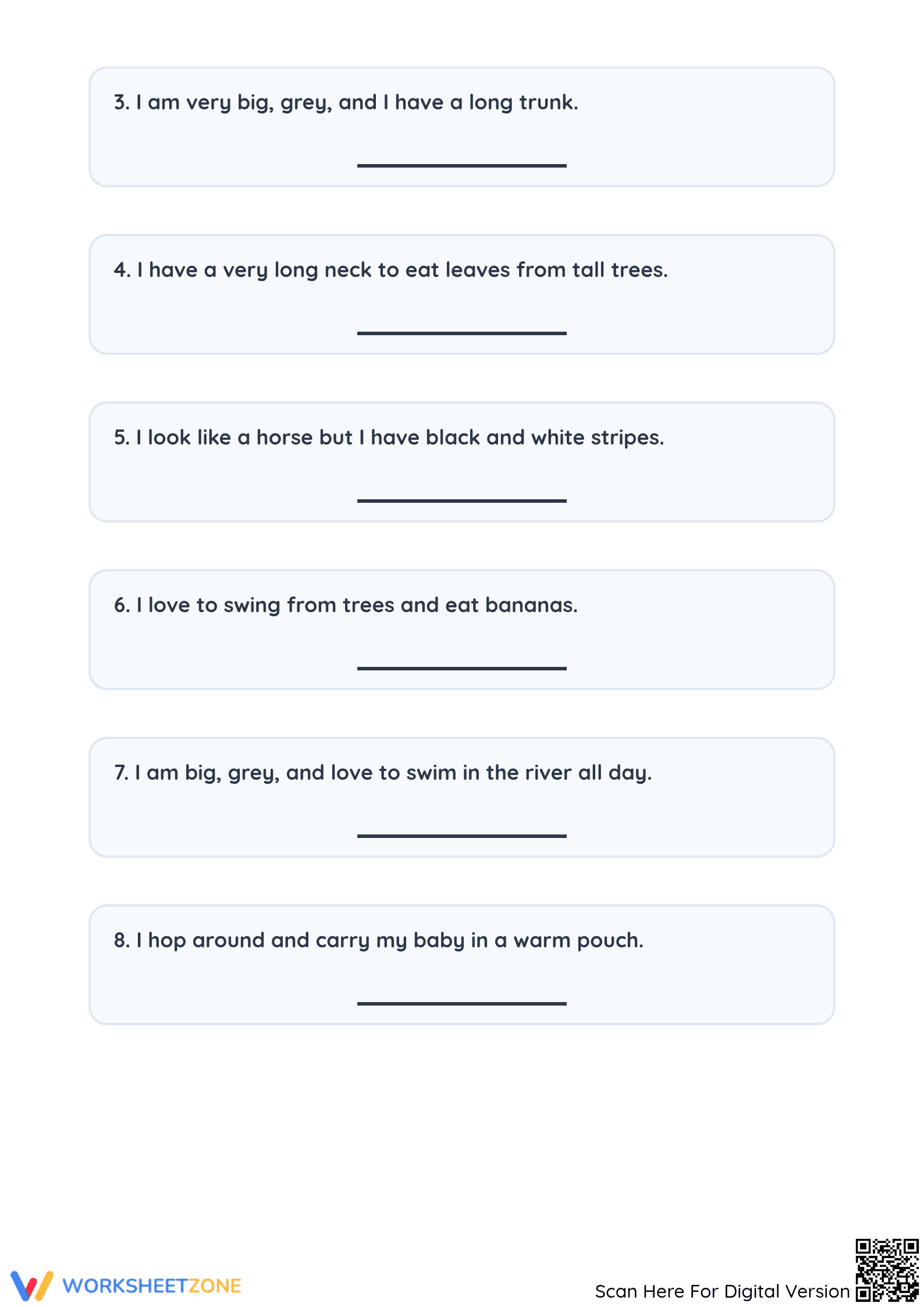
This Essential Wild Animal Riddle Worksheet for Grade 1 provides a comprehensive and engaging way for students to practice reading comprehension while learning about animal characteristics. By reading descriptive clues and identifying animals like lions, tigers, and elephants, learners strengthen their ability to extract key details from text and apply domain-specific vocabulary to real-world biology concepts.
At a Glance
- Grade: 1 · Subject: English Language Arts and Science
- Standard:
CCSS.ELA-LITERACY.RI.1.1— Ask and answer questions about key details in a text to demonstrate understanding of concepts.- Skill Focus: Reading comprehension, attribute identification, and vocabulary building
- Format: 4 pages · 17 problems · Full answer key included · High-quality PDF
- Best For: Independent reading practice, morning work, or substitute lesson plans
- Time: 20–30 minutes of focused classroom activity
What's Inside
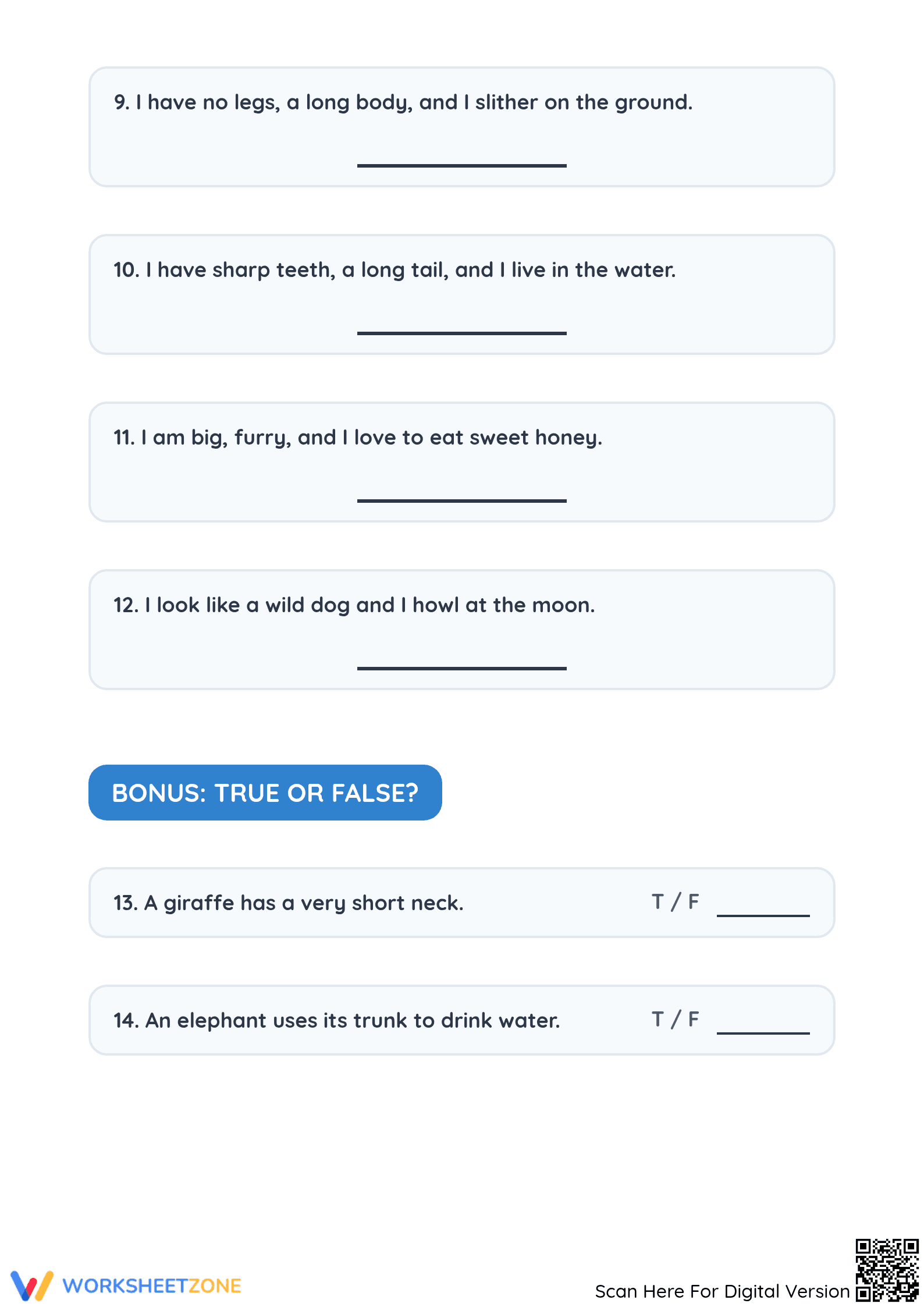
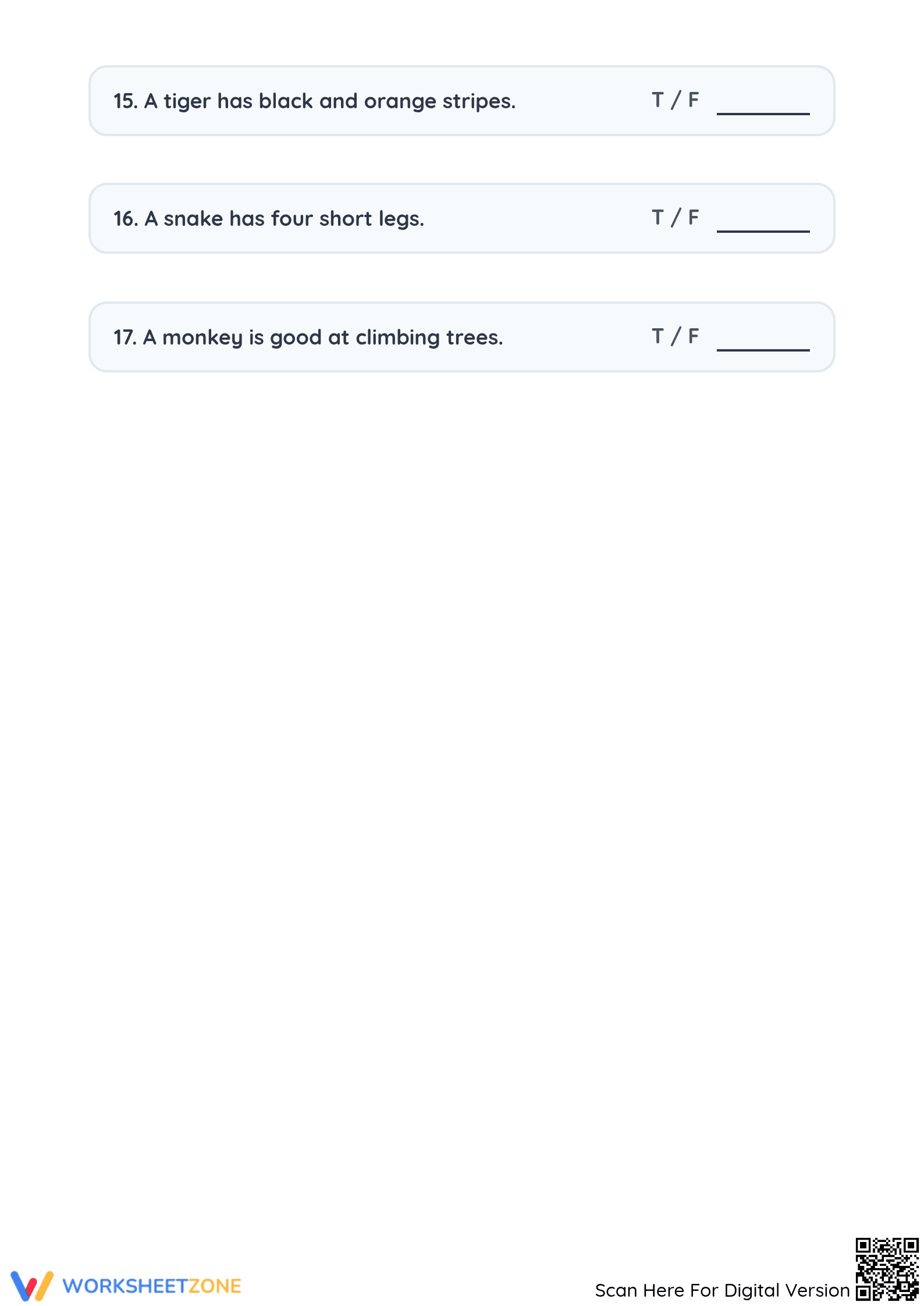
This four-page printable packet features 12 descriptive riddles where students match clues to a provided word bank of 12 wild animals. Following the identification tasks, a bonus section includes 5 True or False questions to further challenge student understanding of animal facts. The layout is clean and spacious, featuring high-quality illustrations to support early readers and a full answer key for easy grading and immediate feedback.
Zero-Prep Workflow
- Print: Print the four-page PDF for your entire class in under 1 minute.
- Distribute: Hand out the worksheets with pencils; students can begin immediately using the clear word bank provided.
- Review: Use the included answer key to check student work in seconds. This workflow is ideal for substitute plans or centers where teacher intervention must be minimized.
Standards Alignment
The primary focus is CCSS.ELA-LITERACY.RI.1.1, which requires students to identify key details in a text. By analyzing specific traits—such as a lion's mane or a tiger's stripes—students engage in evidence-based reasoning. This resource also supports L.1.5.A through category-based word sorting. Both standard codes can be copied directly into lesson plans, IEP goals, or district curriculum mapping tools.
How to Use It
Assign this worksheet as a post-lesson check after a unit on habitats or wild animals to gauge student comprehension. During independent work, walk around and observe if students are using the word bank to cross off animals they have already identified. Expect most Grade 1 students to complete the 17 tasks within 25 minutes, making it a perfect filler for transition periods or literacy blocks.
Who It's For
This resource is designed for first-grade students and advanced kindergartners who are developing their phonics and reading fluency. It provides excellent support for English Language Learners through visual cues and clear, repetitive sentence structures. Pair this worksheet with a non-fiction picture book about the savanna to provide a rich, multi-modal learning experience for your classroom environment.
According to the RAND AIRS 2024 report on early literacy interventions, the use of riddle-based comprehension tasks significantly improves a student's ability to synthesize descriptive information and build mental models of new concepts. This Grade 1 wild animal worksheet utilizes the CCSS.ELA-LITERACY.RI.1.1 standard to guide students through 17 structured problems that require active decoding and semantic mapping. By focusing on observable attributes and factual statements, the worksheet helps bridge the gap between simple word recognition and deep textual understanding. Research from Fisher & Frey (2014) highlights that such targeted, independent practice with domain-specific vocabulary is essential for long-term retention in early elementary subjects. This resource provides a high-leverage opportunity for students to practice evidence-based identification in a low-stakes, printable format that supports diverse learner needs while maintaining rigorous alignment to national educational standards.


