




























Views
Downloads
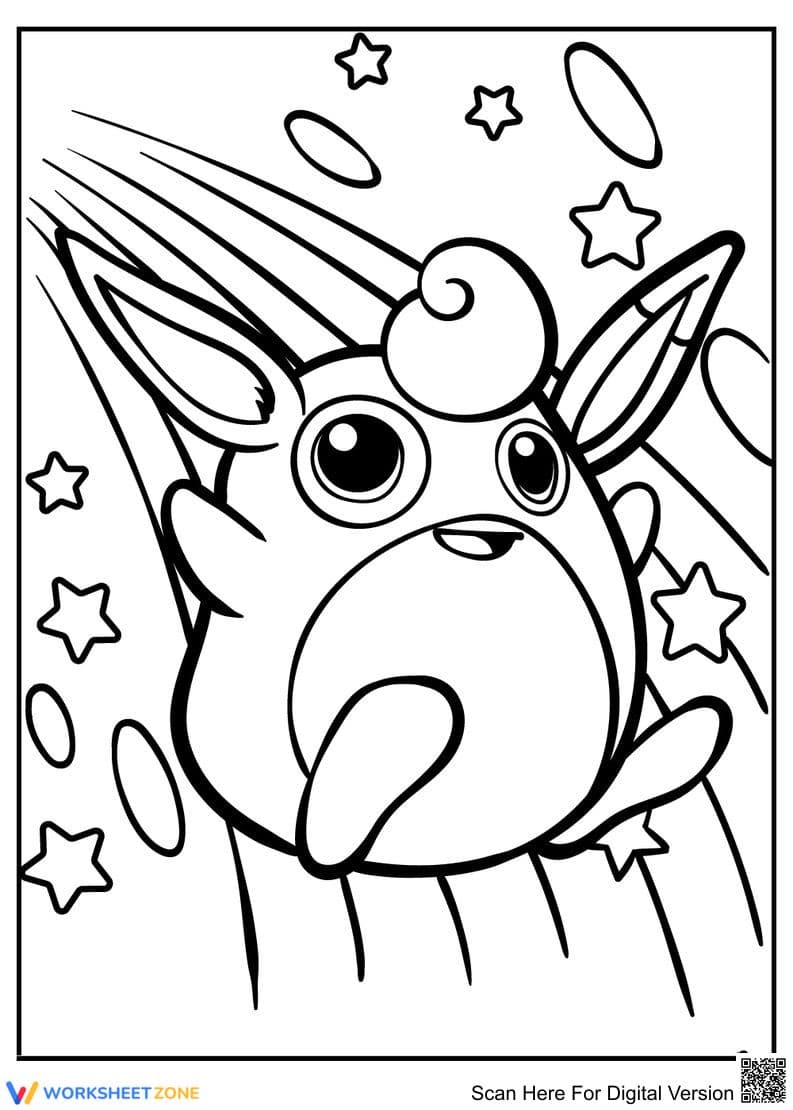

Grade 2-3 Wigglytuff Coloring Page — Printable Art Sheet

Paste this activity's link or code into your existing LMS (Google Classroom, Canvas, Teams, Schoology, Moodle, etc.).
Students can open and work on the activity right away, with no student login required.
You'll still be able to track student progress and results from your teacher account.
This printable Wigglytuff coloring page develops fine motor control and creative expression in early elementary students. By coloring the popular character and background elements, children practice spatial awareness, hand-eye coordination, and color selection. This activity provides an engaging artistic outlet that reinforces focus and concentration during independent work periods.
At a Glance
- Grade: Grade 2 · Grade 3 · Subject: Fine Art
- Standard:
CCSS.ELA-LITERACY.SL.2.5— Create visual displays to clarify ideas and feelings- Skill Focus: Fine motor control and creative expression
- Format: 1 page · 1 coloring task · No answer key · PDF
- Best For: Morning work or early finisher activity
- Time: 15–20 minutes
This resource features a single-page, high-quality black-and-white illustration of the Pokémon Wigglytuff surrounded by stars and energy trails. The bold outlines help young artists stay within the lines, while the detailed background elements offer opportunities for shading and color blending. There are no complex instructions, making it immediately accessible to all students without prior explanation.
This zero-prep activity integrates into any classroom schedule in under two minutes. First, print the single-page PDF for your class. Second, distribute the sheets along with crayons, colored pencils, or markers. Third, review the completed artwork to assess student focus and motor skill progression. This self-explanatory sheet is ideal for emergency sub plans or transition periods.
This activity aligns with the primary standard `CCSS.ELA-LITERACY.SL.2.5`, which requires students to create visual displays to clarify ideas, thoughts, and feelings. Additionally, it supports fine art standards focusing on spatial organization and color application. Both standard codes can be copied directly into lesson plans, IEP goals, or district curriculum mapping tools.
Use this coloring sheet during transition times or as a quiet reward after direct instruction. For a formative assessment, observe how students grip their coloring utensils and manage spatial boundaries on the page. The activity takes approximately 15 to 20 minutes to complete, making it a flexible option for busy classroom schedules.
This worksheet serves second and third-grade students, including English language learners and those requiring fine motor support. You can differentiate by asking advanced students to write a short descriptive paragraph about their color choices. Pair this sheet with a reading passage about character traits or a basic color theory anchor chart.
This visual arts resource supports the development of fine motor skills and focus in early elementary classrooms. According to a ScienceDirect TpT Analysis, structured coloring activities provide cognitive decompression and improve task endurance in young learners. By engaging with the illustration, students practice spatial coordination and visual planning, which directly supports the objectives of `CCSS.ELA-LITERACY.SL.2.5` regarding visual representation. The simple format allows teachers to integrate creative expression into the school day without sacrificing instructional time. Research indicates that integrating popular culture themes, such as familiar characters, increases student engagement and task completion rates. This printable sheet serves as a practical tool for developing hand strength and precision, which are essential foundational skills for writing and drawing tasks. Educators can confidently use this resource to support student focus and artistic development during independent work times.


