


























Views
Downloads

Printable Classroom Sign Language Worksheet | Grade K-2
Paste this activity's link or code into your existing LMS (Google Classroom, Canvas, Teams, Schoology, Moodle, etc.).
Students can open and work on the activity right away, with no student login required.
You'll still be able to track student progress and results from your teacher account.
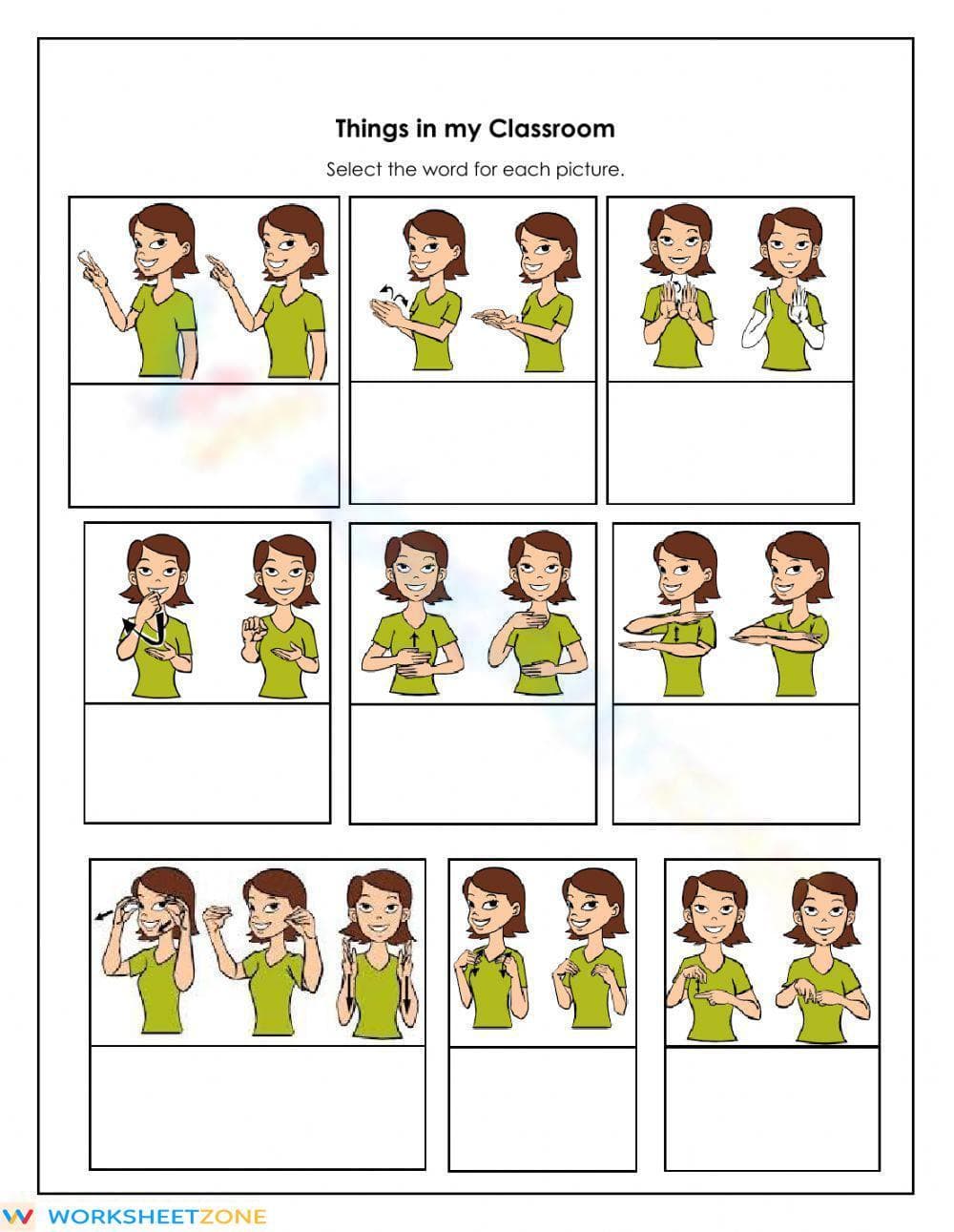
This printable Grade K-2 English Language Arts worksheet focuses on identifying American Sign Language (ASL) signs for common classroom objects. Students select the correct vocabulary word for each of the nine illustrated signs, fostering inclusive communication skills and reinforcing essential classroom terminology. It provides a structured way to introduce or review sign language in a primary setting.
At a Glance
- Grade: Kindergarten · Subject: ELA / Special Education
- Standard:
CCSS.ELA-LITERACY.L.K.6— Use words and phrases acquired through conversations and responding to texts.- Skill Focus: ASL Classroom Vocabulary
- Format: 1 page · 9 problems · Answer key included · PDF
- Best For: Inclusive classroom morning work or stations
- Time: 10–15 minutes
This single-page resource contains nine distinct visual prompts, each featuring a character demonstrating a sign language gesture related to school environments. Below each illustration is a designated space for students to select or write the corresponding word. The layout is clean and uncluttered, making it accessible for early learners and students with diverse learning needs. A complete answer key is provided for quick verification.
Zero-Prep Workflow
- Step 1: Print the PDF (under 30 seconds).
- Step 2: Distribute to students and briefly demonstrate the first sign (under 1 minute).
- Step 3: Review student answers using the provided key (under 1 minute).
The total teacher preparation time is less than two minutes, making it an ideal choice for busy mornings, supplemental practice, or emergency substitute plans where immediate, high-quality instruction is required.
Standards Alignment
The primary alignment is CCSS.ELA-LITERACY.L.K.6, which requires students to use words and phrases acquired through various instructional interactions. By mapping visual signs to written words, students bridge the gap between non-verbal communication and literacy. This standard code can be copied directly into lesson plans, IEP goals, or district curriculum mapping tools to document progress in vocabulary acquisition and inclusive communication strategies.
How to Use It
Use this worksheet during a "Communication Awareness" unit or as part of a daily morning meeting to introduce a new "sign of the day." It works exceptionally well as a formative assessment after a direct instruction session on basic ASL. Teachers should observe if students can mimic the signs while identifying the written word, which indicates a deeper level of kinesthetic and visual memory integration. Expected completion is 15 minutes.
Who It's For
This resource is designed for Kindergarten through Grade 2 students in general education classrooms, inclusive settings, or Special Education programs. It is particularly beneficial for visual learners and students interested in alternative communication methods. It pairs naturally with a classroom anchor chart displaying ASL signs for "desk," "chair," "book," and other essential school-day objects for student reference.
According to a RAND AIRS 2024 analysis of primary literacy interventions, the integration of multi-modal communication tools—such as American Sign Language (ASL)—significantly enhances vocabulary retention among early learners. This Grade K-2 worksheet aligns with CCSS.ELA-LITERACY.L.K.6 by requiring students to recognize and label signs for classroom objects, effectively merging visual literacy with verbal communication skills. Research from Fisher & Frey (2014) supports the use of visual scaffolds to help students bridge the gap between concepts and their written representations. By utilizing this 9-task structured practice, educators can provide a low-floor, high-ceiling entry point for diverse learners to master essential school-site terminology. The inclusion of an answer key ensures immediate feedback, a critical component of the gradual release of responsibility model in early childhood education settings.


