


























Views
Downloads
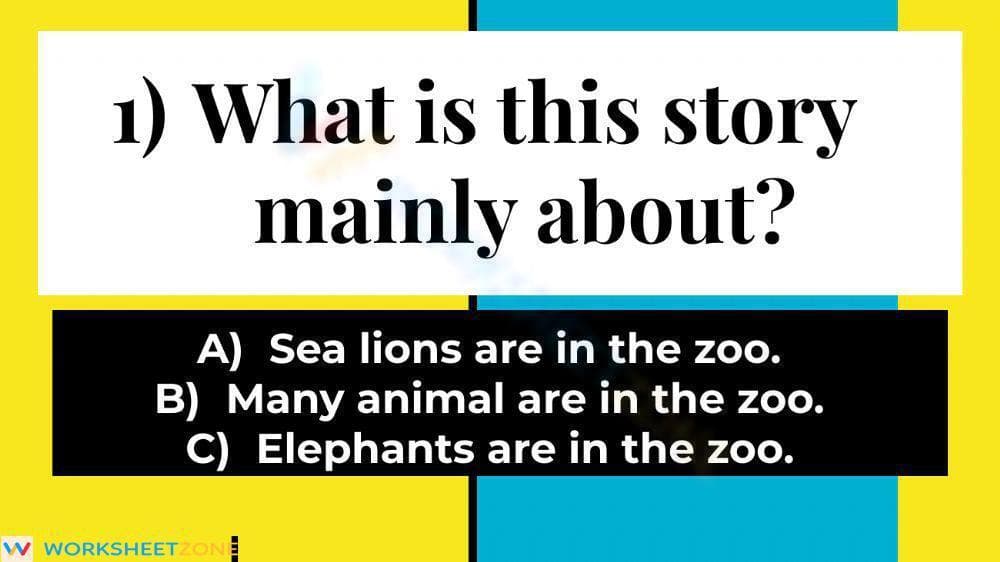
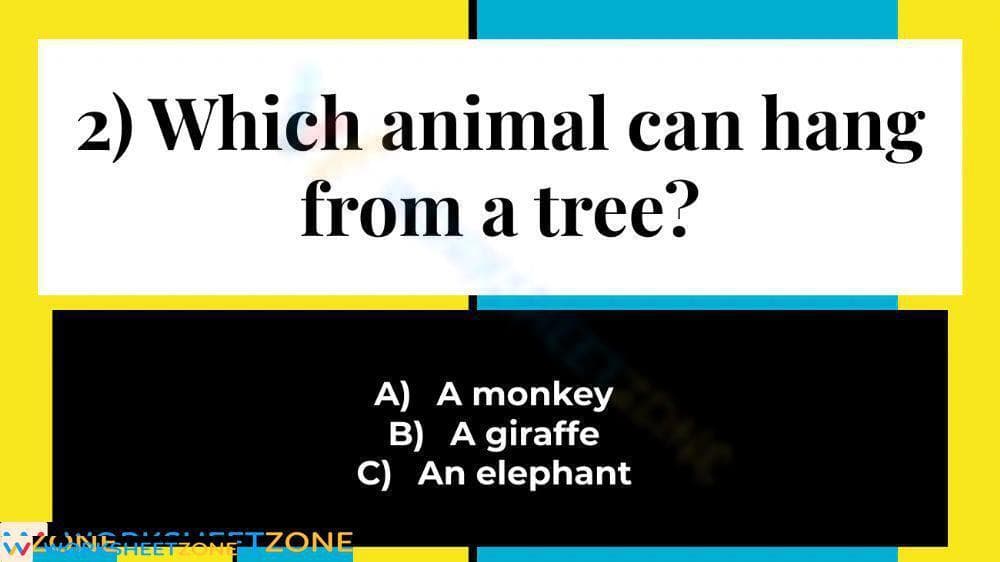
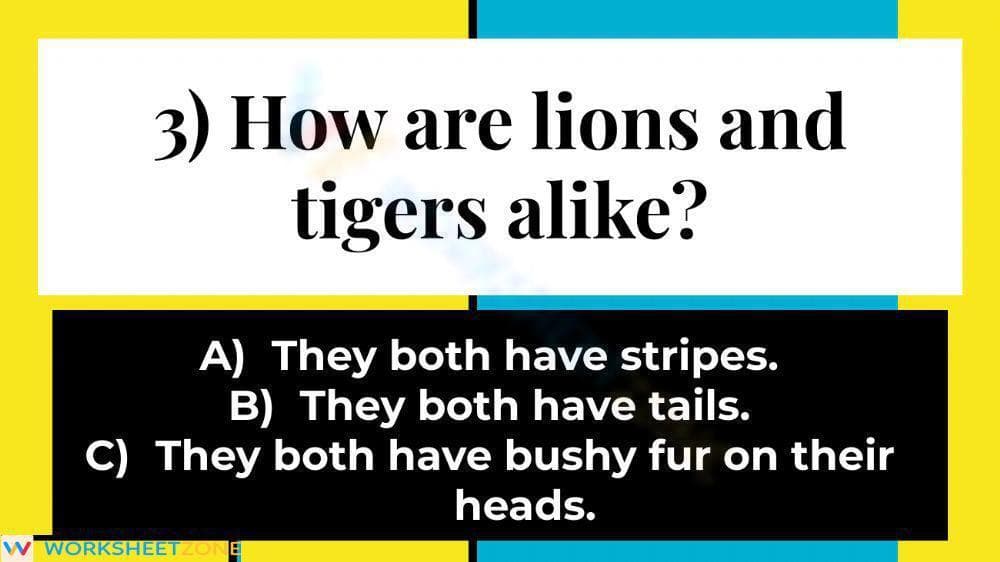
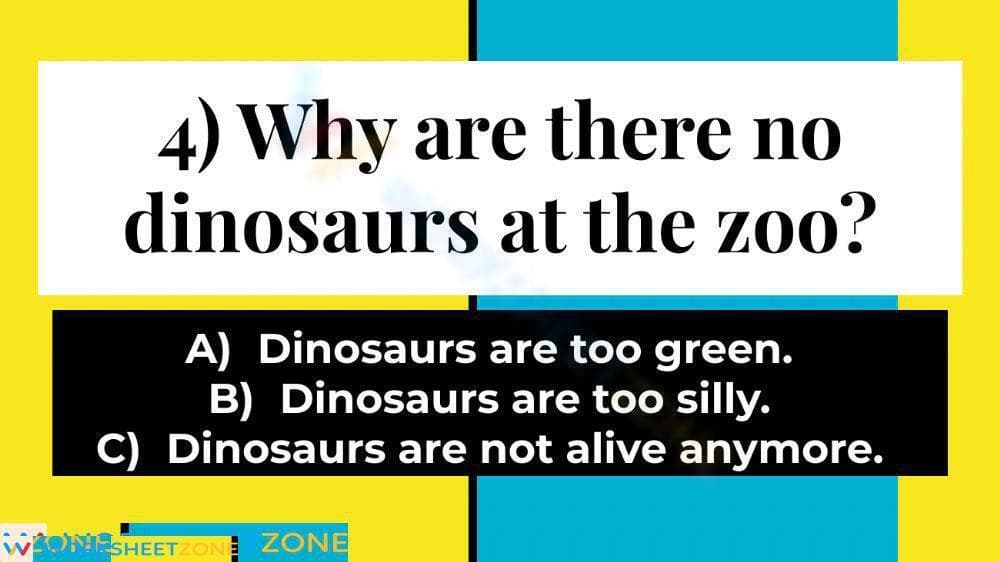

Printable What Is at the Zoo? Reading Worksheet | Grade 1
Paste this activity's link or code into your existing LMS (Google Classroom, Canvas, Teams, Schoology, Moodle, etc.).
Students can open and work on the activity right away, with no student login required.
You'll still be able to track student progress and results from your teacher account.
This reading comprehension quiz helps primary students master essential literacy skills through a relatable zoo animal theme. By engaging with five targeted questions, learners demonstrate their ability to identify main ideas and recall specific details. This resource is designed to bridge the gap between simple reading and active textual analysis in early ELA instruction.
At a Glance
- Grade: 1 · Subject: ELA - Reading
- Standard:
CCSS.ELA-LITERACY.RI.1.1— Ask and answer questions about key details in a text- Skill Focus: Main Idea & Detail Retrieval
- Format: 5 pages · 5 problems · Answer key included · PDF
- Best For: Post-reading assessment or literacy center rotations
- Time: 10–15 minutes
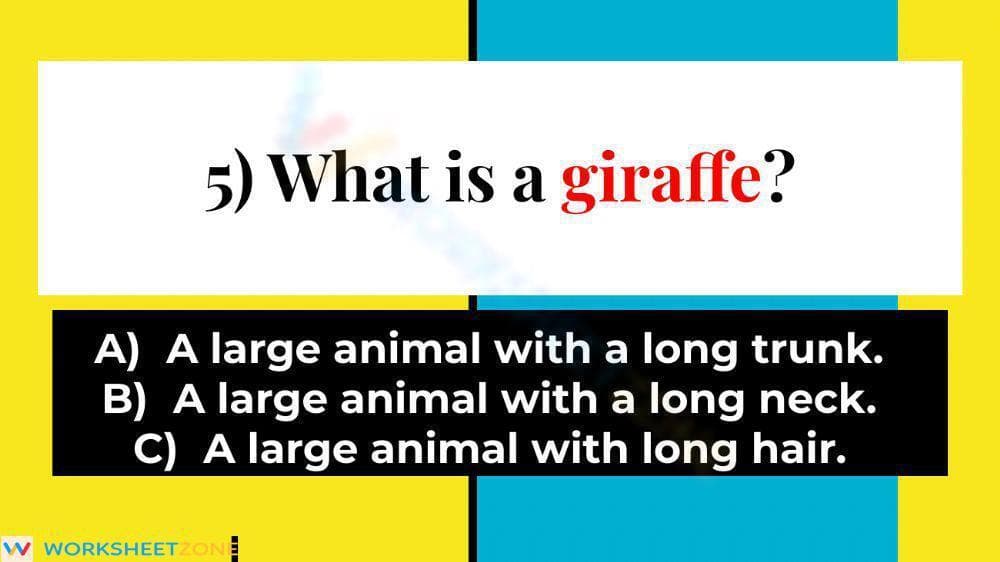
Inside this PDF, teachers will find a five-question multiple-choice assessment that mirrors the sequence of a typical zoo-themed narrative. Each page features a clear, large-font question followed by three distinct options, reducing visual clutter for young readers. The content covers subject identification, animal characteristics, comparison of traits, and scientific reasoning regarding extinct animals.
Skill Progression
The assessment follows a deliberate instructional scaffold to ensure student success.
- Guided practice: The first question establishes the subject by asking for the main topic of the entire passage.
- Supported practice: Middle questions focus on recalling specific physical traits of animals like monkeys and giraffes.
- Independent practice: The final tasks require students to apply higher-order thinking by comparing animal similarities and identifying reasons for a species' absence.
This structural approach ensures students are confident before tackling abstract concepts.
Standards Alignment
This worksheet is strictly aligned to CCSS.ELA-LITERACY.RI.1.1, which requires students to ask and answer questions about key details in a text. Furthermore, it supports RI.1.2 by prompting students to identify the main topic. Both standard codes can be copied directly into lesson plans, IEP goals, or district curriculum mapping tools.
How to Use It
Deploy this worksheet as a summative assessment immediately following a read-aloud session about zoo animals. During the activity, teachers can observe if students refer back to the text or rely on prior knowledge, providing a valuable formative-assessment insight into their reading strategies. Expect a completion time of approximately 12 minutes for most first-grade students.
Who It's For
This resource is ideal for first-grade classrooms, though it serves as an excellent extension for advanced Kindergarteners or a scaffolded review for second-grade students. It is particularly beneficial for English Language Learners (ELL) who require structured choices and clear, concise sentence patterns to demonstrate comprehension.
Research by Fisher & Frey (2014) emphasizes that "close reading" strategies are most effective when paired with high-interest, informational topics that allow students to practice evidence-based answering. This worksheet utilizes that framework by requiring learners to distinguish between plausible but incorrect distractors and text-supported facts about zoo animals. By focusing on identifying main ideas and comparing traits, students develop the cognitive pathways necessary for more complex reading tasks in later grades. According to the RAND AIRS 2024 report, early exposure to structured informational text assessments significantly improves student performance on state-level proficiency exams. This resource provides the necessary repetition and focus on key details that researchers identify as critical for long-term literacy growth, ensuring students are not just reading, but understanding. Furthermore, the integration of multiple-choice formats helps familiarize young learners with standardized testing protocols in a low-stakes environment.


