


























Views
Downloads

CCSS RI.4.2 Worksheet: Main Idea & Details — Grade 4 Aligned
Paste this activity's link or code into your existing LMS (Google Classroom, Canvas, Teams, Schoology, Moodle, etc.).
Students can open and work on the activity right away, with no student login required.
You'll still be able to track student progress and results from your teacher account.
This Weekly Test- Comprehension worksheet provides a rigorous assessment for students to demonstrate mastery in identifying main ideas and supporting details. By engaging with non-fiction passages about kites and dolphins, learners apply critical thinking skills to extract meaning and synthesize information. This essential resource ensures students meet Grade 4 reading expectations through structured, evidence-based questioning.
At a Glance
- Grade: 4 · Subject: ELA - Reading Comprehension
- Standard:
CCSS.ELA-LITERACY.RI.4.2— Determine the main idea of a text and explain how it is supported by key details- Skill Focus: Non-fiction analysis and main idea identification
- Format: 6 pages · 10 problems · Answer key included · PDF
- Best For: Weekly assessment or end-of-unit test prep
- Time: 40–50 minutes
What's Inside
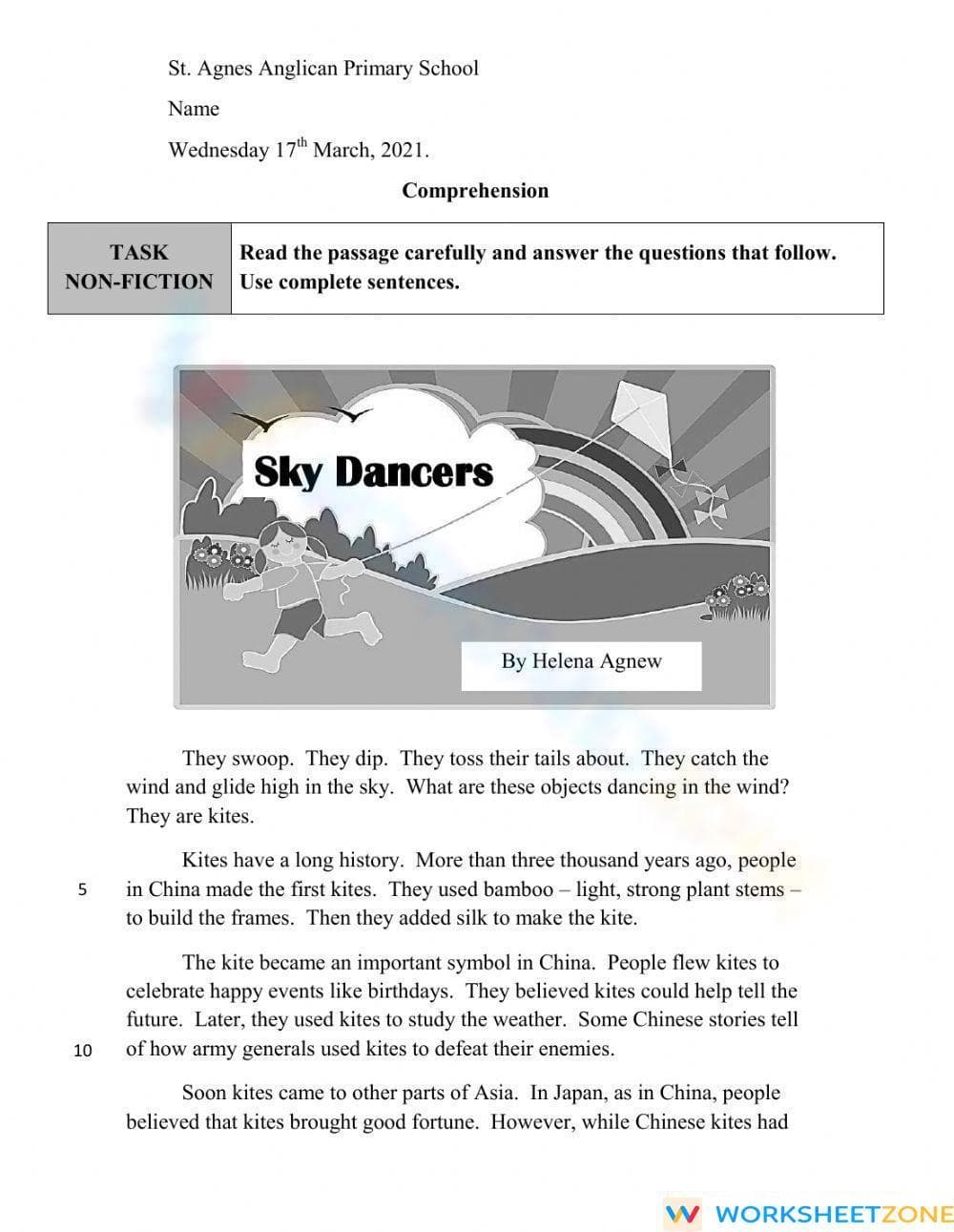
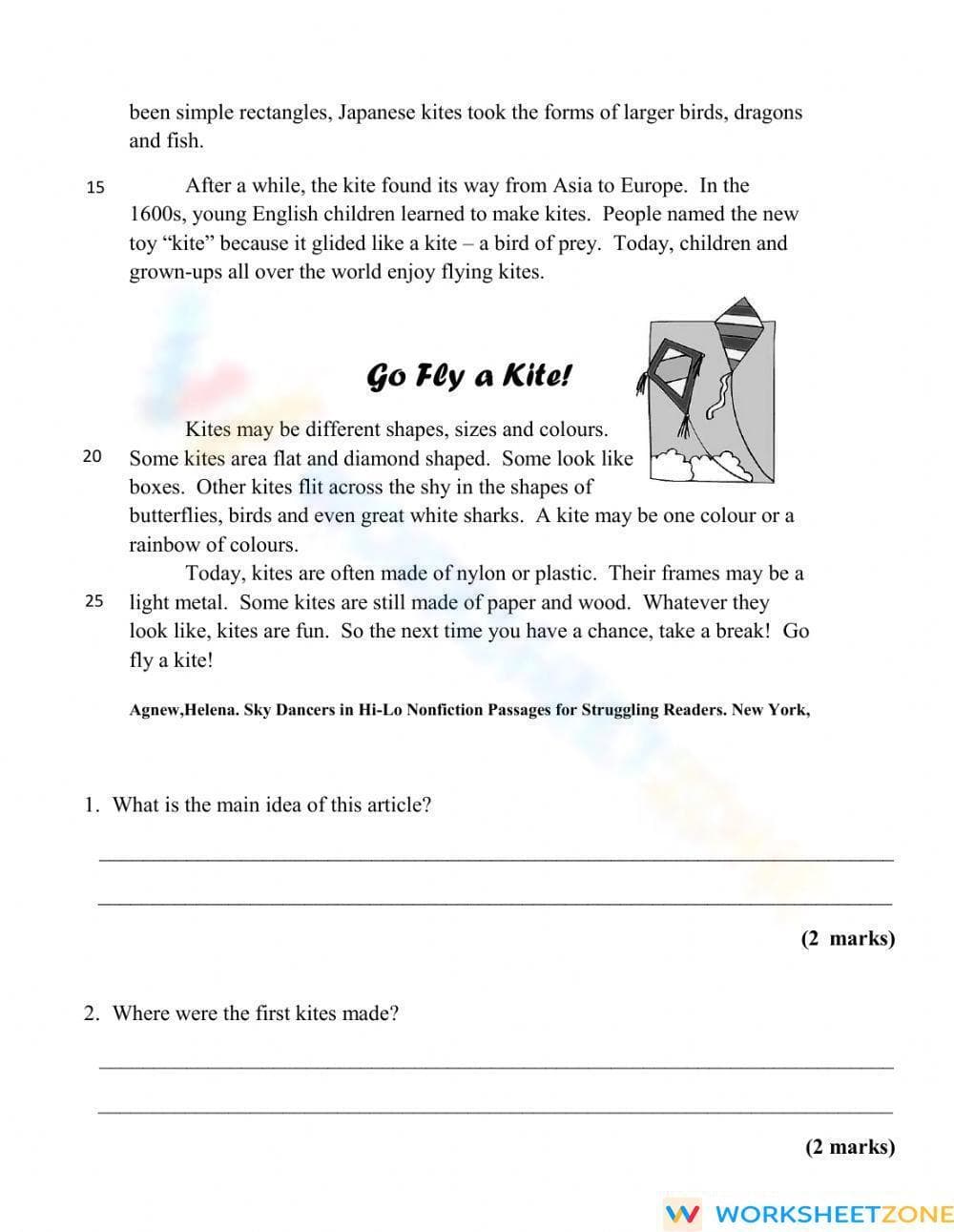
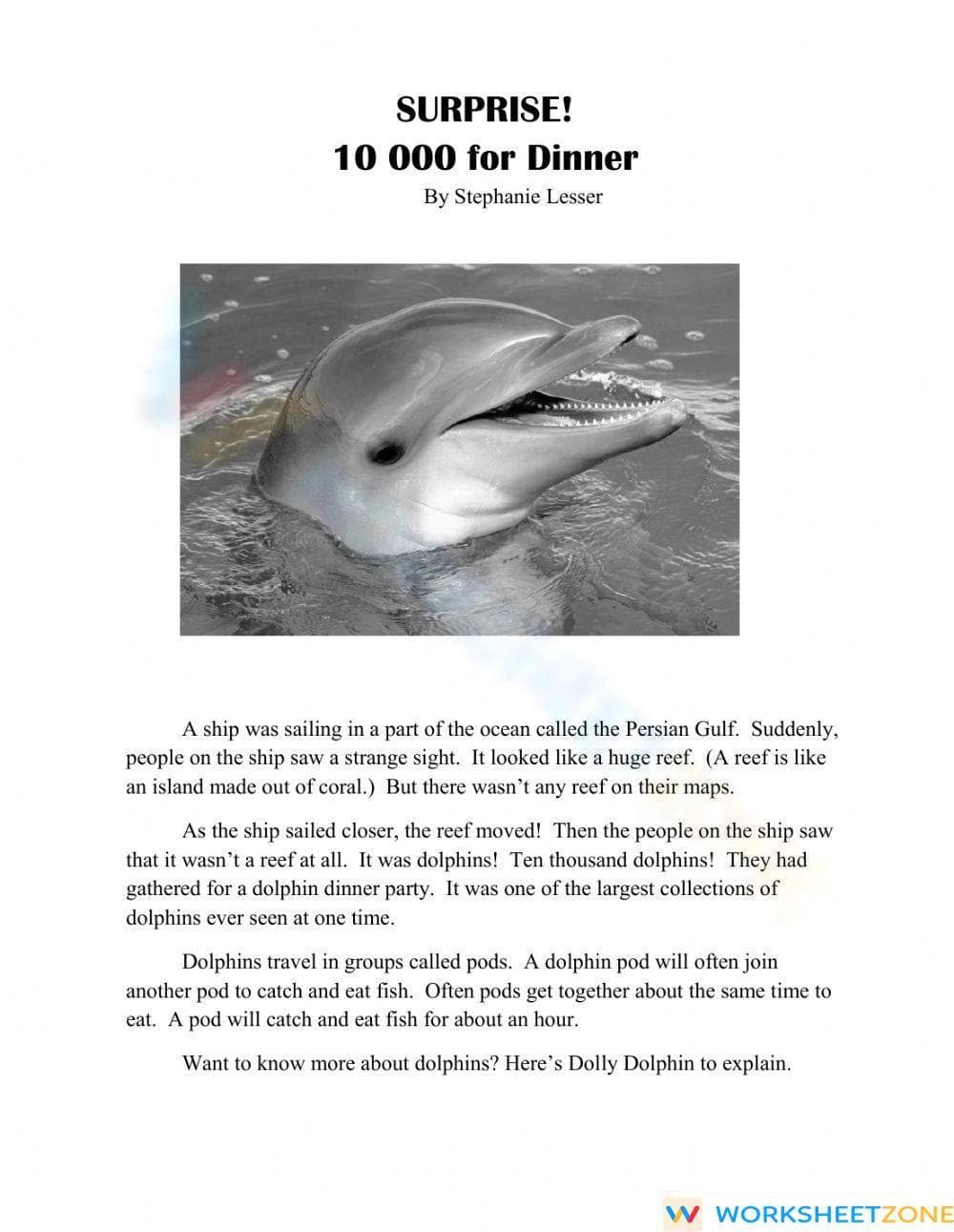
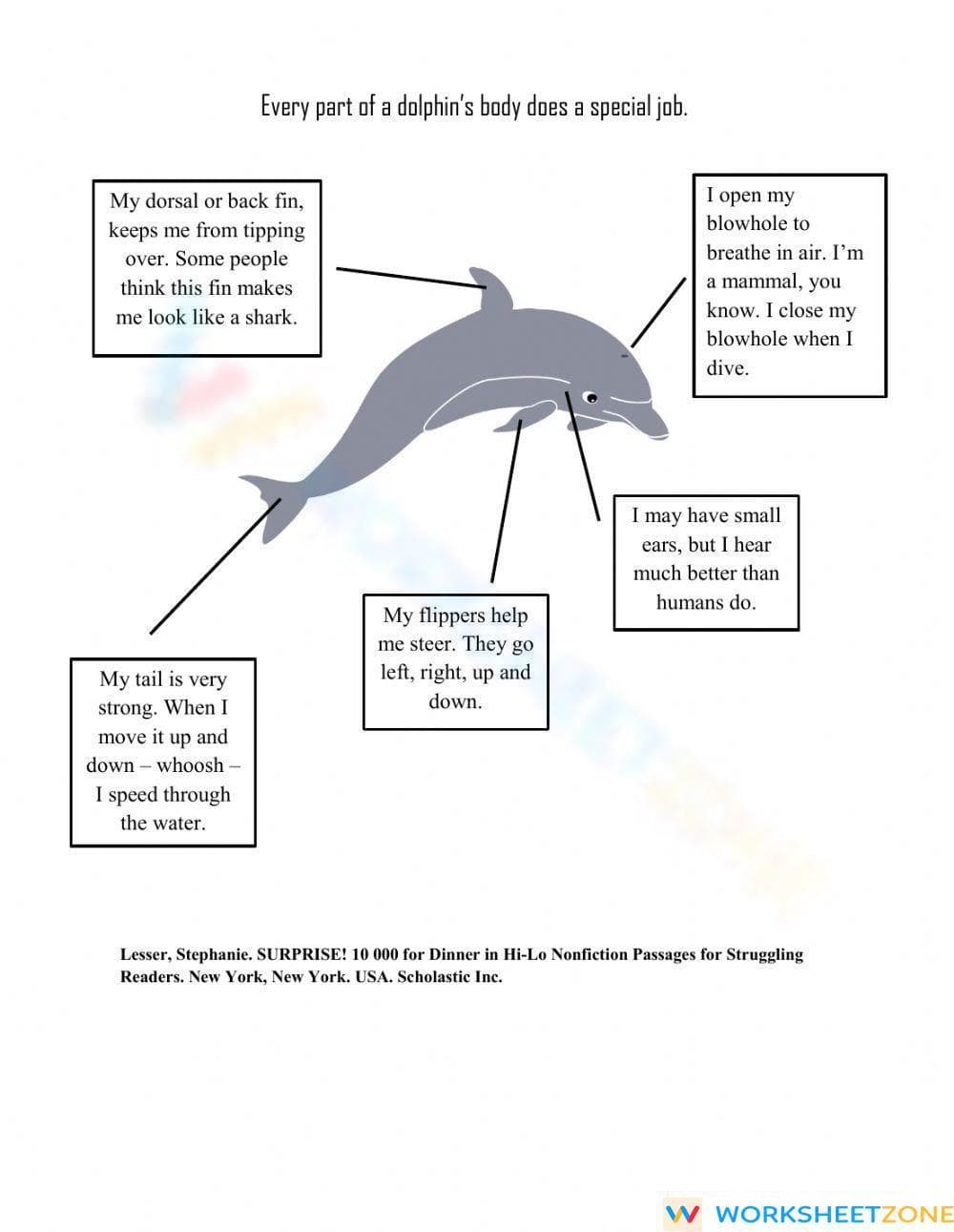
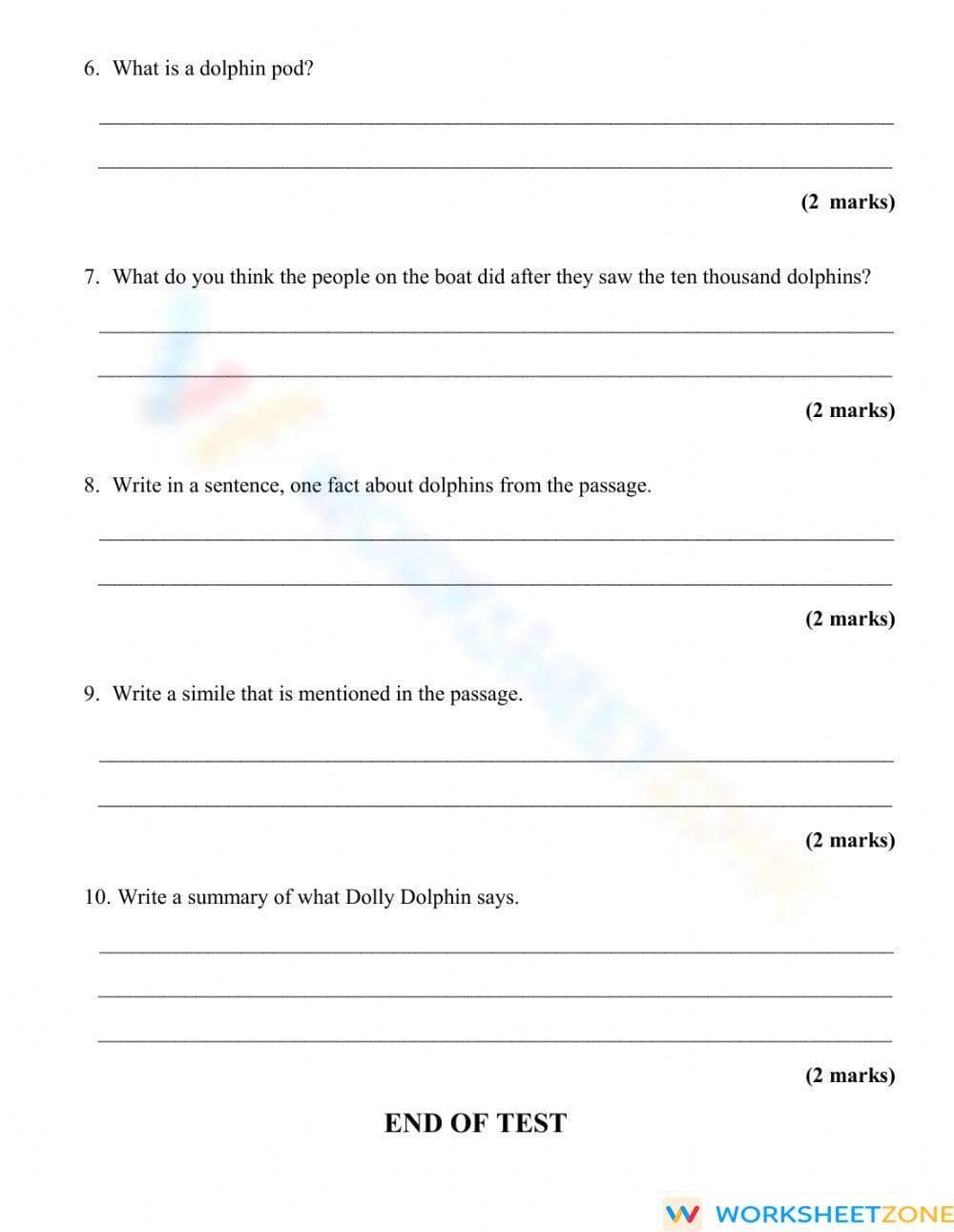
This comprehensive 6-page PDF includes two distinct non-fiction passages: "Sky Dancers" and "SURPRISE! 10 000 for Dinner." The worksheet features 10 structured questions requiring complete sentence responses, point-valued marks for grading, and a labeled diagram of dolphin anatomy to assess visual literacy. A full answer key is provided for efficient grading and immediate student feedback.
Mastery Evidence
Each task in this assessment is carefully mapped to specific RI.4.2 sub-skills. The provided mark system allows teachers to categorize student performance into clear mastery tiers: Approaching, Meeting, or Exceeding. These results provide concrete evidence of a student's ability to summarize informational text and can be entered directly into gradebooks or used to track IEP progress toward literacy goals.
Standards Alignment
The primary focus is CCSS.ELA-LITERACY.RI.4.2: "Determine the main idea of a text and explain how it is supported by key details." It also supports CCSS.ELA-LITERACY.RI.4.1 by requiring students to refer to details and examples when drawing inferences. These standard codes can be copied directly into lesson plans, IEP goals, or district curriculum mapping tools.
How to Use It
Use this worksheet as a formal weekly assessment following instruction on informational text structures. Administer the test in a quiet setting to gather authentic data. For formative use, observe how students transition between the kite passage and the dolphin diagram, noting their application of summarizing techniques. Expected completion time for most students is 45 minutes.
Who It's For
This resource is designed for Grade 4 students, but works well for Grade 3 enrichment or Grade 5 review. The accessible nature of the text makes it an excellent choice for struggling readers who require high-interest content. It pairs naturally with a lesson on non-fiction text features or an anchor chart detailing the differences between main ideas and details.
According to the RAND AIRS 2024 report on literacy achievement, the systematic use of informational text assessments is a primary driver in closing the comprehension gap for intermediate learners. This worksheet aligns with those findings by requiring students to interact with two diverse non-fiction topics, forcing them to apply the CCSS.ELA-LITERACY.RI.4.2 standard in varied contexts. By determining the main idea and summarizing text, students move beyond decoding into the cognitive sphere of deep comprehension. The inclusion of specific point values ensures that student performance is measurable and actionable for educators. Research indicates that using high-interest topics like dolphins and kites increases student engagement during formal testing scenarios. This 10-question assessment provides a reliable snapshot of student mastery, ensuring that literacy interventions are based on empirical data rather than anecdotal observation. It is an essential component for any standards-aligned ELA curriculum.


