




























Views
Downloads

Grade 8 Genetics Vocabulary — Printable No-Prep Worksheet

Paste this activity's link or code into your existing LMS (Google Classroom, Canvas, Teams, Schoology, Moodle, etc.).
Students can open and work on the activity right away, with no student login required.
You'll still be able to track student progress and results from your teacher account.
This middle school science worksheet helps students master foundational genetics vocabulary by providing a clear reference guide and a structured writing practice page. By defining essential terms like genotype, phenotype, and allele, students build the academic language necessary to understand complex heredity concepts and Punnett squares.
At a Glance
- Grade: 8 · Subject: Science
- Standard:
MS-LS3-2— Understand how sexual reproduction results in genetic variation- Skill Focus: Genetics vocabulary
- Format: 2 pages · 18 problems · Answer key included · PDF
- Best For: Independent practice
- Time: 15–20 minutes
What's Inside
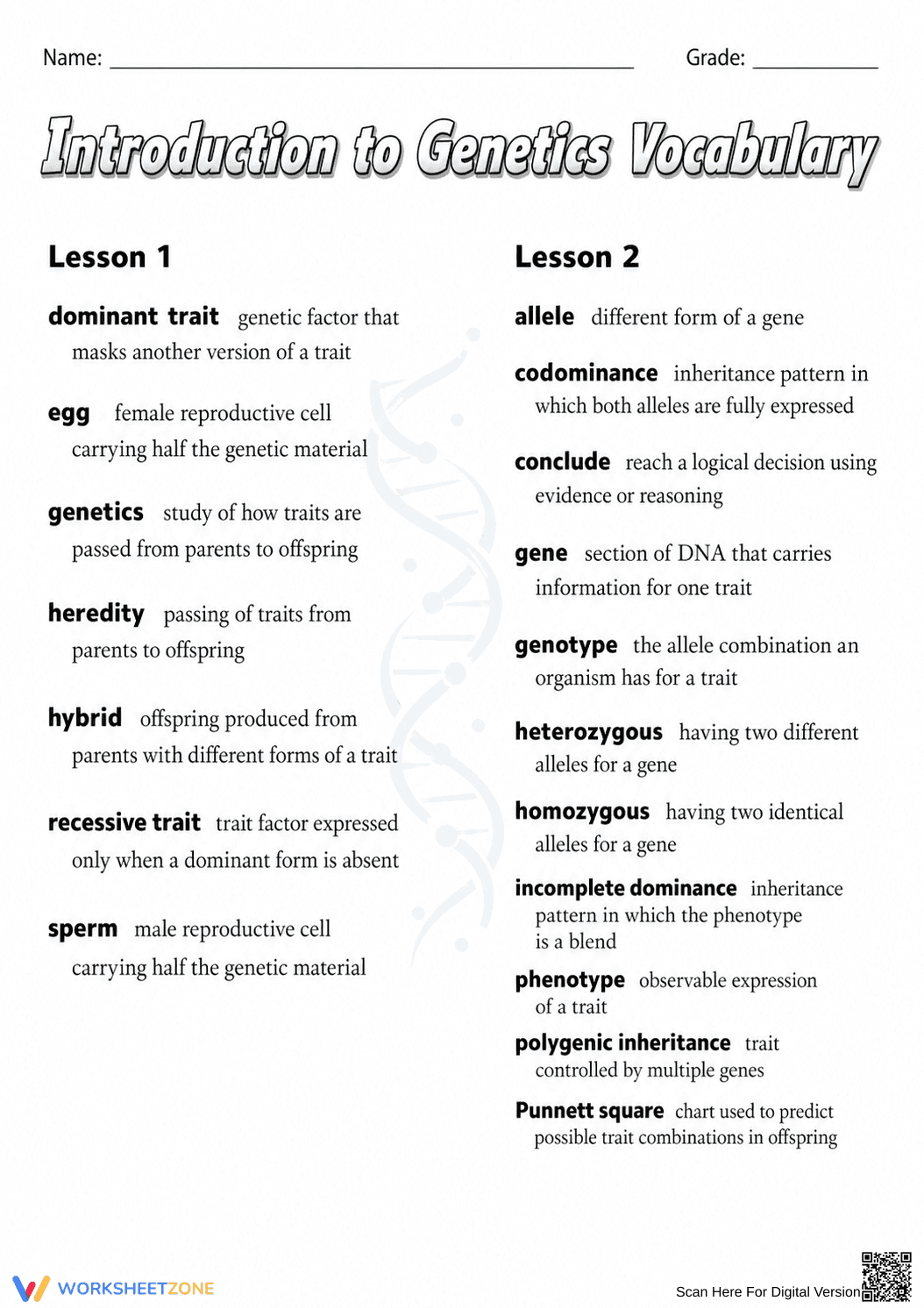
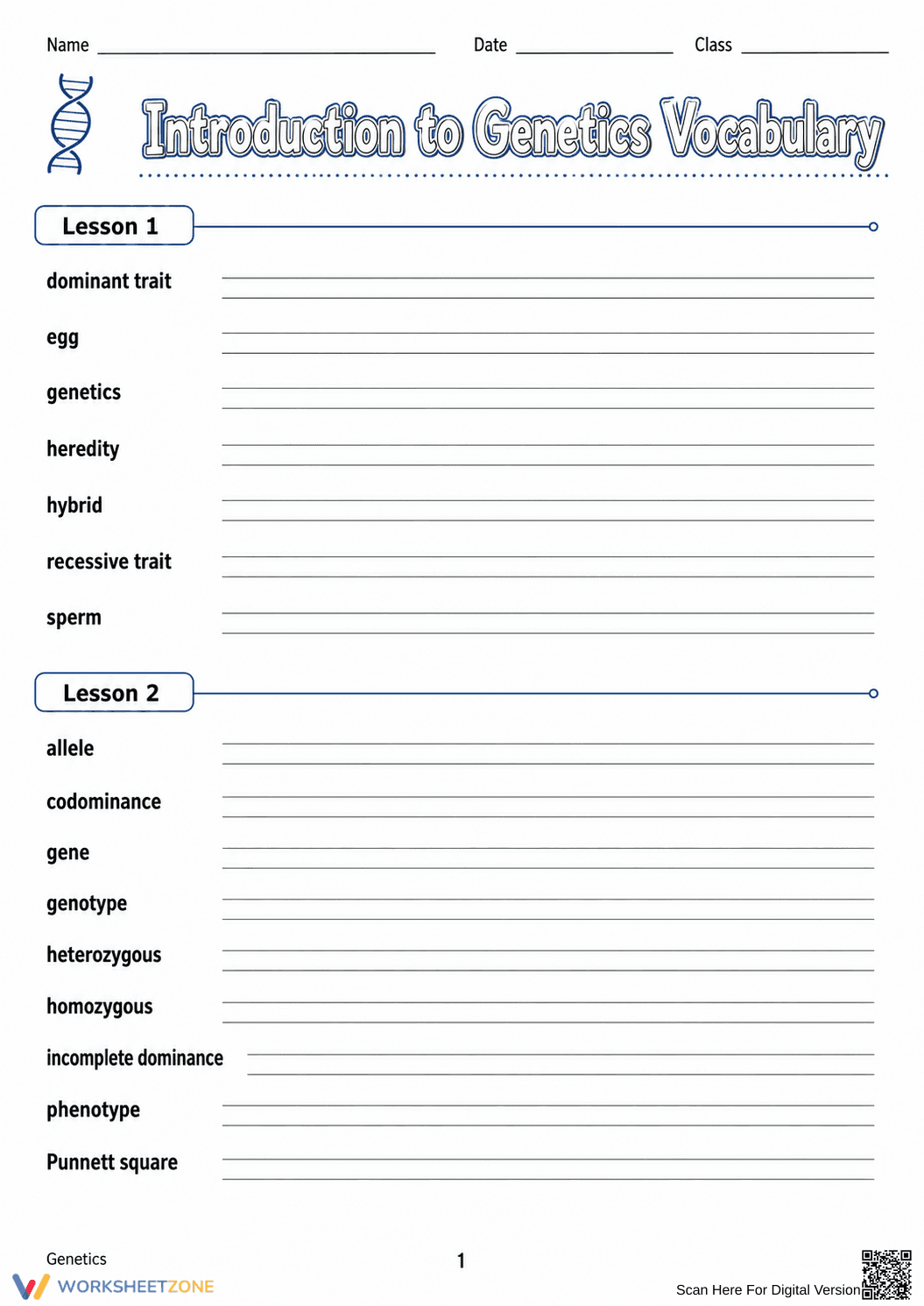
This resource includes a comprehensive two-page layout designed for immediate classroom use. The first page serves as a complete reference glossary, providing concise definitions for eighteen critical genetics terms divided into two distinct lessons. The second page is a structured fill-in-the-blank practice sheet where students write out the definitions, reinforcing their memory and spelling of complex scientific terminology.
Zero-Prep Workflow
- Print (1 minute): Simply print the two-page PDF. The first page acts as both a student study guide and a teacher answer key.
- Distribute (1 minute): Hand out the reference sheet and the blank practice page to students.
- Review (3 minutes): Quickly go over the pronunciation of challenging terms like "heterozygous" before students begin independent work.
Total teacher prep time is under two minutes, making this an ideal resource for emergency sub plans or quick vocabulary reviews.
Standards Alignment
Aligned to MS-LS3-2: Develop and use a model to describe why asexual reproduction results in offspring with identical genetic information and sexual reproduction results in offspring with genetic variation. Mastering this vocabulary is the crucial first step before students can successfully develop and use these genetic models. Both standard codes can be copied directly into lesson plans, IEP goals, or district curriculum mapping tools.
How to Use It
Introduce this worksheet before beginning direct instruction on Punnett squares, ensuring students have the necessary vocabulary to follow the lesson. Alternatively, use the blank second page as a formative assessment quiz at the end of a heredity unit. While circulating, observe whether students can accurately recall the distinction between dominant and recessive traits without checking the reference sheet. Expected completion time is 15 to 20 minutes.
Who It's For
This resource is designed for middle school and early high school biology students encountering formal genetics concepts for the first time. The clear, concise definitions provide excellent scaffolding for English Language Learners and students needing vocabulary support. Pair this worksheet with an introductory lesson on Gregor Mendel or a visual anchor chart demonstrating basic inheritance patterns.
Integrating explicit vocabulary instruction is critical for student success in secondary science classrooms. When students understand how sexual reproduction results in genetic variation, they can better articulate complex biological processes. According to a recent ScienceDirect TpT Analysis, providing students with structured reference guides alongside active recall practice significantly improves the long-term retention of domain-specific terminology. This worksheet directly supports MS-LS3-2 by ensuring learners have the foundational language required to construct accurate scientific models. By separating the terms into manageable lessons and requiring physical transcription of the definitions, educators can effectively reduce cognitive overload and promote deeper encoding of the material. This dual-page approach bridges the gap between passive reading and active mastery, equipping students with the exact academic vocabulary needed to succeed in advanced biology coursework.


