


























Views
Downloads

Letter V Tracing Worksheet | Essential Grade K-1 Ready
Paste this activity's link or code into your existing LMS (Google Classroom, Canvas, Teams, Schoology, Moodle, etc.).
Students can open and work on the activity right away, with no student login required.
You'll still be able to track student progress and results from your teacher account.
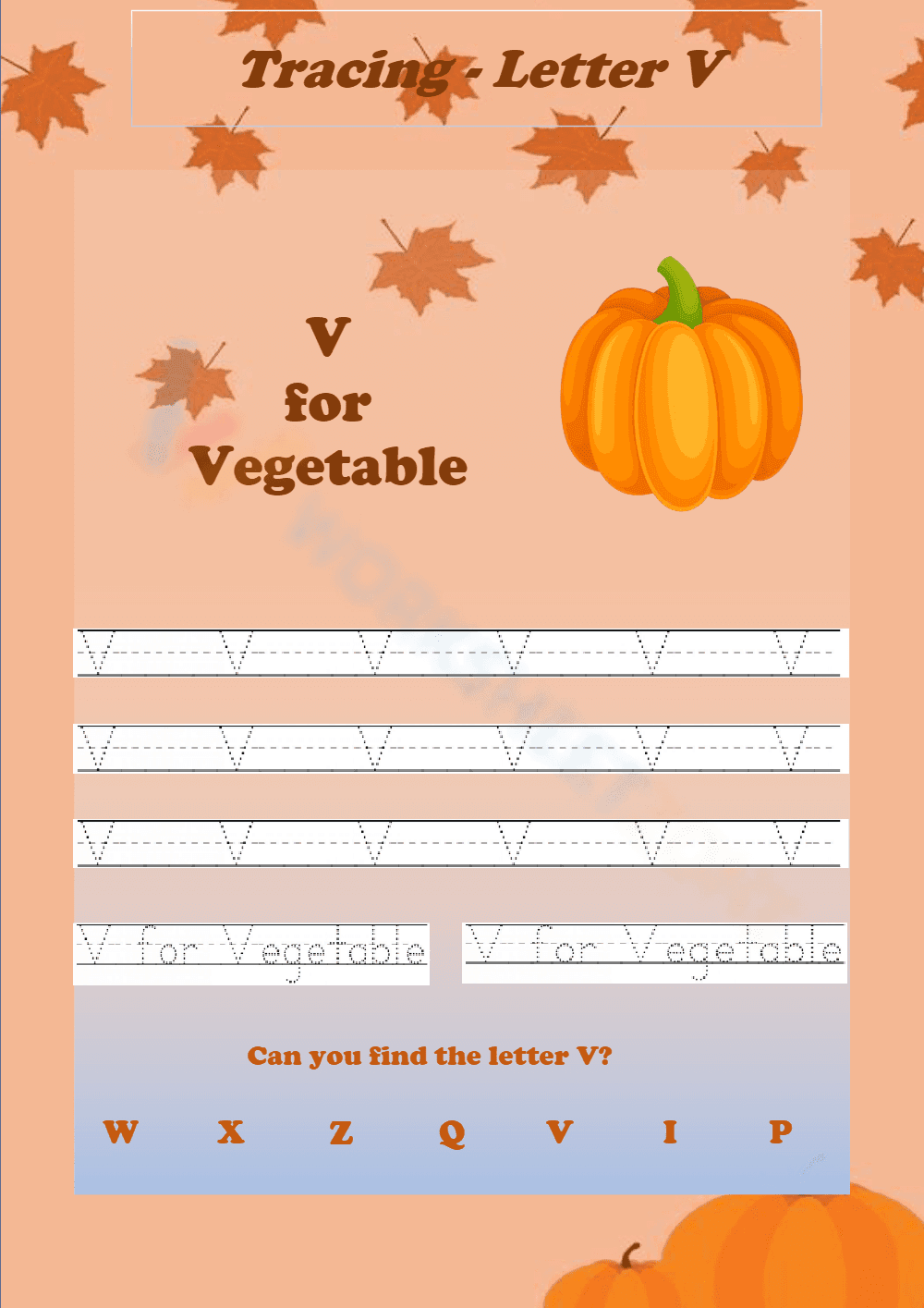
This Grade K-1 handwriting worksheet provides focused practice for mastering the letter V through repetitive tracing and visual identification. Students develop the muscle memory and letter-sound correspondence necessary for early literacy success. This resource ensures students can confidently recognize and produce the letter V in various contexts.
At a Glance
- Grade: K-1 · Subject: English Handwriting
- Standard:
CCSS.ELA-LITERACY.L.K.1.A— Print many upper- and lowercase letters with proper form and spacing- Skill Focus: Letter V formation and identification
- Format: 1 page · 21 tasks · Answer key included · PDF
- Best For: Morning work or literacy centers
- Time: 10–15 minutes
The worksheet features three dedicated rows for tracing uppercase V, providing 18 individual practice opportunities. Below the letter practice, students trace the phrase "V for Vegetable" twice to see the letter in a functional word context. The page concludes with a "Can you find the letter V?" discrimination task, where learners must distinguish V from similar-looking characters like W and X. The fall-themed pumpkin graphics provide a friendly visual anchor for the "V is for Vegetable" concept.
Zero-Prep Workflow
- Print: Generate the single-page PDF for your entire class or small group in under one minute.
- Distribute: Hand out the sheets during your phonics block or as a quiet transition activity; the layout requires minimal instruction.
- Review: Check work by having students point to the letter V they are most proud of for immediate positive reinforcement.
This resource is an ideal sub-plan addition due to its self-explanatory nature and clear student objectives.
Standards Alignment
Primary alignment is to `CCSS.ELA-LITERACY.L.K.1.A`, which requires students to print many upper- and lowercase letters. By focusing specifically on the letter V, this worksheet supports the foundational handwriting requirements of the Common Core. It also touches upon `CCSS.ELA-LITERACY.RF.K.1.D` regarding letter recognition. Both standard codes can be copied directly into lesson plans, IEP goals, or district curriculum mapping tools.
How to Use It
Use this worksheet during the independent practice phase of an alphabet lesson. After demonstrating the diagonal strokes of the letter V on the board, assign this page to reinforce the skill. It also serves as an effective formative assessment tool; observe students as they work to identify those struggling with stroke direction or letter reversals. Completion typically takes 10 to 15 minutes depending on fine motor development.
Who It's For
This activity is tailored for Kindergarten and first-grade students who are beginning their handwriting journey. It is particularly helpful for English Language Learners (ELLs) who benefit from the visual "Vegetable" cue and the repetitive tracing format. Pair this worksheet with a physical alphabet anchor chart or a short read-aloud about autumn vegetables to reinforce the vocabulary naturally.
Handwriting instruction remains a cornerstone of early literacy, as physical letter formation is linked to better letter recognition and reading fluency. According to Fisher & Frey (2014), the gradual release of responsibility—moving from guided tracing to independent identification—is essential for mastery in primary grades. This worksheet applies these principles by providing 21 specific tasks that move from isolated letter formation to word-level application. Research from the RAND AIRS 2024 study suggests that consistent, short-burst practice sessions are more effective for fine motor retention than infrequent, long-duration tasks. By focusing on the letter V within a thematic context, this resource helps students build the cognitive bridges between phonemic awareness and orthographic representation. The inclusion of a visual discrimination task further supports the NAEP findings that letter-naming speed and accuracy are strong predictors of later reading achievement. This worksheet provides the structured repetition required for students to reach automaticity in letter production.


