


























Views
Downloads

Grade 1 Verbs Worksheet — Printable No-Prep Practice
Paste this activity's link or code into your existing LMS (Google Classroom, Canvas, Teams, Schoology, Moodle, etc.).
Students can open and work on the activity right away, with no student login required.
You'll still be able to track student progress and results from your teacher account.
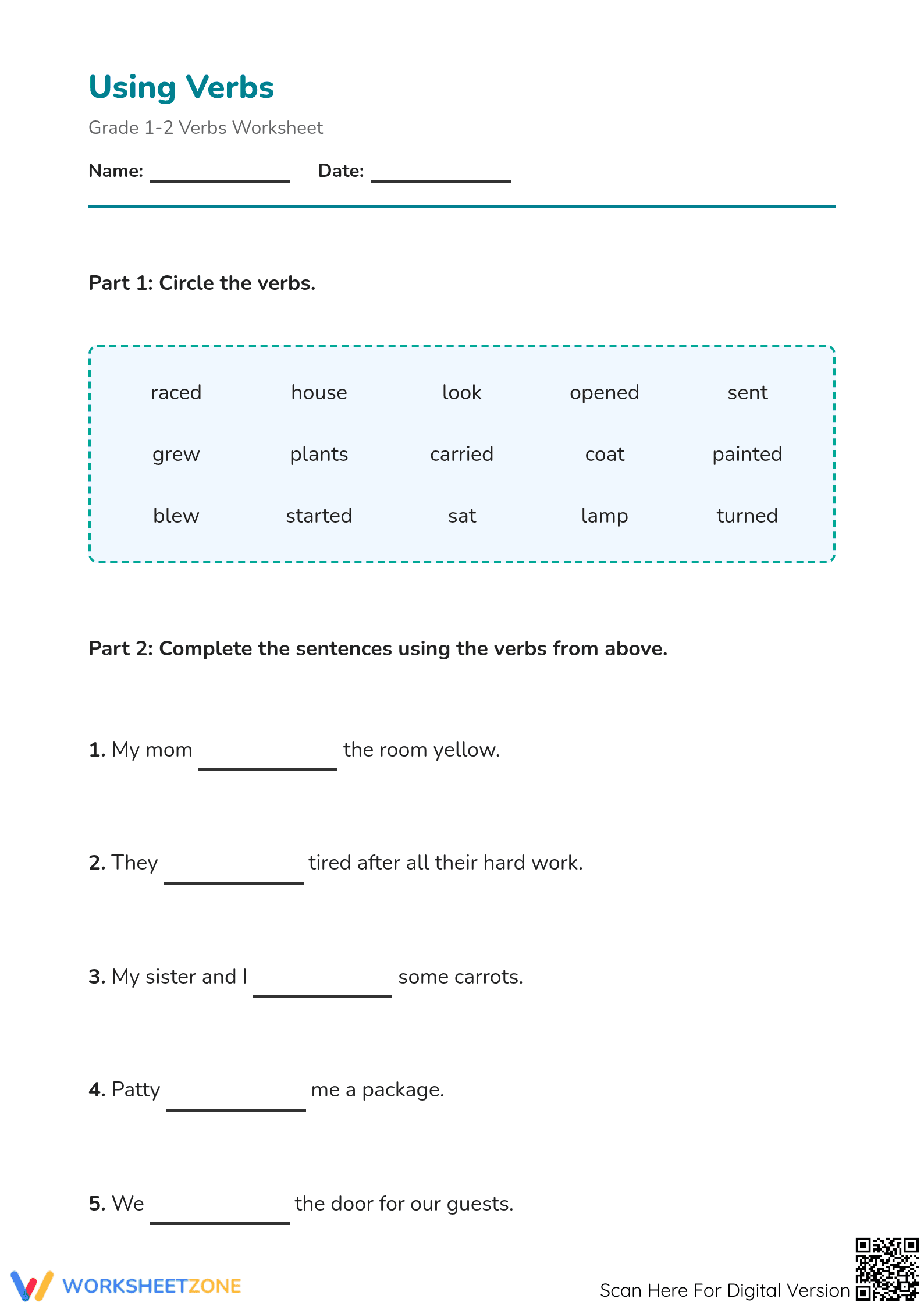
This Grade 1 verbs worksheet helps students identify action words and apply them correctly within sentences. By distinguishing verbs from nouns in a mixed word bank, learners build the foundational parts-of-speech knowledge required for clear writing. The exercises ensure students can recognize verbs in various forms and use them to complete meaningful thoughts.
At a Glance
- Grade: 1 · Subject: ELA
- Standard:
CCSS.ELA-LITERACY.L.1.1.E— Use verbs to convey a sense of past, present, and future- Skill Focus: Verb identification and contextual usage
- Format: 2 pages · 25 problems · Answer key included · PDF
- Best For: Independent practice or morning work
- Time: 15–20 minutes
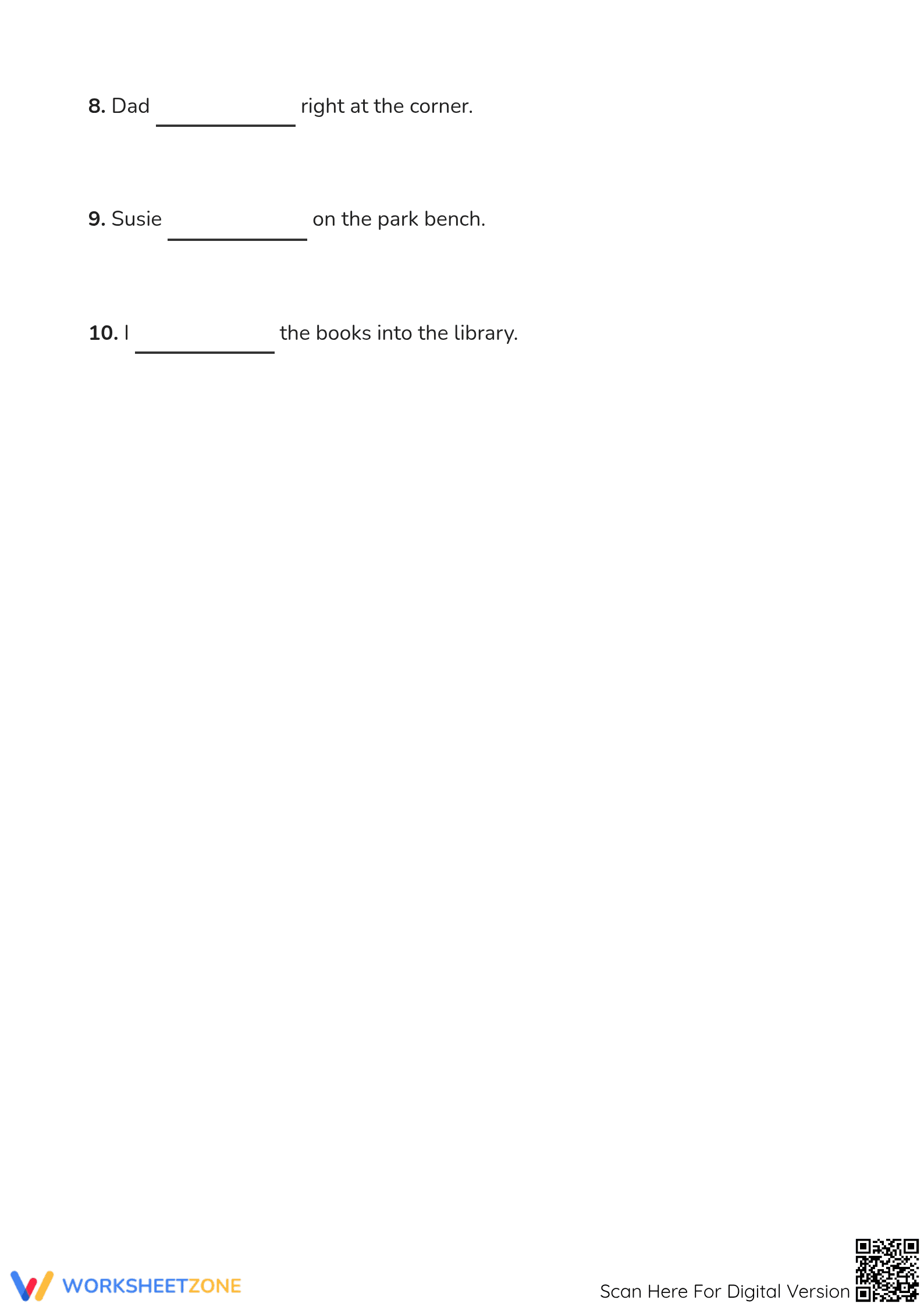
What's Inside: This two-page resource features a structured two-part layout. Part one presents a word bank of 15 terms where students must circle only the verbs, effectively filtering out distractor nouns like "house" and "lamp." Part two provides 10 fill-in-the-blank sentences that require students to select the appropriate verb from the previous list to complete the context. A comprehensive answer key is included for rapid grading.
Zero-Prep Workflow: This resource is designed for immediate classroom implementation with three simple steps. First, print the two-page PDF (30 seconds). Second, distribute the sheets to students for independent or guided work (1 minute). Third, use the included answer key to review student responses or facilitate a self-correction session (1 minute). Total teacher preparation time is under two minutes, making it an ideal choice for unexpected sub plans or transition periods.
Standards Alignment: The primary focus is `CCSS.ELA-LITERACY.L.1.1.E`, which requires students to use verbs to convey a sense of past, present, and future. By working with words like "raced," "painted," and "opened," students practice recognizing the past tense marker "-ed" while reinforcing the role of the verb as the engine of the sentence. Both standard codes can be copied directly into lesson plans, IEP goals, or district curriculum mapping tools.
How to Use It: Use this worksheet as a formative assessment after an introductory lesson on action words. Observe if students can distinguish between objects (nouns) and actions (verbs) in the word bank. Alternatively, assign it as a "fast-finisher" activity to reinforce grammar skills during literacy centers. Students typically complete both pages within 15 to 20 minutes depending on their reading fluency.
Who It's For: This resource is tailored for first-grade students but serves as an excellent review for second graders or a scaffolded activity for English Language Learners. It pairs naturally with an anchor chart displaying common action verbs or a direct instruction lesson on sentence structure. The clear font and simple layout support students with diverse learning needs.
According to the RAND AIRS 2024 report, high-quality supplemental materials that focus on discrete grammatical skills, such as verb identification, significantly improve early literacy outcomes. This Grade 1 worksheet targets CCSS.ELA-LITERACY.L.1.1.E by requiring students to identify and apply verbs within 25 distinct tasks. Research from Fisher & Frey (2014) emphasizes that the gradual release of responsibility—moving from simple identification in a word bank to contextual application in sentences—is essential for mastery of lexical word classes. By providing 15 identification problems and 10 sentence-completion exercises, this resource offers the repetitive exposure necessary for students to internalize the function of verbs. The inclusion of an answer key ensures that feedback can be provided promptly, a factor that NAEP identifies as critical for sustaining student engagement and correcting misconceptions in early elementary language arts instruction.


